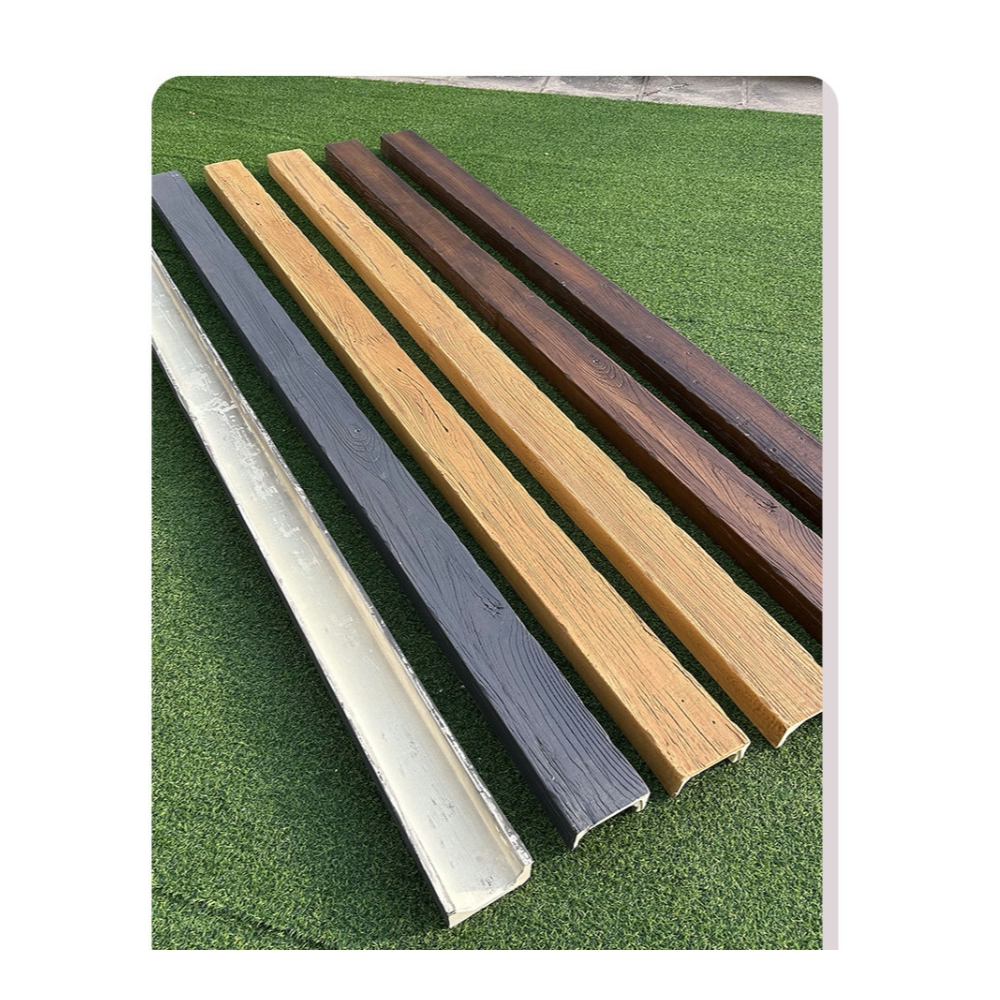
Extended beam installations covering substantial ceiling areas present challenges that single-beam or small-scale projects avoid. When multiple beams extend across rooms, across open floor plans, or through connected spaces, the consistency of corbels at every support point determines whether the installation achieves professional results. Polyurethane corbels selected for series installations must perform reliably not just at one location but throughout entire runs.
The scale of series installations amplifies every variation that might pass unnoticed in smaller projects. A slight color difference between corbels becomes glaring when fifty identical corbels should appear but don't. Dimensional variations that create minor fitting problems in one location become systematic challenges when repeated dozens of times. Understanding these amplification effects guides corbel selection for series work.
Consistency Requirements for Extended Runs
Color consistency across all corbels in series installations ensures unified appearance throughout. Polyurethane products may exhibit subtle color variations between production batches, and these variations become problematic when multiple corbels must match each other across extensive installations. Requesting all corbels from single production batches minimizes variation risks.

Dimensional tolerance becomes critical when corbels repeat at regular intervals. Any variation in width, height, or profile shape becomes visually apparent when corbels sit adjacent to each other or when patterns create expectations of uniformity. Premium corbels manufactured to tight tolerances maintain consistency throughout extended installations.
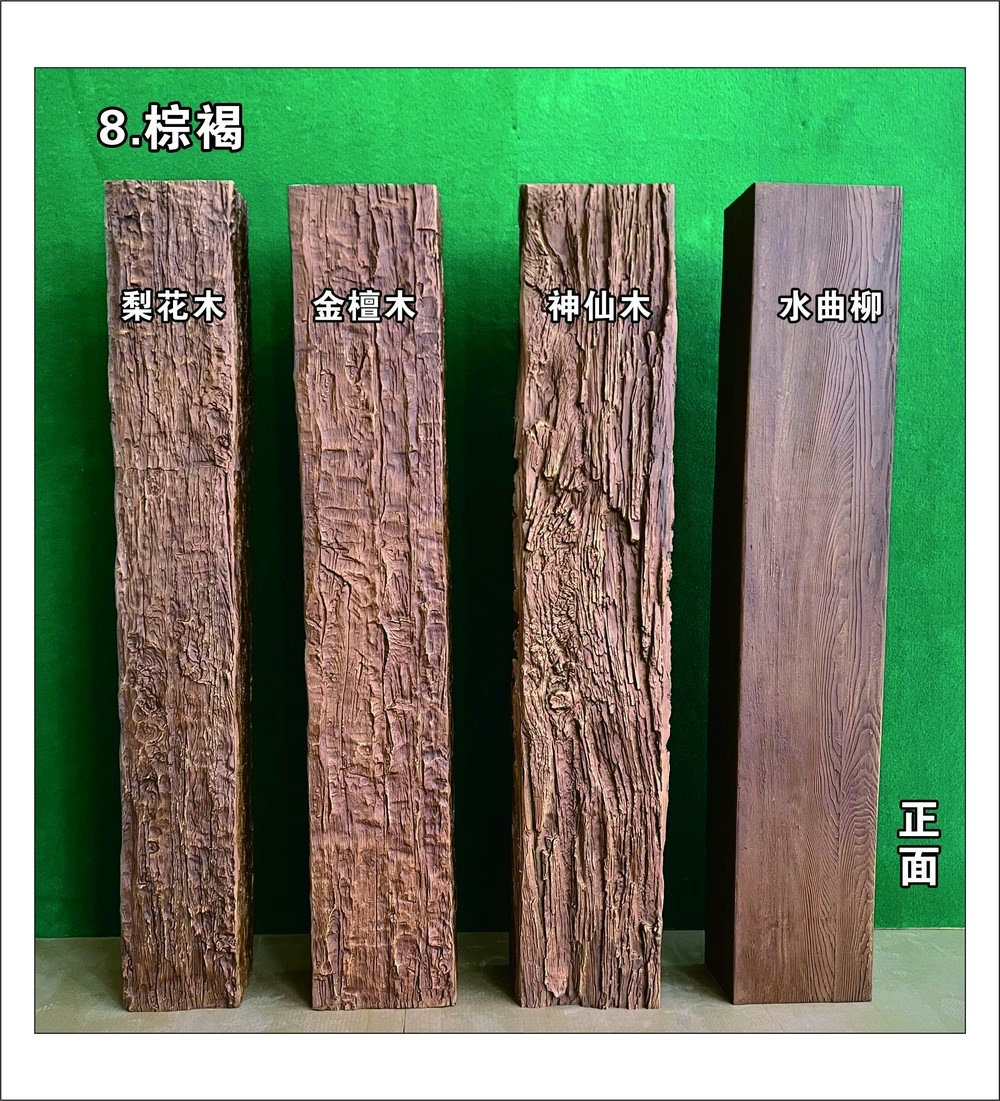
Surface texture uniformity across all corbels prevents the patchy appearance that texture variation creates. When some corbels exhibit smooth surfaces while others show subtle mold marks or surface irregularities, the installation reads as inconsistent despite individual corbel quality. Sample verification before large purchases identifies texture issues that might otherwise surface during installation.
Planning Series Installations
Layout development before corbel selection clarifies quantity requirements and positioning challenges. Drawing installation plans with accurate measurements identifies potential obstacles—windows, doors, recessed lights, or structural elements—that affect corbel placement. This planning prevents purchasing too few corbels or selecting sizes that create awkward positioning.
Staggered beam patterns introduce corbel placement variety that may complicate consistency. When beams don't align regularly, corbels may appear at varying intervals with different surrounding conditions. Planning these patterns in advance helps select corbels appropriate to each specific location rather than assuming uniform requirements throughout.
Symmetry consideration affects how viewers perceive series installations. Symmetrical patterns—beams and corbels balanced around central axes—create formal compositions that feel intentional. Asymmetrical arrangements require confident design to avoid appearing accidental. The chosen pattern affects corbel selection for any asymmetric positions requiring different corbel orientations or sizes.
Installation Techniques for Series Quality
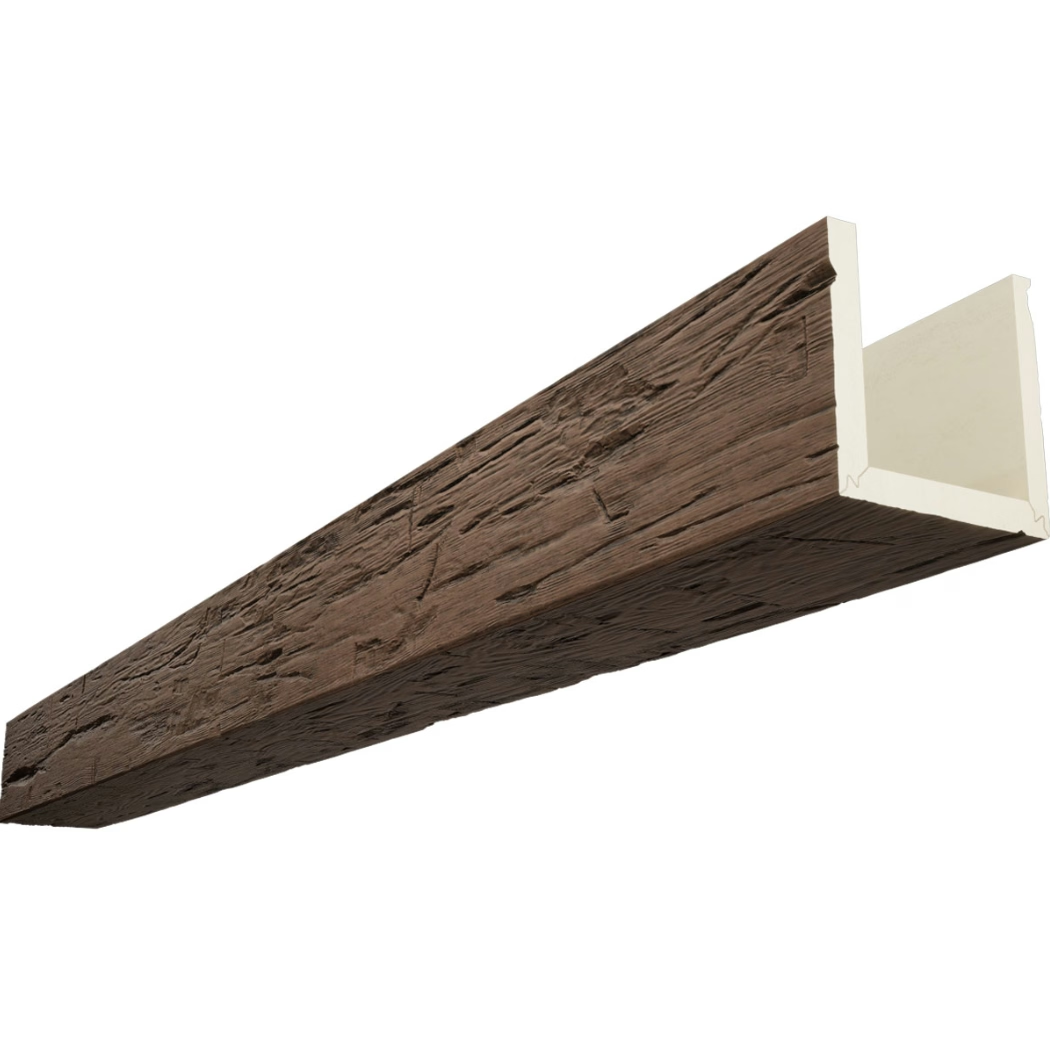
Reference line establishment ensures corbel alignment throughout extended runs. Laser levels or chalk lines provide alignment guides that prevent the cumulative drift that occurs when each corbel is individually positioned without reference to previous placements. Reference lines at both wall attachment points and corbel positions maintain consistency throughout.
Sequential installation following predetermined order prevents installation errors in complex patterns. Moving systematically through installation sequences—left to right, front to back, or following architectural features—ensures that each corbel receives appropriate attention rather than rushing through middle sections after focusing on visible starting points.
Verification checkpoints at regular intervals assess consistency before problems compound. Stepping back periodically to examine the installation from normal viewing distances identifies issues while correction remains possible. Catching misalignment or variation early prevents extensive rework after adhesive cure locks components in place.
Addressing Series Installation Challenges
Obstacle accommodation requires corbel adjustment when standard placement conflicts with architectural features. Planning for these adjustments—perhaps identifying alternative corbel positions or selecting different corbel sizes for obstacle-adjacent locations—prevents installation delays when obstacles appear.
Structural limitation navigation addresses situations where anticipated support locations cannot accommodate corbels. Engineered I-joists, HVAC ductwork, or electrical conduit routing may prevent ideal corbel placement. Having backup positioning plans or alternative corbel approaches ready prevents these limitations from derailing projects.
Level compensation for uneven surfaces ensures corbel alignment despite underlying construction variations. Shimming, selective adhesive application, or selective fastener placement addresses minor variations without requiring surface remediation. These techniques maintain visual alignment despite physical irregularities.
Finishing Series Installations
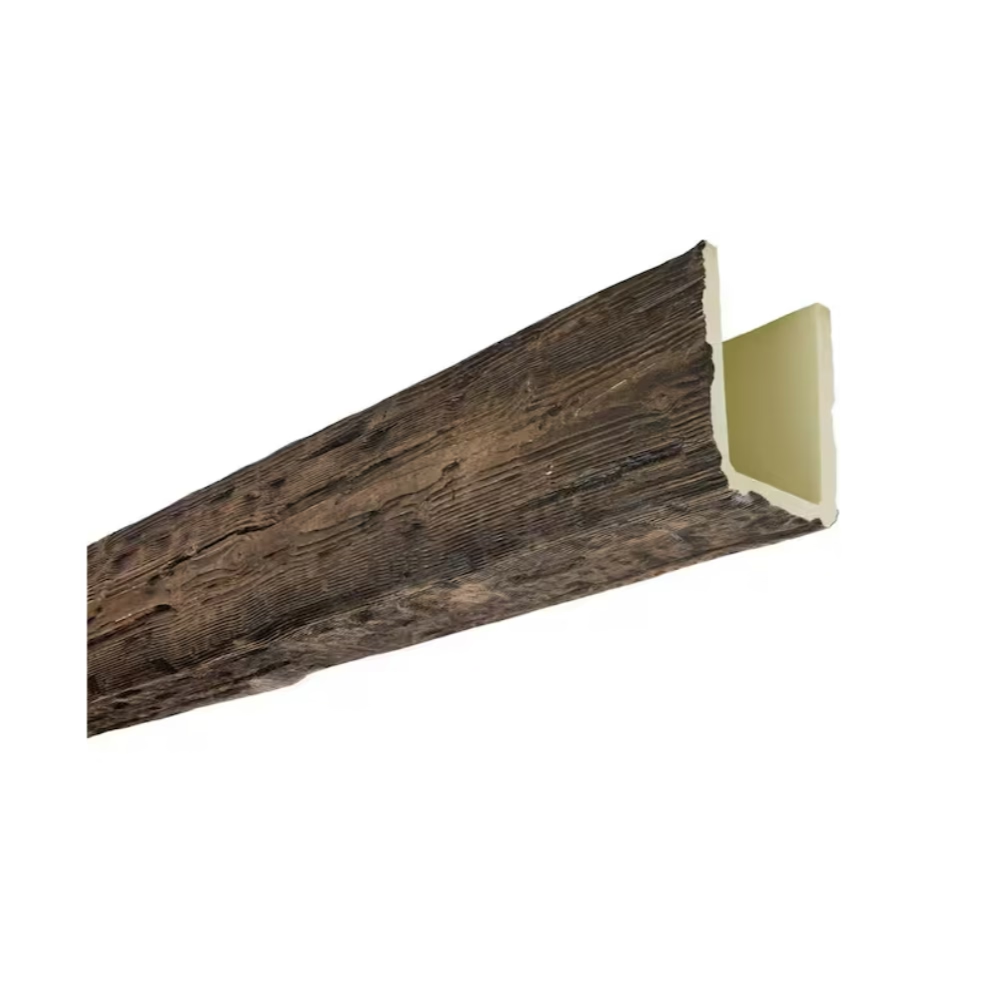
Unified finishing across all corbels maintains the consistency that careful installation achieved. Finishing systems should be applied consistently across all components—identical primer coverage, consistent color coat application, and uniform topcoat protection. Variation in finishing technique creates appearance differences as noticeable as component variation.
Batch finishing ensures uniform appearance when finishing products from multiple cans or batches. Mixing finish materials before application creates consistency that prevents slight color differences between cans from creating visible boundaries. This mixing proves particularly important for stain and glaze applications where variation shows dramatically.
Touch-up planning addresses minor finishing inconsistencies that appear across extended installations. Having finishing materials available for correction, and understanding how touch-ups should proceed without creating visible repair work, maintains installation quality through the finishing phase.
Technical References
ASTM standards cited in every specification
Test Data
Lab results from internal testing program
Updated 2026
Reviewed against current product specs