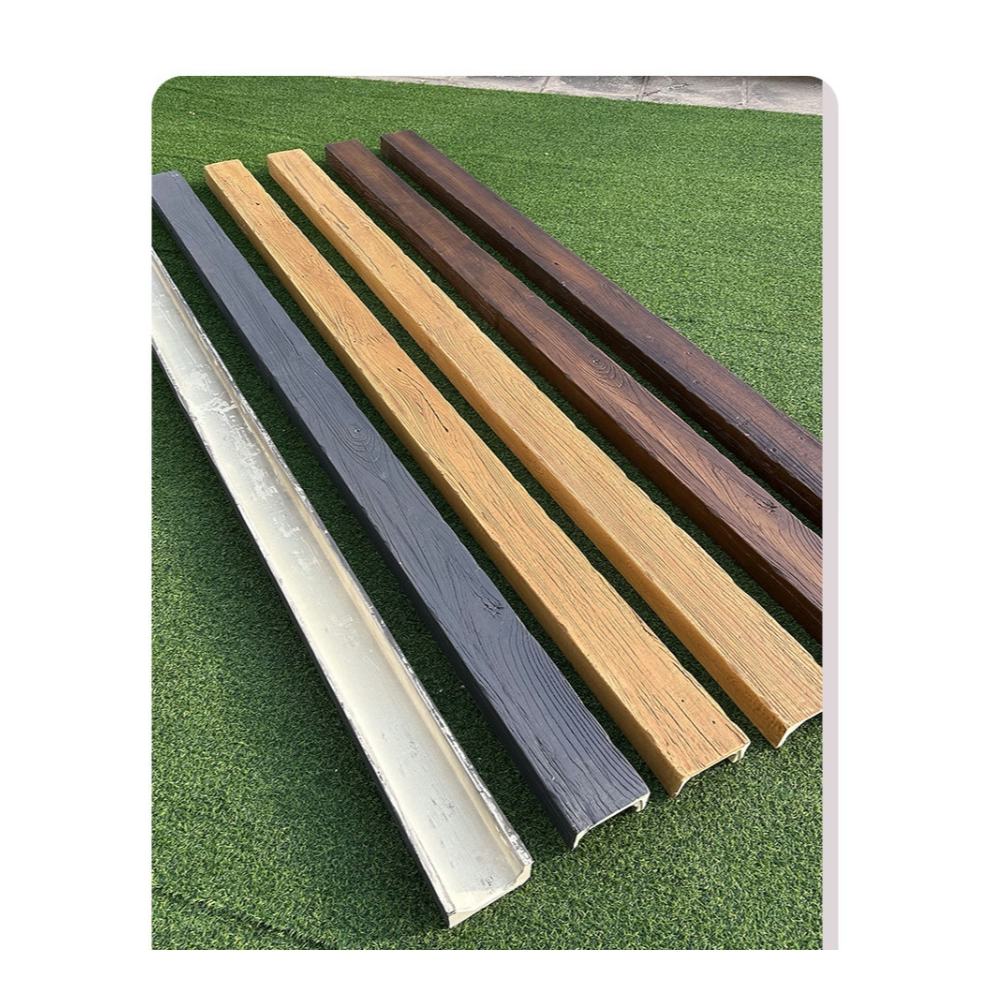
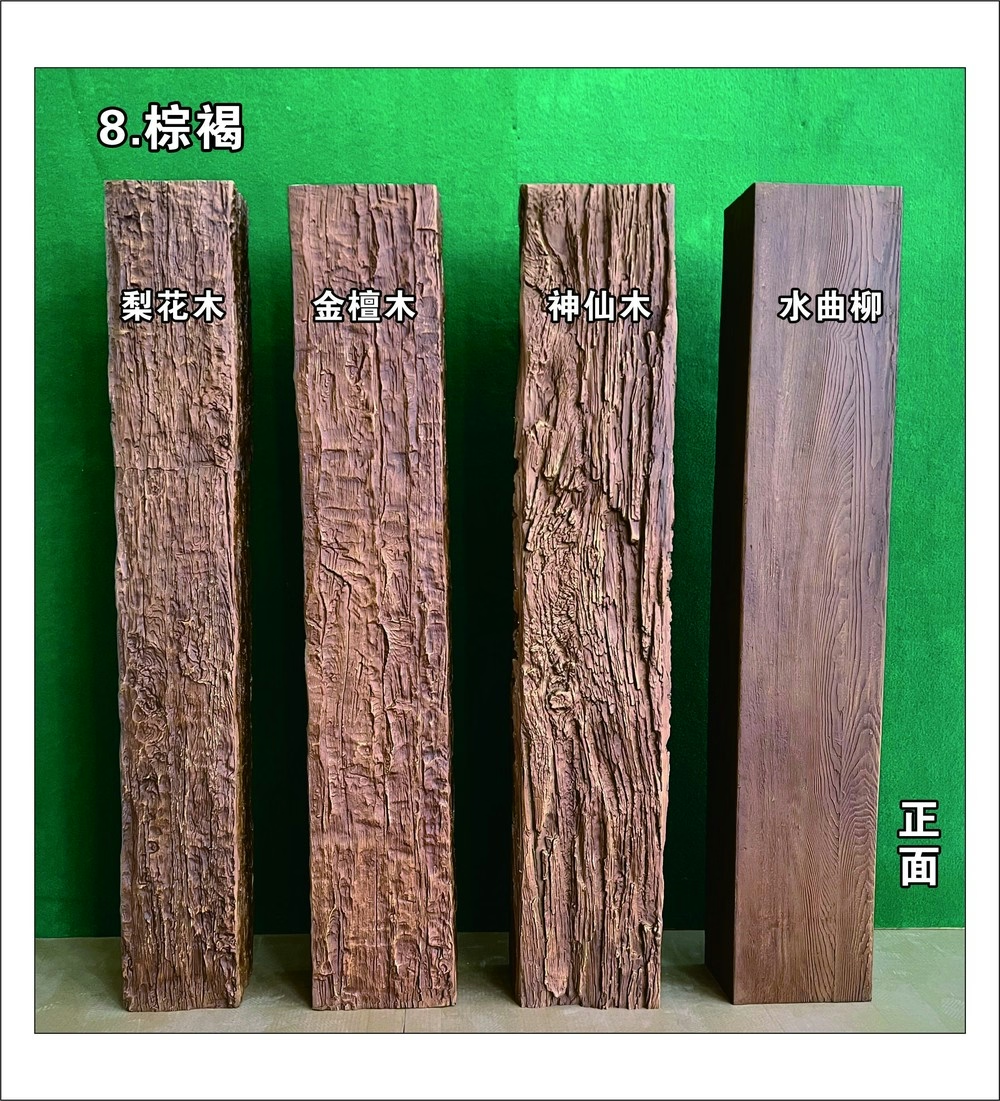
Corbels have served as load-bearing and decorative elements in architecture for millennia, from Greek temples to Victorian mansions. Today, polyurethane versions capture that timeless aesthetic while eliminating the weight and cost penalties that made authentic carved wood impractical for many applications. When incorporated into faux wood beam installations, properly matched corbels transform simple beam runs into architecturally significant features that command attention.
The strategic placement of corbels beneath faux beams accomplishes multiple objectives simultaneously. Visually, they add period-appropriate detail that elevates the beam from mere decorative trim to genuine architectural element. Structurally, they provide additional support points for longer spans, though in most residential applications this is more about visual suggestion than actual load requirements. The psychological effect of seeing these familiar traditional forms cannot be overstated—corbels signal craftsmanship and intentionality in ways that plain beam installations rarely achieve.
Understanding Corbel Styles and Period Influences
Corbel designs trace distinct lineages through architectural history, each characterized by specific proportional relationships, carving patterns, and silhouette contours. Understanding these distinctions allows for coherent design choices rather than arbitrary selection. The acanthus leaf motif, derived from Greek architectural detail, appears frequently in corbel designs and communicates classical influence. More ornate Baroque interpretations incorporate scrollwork and shell patterns that suggest different historical periods.
Renaissance-influenced corbels often feature simpler geometric forms—circles, squares, and straightforward curves—that communicate balance and proportion without excessive ornamentation. These work particularly well in contemporary interpretations of traditional spaces where the goal is suggestion rather than strict historical reproduction. Industrial farmhouse aesthetics have generated their own corbel vocabulary, typically emphasizing heavy proportions and rough-cut textures that contrast with the refined precision of classical forms.
When selecting corbels for a specific installation, considering the overall design intent of the space guides the selection process. A formal dining room might call for finely detailed classical corbels, while a rustic kitchen could better accommodate heavier, more roughly textured versions. The faux beam profile itself should inform this choice—ornate corbels paired with simple beam profiles create visual discord, while properly scaled combinations produce coherent design statements.
Matching Corbel Scale to Beam Dimensions
Proportion represents the most critical factor in successful corbel integration with faux beams. A corbel too small for its supporting beam appears trivial and out of place, while an oversized corbel overwhelms the beam it supposedly supports. The relationship between corbel height and beam depth provides the primary scaling reference, with ideal ratios typically falling between one-half and two-thirds of the beam's visible height.
Beyond the vertical dimension, corbel projection must relate appropriately to the beam's depth. The corbel should extend sufficiently to be visible from normal viewing angles without appearing to push aggressively into the room's usable space. In vaulted ceiling applications, this projection consideration becomes even more critical as sightlines often approach perpendicular to the beam's orientation, making the corbel's silhouette a prominent visual element.
Width relationships matter as well, particularly for installations featuring paired corbels supporting a single beam or running parallel on either side of a structural element. The corbel's width should relate comfortably to the beam's width without creating awkward visual competition. Some designers prefer corbels slightly wider than the beam for a substantial, grounded appearance, while others favor narrower corbels that appear as discrete decorative accents.

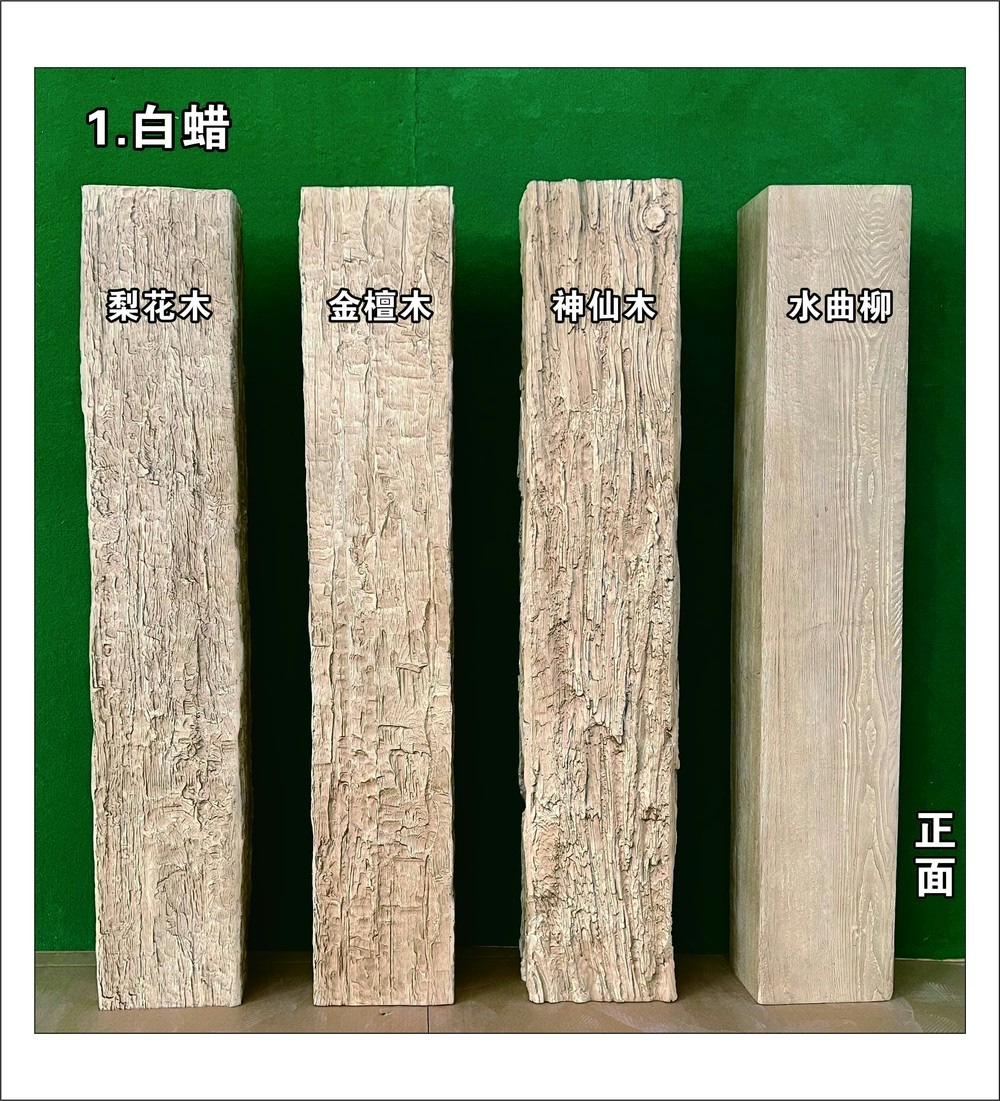
Installation Approaches for PU Corbels
The lightweight nature of polyurethane corbels simplifies installation dramatically compared to their stone or solid wood counterparts. Standard wood screws driven through mounting blocks on the corbel's rear surface provide adequate attachment for most residential applications, with the specific fastener choice depending on the substrate behind the corbel's final position. Concrete, masonry, and various wallboard constructions each require appropriate anchoring approaches.
The mounting surface preparation significantly impacts the ultimate appearance of the installed corbel. Ensuring the mounting area is flat, clean, and structurally capable of supporting the corbel's weight prevents the settling and shifting that leads to visible gaps over time. In new construction or renovation projects, incorporating blocking between wall studs provides ideal mounting surfaces that eliminate uncertainty about fastener holding power.
Alignment during installation requires attention to both vertical plumb and horizontal orientation. Even slight deviations become visible when the corbel is viewed from angles typical in room occupation. Using a level during initial placement and checking alignment from multiple vantage points before final tightening catches issues that might otherwise require remedial adjustment after the fact.
Coordinating Corbel Finishes with Beam Surfaces
Finish coordination between corbels and beams creates the cohesive appearance that distinguishes professional installations from amateur efforts. Polyurethane corbels arrive in various finish states—raw material ready for painting, pre-finished in specific wood tones, or textured to accept particular coating systems. Understanding these options and planning accordingly prevents compatibility issues during the finishing phase.
For installations where the beam and corbel come from the same manufacturer, they typically share compatible surface formulations that accept the same staining or painting protocols. This matching simplifies finishing significantly and produces the most seamless results. When corbels from different sources are being incorporated, testing finish compatibility on inconspicuous areas before committing to the complete installation identifies any adhesion or color-matching challenges.
The level of weathering or distressing applied to beam surfaces should inform corbel selection and preparation. A heavily distressed beam paired with pristine corbels creates visual inconsistency that trained eyes will immediately notice. Conversely, highly detailed corbels lose their textural interest when viewed against smoothly finished beam surfaces. The goal is unified aging that suggests these elements have coexisted in the space for years rather than being installed last week.
Addressing Complex Configurations
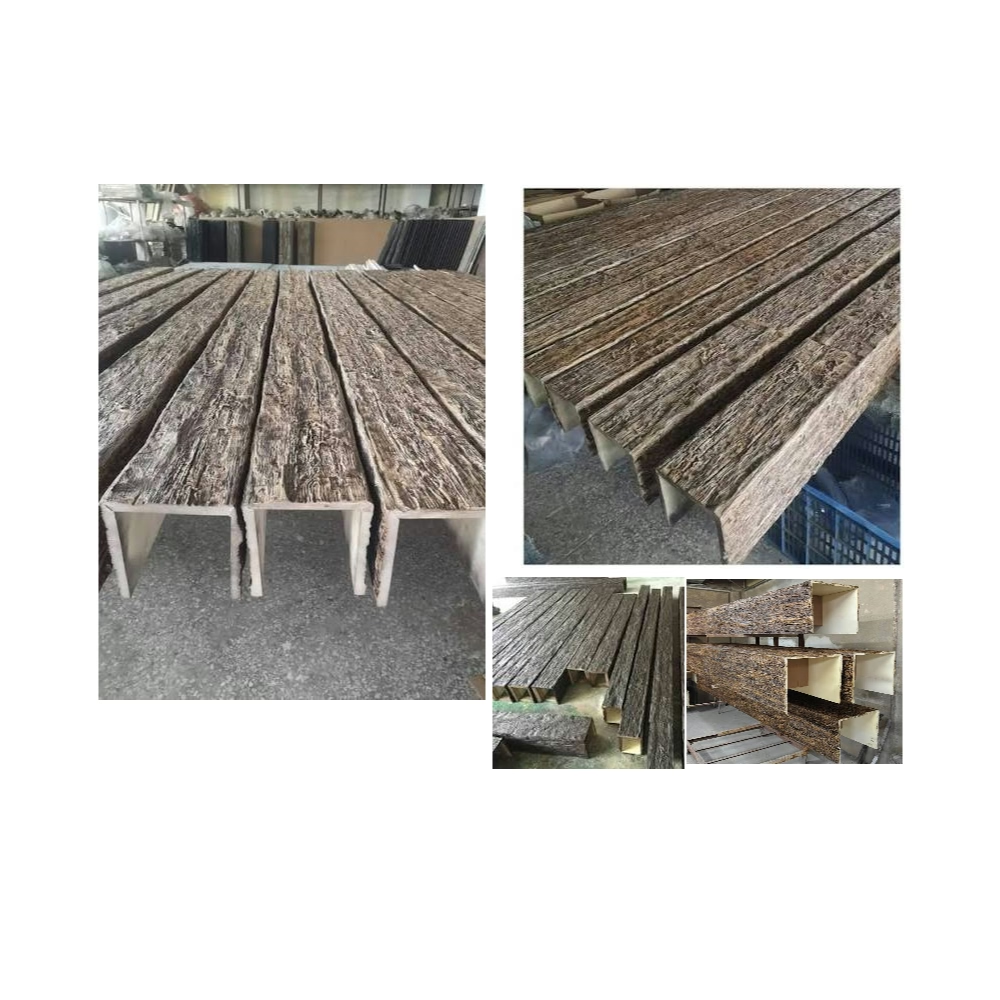
Rooms featuring beams in multiple directions, intersecting runs, or non-standard angles present corbel installation challenges that require creative problem-solving. L-shaped beam configurations might incorporate corbels at the corner point, supporting the intersecting members while providing visual weight at the transition. The corbel selection for these locations should accommodate the specific angle encountered while maintaining proportional relationships with both intersecting beams.
Vaulted and sloped ceiling applications demand corbels that work with the pitch encountered rather than purely vertical installations. Some corbel designs incorporate built-in pitch accommodation through angled mounting surfaces or flexible positioning options. Others require custom modification to achieve proper seating against sloped surfaces. Understanding the ceiling pitch early in the specification process prevents surprises during installation.
Floating beam configurations—where beams appear to span spaces without direct wall attachment—present unique corbel opportunities. Supporting corbels at the midpoint of such spans creates the suggestion of load-bearing function while actually providing structural support for the beam's own weight. These applications often benefit from more elaborate corbel designs since the corbel becomes a focal point rather than incidental trim.
Maintaining Consistency Across Multiple Corbel Placements
Larger installations requiring multiple corbels demand attention to consistency that single corbel placements do not. Variations in corbel orientation, mounting height, or spacing become increasingly apparent as the number of matching elements increases. Establishing clear reference points and measurement protocols before beginning installation prevents the cumulative drift that produces visibly inconsistent results.
Orientation一致性 matters particularly for corbels featuring directional design elements like grain patterns or asymmetrical carved motifs. All corbels in a single installation should follow the same orientation convention—grain running in consistent directions, carved details facing expected viewing positions. Marking corbels during dry-fit placement identifies any orientation issues before final mounting makes correction difficult.
Spacing between multiple corbels along a beam run requires proportional consideration relative to the overall beam length and room dimensions. Equal spacing generally produces the most satisfying visual rhythm, but absolute mathematical equality can produce awkward results near room boundaries or architectural features. Adjusting spacing slightly to accommodate these elements while maintaining the appearance of consistency often produces better overall results than rigid adherence to calculated equal intervals.
Technical References
ASTM standards cited in every specification
Test Data
Lab results from internal testing program
Updated 2026
Reviewed against current product specs