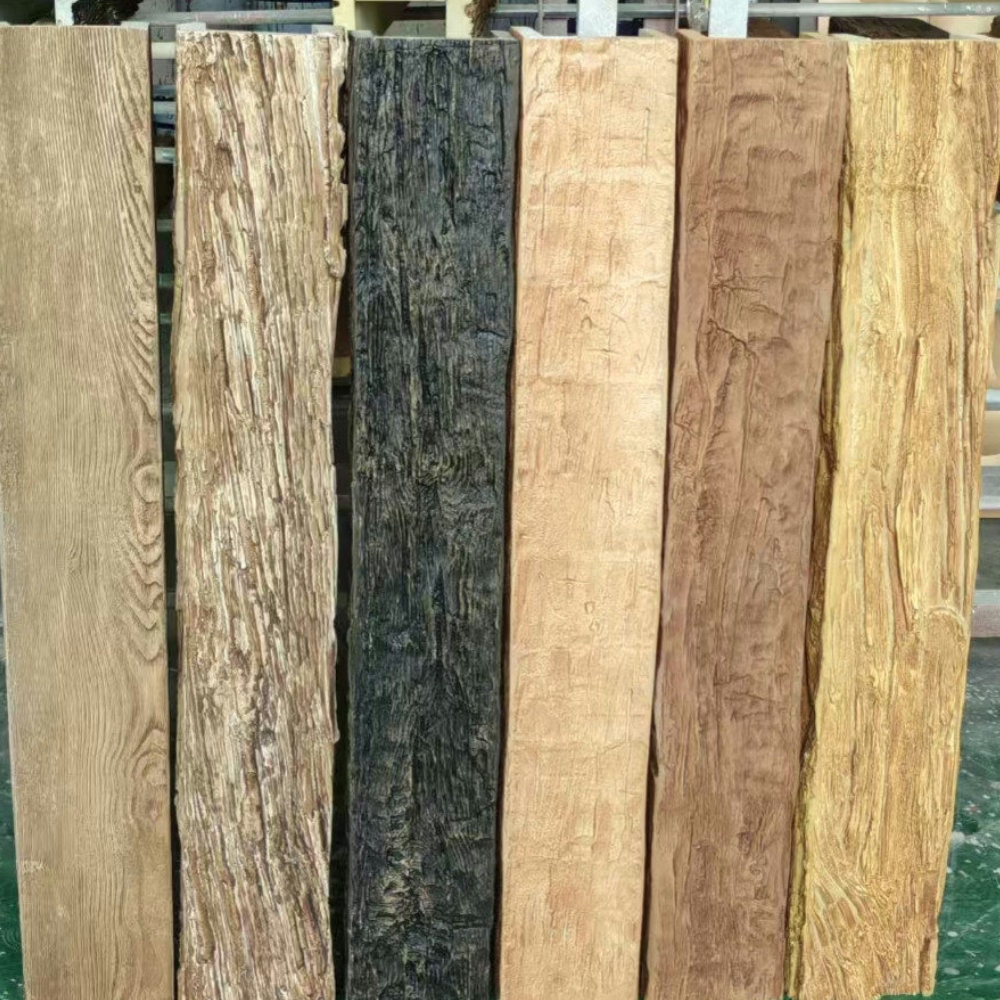
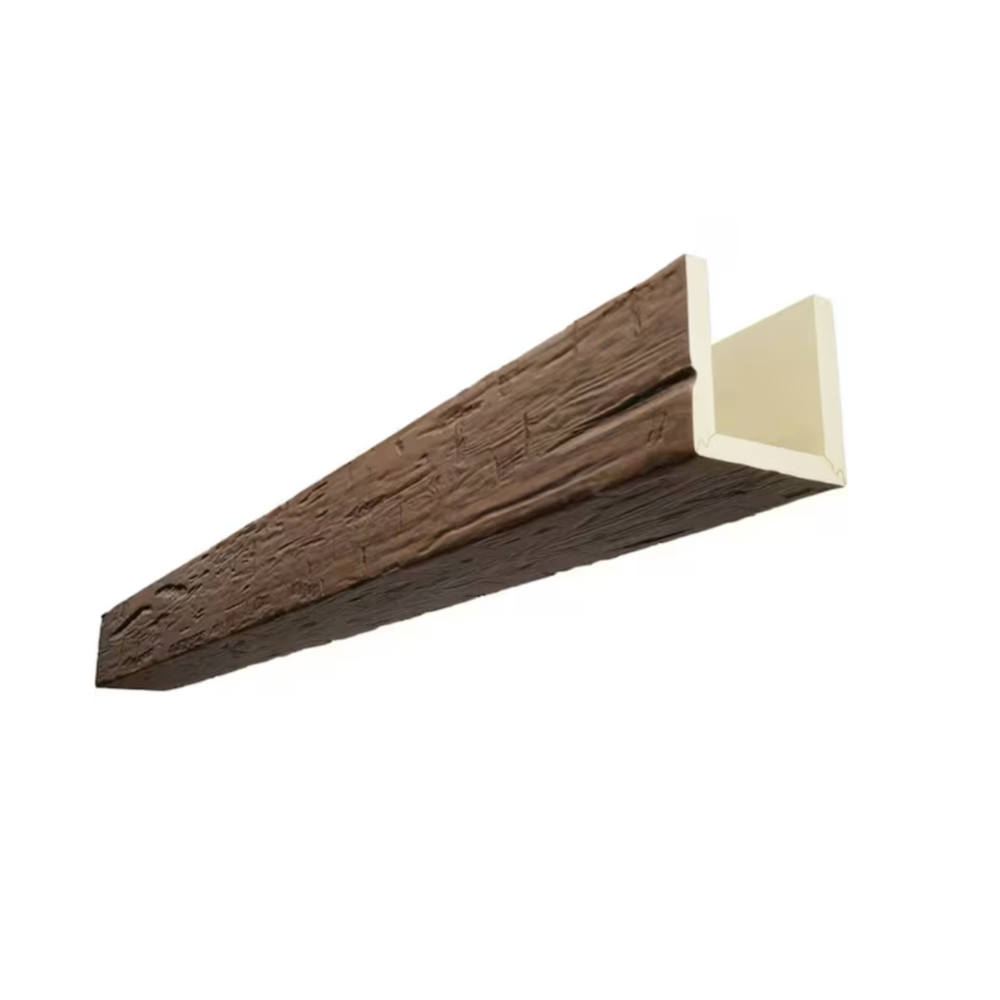
Victorian parlors and Renaissance great halls featured ceilings alive with architectural detail—beams radiating from central focal points, medallions framing chandelier locations, and rosettes punctuating the intersections where multiple design elements converged. These traditions fell from favor during the twentieth century's modernist simplification but have returned with renewed interest as homeowners discover that ceiling detail transforms ordinary rooms into spaces with genuine character. Polyurethane has made this transformation accessible, bringing traditional ceiling aesthetics within reach of typical renovation budgets and installation skill levels.
The combination of faux beams and ceiling rosettes represents a particularly harmonious pairing because both elements share the same material vocabulary while addressing different spatial needs. Beams provide linear interest across ceiling planes, while rosettes add concentrated ornamental detail at strategic points. Together they create ceiling compositions that reward extended viewing rather than disappearing into undifferentiated surface.
Understanding Ceiling Rosette Functions and Forms
Ceiling rosettes serve multiple purposes beyond their ornamental contribution to ceiling design. They conceal the practical reality of how beams, light fixtures, and ceiling surfaces intersect—hiding mounting hardware, covering small gaps, and providing transitions between different planes and materials. This functional aspect explains why rosette designs have persisted across centuries of architectural evolution.
Traditional rosette forms draw from classical ornamentation—concentric rings of acanthus leaves, egg-and-dart patterns, and floriform center medallions that reference Greek and Roman precedents. These classical roots give rosette designs a timeless quality that adapts readily to contemporary interiors when paired with appropriate beam styles. The key lies in maintaining proportional harmony between the rosette's ornamental density and the beam's character.
Modern rosette interpretations sometimes simplify these classical forms, producing geometric or minimalist medallions that suit contemporary spaces more naturally. These simplified versions still perform the same practical functions while contributing different aesthetic effects. The selection between ornate traditional and streamlined modern rosette forms should follow from the overall design intent established for the space.
Coordinating Rosette Scale with Beam Dimensions
Scale relationship between rosette and beam profoundly affects the installation's visual impact. A rosette too small for its associated beam appears trivial—a decorative afterthought rather than an intentional design element. Conversely, an oversized rosette overwhelms the beam it accompanies, creating visual competition where harmony should prevail.
The most reliable scaling approach measures the beam's width and selects rosettes with diameters approximately two to three times that measurement for traditional installations. This proportion produces rosettes substantial enough to read as meaningful design elements without dominating the beams themselves. More elaborate installations might push toward the larger end of this range, while restrained contemporary approaches might favor more modest proportions.
Ceiling height influences scale decisions as well. Higher ceilings can accommodate larger rosette elements without appearing crowded, while lower ceilings benefit from more moderate scaling that doesn't compress the perceived vertical space. Taking ceiling height measurements during the specification phase prevents the sizing surprises that emerge only after installation when correction becomes difficult and expensive.

Installation Approaches for Rosette and Beam Coordination
The mechanical relationship between rosettes and beams depends on the specific installation configuration. Radiating beam arrangements—where multiple beams extend outward from a central point—typically position the rosette at that convergence point, with beam ends abutting the rosette's perimeter. This arrangement creates the classic medallion-and-spokes composition that has decorated formal ceilings for centuries.
Parallel beam installations can incorporate rosettes at interval points along the beam runs, creating rhythmic punctuation that organizes longer ceiling spans into coherent segments. These intermediate rosettes might coincide with light fixture locations, providing both decorative framing and practical mounting support. The spacing between rosettes should relate proportionally to the overall beam run length and ceiling dimensions.
Some installations position rosettes at beam terminations against walls, using the rosette to create a decorative terminus where the beam meets the vertical surface. This application works particularly well when the wall itself receives treatment that coordinates with the rosette's ornamental character—wainscoting, decorative panels, or simply paint colors selected to complement the ceiling's architectural vocabulary.
Finish Coordination Strategies
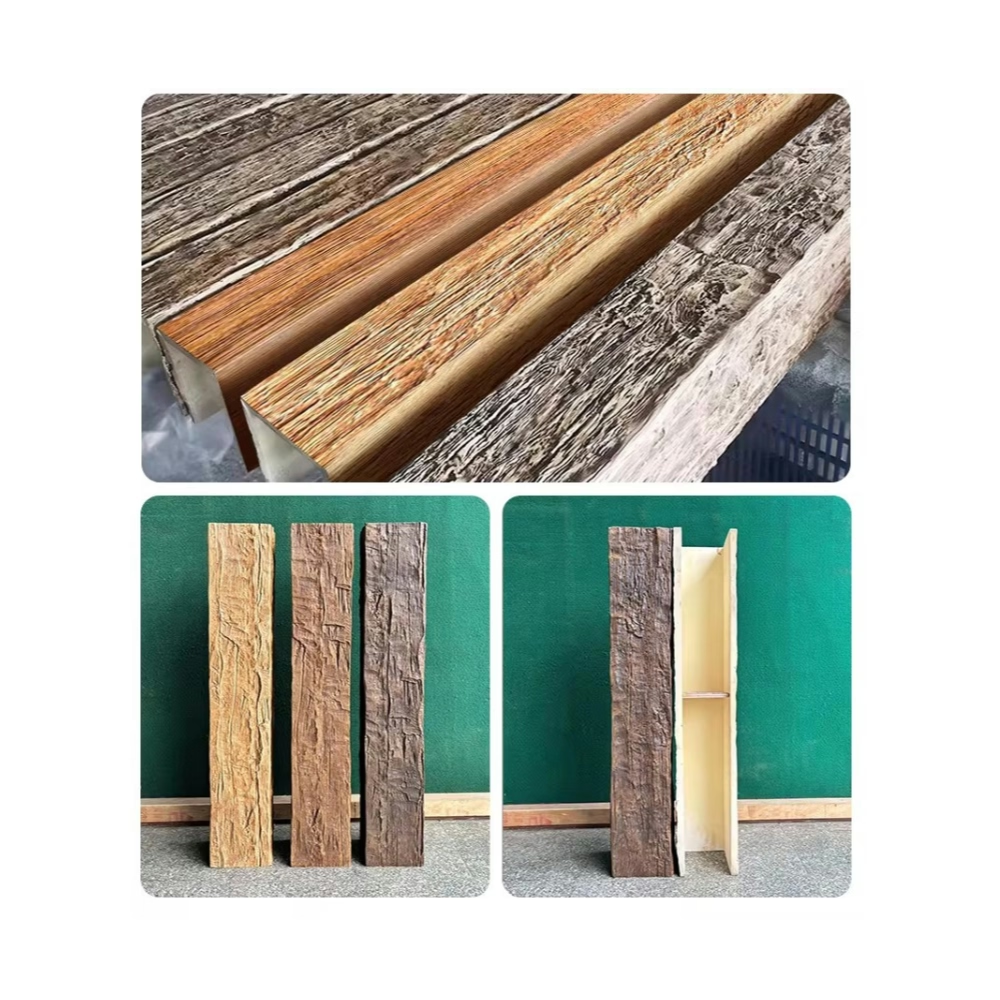
Achieving visual unity between rosette and beam requires deliberate attention to finish application across both element types. Ideally, rosette and beam originate from the same manufacturer using compatible material formulations, simplifying the finishing process considerably. When this isn't possible, testing finish compatibility on sample pieces before committing to the complete installation identifies potential issues in advance.
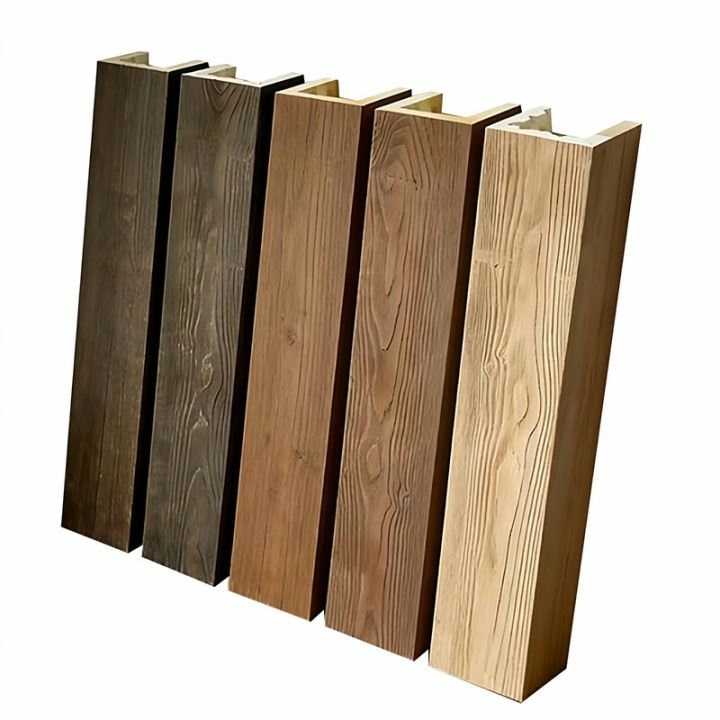
Color relationships between rosette and beam can follow several strategies depending on the desired effect. Exact color matching creates the impression that both elements are solid wood components from the same source. Subtle color variation—slightly darker rosette, different tone emphasis—suggests age differential and can add visual interest if applied deliberately. More dramatic color differences transform the rosette into an accent element rather than a complementary detail.
Textural coordination matters as much as color for achieving convincing unity. Weathered beam surfaces paired with smooth rosettes create visual inconsistency, as do distressed rosettes accompanying pristine beams. The weathering or distressing level should remain consistent across all ceiling elements to suggest that they have aged together rather than being installed as separate components with different histories.
Designing with Multiple Rosette Configurations
Sophisticated ceiling designs sometimes incorporate rosettes at varying scales throughout a single space, creating hierarchy and visual interest through size variation. Large central rosettes command attention as primary focal points, while smaller rosettes at intermediate locations provide secondary interest without competing for primacy. This graduated approach works particularly well in larger rooms where a single rosette would appear lost.
Mixing rosette styles within a cohesive finish palette offers another dimension for design development. A primary ornate rosette might anchor the central ceiling area while simpler geometric medallions frame secondary ceiling zones. The variety prevents monotony while the consistent finish application maintains overall coherence. This approach requires confident design judgment to avoid appearing arbitrary or incomplete.
The relationship between rosette placement and room features should guide configuration decisions. Rosettes positioned to frame chandeliers, ceiling fans, or recessed lighting create practical justifications for their presence beyond purely aesthetic considerations. Aligning rosette positions with functional ceiling elements also simplifies installation by providing natural reference points for placement decisions.
Maintaining Coordinated Installations
Polyurethane rosette and beam combinations share the same maintenance advantages—the material's resistance to moisture, decay, and insect damage eliminates most wood-specific deterioration concerns. Periodic dusting and occasional cleaning with mild soap solutions keeps these elements looking fresh without the refinishing obligations that wood alternatives would require.
UV exposure represents the primary long-term concern for polyurethane ceiling elements, particularly in spaces with significant natural daylight. UV-resistant finishes provide meaningful protection, though very long-term installations in sun-drenched spaces might eventually show some color shift. Selecting appropriate finish systems for the specific exposure conditions addresses this concern proactively during the initial installation.
Damage repair for polyurethane rosettes and beams differs from wood repair in some important respects. Unlike wood, polyurethane cannot be repaired with filler compounds that accept stain and finish in the same way—the material's composition requires different repair approaches. Having spare matching material available for emergency repairs simplifies maintenance for commercial installations where appearance standards remain high.
Technical References
ASTM standards cited in every specification
Test Data
Lab results from internal testing program
Updated 2026
Reviewed against current product specs