
The fireplace mantel occupies one of the most psychologically significant positions in residential design—the focal point around which family life traditionally organizes itself. This centrality explains why mantel selection receives more careful consideration than almost any other decorative element in the home. Polyurethane faux wood mantels have emerged as the preferred choice for discerning homeowners who want the warmth of timber aesthetics without the practical limitations that authentic wood introduces.
Modern polyurethane manufacturing produces mantels with visual fidelity to carved wood that would have seemed impossible a generation ago. Deep relief carving, authentic wood grain textures, and carefully developed color tones create convincing replicas that satisfy even those with extensive experience with genuine timber. The material's consistency also means that every piece from a production run matches the designer's specifications exactly—a uniformity that hand-carved wood cannot achieve regardless of the craftsman's skill.
The Case for Polyurethane in Fireplace Applications
Fireplace surroundings present demanding conditions that challenge many materials. Temperature fluctuations occur daily during heating season, with sustained heat exposure followed by rapid cooling when fires die down. Moisture from combustion byproducts can affect adjacent surfaces, while the physical proximity to open flames creates fire safety considerations that materials must address appropriately.
Polyurethane's performance in these conditions proves surprisingly robust when the material is formulated specifically for architectural use. Fire-rated formulations resist ignition and limit flame spread, meeting building code requirements for proximity to heat sources. The material's low thermal conductivity means it remains comfortable to touch even when surrounding masonry surfaces become too hot for sustained contact. These practical advantages complement the aesthetic benefits that make polyurethane an increasingly common choice.
Weight represents perhaps the most significant practical advantage for fireplace mantel applications. A substantial wood mantel weighing several hundred pounds requires structural support provisions that can complicate installation and limit placement options. Polyurethane mantels of equivalent visual presence might weigh one-quarter as much, allowing installation using standard wall-framing techniques without the engineering accommodations that heavy timber requires.
Mantel Style Families and Their Design Implications
Traditional mantel styles draw from centuries of accumulated architectural precedent, incorporating details that communicate specific historical influences. Colonial-era mantels typically feature simple rectangular profiles with minimal ornamentation, reflecting the utilitarian values of early American settlement. Victorian interpretations embrace richer ornamentation—columned supports, heavily carved friezes, and elaborate overmantel details that speak to the era's confidence in industrial capability.
Transitional styles bridge traditional and contemporary aesthetics, maintaining classical proportions while simplifying surface treatments. These mantels work particularly well in renovated older homes where authentic Victorian or Colonial details exist elsewhere in the space, providing design continuity without requiring exact historical replication. The flexibility of polyurethane allows these transitional designs to capture subtle curves and proportions that would be prohibitively expensive in carved wood.
Contemporary mantel designs embrace geometric simplicity and clean lines that suit modern interior aesthetics. These styles often feature wider friezes, floating shelf effects, and minimal ornamentation that allows the surrounding décor to provide visual interest. The polyurethane medium handles these contemporary forms well, producing crisp edges and consistent surfaces that manufactured wood alternatives sometimes struggle to achieve.

Proportional Considerations for Different Room Sizes
Mantel scale must relate appropriately to the room it occupies, with both the fireplace opening and the overall room dimensions informing size selection. A massive mantel in a modest room overwhelms the space and draws attention away from other design elements; a too-small mantel above a generous fireplace opening appears inadequate and fails to provide the visual weight the installation requires.
The fireplace opening dimensions establish the primary scaling reference, with mantel dimensions typically calculated as multiples of the opening width. Traditional proportions suggest mantel shelves extending equally beyond the opening on each side, with the overall mantel height relating to the opening height through ratios that have proven visually effective over centuries of use. These traditional ratios provide reliable starting points for scale decisions even when other design elements require adjustment.
Ceiling height influences the visual weight that mantels must carry to appear appropriately scaled. Higher ceilings can accommodate taller mantel installations without appearing compressed, while lower ceilings benefit from more horizontally oriented designs that don't further reduce the perceived vertical space. Taking ceiling height measurements early in the selection process prevents the installation challenges that inappropriate scaling creates.
Coordinating Mantels with Surrounding Architectural Elements
Successful mantel installations rarely exist in isolation—the mantel's relationship with surrounding walls, adjacent furniture, and other architectural features determines whether the overall effect achieves design coherence. Paint or finish selection for the mantel should consider the wall color behind it, with sufficient contrast to define the mantel's boundaries without creating jarring visual competition.
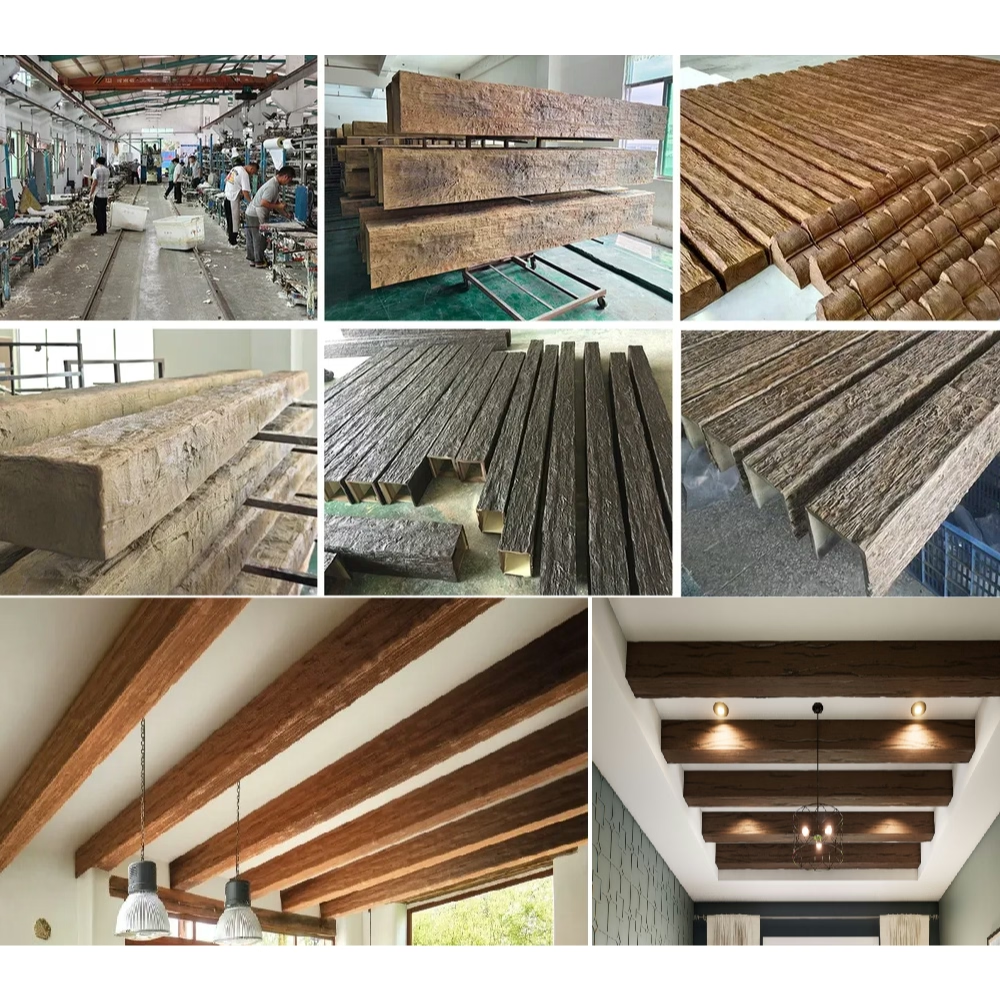
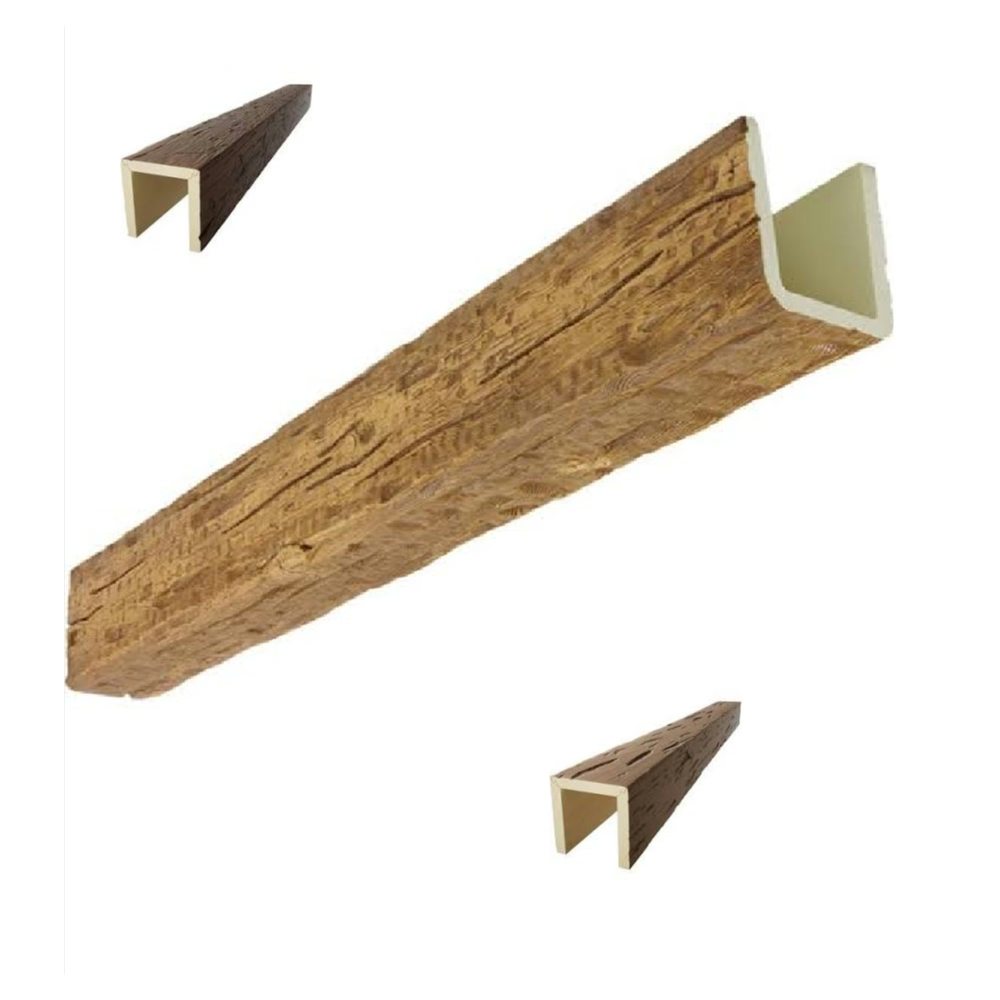
In rooms featuring faux wood beams, extending the beam aesthetic to the mantel creates natural design continuity. Some manufacturers offer coordinated product lines that include both beams and mantels specifically designed to work together, ensuring consistent profile proportions, matching finish options, and complementary ornamental details. When these coordinated lines aren't available, careful specification of separate elements can achieve similar harmony through deliberate style selection.
Furniture placement in front of the fireplace affects how the mantel's lower elements will be perceived. Lower mantel bases that sit close to the hearth may be partially obscured by seating arrangements, while elevated mantels on high fireplace surrounds remain fully visible regardless of furniture placement. Considering the typical furniture arrangement during selection prevents discovering after installation that important mantel details go unseen.
Installation Approaches and Structural Requirements
The installation approach for polyurethane mantels varies depending on the specific product design and the wall construction behind it. Some mantels mount directly to wall studs using lag screws through mounting rails, providing exceptional security without requiring additional structural support. Others rely on adhesive application to prepared wall surfaces, with mechanical fasteners providing supplementary hold during cure time.
Regardless of the specific attachment method, wall preparation significantly affects installation quality and long-term performance. The mounting surface must be flat, clean, and capable of supporting the mantel's weight under all conditions. Gypsum wallboard alone rarely provides adequate fastener holding power for substantial mantel installations; adding blocking between wall studs, attaching plywood backing panels, or using appropriate wall anchors addresses this limitation.
Fireplace clearance requirements specify minimum distances between mantel surfaces and the firebox opening to prevent heat damage and ensure fire safety. These requirements vary by fireplace type and manufacturer, with gas fireplaces typically having more restrictive clearances than wood-burning alternatives. Verifying compliance with these requirements before installation prevents the costly corrections that code violations inevitably require.
Finishing and Long-Term Maintenance
Polyurethane mantels arrive in various finish states, from raw material ready for custom finishing to factory-applied colors that match specific wood species or paint chips. Factory finishing provides convenience and ensures color consistency across multiple pieces, while custom finishing allows exact coordination with other design elements that might not have existed when the mantel was manufactured.
Finish durability in fireplace applications requires consideration of the heat exposure that mantel surfaces will experience. Standard paint and stain formulations may not withstand sustained proximity to heat sources without degrading. Selecting finishes specifically rated for fireplace applications, or applying heat-resistant topcoats over standard finishes, ensures that the mantel's appearance remains attractive over years of use.
Maintenance requirements for polyurethane mantels prove considerably less demanding than wood alternatives. The non-porous surface resists staining from dust and combustion byproducts, while the material's resistance to moisture prevents the swelling and checking that affects wood mantels in fireplaces with less efficient combustion. Occasional cleaning with mild soap solutions maintains the mantel's appearance without the refinishing obligations that wood surfaces periodically require.
Technical References
ASTM standards cited in every specification
Test Data
Lab results from internal testing program
Updated 2026
Reviewed against current product specs


