
The combination of faux wood beams with matching corbels and support brackets creates an architectural language that speaks fluently of craftsmanship, tradition, and attention to detail. These supporting elements transform simple beam installations into statements of design intentionality, suggesting that every visual choice was made deliberately rather than selected from a catalog without consideration for the overall effect. Polyurethane resin has democratized access to these traditional forms, making ornate architectural detail available without the weight penalties and cost premiums that carved wood corbels historically demanded.
Support brackets and corbels serve dual purposes in beam installations—providing genuine structural contribution while delivering substantial aesthetic returns on that investment. Even when the structural function is minimal in engineering terms, the visual suggestion of load-bearing support adds authenticity that plain beam installations simply cannot match. Viewers instinctively understand corbels as elements that bear weight, and this understanding shapes their perception of the entire installation.
Distinguishing Between Corbels and Support Brackets
While the terms often appear interchangeably, corbels and support brackets represent distinct design categories with different visual characteristics and typical applications. Corbels generally feature more ornate detailing and irregular profiles that reference their historical origins in load-bearing masonry construction. The corbel's characteristic bracket shape—wider at the top, narrower at the mounting point—reflects the structural logic of cantilevered support.
Support brackets tend toward simpler, more geometric forms that serve primarily visual functions in decorative installations. These brackets might feature clean angular profiles, simple curved shapes, or minimal ornamentation that complements rather than competes with the beams they support. The distinction between categories blurs in practice, with many products occupying middle ground between pure ornament and functional support.
Selection between corbel and bracket styles should respond to the overall design vocabulary established for the space. Formal traditional interiors benefit from the richer detail that corbel designs provide, while contemporary or minimalist spaces often work better with simpler bracket forms. Mixing styles within a single installation risks visual incoherence, making consistent selection important for achieving unified design results.
Material Advantages of Polyurethane Resin
Polyurethane resin provides material properties that make it particularly suitable for corbel and bracket applications. The formulation's density falls between lightweight foam and solid wood, providing sufficient mass to feel substantial without requiring the structural engineering that heavy timber supports would demand. This balance enables corbels and brackets to contribute visual weight to installations without adding problematic load to ceiling structures.
Dimensional stability distinguishes polyurethane from wood alternatives in variable humidity environments. Wood corbels expand and contract with seasonal moisture changes, potentially developing gaps at joints, warping out of plane, or cracking under the stress of constrained movement. Polyurethane's minimal moisture absorption eliminates these concerns, producing installations that maintain their as-installed appearance indefinitely.
The casting process by which polyurethane corbels are manufactured enables detail reproduction impossible in wood carving. Fine surface textures, undercuts that would defeat wood tools, and consistent thickness throughout complex profiles all emerge from the mold with precision that hand finishing cannot reliably achieve. This manufacturing advantage translates directly to aesthetic quality that casual observers recognize even if they cannot articulate what they're seeing.
Scale Relationships and Proportioning
Corbel and bracket sizing must respond to both the beams they support and the room they occupy. A corbel's height should relate to the beam's depth through proportions that suggest structural appropriateness without appearing over- or undersized. Traditional rules of thumb suggest corbel heights between one-half and two-thirds of the beam's visible height, though contemporary design sometimes departs from these historical guidelines.
Projection—the distance the corbel extends from the wall—affects both visual presence and practical function. Corbels that project minimally appear trivial, while those extending too far into the room may interfere with furniture placement or traffic patterns. The ideal projection allows the corbel to be clearly visible from normal viewing positions while remaining unobtrusive in the room's daily use.
Width relationships matter for installations featuring multiple corbels along a beam run. Consistent width among paired corbels maintains visual rhythm, while slight width variations can create purposeful hierarchy if applied deliberately. Some designers prefer corbels slightly wider than the beams they support, creating a grounded, substantial appearance; others favor narrower corbels that read as discrete decorative accents.

Coordinating with Beam Profiles and Styles
The most cohesive installations coordinate corbel and bracket selection with beam profiles to create unified design statements. Manufacturers producing both beams and corbels often design them as complementary systems, ensuring proportional harmony and style alignment between elements. These coordinated product lines simplify selection by eliminating the guesswork involved in mixing products from different sources.
Ornate corbels paired with simple beam profiles create visual discord that diminishes both elements. The corbel's elaborate detail demands context that simpler beams cannot provide, making the overall installation feel inconsistent. Conversely, simple brackets supporting heavily textured or distressed beams produce their own form of imbalance. Aligning the complexity level of corbels and beams produces more satisfying visual results.
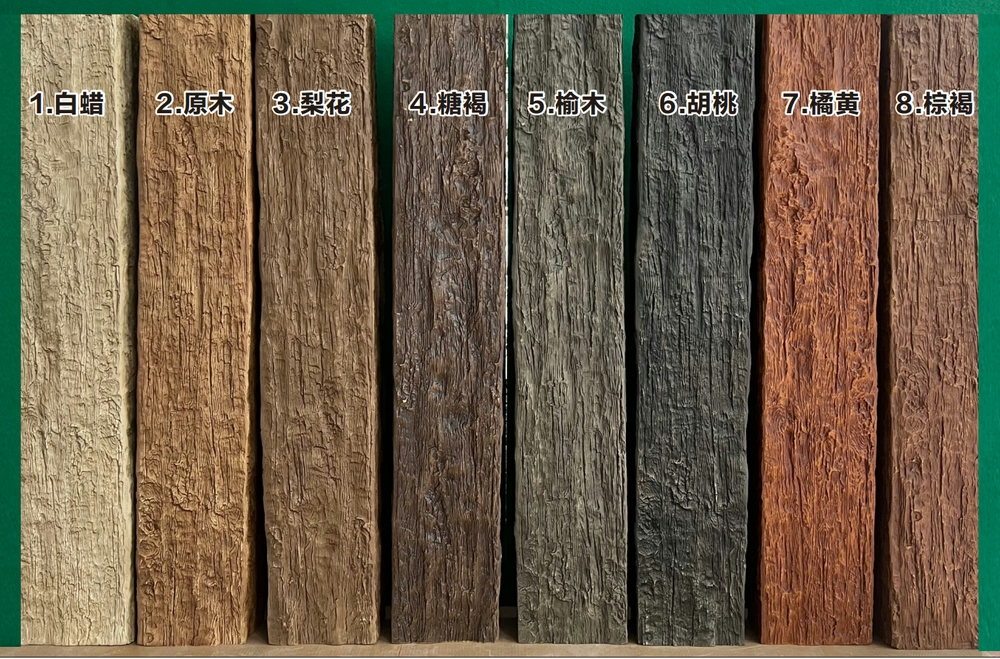
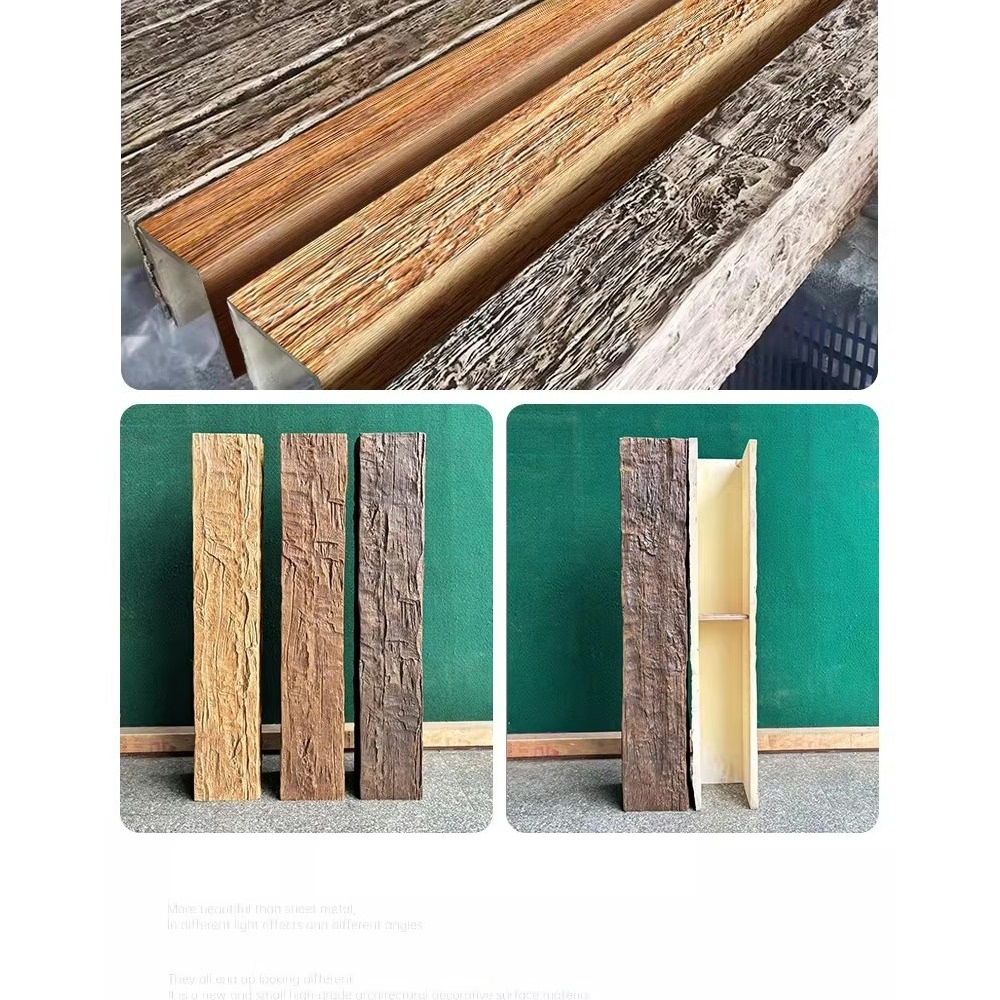
Wood species and finish matching between corbels and beams requires consideration during specification. When both elements share identical finish treatments applied after installation, the coordination is straightforward. When purchasing pre-finished corbels, obtaining finish samples from the same production batch as the beams minimizes the color variation that undermines matched installations.
Installation Best Practices
Proper installation of corbels and brackets begins with adequate structural support behind the mounting surface. The mounting area must accommodate the fasteners required for secure attachment, which typically means positioning over wall studs or adding blocking during construction. Mounting directly to gypsum wallboard without supplementary support risks failure under load.
The corbel's mounting angle requires attention during installation. Traditional corbels often feature a slight upward tilt that enhances their visual suggestion of support, though this angle should be minimal—excessive tilt appears as an installation error rather than intentional design choice. Level checking during installation ensures the final position appears deliberate rather than accidental.
Sealing gaps between corbels and adjacent surfaces prevents dust accumulation and moisture intrusion that could affect long-term performance. Flexible painter's caulk applied at joints accepts paint for seamless concealment, while remaining capable of accommodating the subtle movements that temperature changes produce. This sealing step takes only moments but significantly affects the finished installation's professional appearance.
Applications in Different Room Types
Living rooms and great rooms often feature corbels at fireplace mantel supports or at beam terminations where they contribute visual weight to the installation. The prominence of these spaces makes corbel quality particularly important—family rooms and entertaining areas receive sustained attention that low-quality details cannot withstand without becoming eyesores.
Kitchens benefit from bracket installations that frame ranges, cover transitions between different ceiling heights, or support extended island overhangs. The practical demands of kitchen use—frequent cleaning, temperature variation, occasional impact from cookware—make polyurethane's durability advantage particularly valuable in these demanding environments.
Commercial applications in restaurants, hospitality venues, and retail spaces place corbels and brackets under scrutiny that residential installations rarely encounter. Higher traffic, more frequent cleaning, and more critical design evaluation all demand correspondingly higher quality in these applications. The investment in premium polyurethane corbels for commercial installations pays returns in reduced maintenance and longer replacement intervals.
Technical References
ASTM standards cited in every specification
Test Data
Lab results from internal testing program
Updated 2026
Reviewed against current product specs


