
The shift toward matte surfaces in contemporary interiors reflects broader design movements that value subtlety over showiness, authenticity over ostentation. Where previous generations favored high-gloss finishes that announced their presence loudly, today's design-conscious spaces employ surfaces that acknowledge their presence only through form and shadow rather than reflective炫耀. Matte low-sheen polyurethane faux beams align perfectly with this sensibility, providing architectural interest without competing with the carefully curated furnishings and finishes that define modern spaces.
Low-sheen finishes on faux timber beams accomplish something that high-gloss alternatives cannot: they interact with light in ways that feel natural rather than manufactured. Real wood in interior spaces rarely appears glossy except under artificial lighting specifically designed to create reflections. Matte finishes on faux beams more closely approximate this natural wood behavior, creating visual relationships that feel authentic rather than simulated.
Understanding Matte Finish Characteristics
Matte finishes absorb light rather than reflecting it, creating surfaces that appear velvety and dimensional without obvious shine. The absence of reflection means that surface imperfections that would be glaringly obvious under glossy finishes become invisible, allowing the beam's form to be appreciated without the distraction of visible manufacturing artifacts or application flaws.
The low-sheen characteristic distinguishes matte finishes from flat paints and truly non-reflective surfaces. A subtle luminosity remains visible at certain angles, revealing the beam's texture without creating the mirror-like reflections that higher-sheen options produce. This middle ground—neither flat nor glossy—defines the aesthetic territory that contemporary designers most often occupy when specifying beam finishes.
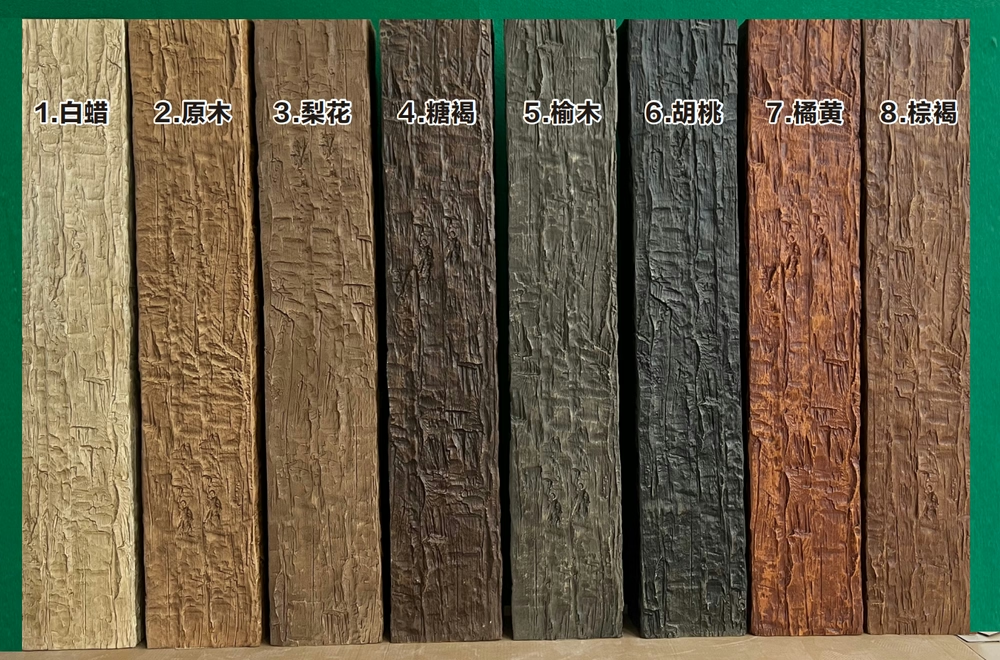
Texture perception differs significantly between matte and glossy surfaces. Matte finishes tend to emphasize the tactile quality of underlying textures, making wood grain feel more present and authentic than glossy alternatives that seem to flatten the surface visually. This perceptual difference makes matte finishes particularly appropriate for beams intended to replicate weathered or distressed wood where texture contributes significantly to the overall effect.
Why Modern Interiors Favor Low-Sheen Aesthetics
Contemporary interior design emphasizes the quality of light within spaces rather than the reflective properties of surfaces. This emphasis leads naturally toward matte finishes that contribute to soft, even illumination rather than competing for attention through highlight and reflection. The overall effect is one of calm sophistication that allows other design elements—artwork, furniture, textiles—to provide visual interest without competing with reflective surfaces.
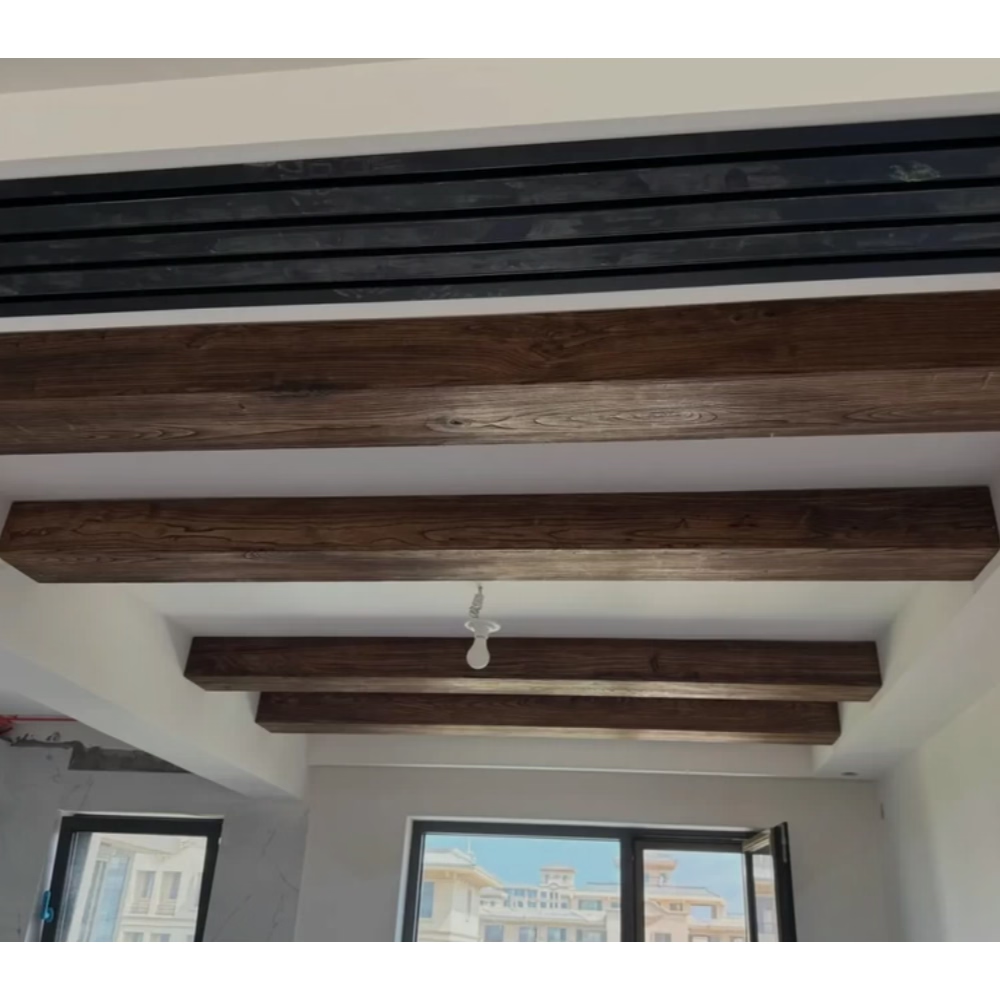
Open floor plans common in modern homes create large ceiling expanses where beam finish decisions significantly affect the space's overall character. High-gloss beams in these expansive ceilings would create distracting reflections visible from multiple vantage points, fragmenting the visual space in ways that feel chaotic rather than intentional. Matte beams maintain visual continuity, supporting the open, flowing character that these floor plans seek to create.
Minimalist design principles favor the understated quality that matte finishes provide. The aesthetic philosophy that underlies minimalist interiors values restraint and purposefulness, avoiding decoration that does not serve functional or conceptual goals. Matte-finished beams fit this philosophy because they contribute architectural interest through form rather than surface treatment, making them appropriate additions to spaces defined by their essential rather than ornamental qualities.

Coordinating Matte Beams with Other Design Elements
The transition from matte beam surfaces to adjacent materials requires careful consideration to avoid visual clashes. Matte paint on walls creates natural harmony with matte beam finishes, the shared light-absorption characteristics producing cohesive surface interactions. The challenge arises when matte beams meet higher-sheen surfaces like semi-gloss trim or lacquered furniture, creating contrast that may or may not align with the intended design effect.
In deliberately minimal spaces, the contrast between matte beams and a single high-gloss element can create meaningful visual punctuation. A matte beam crossing a ceiling above a high-gloss dining table establishes a relationship between elements that reads as intentional rather than accidental. These contrasts require confident design judgment to avoid appearing as though different designers made unrelated choices in the same space.
Textile coordination becomes more important with matte-finished elements because fabrics provide the primary textural contrast that matte surfaces need to avoid appearing flat or dull. A room with matte beams and matte walls benefits from rugs, upholstery, and drapery that introduce different surface qualities—subtle sheen variations, woven texture, natural fiber character—without overwhelming the matte aesthetic that defines the architectural elements.
Application in Different Room Types
Living rooms and great rooms accommodate matte beams naturally because these spaces typically feature multiple surface types and material choices that provide the textural diversity matte finishes require. The larger scale of these rooms also allows beams to contribute meaningfully to the design without dominating the composition, making them appropriate additions even in spaces where furniture might compete for visual attention.
Bedrooms benefit particularly from matte beams because the subdued aesthetic supports the restful character these spaces should provide. Glossy surfaces in bedrooms can feel cold or uncomfortable, while matte finishes create the soft, enveloping quality that encourages relaxation. Pairing matte beams with other low-sheen elements—matte paint, natural fiber textiles, wooden furniture with satin rather than lacquer finishes—establishes consistent material vocabulary throughout the space.
Home offices and studios can employ matte beams to create focused environments where reflective distractions are minimized. The concentration benefits that matte environments provide make them particularly appropriate for spaces dedicated to creative or intellectual work. Beams in these applications might be paired with matte acoustic panels or other treatment elements that reinforce the matte aesthetic while adding functional benefits.
Maintenance Advantages of Matte Finishes
Beyond their aesthetic contributions, matte finishes offer practical maintenance benefits that support their selection for busy households. Matte surfaces hide dust, minor scratches, and surface imperfections more effectively than glossy alternatives, reducing the cleaning frequency required to maintain acceptable appearance. This forgiving quality proves valuable in ceiling applications where regular cleaning is inconvenient or impossible.
Touch-up maintenance on matte-finished surfaces proves simpler than on glossy alternatives because color matching is less critical. The absence of reflection means that slight color variations between old and new finish are invisible, while the same variations on glossy surfaces would create obvious patched areas. This宽容度 reduces the skill required for maintenance finishing and extends the intervals between full refinishing.
The durability of modern matte finishes has improved significantly as formulation technology has advanced. Current products resist staining, moisture damage, and UV degradation better than earlier generations while maintaining the low-sheen characteristics that define their aesthetic contribution. Specifying current-generation products ensures that the maintenance advantages these finishes provide extend throughout the expected service life.
Long-Term Appearance Retention
Matte finishes age gracefully compared to high-gloss alternatives, developing character rather than looking worn. Where glossy finishes show scratches and wear as localized damage, matte surfaces distribute these effects more evenly, with changes appearing as general softening rather than specific defects. This aging behavior aligns with the aesthetic philosophy that favors authenticity over manufactured perfection.
UV exposure affects matte finishes similarly to other surface treatments, though the visual impact of any fading or yellowing remains less obvious than it would on reflective surfaces. The absorption characteristics that define matte finishes also mean that UV effects manifest more as color shift than as surface degradation, and the shift occurs gradually enough that it rarely becomes noticeable before repainting would naturally occur anyway.
The long-term appeal of matte-finished beams depends significantly on how well the initial specification aligns with the space's likely evolution. Spaces that remain minimalist and contemporary will continue to favor matte aesthetics, making the initial investment in matte-finished beams appropriate. Spaces that might transition toward more traditional aesthetics over time might benefit from finish choices that allow easier repainting to different sheen levels as preferences evolve.
Technical References
ASTM standards cited in every specification
Test Data
Lab results from internal testing program
Updated 2026
Reviewed against current product specs


