
Mediterranean architecture speaks in a language of warmth, texture, and accumulated tradition that no other design vocabulary quite captures. The style draws from centuries of building practice across cultures bordering the Mediterranean Sea—Greek temples, Roman villas, Spanish haciendas, Italian farmhouses—all sharing certain essential characteristics that have survived because they work. Heavy timber beams form an essential part of this vocabulary, their substantial presence providing visual grounding that lighter construction cannot replicate.
Luxury interior design has rediscovered Mediterranean aesthetics precisely because they offer something increasingly rare: authenticity. In a world of mass production and global sameness, the warm textures and artisan details of Mediterranean style create spaces that feel genuinely rooted rather than arbitrarily contemporary. Polyurethane faux beams make this authenticity achievable without the structural compromises that genuine heavy timber sometimes requires in luxury construction.
The Essential Elements of Mediterranean Beam Design
Mediterranean beam installations share certain characteristics that distinguish them from other traditional styles. Timber sizes tend toward the substantial—beams that communicate genuine structural presence rather than mere decoration. The wood itself typically shows evidence of age and use: weathered surfaces, irregular grain patterns, mortise and tenon joinery that speaks of pre-industrial craftsmanship. These characteristics must be convincingly replicated to achieve authentic Mediterranean effect.
Spacing between beams in traditional Mediterranean ceilings relates to the structural requirements of the underlying roof system. Exposed ceiling beams typically correspond to structural rafters or joists, their spacing determined by engineering rather than aesthetic considerations. Modern interpretations may deviate from these traditional spacings, but maintaining the appearance of structural logic enhances authenticity even when the actual spacing serves purely decorative purposes.
Support elements—corbels, brackets, and knee braces—contribute significantly to Mediterranean beam character. These supports often feature carved detail inspired by classical ornamentation, with acanthus leaves, scrollwork, and geometric patterns drawn from the architectural traditions of specific Mediterranean cultures. The quality and authenticity of these details determines whether the installation reads as genuine Old World craft or superficial simulation.
Color Palettes for Mediterranean Beam Installations
Mediterranean color palettes draw from the landscapes and materials of the region: terracotta earth, olive groves,薰衣草fields, Aegean blue, whitewashed walls. Beams typically occupy the warmer end of this palette, with honey-toned woods, burnt sienna undertones, and weathered grays all appearing in traditional installations. The specific tone selected should harmonize with the wall and floor colors that will surround the beams.
Natural wood tones in Mediterranean applications often appear more muted than the vivid colors found in other traditional styles. Years of sun exposure and oil treatment have produced patinas that contemporary finishes can only approximate. Polyurethane beams finished with these muted, lived-in tones avoid the too-perfect appearance that undermines authenticity, creating surfaces that appear to have accumulated character over generations rather than being installed last week.
The interplay between beam color and adjacent surfaces affects the overall warmth of Mediterranean interiors significantly. Cream or ivory wall colors provide subtle contrast that allows wood tones to read clearly without harsh separation. Terracotta tile or stone flooring introduces additional warm tones that harmonize with the ceiling beam palette. The key lies in maintaining warmth throughout the composition without allowing any single element to appear isolated from the others.


Coordinating with Mediterranean Architectural Elements
Genuine Mediterranean interiors typically feature multiple architectural elements that evolved together—the beams, the walls, the floors, the detailing all developed as integrated systems rather than independent selections. Contemporary installations must recreate this integration deliberately because the individual elements no longer share common origins.
Arched openings frame spaces in traditional Mediterranean architecture, and ceiling beams often intersect with these arches in ways that require careful detailing. The transition from beam to arch should feel natural rather than abrupt, with either the beam terminating cleanly at the arch surround or continuing through to provide visual continuity. Polyurethane corbels and decorative trim facilitate these transitions when beam profiles alone cannot accomplish the required geometry.
Tile work—particularly the hand-painted tiles common in Spanish and Portuguese traditions—coordinates with ceiling beams through shared color palettes and artisanal quality. When tile is present, beam selection should consider how wood tones will interact with the specific tile colors in the installation. The goal is a composition where each element enhances rather than competes with the others.
Stone accents—fireplace surrounds, wall cladding, architectural columns—share Mediterranean interiors with timber beams, and the relationship between these materials affects the overall success of the design. Stone's permanence and weight complement timber's warmth and organic character, creating balance between the timeless and the inviting. Polyurethane beams in these compositions should reinforce the warmth pole of this relationship rather than competing with stone's cool authority.
Scale Considerations for Luxury Spaces
Luxury interiors typically feature higher ceilings and larger room volumes than standard residential construction, requiring correspondingly larger beam installations to maintain proportional relationships. What reads as substantial in a standard-height room can appear trivial in a space with twelve-foot or fourteen-foot ceilings. The investment in appropriately scaled beams pays dividends in the overall impression the completed space creates.
Beam depth becomes particularly important in tall spaces because the viewing angle from floor level approaches perpendicular to the ceiling plane. At these angles, the beam's depth—the dimension that conveys mass and solidity—becomes the primary determinant of whether the beam reads as architecturally significant. Narrow beams that work well in standard-height rooms can disappear entirely when installed at greater heights.
The interplay between beam size and support element size requires similar scaling adjustments. Corbels and brackets that appear appropriately proportioned for smaller beams become lost when paired with massive ceiling timbers. The relationship between support element height and beam depth should remain consistent regardless of the overall scale, with the proportional ratios maintained even as absolute dimensions increase.
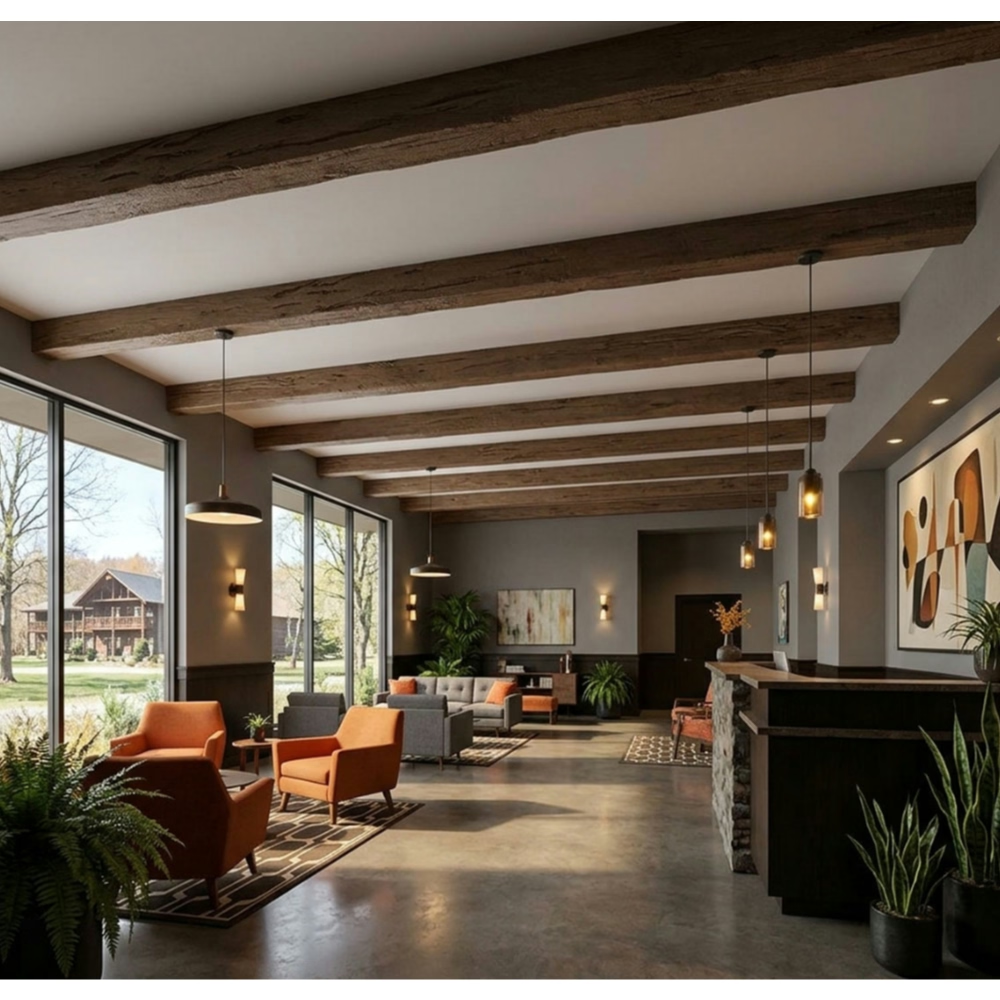
Lighting Design for Mediterranean Ceiling Beams
The warm character of Mediterranean interiors requires lighting approaches that enhance rather than contradict the palette. Incandescent and halogen sources provide the color temperature that makes wood tones appear rich and saturated, while cooler LED sources can make the same beams appear washed out and artificial. Careful attention to lighting color temperature ensures that the design intent survives under actual occupation.
Recessed lighting embedded between beams creates the effect of original construction where fixtures were necessarily positioned between structural rafters. This approach maintains the clean ceiling plane that Mediterranean interiors typically feature while providing adequate illumination for daily activities. The fixtures themselves should remain unobtrusive, allowing the beams to command attention as the primary ceiling feature.
Chandeliers and pendant fixtures in Mediterranean spaces should reflect the artisanal quality that characterizes the overall design. Iron fixtures with hand-forged details, fixture bodies finished in patinated bronze or aged brass, and candle-style lights with warm diffusers all reinforce the Mediterranean vocabulary. These fixtures often require structural support provisions that should be planned during the beam installation rather than added later.
Furniture and Textile Coordination
Mediterranean interiors achieve their characteristic warmth partly through furnishing choices that reinforce the palette and quality established by the architectural elements. Upholstered furniture in warm leather, natural linen, or embroidered textiles contributes additional textural layers that prevent the space from feeling stark or underfurnished despite its architectural richness.
The weight of furnishings in Mediterranean spaces should match the weight of the ceiling beams. Heavy timber requires substantial furniture—leather sofas, carved wooden tables, iron-framed beds—to maintain visual balance throughout the composition. Lighter contemporary furnishings would float disconnectedly in spaces defined by massive ceiling beams, creating discord between architectural and furnishing elements.
Accessories in Mediterranean interiors often include handcrafted items that reference the region's artisanal traditions: ceramic pottery, wrought iron candleholders, embroidered linens, woven baskets. These accessories provide the finishing layer of authenticity that distinguishes genuinely Mediterranean spaces from those that merely reference the style through color selection. Curating these accessories thoughtfully completes the design narrative that beams and architectural elements establish.
Technical References
ASTM standards cited in every specification
Test Data
Lab results from internal testing program
Updated 2026
Reviewed against current product specs

