
The U-channel beam profile occupies a sweet spot in decorative ceiling beam design—substantial enough to contribute meaningful architectural presence while remaining streamlined enough for practical installation and unobtrusive enough for spaces where dramatic ceiling treatment is not the primary goal. This balanced character makes medium profile U-channel beams the workhorses of faux beam installations, suitable for applications ranging from residential living rooms to commercial hospitality spaces.
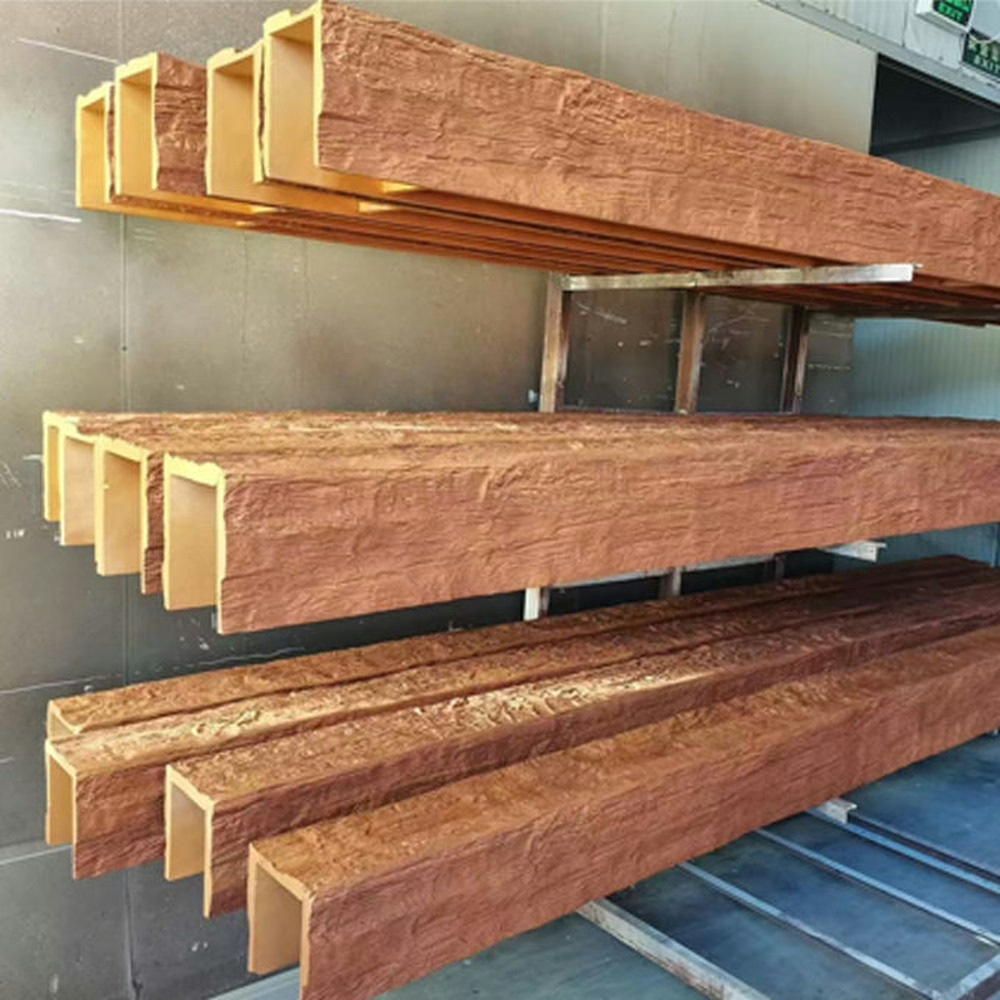
The U-channel configuration—three-sided beams that open toward the ceiling surface rather than enclosing a structural member completely—offers practical advantages that explain its popularity. The open back simplifies mounting, reduces weight, and allows installation over existing ceilings without the extensive preparation that fully enclosing beams might require. These practical benefits come without sacrificing the authentic timber appearance that makes decorative beams attractive in the first place.
Understanding the U-Channel Profile
The U-channel beam takes its name from the cross-sectional shape, which resembles an inverted letter U. The two vertical flanges extend down from the horizontal bottom member, creating the three-dimensional appearance of a structural beam when viewed from below or from the sides. The open back—the fourth side that a fully enclosing beam would include—faces upward toward the existing ceiling structure.
This profile works effectively when beams mount directly to flat ceiling surfaces, as the open back need not be concealed because it faces upward. The mounting surface becomes essentially invisible from normal viewing angles, eliminating the need for the complex trim work that fully enclosing beams require when installed over flat ceilings. This simplicity translates to faster installation and lower cost without compromising the visual effect the beams provide.
The proportions of medium profile U-channel beams typically fall between the more substantial deep beams used for dramatic ceiling treatments and the shallow slim-line beams employed for subtle architectural accents. A six to eight inch depth provides visual weight that reads as genuine timber without dominating the spaces where they are installed. This middle-ground scaling makes medium profiles the most versatile option across the widest range of applications.
Ideal Applications for Medium Profile U-Channels
Residential living rooms benefit significantly from medium profile U-channel beams because the scale relates appropriately to typical room dimensions. Beams too deep overwhelm modest living rooms, while shallow beams disappear in spaces with standard or higher ceilings. The medium profile fills the visual space that ceiling planes create without competing with furniture and other design elements that living rooms must accommodate.
Home offices and professional spaces often employ medium profile U-channel beams to add architectural interest without the heaviness that larger profiles would introduce. The professional atmosphere these spaces require suits the clean lines that medium U-channels provide, creating visual structure that organizes the ceiling plane while maintaining the refined character appropriate for work environments.
Restaurant and hospitality ceilings frequently feature medium profile U-channel beams because the installation scale matches the proportional requirements of commercial spaces. Dining rooms, bars, and reception areas all accommodate these beams effectively, with the U-channel profile providing the architectural definition that hospitality design requires while remaining practical for the commercial installation conditions these projects present.

Mounting Systems and Installation Efficiency
The U-channel profile's open-back design simplifies mounting compared to fully enclosing beam configurations. Mounting rails or cleats attach directly to the ceiling structure, and the beam's open cavity slides over these supports for secure attachment. This slide-over approach allows single-person installation for beams that might require two or more workers if the profile were more complex.
The mounting rail system typically spans the full length of each beam run, with the beam then secured at intervals along this rail. This approach distributes load effectively across the ceiling structure, preventing the stress concentrations that point-mounted beams might experience. The rail also provides alignment reference during installation, helping ensure that parallel beam runs remain consistently spaced throughout their length.
Corner and intersection configurations require additional planning in U-channel installations, though the profile's simplicity actually facilitates these more complex arrangements. Beam ends can be cut to accommodate various angles, with end caps or trim pieces concealing the cut surfaces where visible. The three-sided profile means fewer surfaces to coordinate at intersections compared to four-sided configurations.
Finish Options and Coordination
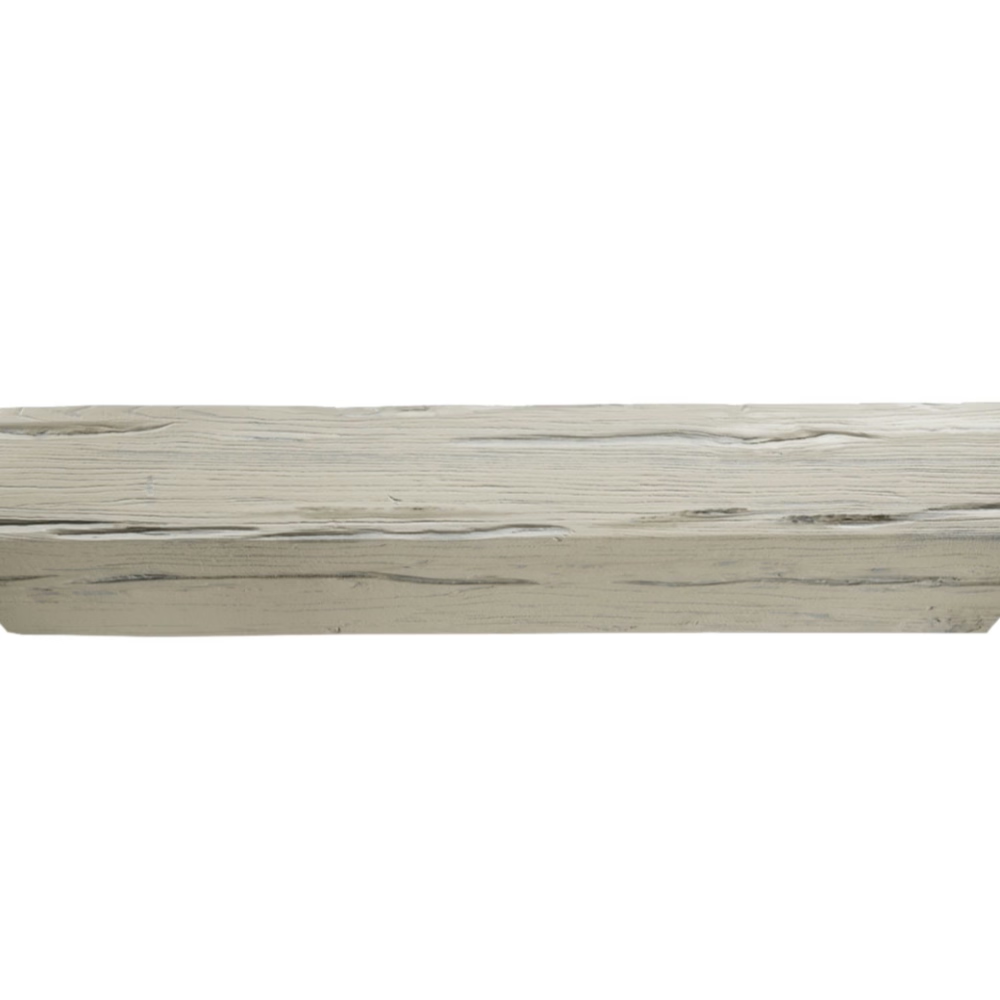
Medium profile U-channel beams accept the full range of finish options available for polyurethane faux beams, from natural wood tones to painted surfaces to weathered effects. The profile's clean lines particularly suit contemporary finishes—matte stains, solid colors, or subtle weathering that enhances rather than complicates the streamlined silhouette. More elaborate finishes work equally well, though the medium profile's balanced proportions may not showcase extremely detailed texturing as effectively as deeper profiles.
Color selection for U-channel beams should consider the viewing angles that will occur in each specific installation. The beam's bottom face receives direct light and creates the primary visual impression, while the side flanges catch indirect light and provide secondary visual reference. Finish color should remain consistent across all visible surfaces to maintain the solid-wood illusion that the profile seeks to create.
The relationship between beam finish and surrounding ceiling surface significantly affects the installation's overall quality. Contrasting colors—dark beams on light ceilings, for example—create bold definition that reads clearly from any distance. Harmonious colors—similar tones between beam and ceiling—produce more subtle effects where beams read as ceiling texture variation rather than distinct architectural elements. The choice depends on the design intent for each specific project.
Spacing and Pattern Considerations
The spacing between parallel U-channel beams determines the visual texture density of the finished ceiling. Uniform spacing creates regular rhythm that feels orderly and intentional, while varied spacing can create visual hierarchy or accent areas that require more architectural presence. The medium profile's balanced proportions accommodate both approaches without appearing awkward under either.
Grid patterns with perpendicular beam runs create the coffered ceiling effect common in traditional architecture. U-channel beams work well in these configurations because the profile's clean lines maintain clarity even at complex intersections. The medium profile provides sufficient depth for meaningful intersection detailing without the bulk that might overwhelm the grid pattern.
Single-direction installations—beams running parallel in one orientation only—work well in elongated spaces like hallways, corridors, and some open-plan areas. The directional quality that single-orientation beams create emphasizes the length of the space, potentially making rooms appear larger than they actually are. This elongation effect can be desirable or problematic depending on the specific space proportions and the design intent.
Long-Term Performance and Value
Medium profile U-channel beams share the durability advantages of all polyurethane products: resistance to moisture, insects, and decay that affects wood alternatives. The simplified mounting system also proves durable because the slide-over attachment method distributes loads effectively without the stress concentrations that can develop in other attachment approaches.
The practical benefits of U-channel installation—faster completion, simpler maintenance, easier access for fixture mounting or ceiling repair—translate to real cost savings over the beam installation's lifetime. These operational advantages complement the initial cost benefits that polyurethane's manufacturing efficiency provides, making medium profile U-channel beams an economically sound choice across a wide range of project types.
The medium profile's versatility means that beams selected for current projects will remain appropriate if the space's function changes. Beams that work in a startup office will adapt seamlessly if that space becomes a restaurant, retail store, or residential unit. This flexibility represents genuine long-term value that more specialized profile selections cannot match.
Technical References
ASTM standards cited in every specification
Test Data
Lab results from internal testing program
Updated 2026
Reviewed against current product specs


