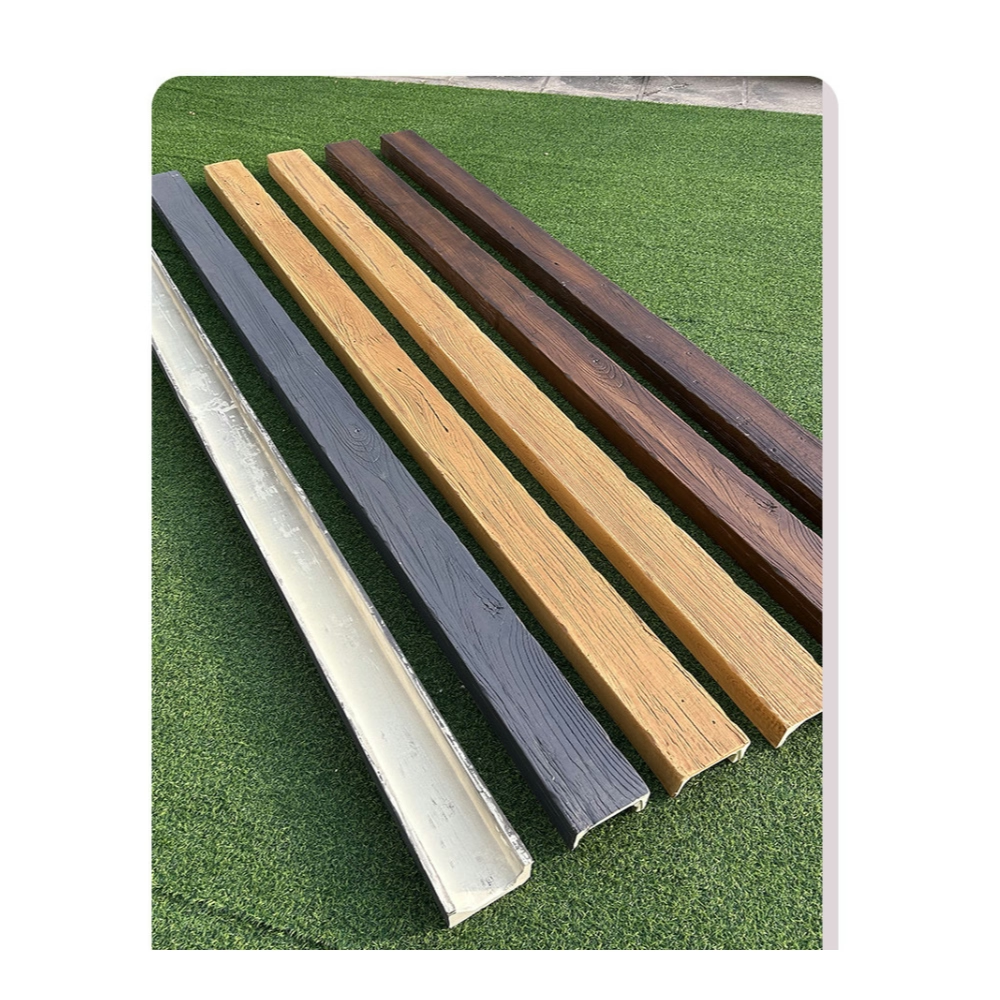
Specifying decorative building materials for significant installations involves risk that sampling helps mitigate. Computer monitor displays, catalog photographs, and showroom displays all provide useful previews, but none captures the experience of handling actual materials in your specific lighting conditions. Sample beams ordered before project commitment eliminate unpleasant surprises after installation completion when corrective options become limited and expensive.
The cost of sample beams represents insurance against specification errors that could cost orders of magnitude more to remedy. Professional designers routinely specify material samples as part of their standard specification processes, building this evaluation step into project timelines and budgets. Homeowners undertaking their own projects should adopt similar practices, treating sample evaluation as essential rather than optional.
What Sample Beams Reveal That Photographs Cannot
Scale relationships between beams and surrounding surfaces dramatically influence perceived visual impact, and photographs rarely convey these relationships accurately. A beam that appears substantial in a catalog image might seem overwhelming or insignificant when installed in your actual room with its specific ceiling height and wall spacing. Physical samples placed in position provide accurate preview of these crucial relationships.
Lighting conditions in your space interact with beam finishes in ways that vary dramatically based on light source type, direction, and intensity. Natural daylight, incandescent, fluorescent, and LED fixtures each render wood tones differently, potentially making a finish that appears warm in showroom lighting seem cool and artificial under your actual ceiling fixtures. Sample beams under your actual lighting conditions reveal these interactions before commitment.
Surface texture perception varies substantially between photographic representation and direct tactile experience. The realistic wood grain textures that polyurethane beams reproduce create visual depth that photographs flatten into two-dimensional patterns. Running your hand across an actual sample reveals texture qualities that contribute significantly to the authentic appearance that distinguishes quality reproductions from flat painted alternatives.

Practical Evaluation Criteria for Sample Beams
Weight evaluation tells you immediately about the material's density and helps you understand the handling characteristics you will experience during installation. Samples that feel too light might indicate lower density that could affect durability, while samples that feel appropriately substantial convey quality manufacturing. Compare samples from multiple sources to develop weight standards for acceptable quality.
Surface finish quality becomes obvious when examining samples under good lighting. Look for consistent color distribution without pooling in recesses, sharp detail definition at edges and corners, and uniform sheen across the entire surface. Run your fingers across textured areas to verify that patterns feel natural rather than plasticky or artificial.
Fastener testing on sample pieces reveals how readily the material accepts hardware without cracking or crumbling. Attempt driving screws at various angles to assess holding power and material resistance. This testing also shows whether adhesive bonding works reliably with the specific products you plan to use. Discovering incompatibility issues during sample testing costs far less than discovering them during actual installation.

Coordinating Samples With Overall Design Scheme
Collect samples of all materials appearing in the same visual field before finalizing specifications. Beam finishes should coordinate with flooring, trim, furniture, and wall colors that share the space. Holding multiple samples together under your actual lighting conditions reveals whether the combination creates the harmonious relationship your design intends.
Finish samples should be large enough to evaluate across the typical viewing distances in your installation. A beam end cap sample too small to see from normal viewing distance doesn't help evaluate how the finish will appear in practice. Request appropriately sized samples that match typical installation viewing distances for your specific project.
Temperature and humidity response testing helps predict long-term performance in challenging environments. Place sample beams in locations experiencing your actual environmental conditions for several days before evaluation. This conditioning reveals whether the material will perform acceptably in spaces like bathrooms, kitchens, or covered porches where humidity varies substantially.

Working With Suppliers for Sample Programs
Reputable suppliers offer sample programs that provide physical material evaluation before purchase commitment. These programs range from free small samples through nominal-cost full sections that apply toward subsequent purchases. Understanding supplier sample policies helps you plan efficient evaluation processes that gather needed information without excessive cost.
Sample lead times should factor into project scheduling to avoid delays caused by waiting for materials to arrive. International suppliers particularly may require several weeks for sample delivery, which might conflict with tight project timelines. Building sample evaluation into project schedules from the beginning prevents these scheduling conflicts.
Sample return policies vary substantially between suppliers, with some crediting sample costs against subsequent purchases and others treating samples as final sales. Understanding these policies before ordering helps you plan sample budgets and decide which samples warrant ordering from which sources.
Documentation and Specification Record Keeping
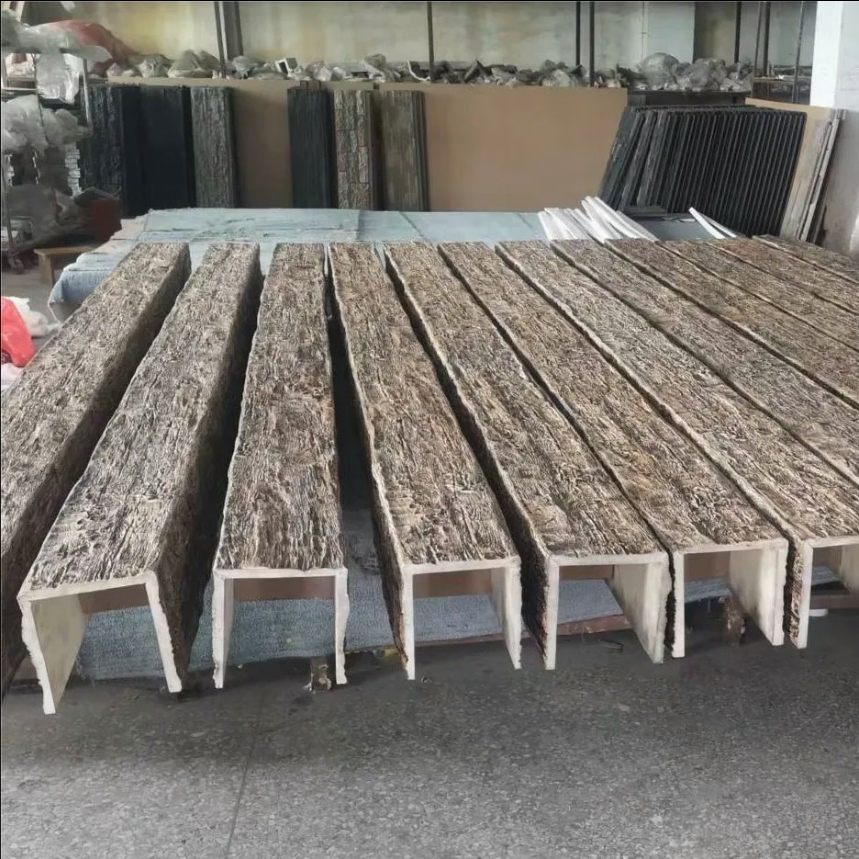
Photograph samples in your actual installation location under your actual lighting conditions for reference during purchasing and installation. These photographs serve as color and texture references when ordering full materials, ensuring that the beams you receive match the samples you evaluated.
Record supplier information, product codes, and batch identifiers from sample materials to facilitate exact reordering if additional materials prove necessary. Beam finishes can vary between production batches, making exact specification records essential for matching new purchases to previously installed materials. These records prevent visible mismatches that would occur from ordering by product name alone.
Retain samples through installation completion in case questions arise about material quality or specification accuracy. Physical samples serve as reference standards for evaluating delivered materials against ordered specifications. Having samples available resolves disputes quickly by providing objective comparison references.
Technical References
ASTM standards cited in every specification
Test Data
Lab results from internal testing program
Updated 2026
Reviewed against current product specs