
The all-white ceiling has long served as the default treatment in modern interior design, valued for its ability to reflect light, visually expand spaces, and provide a neutral backdrop against which furnishings and architectural details can take center stage. Yet this ubiquitous approach carries risks that experienced designers understand intuitively: entirely white ceilings can feel flat, institutional, and emotionally cold, lacking the warmth and character that transform houses into homes. The solution need not involve dramatic interventions or departure from contemporary aesthetics. Subtle faux wood beams introduced to white ceiling surfaces add exactly the right degree of warmth and textural interest to create spaces that feel both modern and genuinely inviting.
The challenge of adding character to white ceilings without disrupting their fundamental qualities requires careful restraint in both selection and placement. Too heavy a beam, too dark a finish, or too elaborate a pattern overwhelms the clean aesthetic that makes white ceilings attractive in the first place. The most successful applications embrace subtlety, selecting beams in pale wood tones that read as gentle warmth rather than bold statement. This restrained approach preserves the light-enhancing and space-expanding qualities of white ceilings while adding the organic character that makes interiors feel complete and considered.
The construction of modern buildings often precludes the installation of genuine timber beams on ceiling surfaces. Standard joist spacing, electrical routing, and HVAC ductwork create practical constraints that genuine heavy timber simply cannot navigate. Faux beams designed for easy installation address these challenges directly, allowing designers to achieve the aesthetic benefits of exposed beam ceilings within the realities of contemporary construction. The lightweight nature of polyurethane also means that beams can span open spaces without intermediate support, something that would require substantial structural engineering with real timber.
The Psychology of White and Wood Together
The combination of white and natural wood tones resonates deeply with human preferences shaped by evolutionary history and cultural conditioning. White spaces feel clean, open, and safe, qualities that our ancestors would have valued in shelter and that contemporary occupants still instinctively appreciate. Wood, as the traditional material of shelter construction for millennia, connects to deep memories of safety and comfort that transcend specific cultural boundaries. Combining these elements creates environments that feel simultaneously modern and deeply reassuring, scientifically validated as pleasant to inhabit for extended periods.
The brightness of white ceilings contributes to positive psychological states by ensuring adequate light for tasks, social interaction, and daily activities. Under-lit spaces create strain, fatigue, and discomfort that accumulate throughout the day, affecting mood and productivity in measurable ways. White ceilings maximize the effectiveness of both natural and artificial light sources, ensuring that spaces remain functional throughout the day regardless of changing light conditions outside. This practical contribution to occupant well-being makes white ceilings valuable beyond their aesthetic qualities.
The warmth introduced by wood-textured beams provides a counterbalance that prevents white spaces from feeling sterile or clinical. Without this warmth, white interiors can create a sense of distance or detachment that makes spaces feel inhospitable despite their visual cleanliness. The organic quality of wood grain texture adds visual interest that engages the eye without demanding attention, creating environments that feel alive and responsive to human presence. This balance between white brightness and wood warmth defines successful minimalist interiors that achieve both aesthetic appeal and psychological comfort.

Proportion and Scale for Successful Integration
Achieving visual harmony between white ceilings and wood beams requires careful attention to the proportional relationships that govern architectural composition. Beams that are too small relative to the ceiling dimensions disappear into the overall surface, failing to contribute meaningful visual interest. Conversely, beams that overwhelm the ceiling plane disrupt the balanced relationship that makes the white-and-wood combination effective. Finding the appropriate scale for specific ceiling dimensions requires understanding the principles that govern these proportional relationships.
Ceiling height provides the primary reference for determining appropriate beam dimensions. In rooms with standard eight-foot ceilings, beams should remain modest in depth to avoid making the space feel compressed. Three to five inches of beam depth typically provides adequate visual presence without aggressive intrusion into the limited vertical space. Higher ceilings accommodate deeper beams, with vaulted and cathedral ceilings able to support substantial elements that would overwhelm lower spaces. The width of beams should relate to their depth, with proportions that feel structurally credible rather than arbitrarily scaled.
Spacing between multiple beams deserves similar proportional consideration. The distance between parallel beams should relate meaningfully to the beam dimensions themselves, creating a rhythmic pattern that feels intentional and resolved. Equal spacing creates formal, ordered compositions appropriate for more contemporary spaces, while varied spacing can create more dynamic, informal arrangements. Whatever spacing is chosen, consistency throughout a single installation ensures that the ceiling reads as a coherent design rather than an arbitrary collection of elements.
Selecting Appropriate Wood Tones for White Backgrounds
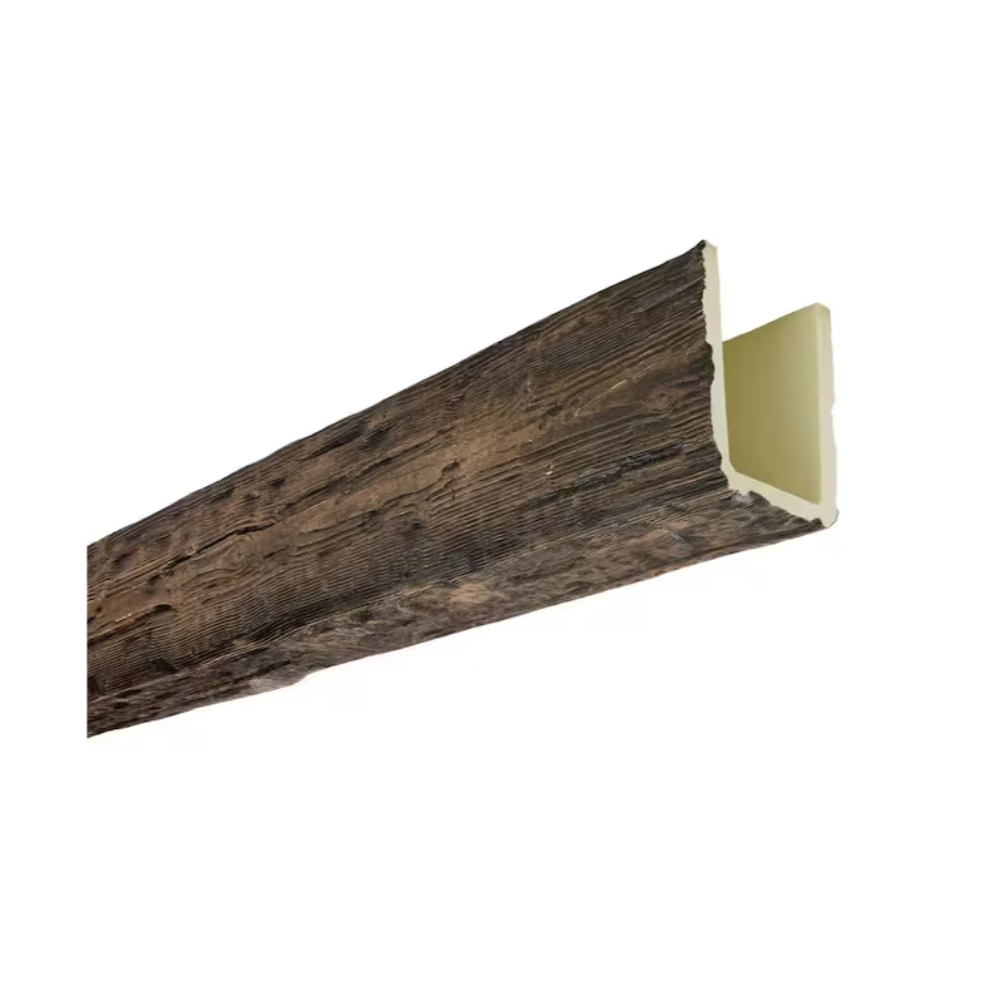
The range of wood tones available in faux beams spans from nearly white ash to deep walnut, and selecting the appropriate tone for white ceiling applications requires understanding how different colors interact with white backgrounds. Light wood tones in the oak, maple, and birch family create gentle warmth that complements white without significant tonal contrast. These pale options are ideal for achieving the subtle enhancement that characterizes successful minimalist applications, adding character while maintaining the overall brightness that white ceilings provide.
Medium wood tones introduce more pronounced warmth that can create cozy atmospheres in spaces where this effect is desired. Honey oak, medium cherry, and similar mid-range tones work well in living rooms, dining areas, and other spaces where warmth contributes to comfort and welcome. Against pure white ceilings, these tones create stronger visual definition that draws attention to the beams as intentional design elements rather than background treatments. This stronger presence suits rooms with generous dimensions where subtle treatments might disappear into the overall volume.
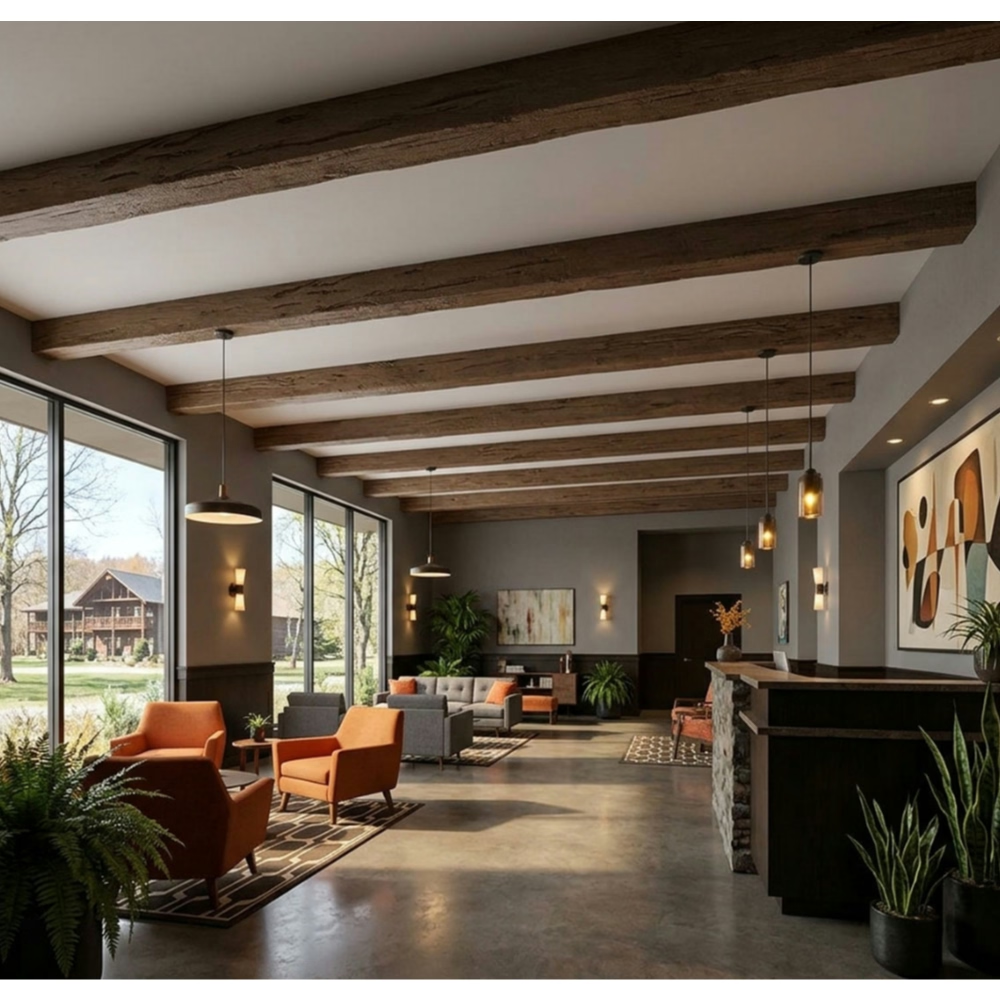
Dark wood tones on white ceilings create dramatic contrast that works best in spaces designed for bold visual impact. Deep walnut, mahogany, and ebony finishes make powerful statements that anchor rooms visually, providing strong horizontal lines that define space even in the absence of walls or partitions. These dramatic applications work particularly well in lofts, great rooms, and other expansive spaces where the visual weight of dark beams can balance the overall composition without overwhelming the space. More intimate rooms typically benefit from the subtler approach that lighter wood tones provide.
Installation Considerations for White Ceilings
The visual impact of beams on white ceilings makes installation quality particularly important for these applications. Even minor gaps, visible fasteners, or imperfect alignment become apparent against the clean white background, potentially compromising the refined aesthetic that makes these installations successful. Taking additional care during installation ensures that beams appear as professional architectural elements rather than amateur additions.
Alignment with architectural features throughout the room helps beams integrate naturally into the overall design. Beams that run parallel to visible structural elements, fireplace mantels, or major furniture pieces create visual continuity that makes the ceiling treatment feel intentional. Cross-alignment with window locations ensures that beam shadows interact naturally with other light-related elements in the space. These alignments may seem minor but contribute significantly to the overall coherence of the completed installation.
Sealing the connection between beams and ceiling surfaces prevents the dust accumulation and visual discontinuity that can detract from finished appearance. Quality caulking materials designed for use with polyurethane provide clean, paintable transitions that become invisible once finished. This attention to detail at the edges of beam installations ensures that beams appear to emerge naturally from the ceiling plane rather than sitting awkwardly atop it. The small additional effort required for proper sealing delivers substantial visual benefits in the completed installation.
Maintaining the White Ceiling Aesthetic
Once installed, maintaining the clean appearance of white ceilings with beams requires ongoing attention that respects the aesthetic goals of the original design. Dust accumulation affects both white surfaces and wood-textured beams, though the impact differs significantly between the two materials. White ceilings show dust and marks more readily than wood-toned surfaces, making regular cleaning essential for maintaining the bright, fresh appearance that defines these spaces. The contrast between clean beams and dusty ceiling surfaces can create visual discord that undermines the overall effect.
Wood-textured beams require less frequent cleaning than white surfaces due to the forgiving nature of wood tones for dust accumulation. The texture itself helps disguise minor dust buildup, while the natural warmth of wood tones masks the gray appearance that dust creates on white surfaces. This practical advantage means that beams typically need cleaning less often than surrounding ceiling areas, though the different maintenance cycles should be considered when establishing cleaning routines for the space.
Periodic inspection of beam installations ensures that any developing issues are addressed before they become visually apparent. Adhesive failures, moisture intrusion, or physical damage can affect beam appearance over time, and early intervention prevents minor issues from developing into problems that compromise the overall aesthetic. Annual inspection as part of a broader home maintenance routine helps identify and address concerns before they become obvious to casual observers, preserving the refined appearance that makes these installations successful.
Technical References
ASTM standards cited in every specification
Test Data
Lab results from internal testing program
Updated 2026
Reviewed against current product specs


