
Eclectic interiors celebrating multiple design influences have emerged as a prominent trend, reflecting homeowners' desire to express individual personalities rather than adhering strictly to singular aesthetic movements. Yet blending these varied influences presents genuine challenges. Without thoughtful coordination, mixed-style spaces risk appearing chaotic or randomly assembled. This is where rustic polyurethane faux beams demonstrate remarkable versatility, serving as unifying elements that allow diverse furnishings and finishes to coexist harmoniously.
The secret lies in wood's remarkable ability to bridge design vocabularies. Wood connects to both natural and built environments, feeling equally at home beside polished concrete, exposed brick, blackened steel, and crisp white plaster. When selecting rustic faux beams, designers leverage this material flexibility to create visual bridges between disparate elements that might otherwise compete for attention.
Understanding Visual Hierarchy in Mixed-Style Spaces
Successful mixed-style interiors establish clear visual hierarchies, ensuring that no single element overwhelms the composition. Faux beams contribute to this hierarchy by providing large-scale architectural punctuation that organizes the space below. Whether spanning living room ceilings or defining kitchen boundaries, these beams create reading order that guides the eye through the composition.
Rustic beams specifically bring textural complexity that enriches contemporary or industrial elements. A room featuring sleek furniture, metal lighting fixtures, and polished floors might feel cold or impersonal without something organic to soften the edges. The rough-hewn appearance of rustic faux beams introduces this necessary warmth, tempering minimalism with approachable character. Guests instinctively feel more comfortable in spaces that offer these visual breathing room.
Scale becomes crucial when integrating beams with existing architectural features. Beams sized appropriately to the space provide presence without dominance. They should read clearly as intentional design choices rather than afterthoughts or excessive decoration. Most designers achieve this balance by selecting beam dimensions that echo other substantial elements in the room—a large kitchen island, a prominent fireplace surround, or substantial dining table.
Rustic Character Meets Contemporary Craftsmanship
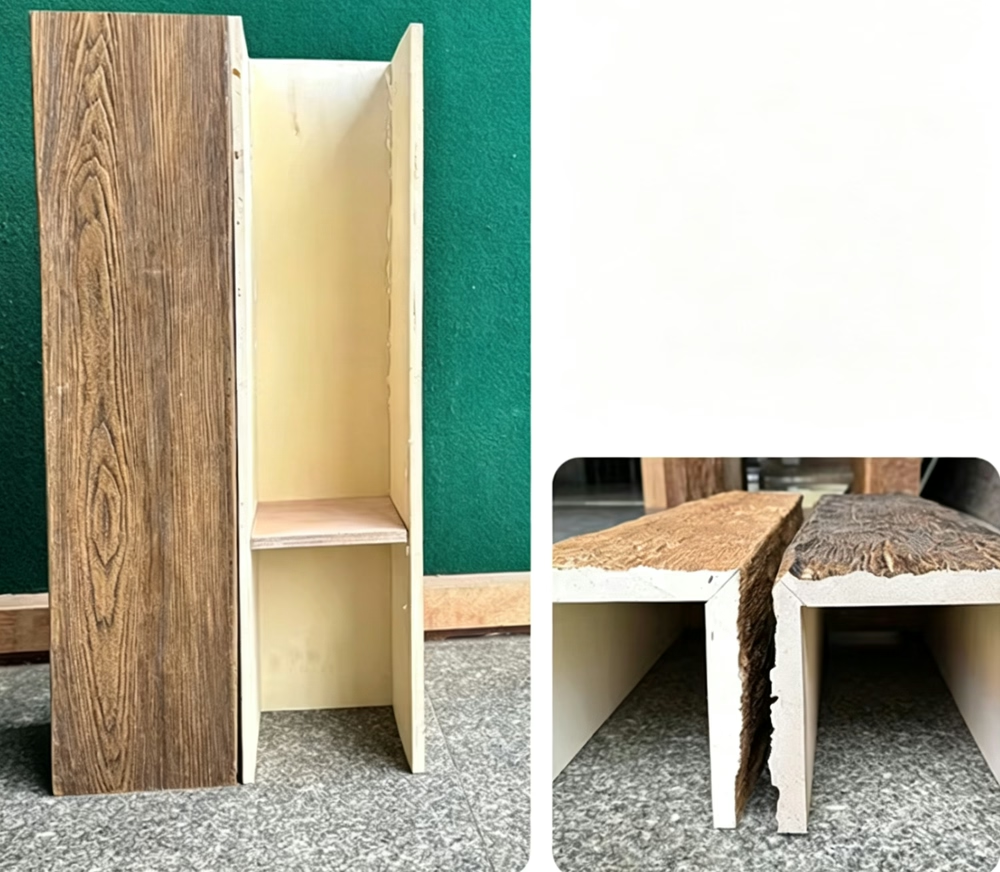
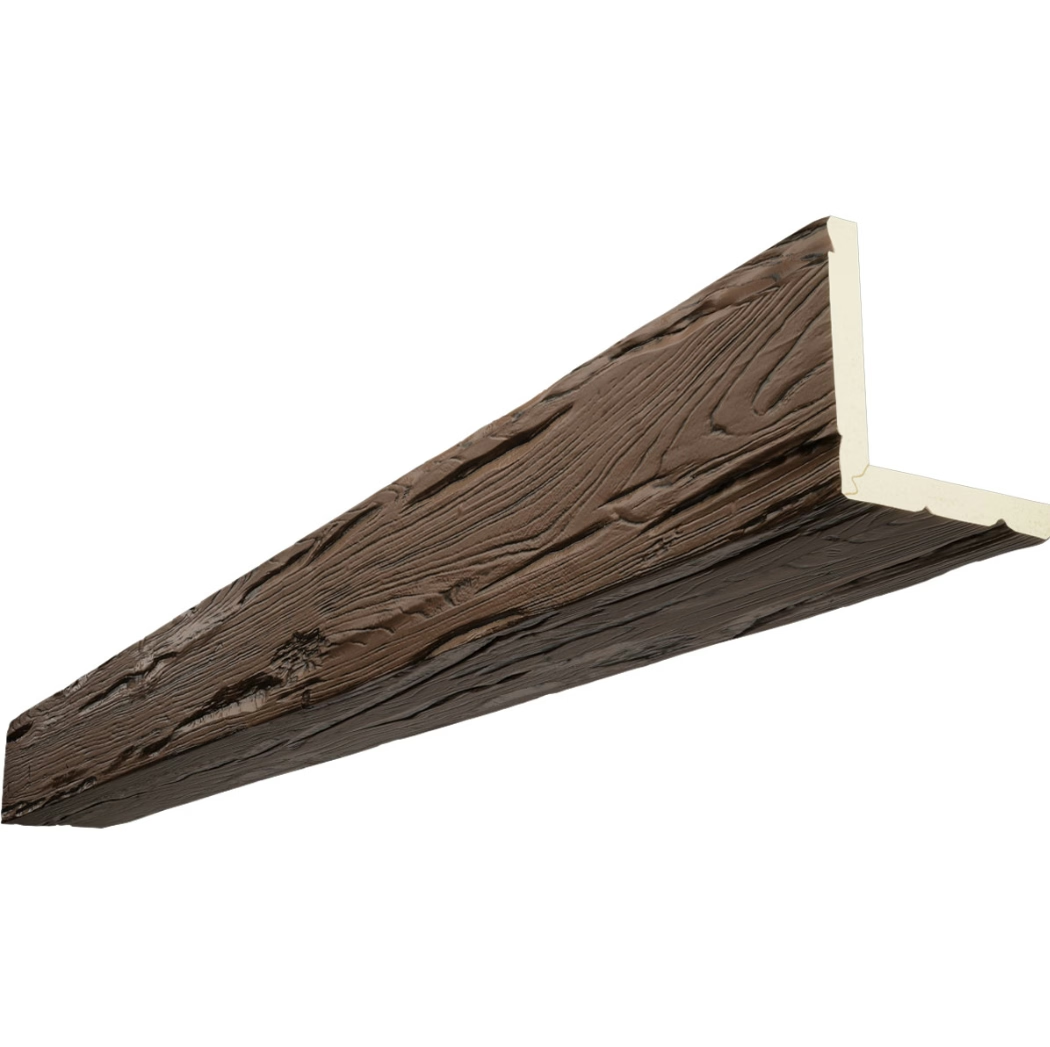
Modern manufacturing techniques enable polyurethane beams to capture the authentic character of reclaimed timber with remarkable precision. Deep grain patterns, natural color variations, and subtle surface imperfections that define rustic aesthetics translate faithfully into the manufactured product. The result delivers genuine rustic charm without the complications inherent to authentic reclaimed materials.
Weight represents the most dramatic practical difference. Genuine reclaimed beams often require structural assessment before installation, as their substantial mass places significant loads on ceiling structures. Polyurethane alternatives typically weigh ninety percent less, eliminating the need for engineering consultation or structural reinforcement. This weight reduction transforms what might be an architectural project into a straightforward decorative installation.
The installation process itself becomes correspondingly simplified. Where authentic timber might require scaffolding, specialized lifting equipment, and multiple installers, faux beams often mount with basic hand tools and minimal personnel. This accessibility opens rustic ceiling treatments to a broader range of projects and budgets. Homeowners comfortable with standard home improvement skills can potentially complete installations themselves, further reducing project costs.
Durability characteristics also favor the polyurethane alternative. Reclaimed wood may harbor insects, present unknown moisture history, and contain hidden defects like internal rot or compromised structural integrity. Factory-manufactured faux beams arrive in pristine condition, free from these unknowns. They will not develop splits or cracks over time, maintaining their appearance through the life of the installation.

Coordinating Beams with Multiple Design Influences
Mixed-style interiors typically combine two to four distinct design vocabularies. Common combinations include industrial elements with farmhouse warmth, mid-century modern pieces alongside rustic textures, or contemporary architecture softened by traditional materials. Understanding how beams interact with each design influence ensures successful integration.
Industrial design emphasizes raw materials, honest construction, and functional aesthetics. Beams in industrial-mixed spaces might feature darker stains or more pronounced texture that complements exposed ductwork, steel staircase railings, or concrete floors. The beams should feel like they belong in this vocabulary rather than appearing as foreign farmhouse intrusion. Selecting beam profiles with substantial depth and bold shadow lines supports industrial sensibilities.
Farmhouse influences bring comfort, practicality, and heritage references to mixed interiors. Beams should feel welcoming rather than imposing, with warmer colorations and softer textures. Whitewashed or limed finishes often work better than dark stains in these contexts. The goal involves creating the impression that beams have served the space for generations, accumulating character through honest use.
Contemporary elements introduce clean lines, minimal ornamentation, and often bold geometric forms. Beams in these mixed applications might adopt more refined profiles or sleeker proportions than pure rustic applications would suggest. The contemporary setting benefits from beam texture providing warmth, while the beam design acknowledges modern preferences for restraint and intentionality.
Practical Guidance for Homeowners
Before purchasing faux beams for mixed-style applications, consider the dominant influences in your space. The beam selection should complement the largest design vocabulary present while providing enough flexibility to bridge to secondary influences. If your living room combines farmhouse furniture with industrial lighting and contemporary art, the beams might lean slightly farmhouse while maintaining industrial-compatible proportions.
Sample acquisition proves essential. Request physical samples whenever possible, as photographs rarely convey texture accurately. Hold samples against your existing materials to assess color relationships and finish compatibility. What appears perfect in catalog images may disappoint when viewed alongside your specific paint colors or countertop materials.
Professional installation, while not always mandatory, often proves worthwhile for ceiling applications. Experienced installers understand how to create clean joints where beams meet, ensure proper attachment for secure mounting, and address ceiling irregularities that might otherwise compromise the finished appearance. The investment in professional installation typically returns dividends in longevity and visual quality.
Technical References
ASTM standards cited in every specification
Test Data
Lab results from internal testing program
Updated 2026
Reviewed against current product specs


