
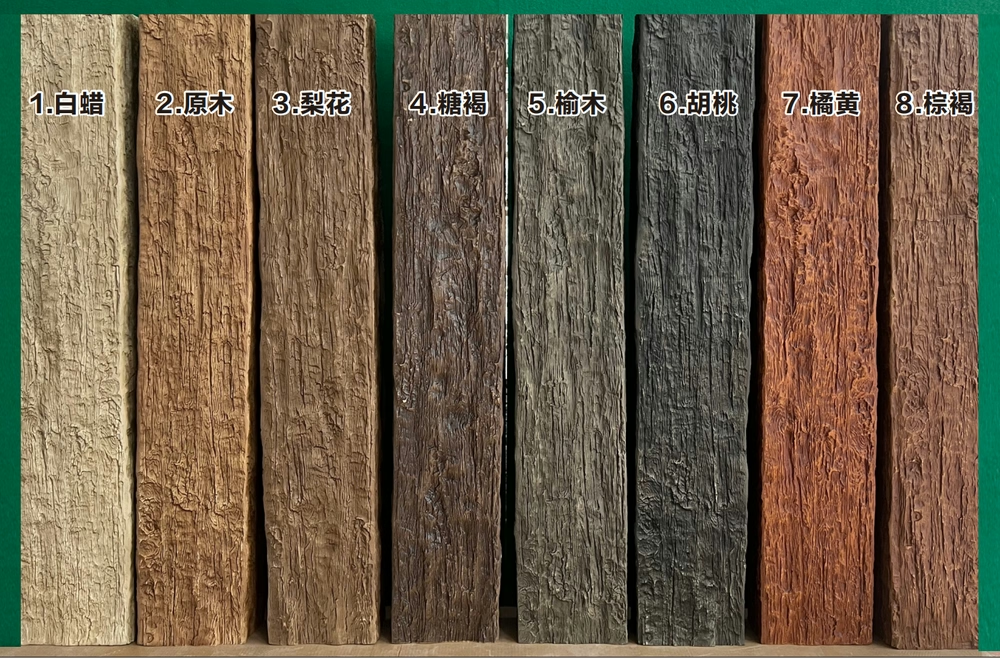
Warm wood tones dominate traditional faux beam offerings, reflecting the natural colorations found in oak, walnut, and pine. Yet contemporary interiors increasingly favor cooler palettes, incorporating grey, charcoal, and blue-grey tones that create sophisticated, serene atmospheres. This shift in design preferences has driven manufacturers to develop faux wood beams in these cooler ranges, opening new possibilities for interior designers and homeowners seeking architectural interest without warm coloration.
The challenge with cool-toned spaces involves introducing visual texture without disrupting the carefully calibrated palette. Traditional honey oak or rich mahogany beams might feel jarring beside steel fixtures, grey upholstery, and cool white walls. Cool-toned faux beams resolve this tension elegantly, providing the warmth of wood texture while maintaining chromatic harmony with surrounding surfaces.
Understanding Cool Wood Tone Finishes
Cool wood tones encompass a range of grey-adjacent finishes, from barely-there grey-browns to dramatic charcoal with blue undertones. Understanding these variations helps specify appropriate products for specific interior contexts.
True grey beams contain minimal warm undertones, presenting as grey throughout with subtle grain variation providing visual interest. These products work best in interiors already committed to grey palettes, where any warm wood would disrupt the established color story. True grey beams can feel stark in more traditional settings but create beautiful contrast against warm white walls in transitional spaces.
Ash and driftwood finishes introduce subtle brown undertones that prevent the grey from reading as cold or institutional. These finishes capture the look of weathered wood that has silvered naturally, combining grey surface coloration with underlying warmth that keeps the space inviting. Driftwood finishes prove particularly popular for coastal and contemporary applications where they complement white surfaces beautifully.
Charcoal and ebony finishes push cool-toned beams toward dramatic maximum contrast. These deep, dark options work well as statement elements in otherwise light and airy spaces. A single charcoal beam across a white ceiling creates striking focal point that draws attention without introducing competing warm colors.
Minimalist Applications for Cool-Toned Beams
Minimalist interiors provide ideal contexts for cool-toned beam installations. The restrained aesthetic welcomes architectural elements that contribute without cluttering, and the typically neutral palettes accommodate beam colors that might overwhelm busier spaces.
The monochromatic minimalism popular in Scandinavian-influenced design pairs exceptionally well with ash and grey-toned beams. These spaces favor whites, light greys, and natural materials in restrained quantities. Beams echo this material sensibility while maintaining the cool temperature that defines the aesthetic. The wood grain provides necessary texture without introducing the warmth that might feel inconsistent with the overall composition.
Industrial minimalist spaces combine concrete, steel, and glass with minimal wood elements. Cool-toned beams bridge between these industrial materials and softer upholstered furnishings. The grey of the beams relates visually to exposed concrete or polished steel, creating material continuity that warmer wood could not achieve. This compatibility allows beams to integrate seamlessly rather than appearing as foreign elements.
Japandi interiors, blending Japanese and Scandinavian design influences, favor natural materials in calm, muted tones. Cool-toned beams align perfectly with this aesthetic, providing wood's organic character without disrupting the carefully balanced palette. Beams might echo the grey-brown of woven seagrass, the cool tone of pale oak, or the silver-grey of weathered surfaces found throughout these serene interiors.

Coordination with Cool Palette Interiors
Successfully integrating cool-toned beams requires attention to how they interact with surrounding surfaces, furnishings, and lighting conditions.
White walls in various temperatures influence beam selection significantly. Cool whites (those with subtle blue undertones) create natural harmony with grey-toned beams, while warm whites (featuring yellow or cream undertones) might create slight discord. Testing beam samples against actual wall paint reveals these interactions, allowing adjustments before committing to specific products.
Flooring presents another consideration in beam coordination. Hardwood floors in grey, whitewashed, or cool-toned finishes align well with matching beam colors. Warmer wood floors may compete with grey beams, creating visual confusion about the intended palette. When warm floors already exist, consider beams in natural finish rather than grey to create continuity.
Upholstery and textile colors influence overall palette perception. Grey sofas, cool blue accent pillows, and white area rugs all reinforce cool palettes that support grey-toned beams. Introducing warm-colored textiles—terracotta, burnt orange, or golden yellow—creates tension that may feel intentional or uncomfortable depending on execution.
Lighting temperature matters throughout the day and varies by light source. Incandescent lighting introduces warmth that diminishes cool tones, potentially making grey beams appear more brown than intended. LED and daylight-balanced lighting maintains cool tone integrity. Consider the lighting conditions in your specific space when evaluating beam colors.
Material and Performance Advantages
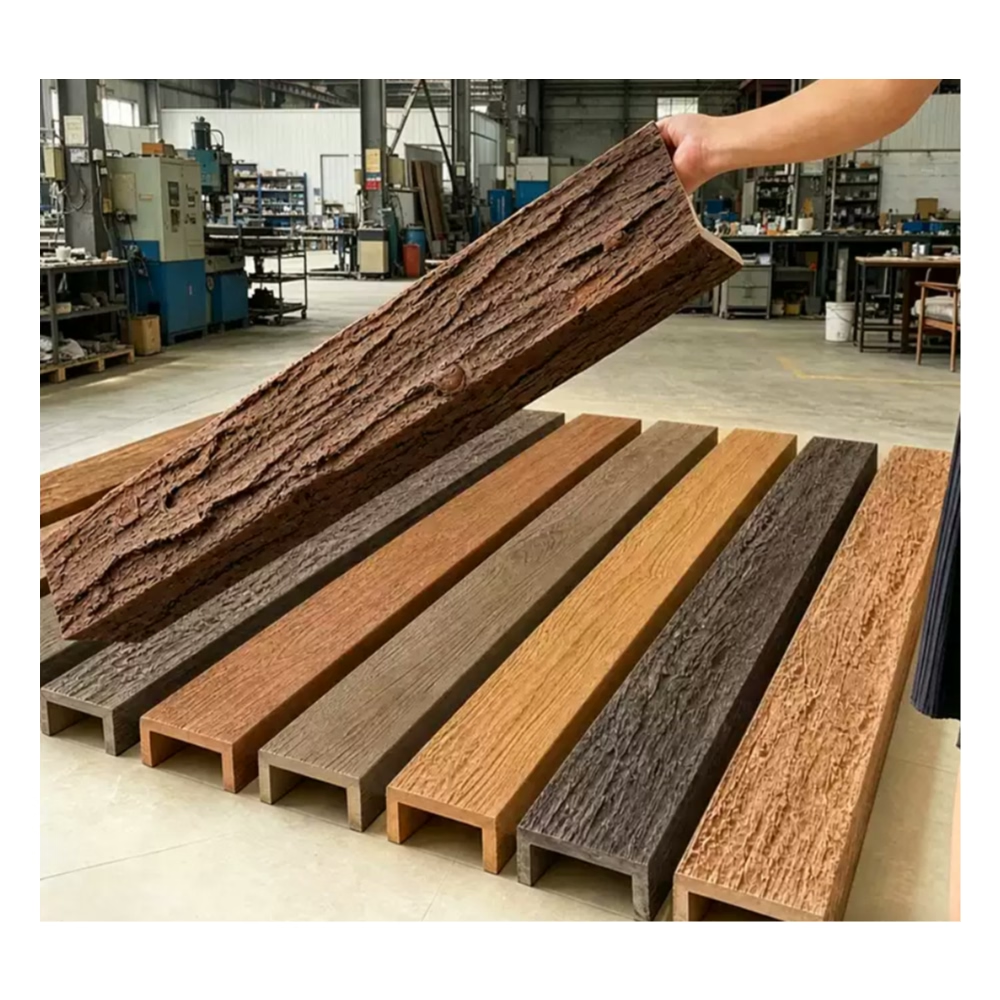
Beyond aesthetic considerations, polyurethane faux beams offer practical advantages that make them particularly suitable for cool-toned installations.
Finish consistency represents a significant benefit. Natural wood displays color variation even within single boards, with grain patterns creating tonal differences that manufacturers cannot control. Polyurethane beams receive factory-applied finishes with consistent coloration throughout. The result provides predictable appearance that simplifies specification and ensures the installed beams match design intentions precisely.
Fade resistance proves crucial for cool-toned applications. Pigments creating grey, ash, and driftwood finishes may prove more susceptible to ultraviolet degradation than traditional wood tones. Quality polyurethane products incorporate UV inhibitors that protect finish integrity, maintaining the intended cool temperature over years of exposure to natural light.
The lightweight construction accommodates various ceiling types without structural concern. Modern construction often employs engineered floor joists or open web trusses that cannot support heavy timber loads. Polyurethane beams install safely on these systems, expanding the range of applications where cool-toned ceiling treatments remain viable.
Design Strategies for Maximum Impact
Cool-toned beams can serve as subtle architectural details or bold statement elements depending on application strategy. Several approaches maximize their visual contribution.
Accent placement concentrates beams in specific zones rather than spreading throughout the space. A single exposed beam crossing the dining area ceiling creates focal point without overwhelming the composition. This approach suits smaller spaces or those already featuring substantial architectural interest elsewhere.
Systematic installation treats beams as integral ceiling components throughout the space. Parallel or grid arrangements create rhythm that unifies the entire room. This strategy works best in larger spaces where the repetition feels intentional rather than excessive.
Contrast integration uses cool-toned beams deliberately against warm backgrounds. While potentially challenging, this approach can create sophisticated tension that enriches the overall design. The key involves maintaining palette balance so neither warm nor cool elements dominate inappropriately.
Material echoing reinforces beam selection by incorporating matching cool wood tones elsewhere. A cool-toned beam might coordinate with grey-toned kitchen cabinets, an ash-finished bookshelf, or driftwood side table. These material connections create visual coherence that justifies and amplifies the beam installation.
Technical References
ASTM standards cited in every specification
Test Data
Lab results from internal testing program
Updated 2026
Reviewed against current product specs


