
The surge in popularity of grey tones within interior design reflects broader cultural shifts toward sophisticated, restrained aesthetics. Neutral palettes that once defaulted to warm beige and cream now embrace cool grey values ranging from barely-there greige to dramatic charcoal. Within this context, grey faux wood beams have emerged as essential elements for contemporary ceiling design, offering architectural interest without sacrificing the clean, uncluttered appearance that defines modern interiors.
Unlike their traditional warm-toned counterparts, grey beams occupy a unique position in design vocabulary. They bridge the gap between natural wood aesthetics and contemporary material finishes like concrete, steel, and matte black. This versatility makes them invaluable tools for designers seeking cohesive environments where organic warmth coexists with industrial edge.
The Appeal of Grey in Contemporary Interiors
Grey has transcended its reputation as merely a transitional or conservative color choice. Today's grey-driven palettes express confidence, sophistication, and timelessness. The color communicates understated elegance that resists dating trends, allowing spaces to maintain contemporary relevance for years without constant updating. Grey faux wood beams extend these qualities into three-dimensional architectural elements.
The psychological associations of grey contribute to its appeal in modern living spaces. Grey conveys stability, professionalism, and calm—qualities increasingly valued in hectic contemporary lifestyles. Spaces featuring grey elements often feel more contemplative and grounded than those dominated by warmer, more energetic color schemes. This psychological dimension explains grey's strong presence in meditation spaces, home offices, and minimalist living areas.
Versatility distinguishes grey from more assertive design choices. Grey beams complement virtually any accent color scheme, from bold primary hues to soft pastels and natural earth tones. This adaptability simplifies design decision-making while protecting investments against future style pivots. Homeowners and designers appreciate how grey provides reliable foundation upon which evolving decorative choices can build.
Understanding Grey Beam Finishes
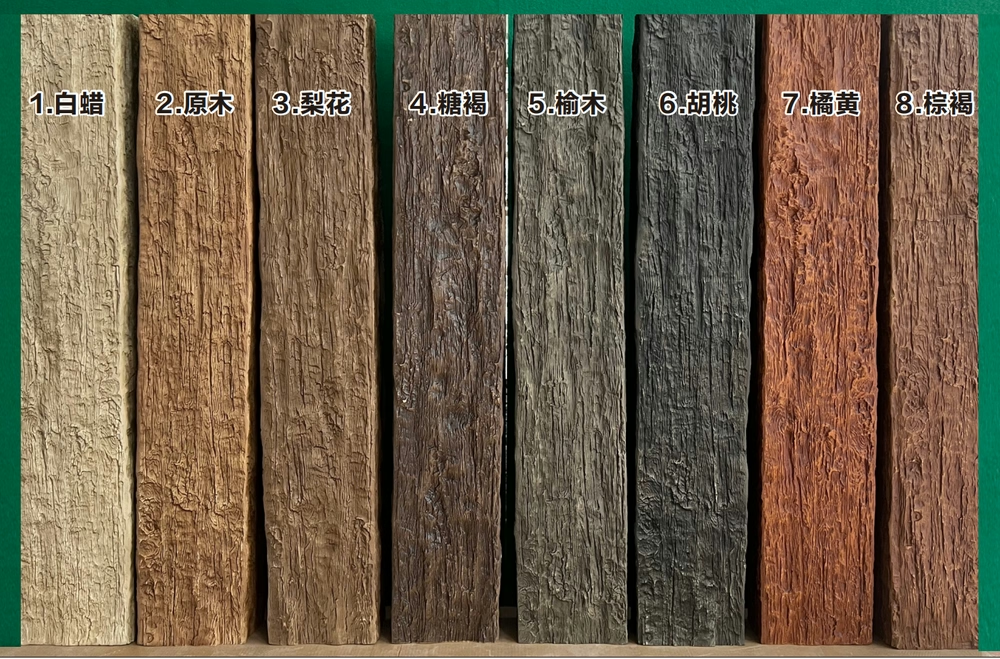
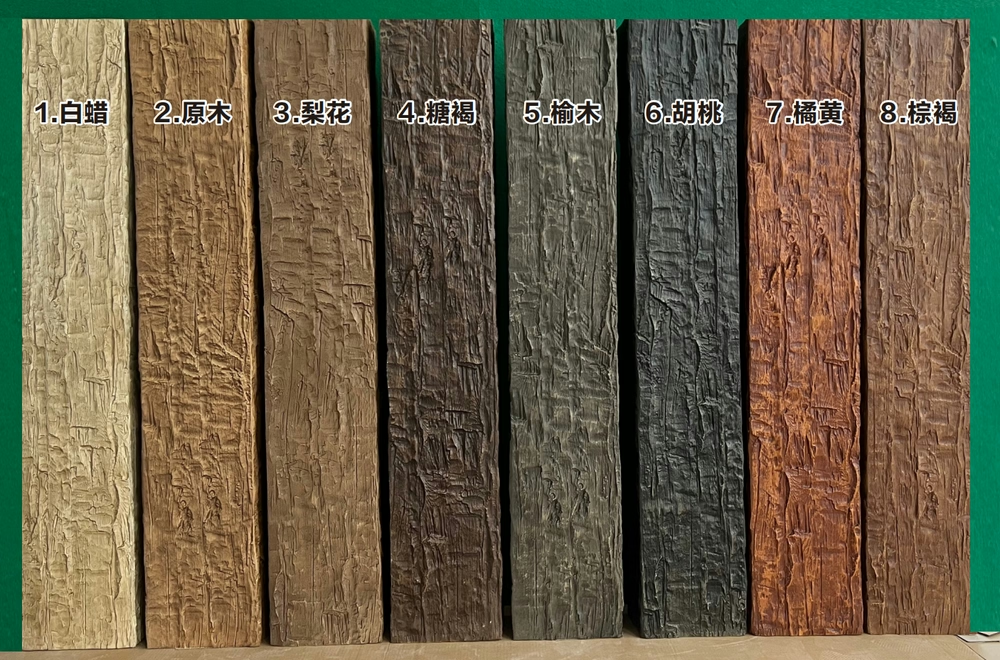
Grey faux wood beams are available in numerous finish variations, each delivering distinct visual qualities. Weathered grey finishes simulate the natural aging processes that produce authentic silvered timber, complete with subtle color variations and patina effects. These finishes introduce organic character that pure grey paints cannot achieve, adding depth through apparent history and texture.
Cool grey finishes with subtle blue undertones create contemporary aesthetics aligned with modern industrial and Scandinavian design influences. These finishes work particularly well in spaces featuring chrome, stainless steel, or glass elements where warmer wood tones might appear incongruous. The blue-grey palette establishes cohesive visual language across diverse material selections.
Warm grey finishes incorporate subtle brown or taupe undertones that maintain stronger connection to natural wood origins. These versatile options bridge traditional and contemporary aesthetics, proving equally appropriate in transitional interiors blending classical and modern elements. Warm greys prevent the potentially cold or sterile impressions that pure cool greys sometimes convey.
Selecting Appropriate Grey Tones
Room orientation significantly influences grey tone selection. North-facing spaces with limited natural light benefit from warmer grey values that prevent overly cool impressions. South-facing rooms with abundant sunshine can accommodate cooler grey tones, as natural light warms overall color perceptions throughout the day.
Existing color schemes provide guidance for grey beam selection. Identify dominant colors in flooring, furniture, and wall treatments, then select grey beam finishes that complement rather than compete with these elements. Warm-toned woods and leather furniture pair naturally with warm grey beams, while cool grey variations suit spaces featuring stone, metal, or blue-toned textiles.
Lighting temperature matters considerably when specifying grey beams. Warm incandescent lighting makes cool greys appear slightly purple, while cool fluorescent lighting causes warm greys to look muddy. Evaluate beam samples under actual installation lighting conditions whenever possible to ensure satisfactory results.

Design Applications for Grey Beam Ceilings
Open-plan living spaces benefit substantially from grey faux beam ceiling treatments. These expansive areas often struggle with visual definition and spatial interest, particularly when ceiling heights match those of surrounding zones. Grey beams provide overhead structure that helps organize space while maintaining the visual openness that open-plan living requires.
Kitchen installations create focal points that elevate these functionally focused spaces. Grey beams above kitchen islands or dining areas define activity zones within larger room configurations. The durability of polyurethane construction proves particularly valuable in kitchen environments where cooking activities, humidity variations, and cleaning routines challenge material performance.
Bedroom ceilings featuring grey beams establish serene environments conducive to rest and relaxation. The cool grey palette promotes calm mental states, while organic wood texture prevents sterile impressions that might undermine bedroom comfort. Lower-profile beam installations work well in intimate bedroom scales, providing subtle interest without overwhelming close-proximity viewing.
Complementing Various Design Styles
Industrial loft aesthetics incorporate grey beams naturally within exposed structure, ductwork, and concrete palettes. These environments already embrace utilitarian materials and honest construction expression, making grey beams ideal additions that enhance rather than compromise industrial character. Beams can echo steel column finishes or provide textural contrast against smooth concrete surfaces.
Scandinavian design principles align perfectly with grey beam applications. The Nordic emphasis on natural materials, clean lines, and functional beauty extends naturally to wood-textured ceiling elements. Grey beams complement the light woods, white walls, and cozy textiles that define Scandinavian interiors while maintaining the restrained palette these styles prefer.
Minimalist interiors benefit from grey beams that add architectural depth without visual heaviness. The cooler grey palette feels lighter than warm wood tones, preventing the potentially overwhelming presence that traditional beams sometimes create in minimal spaces. This lightness makes grey beams ideal for smaller rooms or spaces with lower ceiling heights where visual weight concerns limit material options.
Integrating Grey Beams with Other Materials
Grey beams create compelling combinations when paired with natural stone surfaces. The organic grain patterns of wood juxtapose beautifully against stone's crystalline textures, creating balanced material dialogues. Fireplace surrounds, accent walls, and bathroom surfaces in stone materials gain additional visual interest when overhead beams provide complementary textural contrast.
Metal accents in bronze, brass, or matte black hardware coordinate effectively with grey beam ceilings. These warm metallics pop against cool grey backgrounds, creating focal points and visual anchors throughout spaces. Door hardware, lighting fixtures, and furniture details benefit from this color relationship, with grey beams providing sophisticated neutral backdrops.
Glass and mirrored elements amplify grey beam installations through reflected light and visual expansion. The cool grey palette reflects naturally in glass surfaces, creating luminous effects that enhance contemporary aesthetics. Windows, glass partitions, and mirrored furniture positioned to reflect beam installations maximize visual impact while making spaces feel larger.
Texture Coordination Strategies
The texture of grey beams should relate intentionally to other surface treatments throughout rooms. Highly textured grey beams featuring pronounced grain patterns work well with smoother wall and floor treatments, creating balanced textural variety. Conversely, smoother grey beam finishes complement more textured surfaces without introducing competing visual demands.
Mixed-finish approaches incorporate multiple grey treatments within single installations. A primary grey beam finish might coordinate with secondary grey paint on walls and tertiary grey stone on floors, creating layered monochromatic schemes with rich visual depth. These sophisticated applications reward careful finish selection and demonstrate mastery of neutral palette composition.
Practical Considerations for Grey Beam Installation
Ceiling preparation requirements for grey beam installation parallel those for other beam finishes. Surfaces should be clean, dry, and structurally sound before mounting. Any existing ceiling treatments that might interfere with adhesion or mounting should be removed or properly prepared. Professional installers assess conditions and make appropriate preparations before beginning installations.
Lighting placement requires coordination with grey beam installations to ensure optimal visual effects. Cooler grey beams under warm lighting may appear slightly purple, while warmer grey options under cool lighting can look muddy. Test sample placements under actual installation lighting conditions whenever possible, adjusting beam specifications if necessary to achieve intended color relationships.
Maintenance considerations for grey beams are minimal compared to many alternative ceiling treatments. The polyurethane surface resists staining, moisture absorption, and physical damage that might affect authentic wood. Regular dusting maintains appearance between thorough cleanings, while the durable finish eliminates need for periodic refinishing or sealing.
Climate and Environmental Factors
Temperature fluctuations and humidity variations affect grey beam installations differently than authentic wood. Polyurethane does not expand, contract, or warp with environmental changes, ensuring long-term joint integrity and appearance stability. This dimensional stability proves particularly valuable in regions with extreme seasonal variations or inconsistent climate control.
UV exposure considerations influence grey beam selection for spaces with significant natural light. Direct sunlight can cause color fading in lower-quality painted finishes over extended periods. Quality manufacturers use UV-stable pigments and clear coats that resist sun damage, maintaining grey tone consistency throughout product lifespans. Specifying products with appropriate UV resistance protects investments in sun-exposed installations.
Indoor air quality compatibility ensures grey beam installations remain safe for occupant health. Quality polyurethane products emit minimal volatile organic compounds (VOCs) once fully cured, meeting standards for indoor environmental quality. Certifications from recognized testing laboratories provide assurance of product safety in residential and commercial applications.
Cost Considerations and Value Analysis
Grey faux wood beams deliver substantial cost advantages compared to authentic weathered timber or custom-finished wood alternatives. Manufacturing efficiency and material economy translate directly to purchase price savings that compound across complete installations. These advantages become more pronounced as installation scale increases, making beams particularly economical for large commercial projects.
Installation cost savings further enhance economic value propositions. The lightweight construction eliminates requirements for structural reinforcement or specialized handling equipment. Standard mounting methods and reduced labor requirements accelerate installation timelines, translating to additional savings in labor costs and construction scheduling.
Long-term value analysis favors faux beams when considering total cost of ownership. Reduced maintenance requirements, elimination of refinishing cycles, and extended service life combine to deliver favorable lifetime costs. These practical advantages complement aesthetic benefits, providing comprehensive value that justifies investment in quality faux beam products.
Future Directions in Grey Beam Design
Product development continues expanding design possibilities for grey beam applications. New finish technologies achieve increasingly realistic wood appearances while offering expanded color options beyond traditional grey ranges. Metallic grey finishes, for instance, introduce contemporary visual effects that blur distinctions between wood and manufactured materials.
Customization capabilities enable designers to specify precisely matched grey tones that coordinate perfectly with unique project requirements. Digital color matching technology reproduces any grey reference sample with remarkable accuracy, enabling bespoke finishes that were previously impossible or prohibitively expensive. This capability expands creative possibilities while maintaining practical installation advantages.
Sustainability innovations address growing environmental concerns across material categories. Bio-based polyurethane formulations, recycled content integration, and improved manufacturing efficiency reduce environmental impacts while maintaining performance standards. These advances position grey faux beams as responsible choices for environmentally conscious design projects.
The continued evolution of grey's role in interior design ensures ongoing relevance for grey beam products. As design trends cycle through various aesthetic directions, neutral grey palettes provide reliable foundations that accommodate change without requiring replacement. Grey faux wood beams represent timeless investments that adapt to shifting design contexts while maintaining core aesthetic contributions.
Technical References
ASTM standards cited in every specification
Test Data
Lab results from internal testing program
Updated 2026
Reviewed against current product specs


