
The intersection of traditional craft and contemporary manufacturing has produced remarkable innovations in the faux wood beam category. Among these developments, grey-washed curved finish beams represent a distinctive category that defies easy classification. These architectural elements combine flowing, organic silhouettes with sophisticated grey color treatments, creating ceiling features that read simultaneously as natural and refined.
Conventional beam profiles present straight, linear forms that align with traditional timber construction vocabulary. While effective for many design contexts, these straight-line aesthetics may feel insufficient for spaces seeking softer, more fluid architectural expressions. Curved beams address this limitation, introducing organic movement patterns that echo natural forms and create gentler spatial impressions.
The grey-washed finish treatment adds additional sophistication to these already distinctive elements. Rather than the uniform grey color of painted beams, grey-washing creates layered, dimensional appearances with subtle color variations that suggest authentic weathering and natural aging. The result combines the clean, contemporary quality of grey tones with organic authenticity that pure synthetic treatments cannot achieve.
Understanding Curved Beam Design
Curved beams break from conventional straight-line beam vocabulary, introducing flowing forms that create entirely different spatial effects. These organic silhouettes soften architectural environments, adding visual movement that transforms static ceiling planes into dynamic design elements. The curved profiles reference traditional timber framing while advancing contemporary aesthetic sensibilities.
Design possibilities expand dramatically when curved profiles join the beam designer's vocabulary. Single curves create gentle arching forms, while compound curves produce S-shapes, wave patterns, and more complex flowing configurations. These variations enable designers to create ceiling installations as distinctive as fingerprints, supporting unique spatial identities that generic straight-beam installations cannot achieve.
The visual weight of curved beams differs substantially from straight alternatives. Curved profiles create softer, more diffuse shadow patterns that diffuse light differently throughout spaces. This shadow behavior contributes to the gentler, more contemplative atmospheres that curved installations typically create.
Technical Manufacturing Considerations
Creating convincing curved faux beams requires sophisticated manufacturing capabilities that not all producers possess. The polyurethane material must flow into complex molds that capture curved profiles accurately while maintaining consistent wall thickness throughout bent sections. Quality manufacturers invest in mold-making expertise and production processes that ensure reliable curved beam reproduction.
Structural integrity in curved sections demands attention during manufacturing. Stress concentrations can develop where curvature is most pronounced, potentially affecting long-term durability. Quality products address these concerns through material formulation, wall thickness optimization, and appropriate structural reinforcement in critical areas.
Finish application becomes more complex for curved profiles. The grey-wash treatment must apply evenly across varying surface orientations without pooling in concave areas or appearing thin on convex surfaces. Skilled finishing technicians understand these challenges and apply techniques that achieve consistent, beautiful results throughout curved surfaces.
Grey-Washed Finish Characteristics
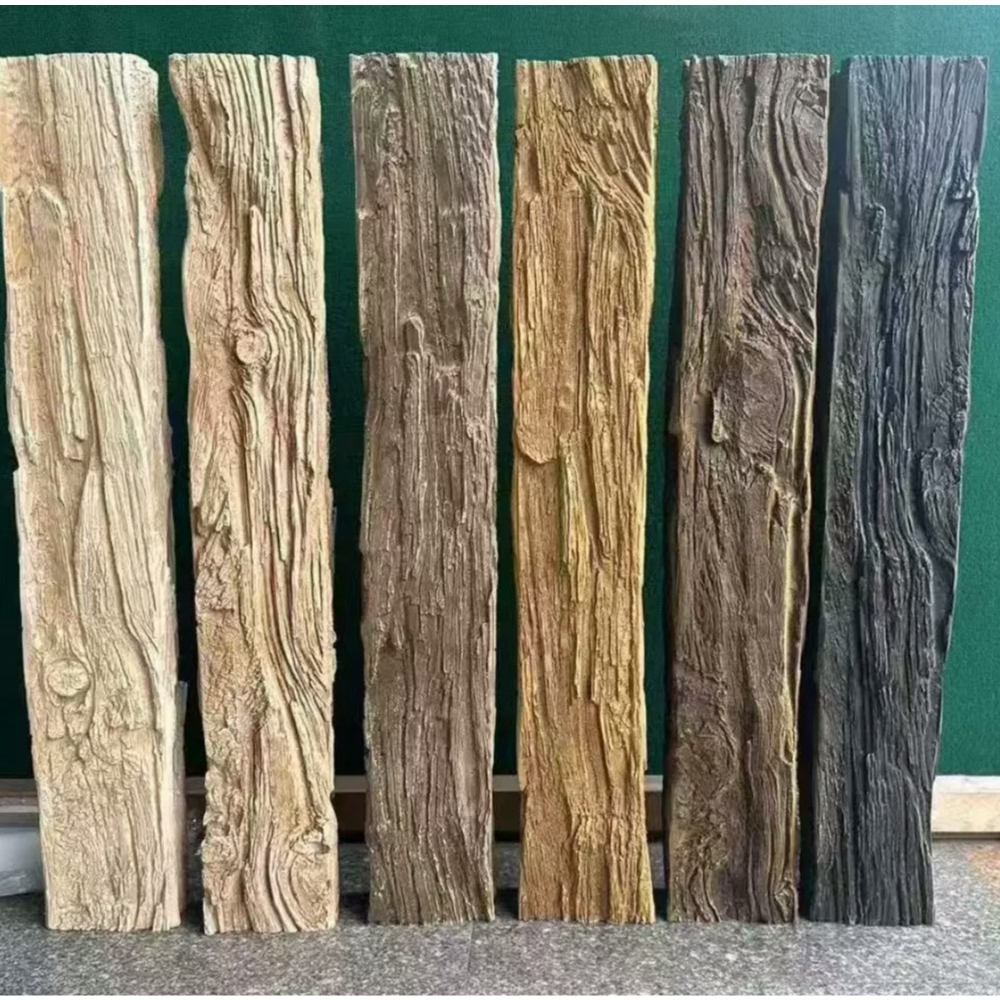
The grey-wash finish represents a specific color treatment that achieves distinctive aesthetic qualities. Unlike solid grey paints that present flat, uniform color, grey-washing builds subtle color variations that suggest natural aging processes. These variations create visual depth and interest that rewards close examination while reading as sophisticated from typical viewing distances.
The washing technique typically involves applying semi-transparent grey pigment that partially reveals underlying surface characteristics. Wood grain patterns remain visible through the grey wash, adding organic texture to the contemporary color treatment. This combination of natural texture with modern color creates the distinctive appearance that distinguishes grey-washed beams from alternative treatments.
Color depth in grey-washed finishes varies according to application technique and pigment concentration. Lighter applications preserve more wood character while adding subtle grey shifting. Heavier applications create more dramatic grey presence while suppressing natural wood tones. Both approaches yield valid aesthetic outcomes depending on intended design effects.
Achieving Authentic Weathered Appearance
True grey-washed finishes replicate the natural weathering processes that affect outdoor timber over extended periods. Sun exposure bleaches wood surfaces while moisture introduces grey tones through chemical changes in wood fibers. Rain removes softer wood components, creating silver-grey patinas that represent authentic aging.
Manufacturers achieve convincing weathered appearances through various techniques including layered pigment application, selective staining, and surface treatment variations. The goal is not uniform grey color but dimensional appearance with subtle variations suggesting natural development over time. This authenticity distinguishes quality grey-washed products from simpler painted alternatives.
Surface texture interacts importantly with grey-washed finishes. Beams with pronounced grain patterns reveal more wood character through lighter washes, while smoother surfaces present more uniform grey appearances. Understanding these interactions enables appropriate finish and texture coordination for intended aesthetic results.

Design Applications and Spatial Effects
Curved grey-washed beams create distinctive spatial experiences that straight alternatives cannot replicate. The flowing forms introduce organic movement patterns that guide visual attention through spaces in natural, intuitive ways. This movement quality proves particularly valuable in contemporary interiors seeking to soften industrial or geometric design elements.
Great room applications benefit substantially from curved beam installations. These expansive spaces often struggle with visual monotony despite furniture arrangements and decorative treatments. Curved beams introduce overhead movement that breaks ceiling plane monotony while creating architectural features that justify the spatial generosity these rooms provide.
Loft conversions and spaces with exposed structure provide natural contexts for curved beam installations. The already organic character of exposed joists and rafters harmonizes naturally with curved beam profiles. Grey-washed finishes complement industrial elements like steel columns and concrete surfaces while adding necessary warmth.
Coordinating with Existing Architecture
Successful curved beam integration requires thoughtful coordination with existing architectural elements. The flowing silhouette of curved beams should relate intentionally to other curved or organic forms throughout spaces. Arched doorways, curved staircases, and rounded furniture pieces all provide opportunities for coordinated design language.
Straight-line architectural elements require careful integration to prevent visual conflicts. When curved beams intersect with orthogonal walls or parallel structural elements, transition treatments ensure graceful relationships. Strategic beam placement can minimize these conflicts by positioning curves where organic movement feels natural rather than forced.
Ceiling height variations influence appropriate curved beam selection. Dramatic curves that work beautifully in high-ceilinged spaces may overwhelm standard residential heights. Proportionally scaled curves ensure appropriate visual presence without dominating intimate rooms or appearing trivial in generous spaces.
Lighting Integration for Curved Beams
The three-dimensional quality of curved beams creates unique lighting challenges and opportunities. Shadow patterns vary dramatically across beam surfaces as light angles change throughout days and seasons. Strategic lighting design can emphasize these variations or minimize them depending on intended atmospheric effects.
Uplighting curved beams creates dramatic shadow projections on surrounding surfaces. Light tracing curved profiles casts evolving shadow patterns that transform spaces throughout the day. This dynamic quality adds life and movement to interior environments without requiring mechanical or electronic elements.
Pendant fixtures suspended from curved beams require careful positioning to maintain both functional illumination and aesthetic harmony. Fixture placement should relate intentionally to beam curves, creating compositional relationships rather than arbitrary mounting positions. Professional lighting design ensures integrated results.
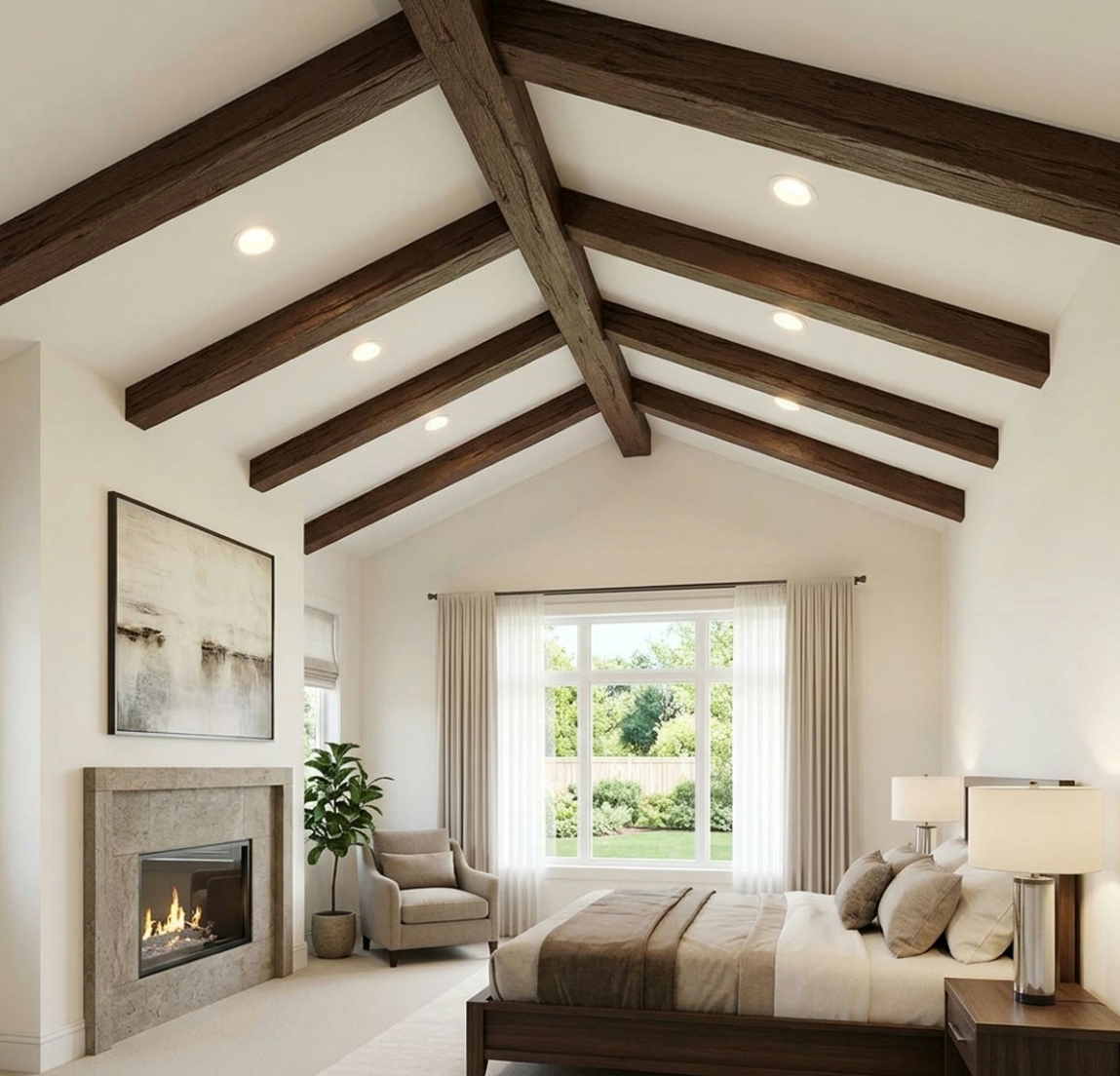
Recessed lighting positioned within curved beam installations enables clean ceiling planes while providing functional illumination. These fixtures might follow beam curves, creating linear lighting patterns that reinforce the organic movement quality of curved installations.
Installation Complexity and Requirements
Curved beam installation presents additional challenges compared to straight beam mounting. The flowing profiles require more complex mounting systems that accommodate curved geometry while providing secure attachment points. Professional installers assess conditions and specify appropriate mounting approaches for specific curved configurations.
Support structure requirements for curved beams may exceed those for straight alternatives, depending on installation complexity. The curved profile can introduce different load distribution patterns that affect ceiling structure differently. Professional engineering assessment ensures adequate support for safe, lasting installations.
Coordination between multiple curved beams in complex installations demands precise positioning to achieve intended flowing effects. Small positioning errors can disrupt visual continuity that curved installations depend upon for their distinctive effects. Professional installers use precise measurement and positioning techniques that ensure successful results.
Maintenance Considerations
Curved beam surfaces require appropriate cleaning approaches that address varying surface orientations throughout curved profiles. The grey-washed finish should maintain appearance when cleaned according to manufacturer recommendations. Testing cleaning approaches in inconspicuous locations before general application prevents visible damage.
Joint areas between curved beam sections may require occasional attention to maintain clean appearances. Quality installation minimizes visible joint conditions, but settling and environmental changes can affect joint integrity over time. Periodic inspection identifies concerns requiring professional attention.
Finish touch-up for grey-washed surfaces requires skill to achieve seamless results. The dimensional color variations that characterize grey-washing prove challenging to replicate in localized repairs. Professional refinishing services understand these challenges and employ techniques that achieve invisible repairs.
Design Style Alignment
Curved grey-washed beams align naturally with design styles emphasizing organic forms, natural materials, and sophisticated restraint. Contemporary, modern farmhouse, coastal, and transitional aesthetics all accommodate these distinctive elements when properly integrated with surrounding design elements.
Scandinavian design approaches embrace the organic curves and sophisticated grey palette that curved grey-washed beams provide. The Nordic appreciation for natural materials, functional beauty, and restrained color schemes makes these beams ideal additions to Scandinavian-influenced interiors.
Industrial loft aesthetics benefit from curved beams that soften otherwise harsh environments. Steel, concrete, and brick surfaces gain warmth and organic character through grey-washed wood textures. The curves introduce movement that prevents static impressions common in heavily industrial spaces.
Avoiding Stylistic Conflicts
Spaces dominated by sharp geometric forms may experience visual conflicts with curved beam installations. Ultra-modern minimalist interiors with exclusively straight-line vocabulary might resist curved additions that feel incongruous. Evaluating existing design language before committing to curved installations prevents uncomfortable aesthetic tensions.
Traditional design contexts featuring classical moldings, formal symmetry, and period details may also conflict with contemporary curved beam aesthetics. The organic, flowing quality of curved grey-washed beams reads as deliberately modern, potentially undermining traditional design intentions.
The safest approach involves evaluating overall design direction and selecting beam profiles and finishes that support intended aesthetic outcomes. Curved grey-washed beams work beautifully when intentionally integrated into coherent design visions, but can create confusion when added to spaces without clear stylistic direction.
Investment and Value Considerations
Curved grey-washed beams typically command premium pricing compared to straight beam alternatives. The additional manufacturing complexity, finishing skill requirements, and installation challenges contribute to higher per-unit costs. These investments yield distinctive architectural results that justify premium positioning for projects seeking unique spatial identities.
Long-term value considerations favor quality curved beam installations. The distinctive appearance ensures lasting design relevance, while durable polyurethane construction eliminates replacement concerns. The initial investment delivers returns throughout extended service lives without ongoing maintenance expenditures.
Custom curved configurations command additional premiums but enable design visions impossible with standard product offerings. For projects requiring specific radii, unique curves, or non-standard configurations, custom manufacturing delivers tailored results that standard products cannot achieve.
The continued evolution of contemporary design suggests strong ongoing demand for distinctive curved beam products. As spaces increasingly seek unique identities and memorable experiences, curved grey-washed beams position themselves as elements capable of delivering the architectural differentiation that distinguishes exceptional interiors from ordinary ones.
Technical References
ASTM standards cited in every specification
Test Data
Lab results from internal testing program
Updated 2026
Reviewed against current product specs


