
Living room decoration often involves careful curation of furniture, textiles, and accessories that express personal taste and create comfortable environments for daily life. Yet even the most thoughtfully selected furnishings can feel incomplete without architectural elements that provide visual anchors and establish design foundations. Polyurethane faux wood beams serve as powerful decorative tools, creating focal points that transform living rooms from ordinary spaces into environments with genuine character and presence.
The decorative potential of faux wood beams extends beyond their inherent beauty. These elements interact with lighting, furniture, and other design features in ways that multiply their impact. A single beam installation influences how we perceive the entire room, affecting spatial proportions, visual weight distribution, and the overall atmosphere that defines daily experience. Understanding this multiplicative potential enables decorative strategies that maximize the value beam installations provide.
Establishing Decorative Hierarchy
Effective living room decoration establishes clear hierarchy among visual elements, creating order that helps occupants navigate spaces intuitively. Focal points command primary attention, secondary elements support without competing, and background features recede to provide context. Faux wood beams can fulfill roles at any hierarchy level, depending on how they are specified and integrated into overall design schemes.
When beams serve as primary decorative focal points, they should receive the visual emphasis that this position demands. Substantial sizing, strategic positioning, and complementary lighting all contribute to focal point prominence. The decorative scheme should reinforce beam significance through color coordination, spatial arrangement, and the careful placement of secondary elements that direct attention toward rather than away from beam installations.
Supporting decorative roles for beams involve more restrained specifications that complement rather than compete with other focal points. Softer finishes, smaller dimensions, or peripheral positioning establish beam presence without demanding the attention that primary focal features require. This supporting function adds visual richness without visual chaos, contributing to layered complexity that rewards sustained observation.

Color Coordination Strategies
The finish color selected for living room beams significantly influences their decorative impact and integration with surrounding elements. Color choices should emerge from analysis of existing furniture, flooring, wall treatments, and the overall color palette that defines the living room's decorative character. Successful coordination creates environments that feel intentional rather than assembled from unrelated components.
Warm wood tones—honey, amber, chestnut, and golden oak—create inviting atmospheres suited to family living rooms where comfort represents a primary objective. These colors complement the natural materials common in residential settings, including leather upholstery, woven textiles, and solid wood furniture. The warmth prevents spaces from feeling austere or clinical, establishing the welcoming environment that living rooms should provide.
Neutral and grey tones accommodate contemporary living room schemes that pursue minimalism or Scandinavian-inspired aesthetics. These finishes establish sophistication without the rustic associations that warmer wood tones might imply. Grey beams coordinate naturally with grey sofas, white walls, and black accents that characterize modern living room palettes, providing visual interest without disrupting the restrained color schemes these designs pursue.
Pattern and Texture Integration
Living room decoration benefits from the careful integration of patterns and textures that create visual complexity and tactile interest. Faux wood beams contribute their own textural qualities while interacting with textile patterns, surface textures, and decorative details throughout the space. Understanding these relationships enables decoration strategies that achieve richness without overwhelming.
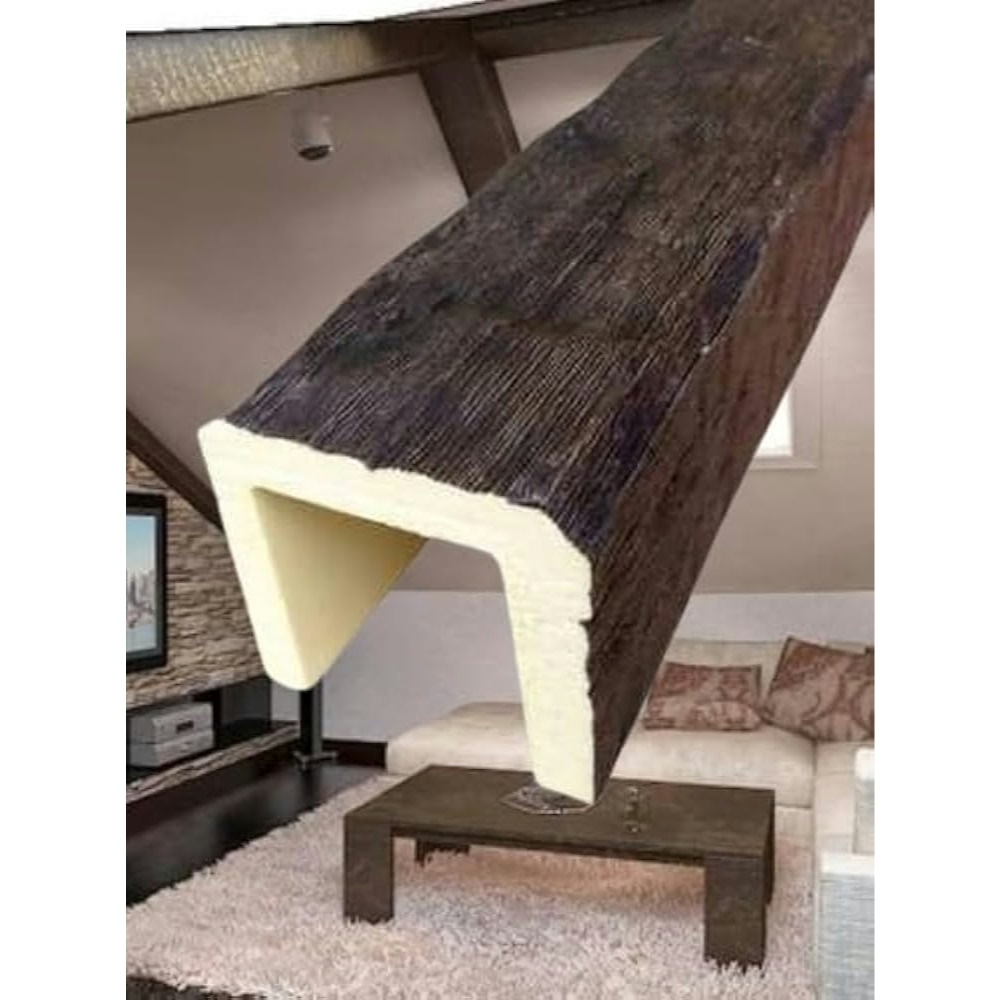
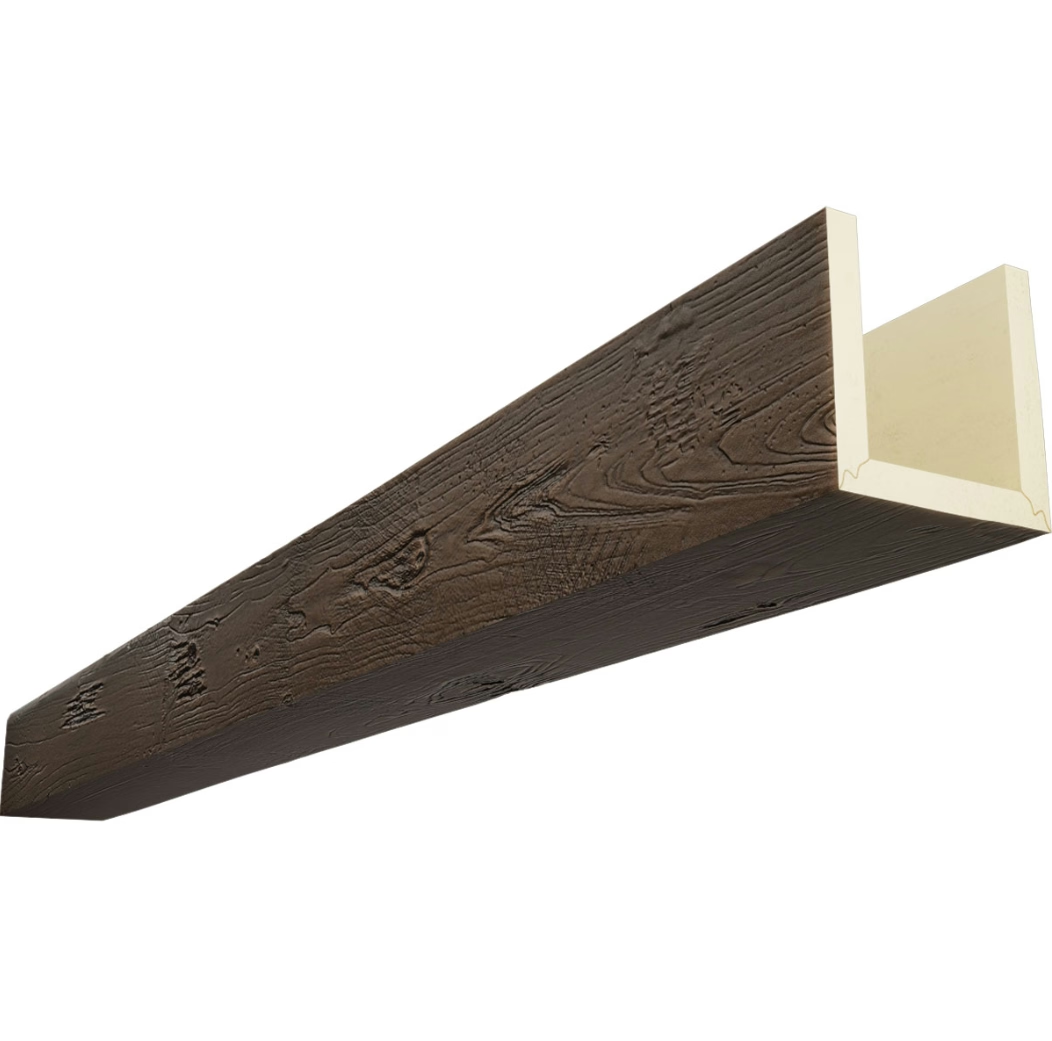
The grain patterns that characterize wood-look beams provide texture that complements upholstered fabrics, woven rugs, and other textiled elements common in living rooms. This textural harmony creates environments where different materials feel related rather than disparate, reinforcing the cohesive atmosphere that successful decoration requires. The organic irregularity of wood grain prevents these spaces from feeling manufactured or artificial.
Pattern coordination requires attention to scale and visual weight. Large-scale beam installations complement substantial furniture pieces and generous textile patterns, while smaller beams harmonize with more delicate furnishing schemes. Mismatched scales create visual dissonance that undermines decorative intentions, regardless of how attractive individual elements might appear in isolation.
Seasonal and Transitional Decorating
Living rooms typically accommodate seasonal decorating changes that keep spaces feeling fresh and current. Faux wood beams provide stable anchors around which these rotating elements arrange, establishing continuity that connects different seasonal treatments. The architectural stability of beam installations prevents seasonal changes from feeling arbitrary or disconnected.
Winter and holiday decorating often emphasizes warmth and coziness, with darker wood tones on beams harmonizing naturally with rich seasonal colors, evergreen accents, and ambient lighting that characterize winter living. Summer arrangements might pursue brighter, lighter aesthetics that coordinate effectively with pale beam finishes and casual furnishing schemes. The adaptability of beam finishes to varied seasonal palettes enhances their value as living room anchors.
Transitional decorating—shifting between seasonal aesthetics—proceeds more smoothly when substantial architectural elements provide consistent context. Beams establish design parameters within which seasonal accessories can rotate without requiring fundamental redecisions. This continuity simplifies decorating efforts while ensuring that living rooms maintain character regardless of seasonal treatment changes.
Accessorizing Around Beam Focal Points
The presence of prominent beam installations influences how accessories should be selected and arranged throughout living rooms. Understanding this influence enables decorating strategies that complement rather than compete with beam focal points, creating environments where every element contributes to unified design vision.
Wall art placement requires consideration of how beams redirect visual attention across wall surfaces. Artwork positioned below beam intersections creates compositional harmony, while pieces competing for attention with beam installations fragment visual focus. The relationship between beams and wall art should feel intentional, with clear design logic governing placement decisions.
Vases, sculptures, and other three-dimensional accessories interact with beam installations through shared space and coordinated aesthetics. The substantial presence of beams suggests correspondingly substantial accessories, preventing small decorative objects from appearing lost or inadequate. This proportionality ensures that accessorizing enhances rather than diminishes beam installations.
Investment Value of Quality Beam Decorations
The decorative impact of faux wood beams represents genuine value that enhances living room environments over extended periods. Unlike accessories that wear out, lose appeal, or require replacement, quality beam installations provide enduring decoration that maintains its attractiveness through years of daily experience. This durability enhances the value proposition that beam installations represent.
The timeless aesthetic of wood-look beams ensures continued relevance as decorating trends evolve. Spaces featuring substantial beam installations maintain design currency more readily than those relying on trendier decorative elements. This enduring appeal protects the investment that beam decoration represents, ensuring continued satisfaction as personal tastes and broader design fashions develop over time.
The practical benefits of polyurethane—including moisture resistance, insect resistance, and structural stability—ensure that decorative appearance persists without the deterioration that affects genuine wood alternatives. This performance reliability eliminates the disappointment that lesser materials eventually produce, providing confidence that living room decoration will continue providing satisfaction indefinitely.
Technical References
ASTM standards cited in every specification
Test Data
Lab results from internal testing program
Updated 2026
Reviewed against current product specs


