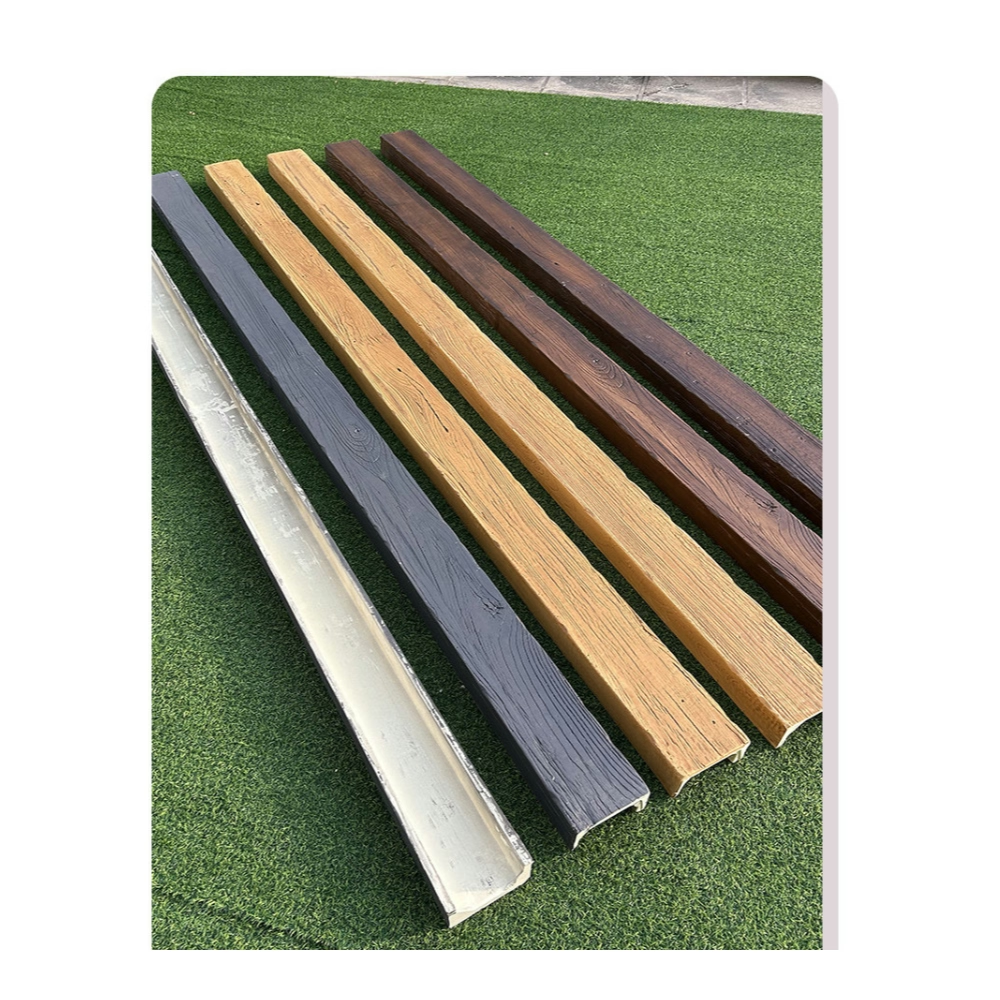
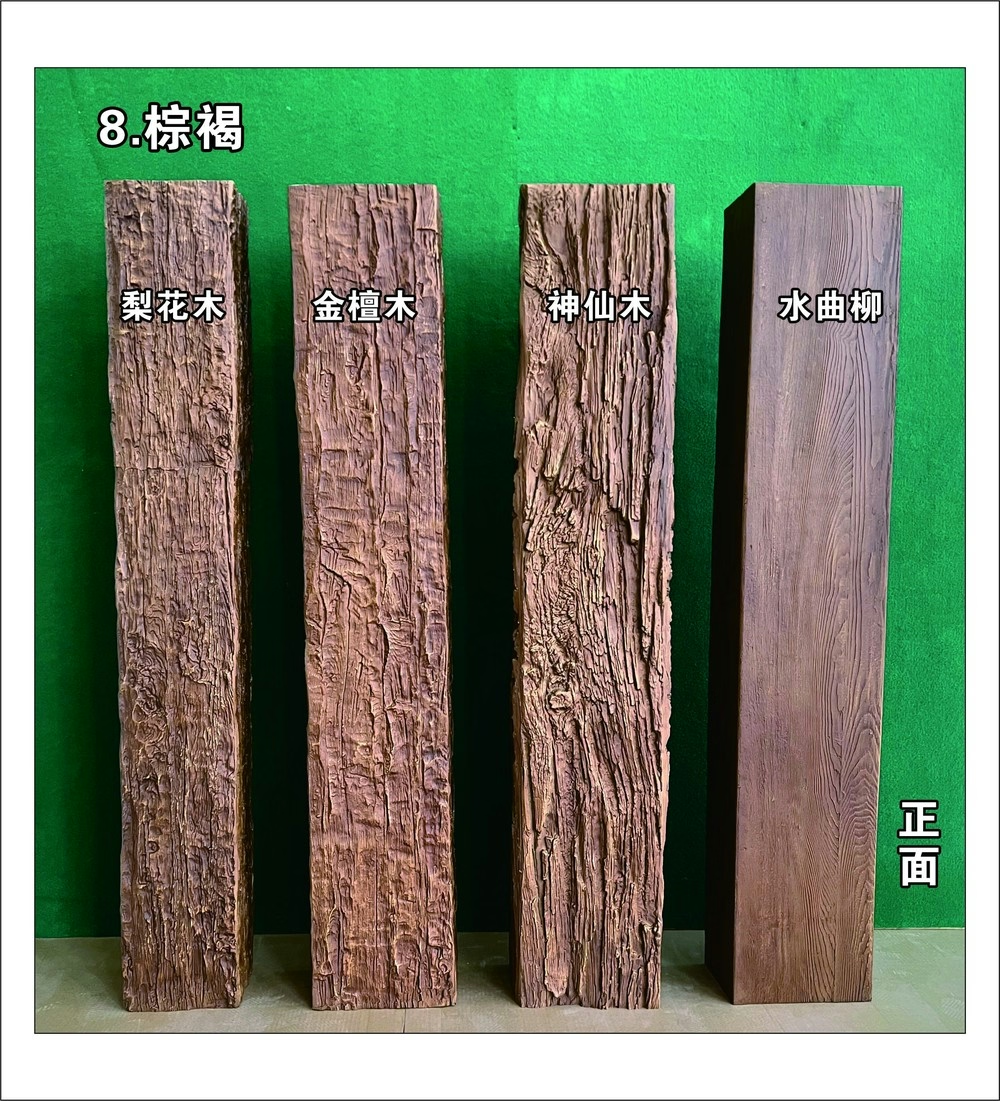
Home renovation projects increasingly pursue minimalist aesthetics that prioritize clean lines, neutral palettes, and thoughtful reduction of visual clutter. This design direction requires careful selection of every element, ensuring that what remains deserves the attention it receives. Polyurethane faux beams manufactured from foam core formulations offer architects and homeowners exceptional tools for achieving minimalist renovation objectives, providing the architectural presence that makes spaces distinctive while maintaining the simplicity that minimalist principles demand.
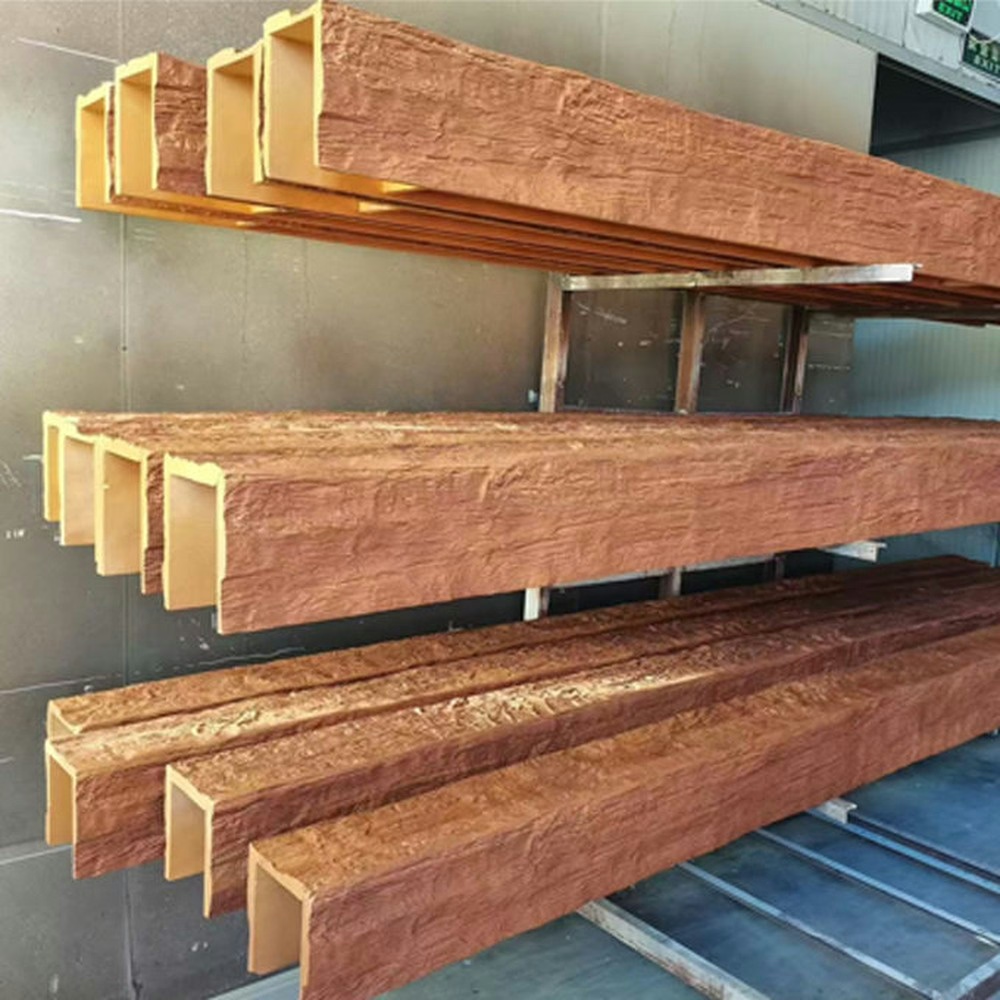
The evolution of polyurethane beam technology has produced foam core products that combine lightweight handling with structural integrity sufficient for demanding applications. These formulations reduce material weight dramatically compared to solid polyurethane alternatives while maintaining the surface quality and durability that residential and commercial installations require. This combination enables beam installations in contexts where weight constraints previously prohibited or complicated architectural enhancement.
Understanding Foam Core Beam Technology
Foam polyurethane beams represent an evolution in faux beam manufacturing that addresses practical concerns without sacrificing aesthetic quality. The foam core provides structural support while dramatically reducing weight, enabling installation approaches impossible with heavier materials. Surface layers maintain the wood grain texture and finish quality that define beam appearance, ensuring that the visual qualities discriminating buyers expect remain uncompromised.
The manufacturing process for foam core beams involves careful formulation and quality control that distinguishes reputable producers from commodity alternatives. Density, cell structure, and bonding between foam core and surface layers all influence performance characteristics that affect installation success and long-term durability. Understanding these technical details helps buyers evaluate products appropriately when specifying for renovation projects.
Thermal and acoustic properties of foam core formulations provide additional benefits beyond reduced weight. The insulating quality of foam helps these beams contribute marginally to thermal performance, while the cell structure provides some acoustic absorption that benefits room acoustics. These secondary benefits enhance the value proposition that foam beam installations represent.
Advantages for Renovation Projects
Renovation projects present specific challenges that influence material selection. Existing structures may have limited load capacity; occupied homes require installation methods that minimize disruption; time constraints demand efficient processes that do not extend project timelines unnecessarily. Foam beams address each of these considerations through characteristics that renovation contexts particularly value.
The reduced weight of foam beams eliminates or simplifies structural reinforcement that heavier materials might require. In older homes with uncertain load capacity, this weight advantage enables beam installation where solid alternatives would prove impractical. The engineering consultation and potential modification that heavier beams might require adds cost and complexity that foam beams avoid entirely.
Installation efficiency serves occupied home renovation particularly well. The lightweight handling that foam enables allows single-worker installation in many contexts, eliminating the equipment and labor coordination that heavier materials demand. Faster installation reduces the period of disruption that families experience, a benefit that occupied renovation particularly values.

Minimalist Aesthetic Achievement
Achieving authentic minimalism requires restraint in every selection, with each element contributing meaningfully without introducing visual clutter. Foam beams in minimalist applications should provide architectural presence while respecting the visual quietude that minimalist spaces require. This balance emerges from thoughtful specification that considers profile, finish, and positioning carefully.
Clean-lined profiles with refined proportions serve minimalist contexts better than heavily detailed alternatives. The beam should appear as architectural element rather than decorative addition, with proportions and detailing that feel structural even when serving purely aesthetic purposes. Quality foam beam producers offer profiles designed specifically for contemporary and minimalist applications, providing options that satisfy these requirements without requiring custom fabrication.
Finish selection for minimalist beams typically emphasizes neutrality and restraint. White, grey, and natural wood tones in muted variations establish the kind of subtle presence that minimalist design requires. More adventurous color selections risk fragmenting visual focus that minimalist spaces should concentrate on essential elements alone.
Handling and Installation Best Practices
While foam beams simplify handling compared to heavier alternatives, proper technique remains essential for successful installation. Understanding the characteristics of foam core materials enables approaches that protect both materials and surrounding construction while achieving the secure, long-lasting attachment that quality installations require.
Cutting foam beams requires appropriate tools and techniques that prevent damage to surface layers. Fine-toothed blades designed for composite materials produce clean cuts without tear-out or chipping that might compromise appearance. Support during cutting prevents stress that might damage connections between foam core and surface material.
Mounting systems for foam beams should distribute loads appropriately across beam surfaces. While foam cores provide structural support, point loads concentrated in small areas might exceed local capacity. Mechanical fasteners positioned to spread loads across broader areas ensure secure attachment without risk of local compression or surface damage.
Finish Application and Customization
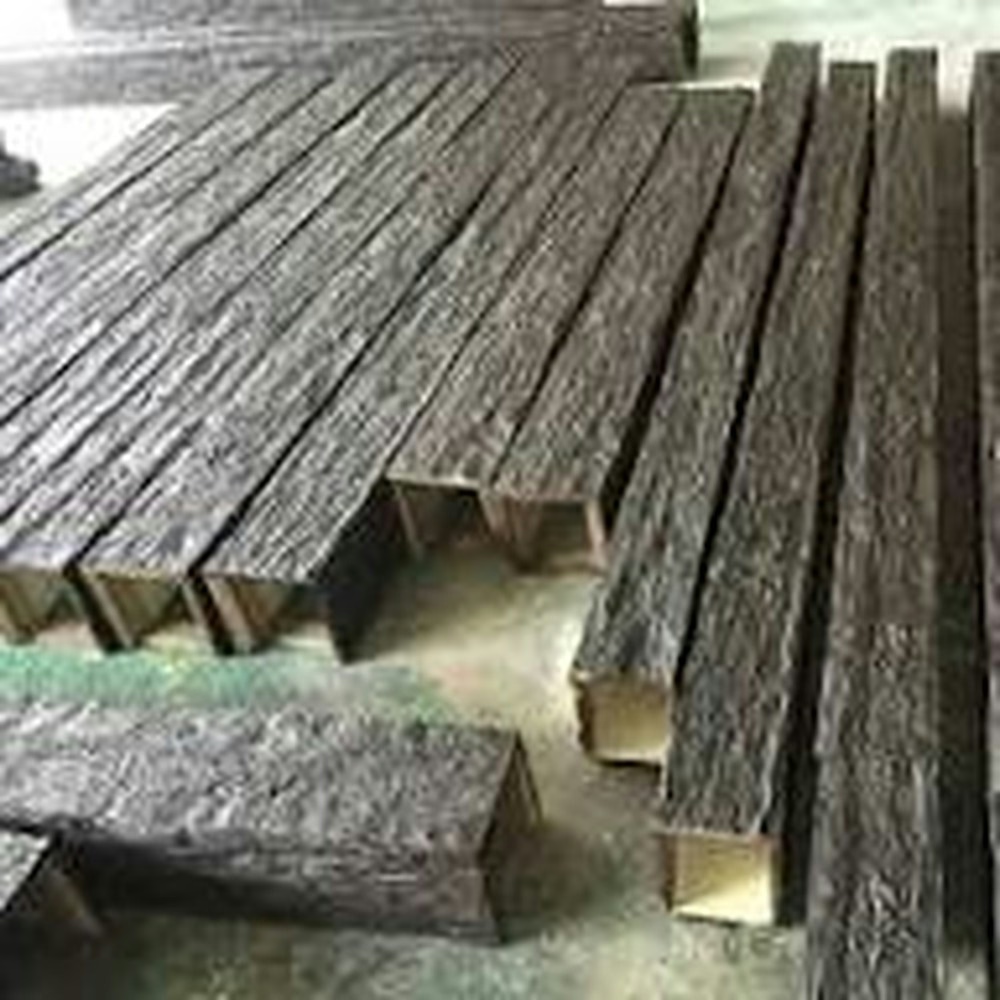
Foam beams accept paint and stain with results that satisfy demanding applications. The smooth, consistent surface that quality foam beams provide ensures uniform finish application without the irregularities that natural wood surfaces present. This consistency enables precise color matching and clean finish results that support minimalist aesthetic requirements.
Custom finish work should occur before installation whenever possible, enabling access to all surfaces and eliminating the担心 of damaging adjacent construction during finishing. Primers and paints designed for polyurethane surfaces provide the best adhesion and durability, ensuring that finishes maintain appearance through extended service.
Touch-up capability represents an advantage that foam beams provide over some alternatives. Damage occurring after installation can be addressed with matching finish products that restore appearance without visible evidence of repair. This practical benefit reduces long-term maintenance concerns while ensuring that installations maintain aesthetic quality indefinitely.
Long-Term Performance Considerations
Foam core beams provide reliable long-term performance when properly specified and installed. Understanding the factors that influence durability helps ensure successful outcomes that satisfy homeowners throughout extended occupancy periods.
UV exposure represents the primary concern for foam beams in some applications. Direct sunlight through windows or in sunroom installations can degrade surface materials over extended periods. Quality producers address this concern through UV-stable formulations that resist yellowing and surface deterioration, ensuring that installations maintain original appearance despite sustained light exposure.
Physical durability of foam beams accommodates normal residential use effectively. The foam core provides impact resistance that prevents the denting that might affect more rigid materials, while surface layers tolerate the cleaning and contact that ceiling installations occasionally experience. This durability ensures that beam installations continue providing aesthetic contribution throughout typical residential occupancy periods.
Cost Considerations for Renovation Budgets
Renovation budgets require careful allocation that balances aesthetic objectives against practical constraints. Foam beams typically provide cost advantages compared to solid polyurethane or genuine wood alternatives, enabling architectural enhancement within constrained renovation budgets.
Material cost savings derive from reduced raw material content in foam core formulations. The weight reduction that foam enables also contributes to cost savings through reduced shipping and handling expenses. These material advantages translate directly to competitive pricing that budget-conscious renovation projects appreciate.
Installation cost advantages compound the material savings. Faster handling, simplified mounting, and reduced labor requirements all contribute to lower installed costs that improve the overall value proposition foam beams represent. For renovation projects where budget constraints limit scope, these installation savings might enable beam installations that heavier alternatives would price out of consideration.
Technical References
ASTM standards cited in every specification
Test Data
Lab results from internal testing program
Updated 2026
Reviewed against current product specs