
There is something quietly confident about a neutral palette executed well. It breathes. It adapts. And when paired with the right architectural details, a room built on restraint transforms into something remarkable. Textured matte finish faux ceiling beams sit at the intersection of these two worlds—the organic warmth of wood grain and the clean sophistication of understated color.
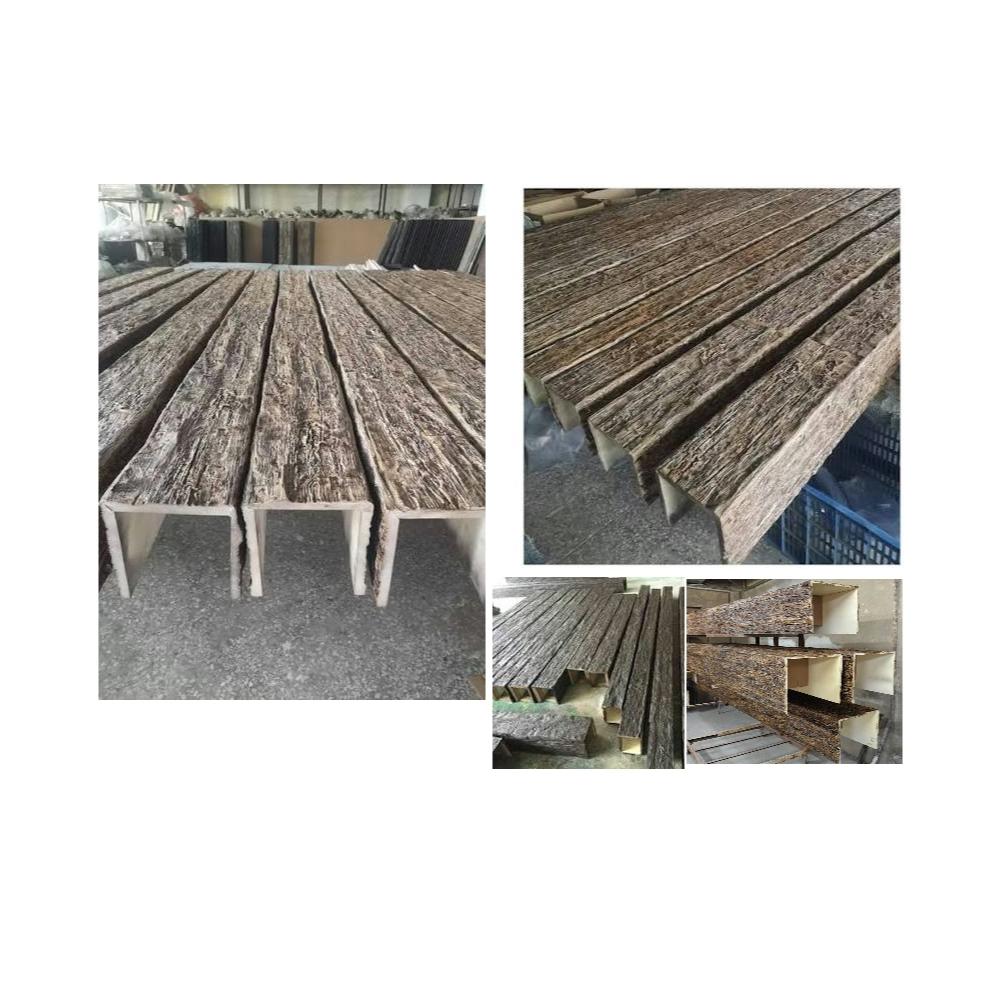
Natural timber beams carry their imperfections with pride: the knots, the grain variations, the slight color shifts from end to end. But not every project can accommodate the weight, the cost, or the ongoing care that genuine wood demands. This is where textured matte faux beams change the equation entirely. Crafted from high-density polyurethane, these beams replicate the tactile quality of hand-finished wood while offering consistency that natural materials simply cannot match.
Understanding Textured Matte Finishes
The matte finish on these faux beams represents a deliberate design choice that prioritizes authenticity over flash. Unlike high-gloss alternatives that can feel artificial or overly polished, matte textures absorb light rather than reflect it. This creates the same visual behavior as natural wood, where light interacts with the surface in soft, diffuse ways. The result is an architectural element that reads as genuinely aged and honestly crafted.
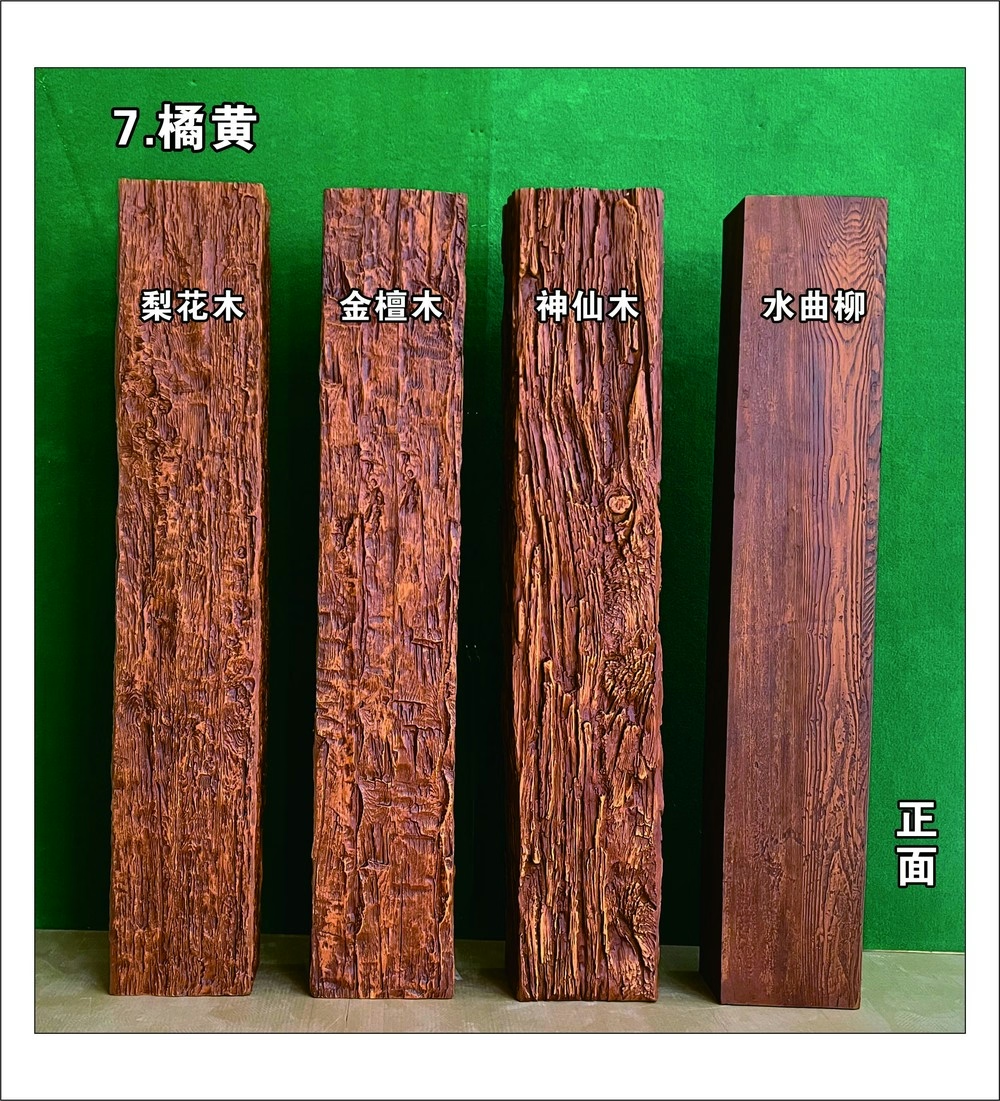
Texturing goes beyond surface appearance. The best textured matte beams capture the subtle undulations found in reclaimed wood—minor surface variations that catch shadows differently throughout the day. Morning light reveals one dimension; afternoon sun introduces another. This dynamic quality prevents the ceiling from feeling static or flat, even in rooms with minimal other detail.
The polyurethane composition allows manufacturers to achieve these textures with remarkable precision. Each beam emerges from the molding process with consistent grain patterns that flow logically from end to end. No dead spots, no unexpected gaps, no areas where the wood species simply stops making sense. For designers working on large-scale installations, this predictability proves invaluable for both specification and installation.
The Role of Texture in Spatial Perception
Texture influences how we perceive space more profoundly than most people realize. Smooth, untextured surfaces tend to recede visually—they can make a room feel larger but also more anonymous. Textured surfaces, conversely, draw the eye and create visual anchors. When applied to ceiling beams, texture introduces a sense of crafted permanence that anchors the eye upward.
In neutral interiors specifically, texture performs an additional function: it provides visual interest without relying on color contrast. A room decorated entirely in grays, whites, and taupes can still feel dynamic when the materials themselves carry enough surface variation. Textured matte beams become part of this material vocabulary, contributing richness without demanding attention.
The tactile dimension extends the experience beyond the purely visual. Running a hand along a textured matte beam reveals the same surface qualities visible from below. This consistency between appearance and touch reinforces the authenticity of the installation in ways that smooth-surfaced imitations cannot achieve.
Designing with Neutral Palettes
Neutral interiors span an enormous range of aesthetics. What unites them is a commitment to color relationships rather than individual color statements. Beige walls, gray floors, white trim—the foundation is calm and coordinated. Into this foundation, textured matte beams introduce the one element most likely to feel genuinely organic: the visual language of wood.
The key lies in selecting the right wood tone for the specific neutral environment. Cool neutrals—grays with blue undertones, greiges with subtle purple hints—pair beautifully with beams finished in weathered grays or muted oak tones. Warmer neutrals—cream, sand, greige with yellow undertones—respond well to honey-toned or pale birch finishes. The goal is harmony, not contrast.

Consider the overall lighting conditions when making finish selections. North-facing rooms with predominantly cool, indirect light benefit from beams with subtle warmth built into the finish—the eye craves that warmth even when it cannot consciously identify the source. South-facing rooms swimming in golden light can accommodate cooler beam finishes without risk of the space feeling cold.
Practical Benefits for Residential Applications
Beyond aesthetics, textured matte faux beams address several practical concerns that arise in residential construction and renovation. The lightweight nature of polyurethane means these beams can be installed where structural considerations would rule out genuine timber. Upper-floor ceilings, vaulted spaces requiring long beam spans, and renovated rooms where the existing structure cannot support significant additional load—all become viable candidates for beam installation.
Moisture resistance represents another significant advantage. Natural wood expands and contracts with humidity changes, potentially leading to cracks, warping, or finish deterioration over time. Polyurethane remains dimensionally stable across normal indoor humidity ranges, maintaining its appearance and structural integrity for decades without special care.
The installation process itself proves considerably more straightforward than working with real timber. No specialized lifting equipment is required for typical residential installations. The beams can be cut with standard woodworking tools, fitted with standard fasteners, and finished with ordinary caulk and paint. This accessibility opens beam installations to a much broader range of projects and contractors.
Maintenance and Longevity
Textured matte finishes hide dust and minor wear remarkably well compared to smooth or high-gloss alternatives. The surface variations create a forgiving appearance that maintains its quality even when perfect cleaning proves impractical. For vaulted ceilings or other hard-to-reach locations, this forgiving quality translates directly into reduced maintenance burden.
Cleaning requires nothing specialized: a soft brush attachment on a vacuum cleaner removes accumulated dust, and occasional wiping with a damp cloth addresses any grime that brushing misses. No waxing, no polishing, no specialized cleaners—simply maintenance consistent with the surrounding ceiling materials.
The expected lifespan of quality polyurethane beams easily exceeds twenty years under normal indoor conditions. Unlike natural wood, there is no risk of insect damage, dry rot, or wood rot. The material does not splinter, crack along grain lines, or develop the hollow sounds that indicate deterioration in aging timber beams.
Installation Considerations
Successful beam installation begins with accurate measurement and careful planning. The visual impact of ceiling beams depends heavily on proper spacing, consistent sizing, and appropriate relation to the room's other architectural elements. Spending time on layout before any cutting or fastening pays dividends in the final appearance.
Support requirements vary by installation type. Exposed beam installations—where the beams mount directly to the ceiling surface—transfer load differently than box beam installations that wrap existing structural elements. Understanding the intended visual effect and the structural reality determines which approach serves each project best.
For textured matte finishes, handling during installation requires some attention to maintain the surface quality. While polyurethane is more resistant to damage than natural wood, the textured surface can collect scuff marks from rough handling. Planning the installation sequence to minimize handling and protecting the beams during transport prevents these issues before they occur.
Finishing Touches and Integration
The transition between faux beams and surrounding ceiling materials deserves thoughtful attention. Natural wood beams integrate with adjacent surfaces through the natural variation of real materials—grain patterns flow, colors transition gradually. Achieving similar integration with faux beams may require additional finishing steps.
Paint matching proves simpler with matte finishes than with glossy alternatives. The reduced reflectivity means color differences between the beam finish and adjacent surfaces read as less pronounced. In many cases, lightly feathering the beam color into surrounding areas with a soft brush creates the appearance of natural material flow.
Corners and intersections require particular care. Natural wood beams meet with organic irregularity; faux beams meet with geometric precision. This precision can read as artificial if not softened appropriately. Techniques like slightly offsetting corner joints, adding faux wood plugs at fasteners, and applying thin bead caulk lines that mimic wood movement cracks help bridge the gap between manufactured and natural appearances.
Elevating Everyday Spaces
Textured matte faux beams offer a path to architectural richness that does not require compromising on maintenance, budget, or structural limitations. The combination of authentic-feeling texture, appropriate matte finish, and flexible design integration creates opportunities across the full spectrum of neutral interior styles.
Whether applied to a new construction project seeking immediate character or a renovation where existing ceilings lack visual interest, these beams transform the fifth wall from afterthought to focal point. The investment in quality materials and thoughtful installation returns value daily, as occupants experience the warmth and crafted quality that textured wood surfaces provide.
Technical References
ASTM standards cited in every specification
Test Data
Lab results from internal testing program
Updated 2026
Reviewed against current product specs


