
The juxtaposition feels intentional even when it is not. City dwellers surrounded by glass and steel crave textures that recall simpler times—weathered wood, hand-forged metal, natural fibers that soften the edges of contemporary architecture. Urban rustic design answers this craving by introducing rustic elements into urban contexts, creating spaces that feel simultaneously sophisticated and grounded. In this design conversation, ceiling beams carry significant weight, both literally and visually.
Defining Urban Rustic Style
Urban rustic is not simply rustic design transplanted to the city. It is a deliberate synthesis that takes the warmth and authenticity of rustic aesthetics and filters them through a contemporary sensibility. The result preserves the essential character of rural vernacular design while acknowledging the constraints and opportunities of urban architecture.
Rustic design draws from agricultural buildings, pioneer settlements, and natural materials that age gracefully into beautiful patina. The aesthetic values honesty over refinement, texture over smoothness, and the evidence of human craft over mechanical precision. These values create interiors that feel warm and lived-in, qualities that modern urban interiors often lack.
Urban context adds complexity to rustic elements. City spaces typically feature cleaner lines, more glass, and more sophisticated infrastructure than rustic aesthetics traditionally address. The challenge of urban rustic design lies in integrating these different vocabularies without either overwhelming the rustic elements or feeling incongruously urban.
The Role of Ceiling Beams
Ceiling beams serve urban rustic interiors particularly well because they address the ceiling—the space most rustic designs leave underdeveloped. Natural wood beams have long featured in rustic architecture, spanning the wide clears that agricultural buildings required and providing structural honesty that matched other design elements. Translating this tradition into urban contexts demands adaptation without abandoning authenticity.
Beams establish vertical scale in ways that other elements cannot. Urban interiors often suffer from compressed proportions that make rooms feel flat and uninteresting. Beams draw the eye upward, creating the perception of greater height while adding the visual weight that prevents spaces from feeling overly airy or disconnected from the ground.
The material honesty of beams resonates with urban rustic philosophy. Unlike decorative moldings that might be painted to disappear into surrounding surfaces, beams declare their presence and their material nature. Wood beams—genuine or quality faux—announce themselves as wood, creating the authentic material statement that urban rustic design requires.
Choosing Faux Beams for Urban Rustic Applications
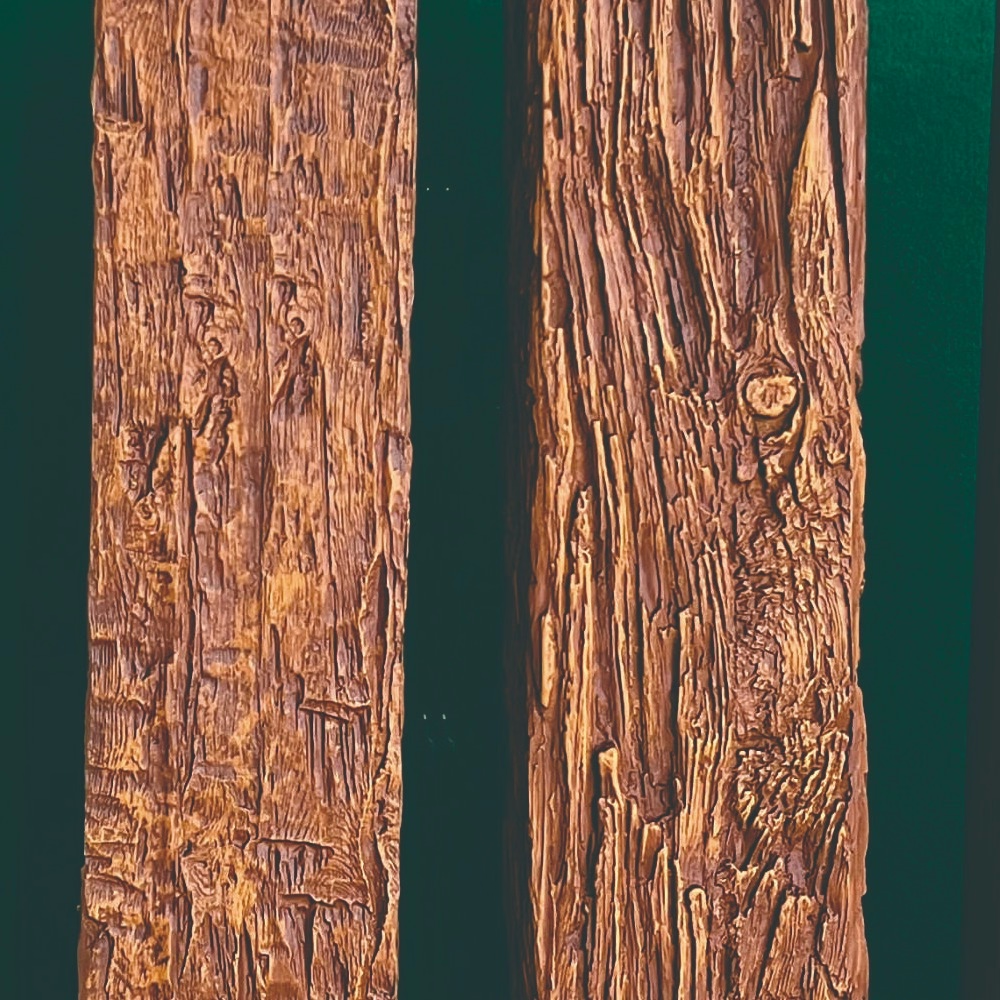
Modern polyurethane faux beams have advanced significantly from early imitations that betrayed their manufactured nature at a glance. Current production techniques capture the essential qualities of natural wood with sufficient fidelity for most applications. Understanding what to look for helps ensure successful urban rustic installations.
Surface texture provides the most immediate indicator of quality. High-quality faux beams feature irregular textures that suggest the natural variation found in genuine timber. The texture should be consistent across the beam surface without the repetitive patterns that indicate mechanical reproduction. Running a hand across the beam should reveal the same tactile variation visible to the eye.
Grain patterns deserve close inspection. Natural wood grain follows logical growth patterns that skilled craftsmen learn to read. Faux beams that replicate these patterns convincingly read as authentic; those with grain that seems randomly applied or mechanically repetitive fail the authenticity test. The grain should flow continuously across joints and around corners, just as it would in natural timber.

Color depth distinguishes quality faux beams from inferior products. Natural wood contains color variations that no single-pass painting can reproduce. Quality faux beams feature multiple color layers that create depth—the lighter tones appearing in grain peaks, darker tones accumulating in texture valleys. This complexity reads as natural aging and adds richness that flat colors cannot achieve.
Design Integration Strategies
Successful urban rustic design integrates beams with surrounding elements rather than treating them as isolated features. The ceiling plane, the walls, the lighting, and the beams all participate in a coherent spatial composition. How these elements interact determines whether the result feels curated or chaotic.
Beam color should relate to other wood elements in the space. Kitchen cabinets, furniture pieces, shelving, and flooring all contribute to the wood vocabulary of the room. Beams that complement without matching these elements create continuity while adding the ceiling-scale presence that smaller wood elements cannot achieve. Exact matching tends to feel deliberate rather than organic.
The industrial elements common in urban rustic spaces—exposed ductwork, black metal pipes, concrete columns—provide context for beam selection. Warm wood tones contrast effectively against cool industrial grays and blacks, creating the material tension that urban rustic design exploits. The relationship between beam finish and industrial elements should be considered early in the design process rather than resolved after other elements are selected.
Mounting Approaches for Different Effects
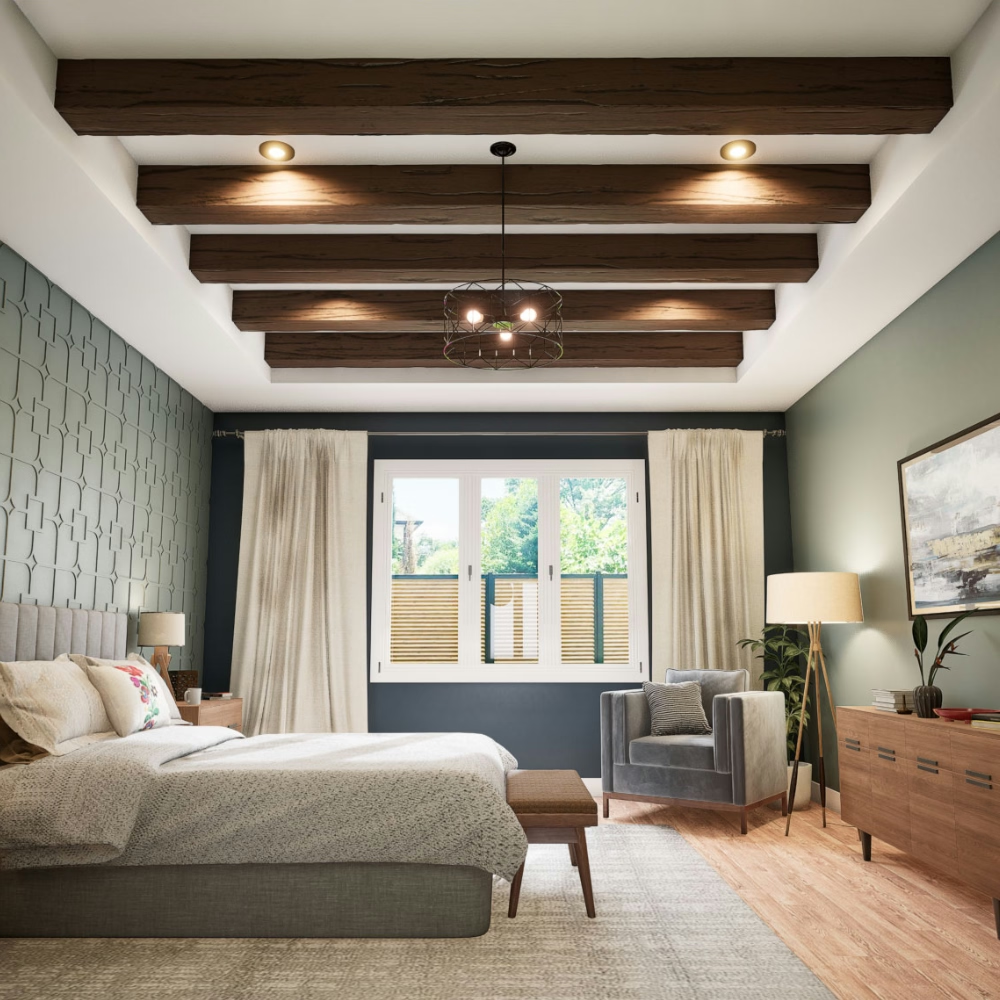
The way beams attach to the ceiling significantly influences the overall effect. Exposed mounting places beams directly against the ceiling surface with visible fasteners or brackets. This approach works well in spaces where industrial character is welcome and where the attachment hardware contributes to the overall aesthetic.
Suspended mounting lifts beams away from the ceiling plane, often creating shadow gaps that emphasize the beam as a distinct floating element. This approach suits spaces where the ceiling itself has interesting features that should remain visible or where the additional visual weight of floating beams creates desired drama.
Box beam wrapping transforms existing structural elements—ductwork, beams, or other ceiling obstructions—into visually unified beam forms. This approach offers the beam aesthetic without the ceiling space that exposed beams require. In urban spaces where ceiling height is precious, box beams provide the wood warmth while preserving maximum vertical dimension.
Practical Considerations for City Living
City homes face challenges that suburban and rural residences do not encounter. Noise from neighbors, limited natural light, and the constant presence of the urban environment create specific demands for interior design. Beams can address some of these challenges while introducing new considerations that city living requires.
Sound absorption benefits from the additional mass that ceiling beams provide, even when that mass is manufactured rather than genuine timber. Beams break up the ceiling plane in ways that diffuse sound reflections, potentially improving acoustic comfort in open-plan city apartments where hard surfaces dominate.
Light quality in city spaces varies dramatically based on window orientation and surrounding buildings. Beams cast shadows that add visual interest during bright daylight hours but may create dark spots when artificial lighting dominates. Planning beam placement in relation to existing and planned light sources ensures that beams enhance rather than complicate the lighting design.
Maintenance expectations in city living differ from suburban contexts. Access to ceiling beams for cleaning or repair may require ladders or professional assistance. The low-maintenance nature of quality faux beams reduces but does not eliminate this consideration. Specifying beam positions that allow reasonable access prevents future difficulties.
Climate Considerations
Urban heating and cooling systems operate differently than those in more spacious suburban environments. Temperature stratification, reduced air circulation, and proximity to neighbors' systems can create humidity variations that affect interior materials. Quality polyurethane faux beams handle these variations without the dimensional changes that plague natural wood in unstable conditions.
Direct sunlight exposure, common in south and west-facing urban apartments, can affect some materials over time. Quality faux beams resist UV degradation better than natural wood, maintaining their color and surface quality despite years of sun exposure. This durability proves particularly valuable in spaces where curtains or other window treatments offer limited protection.
The energy efficiency implications of beam installations deserve consideration in climate-controlled urban spaces. While beams themselves provide minimal insulation value, their presence affects how air circulates near the ceiling and how light reflects through the space. These effects are generally subtle but can contribute to overall comfort when properly anticipated.
Creating Authentic Urban Rustic Spaces
Urban rustic design succeeds when it feels discovered rather than decorated—when rustic elements appear to have accumulated naturally over time rather than being assembled according to a design plan. Beams contribute to this effect by providing the ceiling-scale presence that anchors the space and establishes its character.
The choice of faux over genuine timber in urban rustic applications often surprises observers who expect authentic materials in rustic contexts. Modern faux beams, however, serve the aesthetic goals of urban rustic design as effectively as natural wood while addressing the practical constraints that city spaces impose. The material serves the design; the design does not require specific materials to succeed.
Well-designed urban rustic spaces feel like retreats from the intensity of city life while remaining thoroughly modern in their function and context. Beams help establish this duality—honest and warm like their rustic antecedents, practical and contemporary in their manufactured precision. The synthesis creates spaces that answer the genuine needs of urban dwellers who crave authenticity without sacrificing the conveniences that city life provides.
Technical References
ASTM standards cited in every specification
Test Data
Lab results from internal testing program
Updated 2026
Reviewed against current product specs


