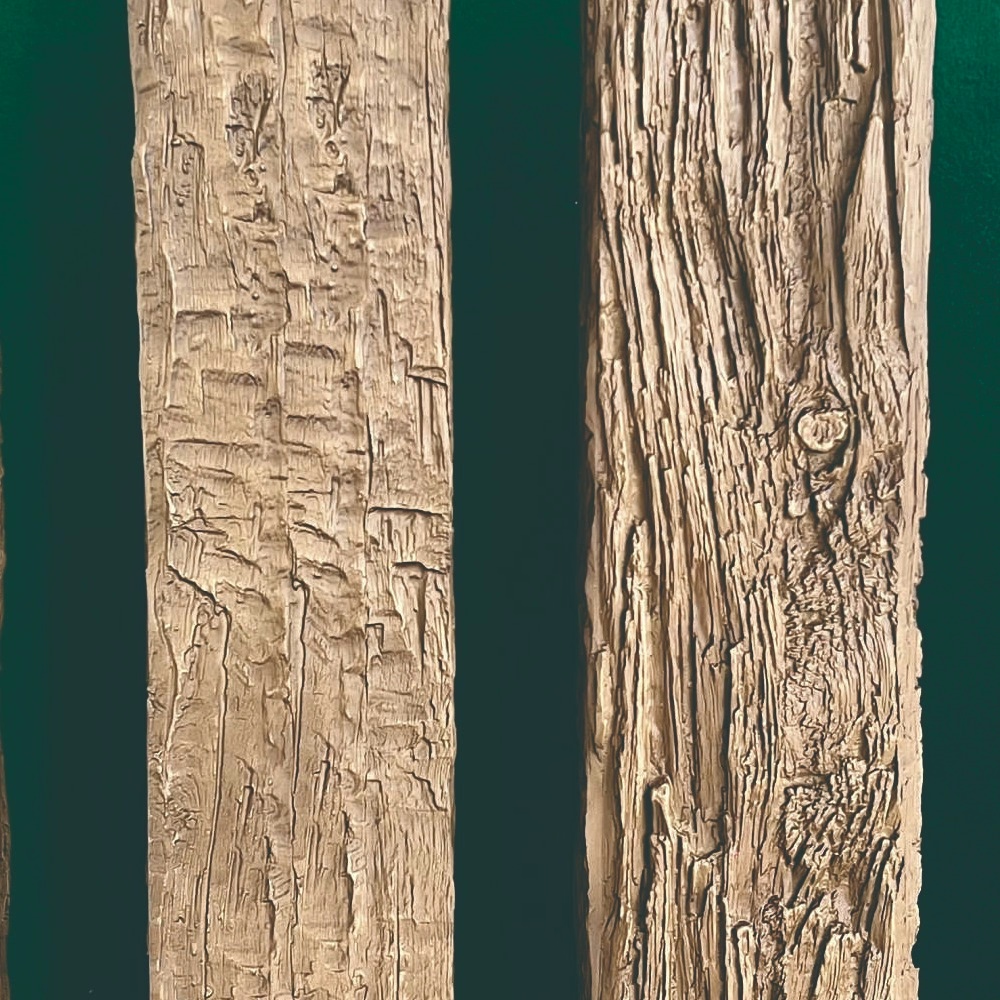
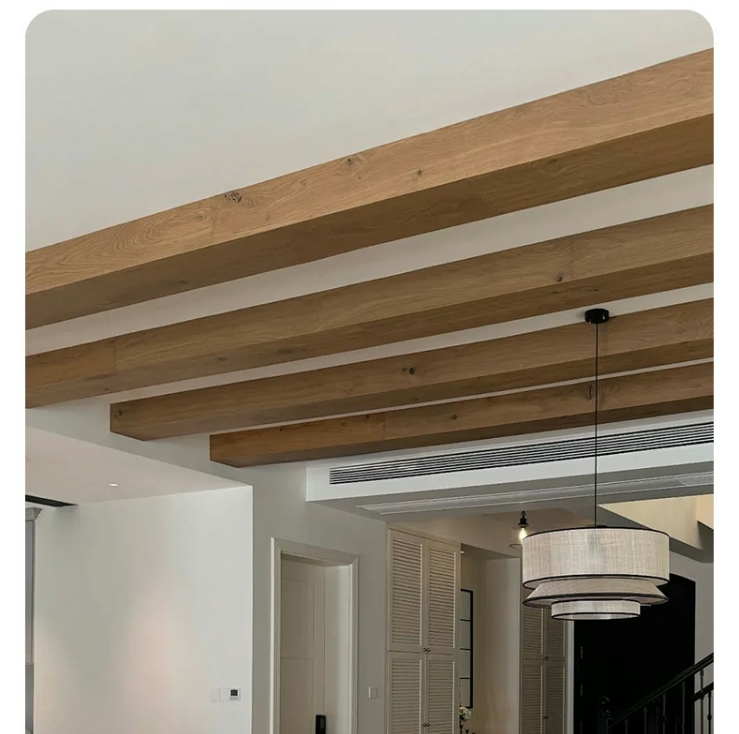
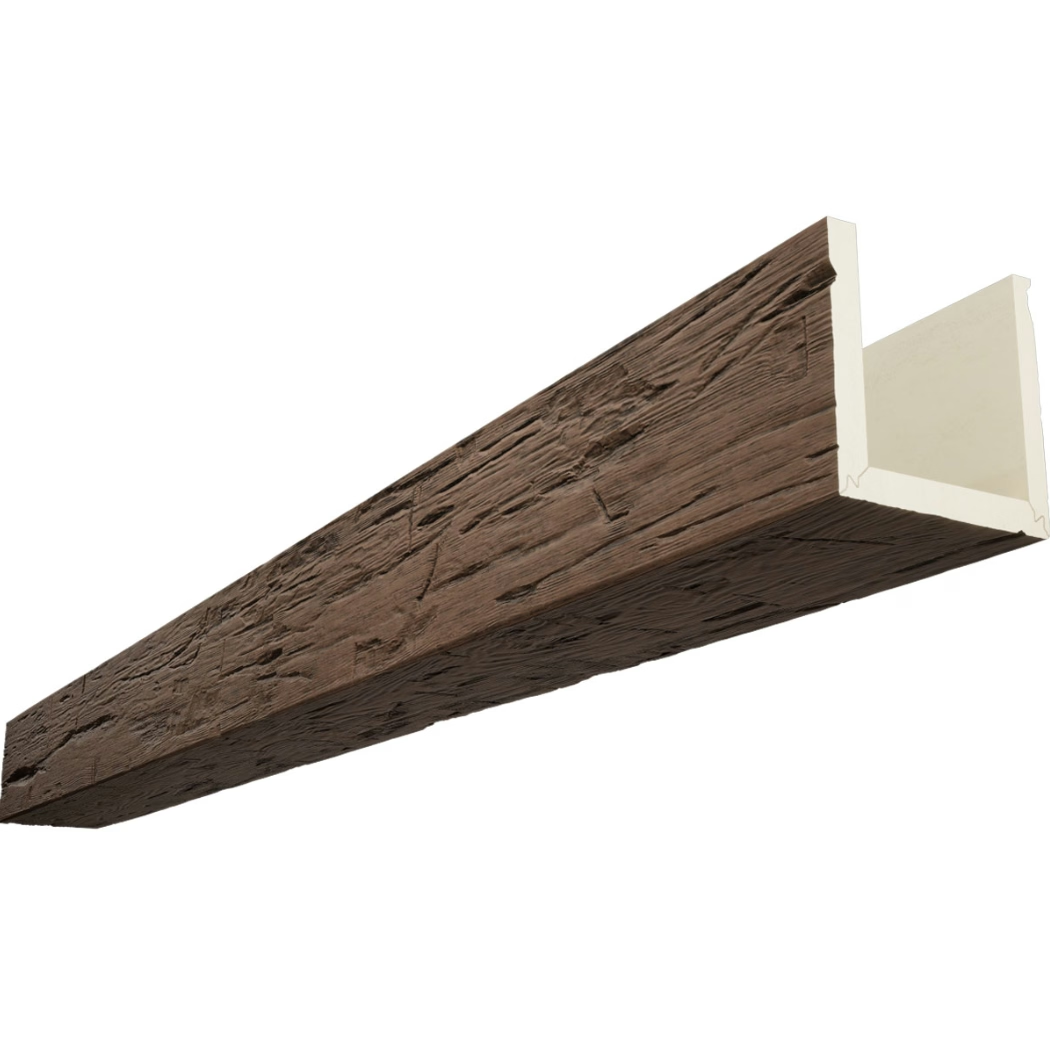
The airport lounge occupies a unique position in commercial interior design. It must welcome weary travelers with warmth and comfort while projecting an image that justifies premium pricing. It must accommodate diverse functions—quiet work, social conversation, relaxation, dining—within spaces that flow efficiently and maintain clear sightlines for security considerations. Ceiling design in these environments plays a significant role in establishing atmosphere while facing challenges that residential and even most commercial applications never encounter.
The Demands of Airport Interior Environments
Airport lounges operate under conditions that would overwhelm standard interior materials. Thousands of travelers pass through daily, each bringing luggage, food, beverages, and the general chaos of travel. Climate control systems run continuously to manage the heat loads generated by dense occupancy and significant electronic equipment. Natural light from expansive windows competes with artificial lighting that must function regardless of time or weather conditions.
Ceiling materials in these environments face specific challenges. Temperature variations between conditioned interior spaces and unconditioned service corridors create humidity fluctuations that stress materials. The constant circulation of climate-controlled air affects surfaces differently than residential HVAC systems. Security and maintenance staff require ceiling access for service runs, potentially causing impacts and wear that decorative elements must withstand.
Material selection for airport lounges must balance aesthetic goals against practical realities. The sophisticated atmosphere that lounge operators cultivate requires high-quality appearances; the operational realities of airport environments demand materials that maintain that quality despite continuous use. Faux wood beams occupy a strategic position in this balance, offering wood aesthetics with manufactured durability.
Designing Ceilings for Traveler Comfort
The psychological experience of airport lounges significantly influences traveler satisfaction. After the stress of security lines, boarding gate navigation, and flight delays, lounge visitors seek spaces that restore equilibrium and provide genuine comfort. Ceiling design contributes to this restoration through visual warmth and spatial interest that counteracts the institutional character of airport architecture.
Wood elements perform psychological work that smooth surfaces cannot accomplish. The organic quality of wood grain, even when reproduced in manufactured materials, connects travelers to natural environments that contrast with the mechanical precision of airport terminals. This connection provides subtle comfort that supports the relaxation that lounge environments seek to facilitate.
Ceiling height and proportion influence how spaces feel to occupants. Airport lounges often feature generous ceiling heights that can feel cavernous without appropriate treatment. Beams break up these expansive ceiling planes, creating visual scale that brings the space to human proportions. The texture and shadow that beams introduce also reduce the flat, institutional quality that large ceiling expanses often exhibit.
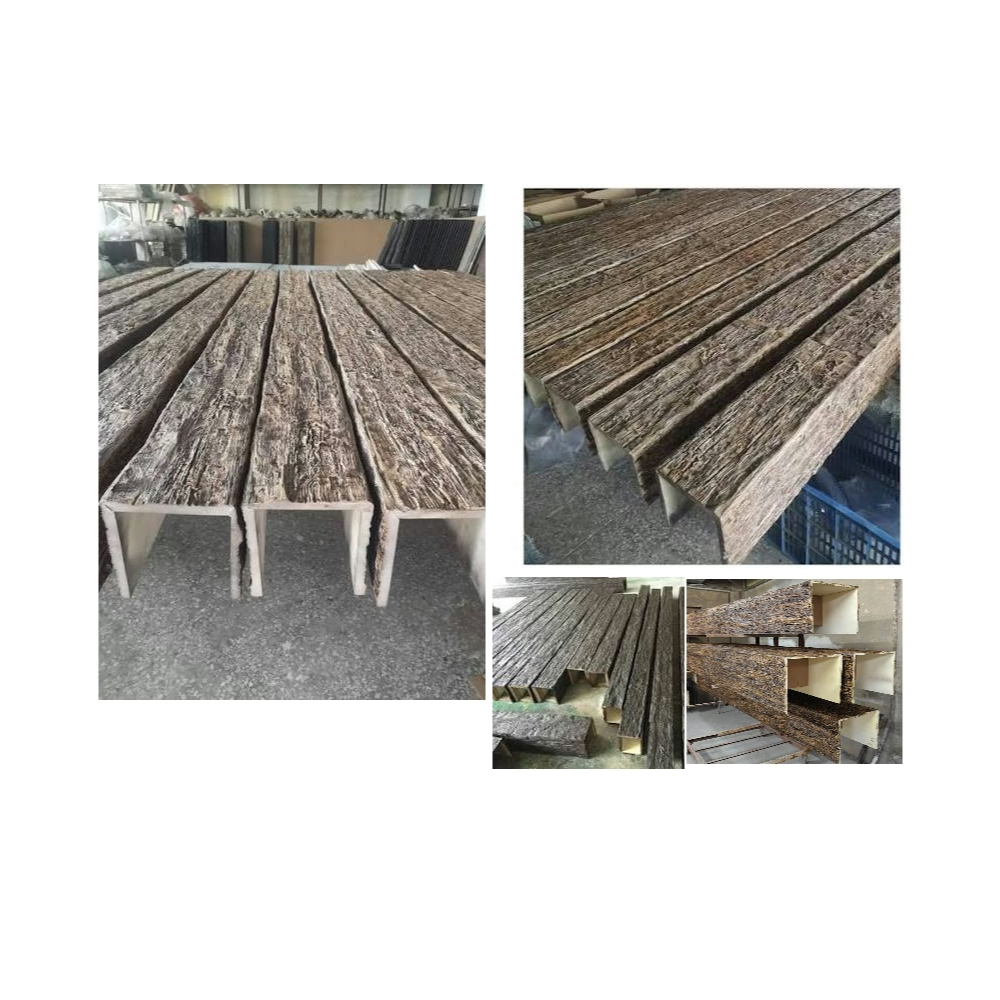
Faux Beams for Commercial Specifications
Commercial applications impose requirements that residential specifications cannot address. Fire ratings, smoke development ratings, and material toxicity certifications all affect what can legally be installed in public spaces. Understanding these requirements ensures that beam specifications meet both aesthetic goals and regulatory compliance.
Quality faux beam manufacturers provide documentation supporting commercial applications. This documentation typically includes fire test results from accredited laboratories, VOC emission certifications, and structural load ratings where applicable. Specifying products with complete documentation protects designers and building owners from compliance issues that might emerge during inspection or, worse, during incidents requiring material performance.
Durability testing provides additional assurance of commercial suitability. Quality manufacturers subject their products to accelerated aging tests that simulate years of use under challenging conditions. These tests evaluate surface wear, color stability, dimensional consistency, and structural integrity. Products that pass such testing offer confidence that commercial installations will maintain their appearance over time.

Impact resistance matters significantly in commercial environments. While faux beams are not intended to withstand deliberate abuse, they must handle the incidental contacts that occur in busy public spaces—travelers reaching up with luggage, maintenance equipment accessing overhead services, cleaning staff working near ceiling elements. Quality polyurethane faux beams resist impact damage that would crack or chip less resilient materials.
Aesthetic Strategies for Lounge Design
Airport lounges serve diverse traveler populations with varying expectations and design sensibilities. First-class lounges, business lounges, and priority lounges each project distinct brand images that ceiling design should support. The beam aesthetic must align with the overall design direction while maintaining the practical qualities that commercial environments require.
Premium lounges typically feature more substantial beams with richer finishes. The visual weight of prominent beams complements the generous proportions and quality furnishings that premium environments provide. In these contexts, beams can become significant design features rather than background elements, contributing to the overall atmosphere of exclusivity and comfort.
Business-focused lounges may employ subtler beam treatments that support productivity without distracting from work. Beams in these environments often feature sleeker profiles and more restrained finishes, contributing warmth while maintaining the professional atmosphere that business travelers expect. The acoustic benefits of beam installations become particularly valuable in spaces designed for concentration and focused work.
Integration with Lounge Functions
Different functional zones within airport lounges may require different ceiling treatments while maintaining overall design coherence. Quiet work zones, social lounge areas, dining spaces, and refreshment bars each benefit from ceiling design that supports their specific functions.
Dining areas often feature beams that coordinate with table and furniture positioning. Beams running parallel to dining rows can reinforce spatial organization; beams spanning perpendicular to dining orientation can create intimate enclaves within larger spaces. The beam placement should align with furniture layout to create visual relationships that support functional organization.
Quiet zones require ceiling treatments that contribute to acoustic comfort without visual intensity. Beams in these areas might feature smoother finishes and more refined proportions, providing the warmth that supports relaxation while avoiding the dramatic visual presence appropriate for social spaces. Lighting integration in quiet zones should emphasize diffuse, comfortable illumination rather than task-focused brightness.
Practical Considerations for Airport Installation
Airport environments present installation challenges that distinguish them from conventional commercial projects. Security requirements affect material transport and contractor access. Operating schedules limit when installation work can occur. The continuous presence of travelers requires dust and noise management that typical construction projects do not demand.
The lightweight nature of faux beams simplifies installation in airport contexts. No heavy lifting equipment is required for typical beam installations; materials can be transported through security checkpoints and passenger areas without the special arrangements that genuine timber might require. This accessibility significantly reduces installation complexity and cost.
Installation timing in operating facilities typically requires night shifts or early morning hours before passenger traffic increases. Quality faux beams install faster than genuine timber alternatives, reducing the time that installation crews must occupy space in operating lounges. Faster installation also reduces the total disruption that construction activities impose on lounge operations.
Maintenance and Long-Term Care
Commercial maintenance in airport environments follows different economics than residential care. Labor costs are higher; access is more complicated; disruption to operations carries significant costs. Materials that minimize maintenance requirements offer genuine value in these contexts.
Faux beams resist the staining, moisture damage, and surface wear that would require regular attention in natural wood products. The non-porous surface of quality polyurethane beams does not absorb spilled liquids; surface textures are engineered to maintain appearance despite routine cleaning; color stability prevents the fading that would require periodic refinishing.
Inspection and cleaning protocols for faux beams typically involve visual assessment during regular ceiling maintenance and periodic cleaning with standard commercial cleaning products. No specialized treatments, protective coatings, or regular maintenance applications are required. This simplicity translates directly to maintenance cost savings over the life of the installation.
The Brand Expression Opportunity
Airport lounges represent significant brand investments for airlines and lounge operators. The interior design communicates brand values to travelers who may have limited other interactions with the brand. Every design element, including ceiling beams, contributes to brand perception in ways that designers must thoughtfully consider.
Wood aesthetics carry associations with craftsmanship, naturalness, and timeless quality that align well with premium hospitality brands. Even when reproduced in manufactured materials, these associations persist and contribute to brand communication. Quality faux beams that successfully replicate natural wood continue to convey these values; inferior imitations may undermine brand perception by appearing obviously fake.
The investment in quality faux beams returns value through both initial aesthetic achievement and long-term appearance maintenance. Premium lounge interiors demand materials that maintain their quality despite heavy use; faux beams that fail prematurely reflect poorly on brand quality standards. Specifying quality products from reputable manufacturers protects brand reputation while delivering the design vision that the space requires.
Technical References
ASTM standards cited in every specification
Test Data
Lab results from internal testing program
Updated 2026
Reviewed against current product specs