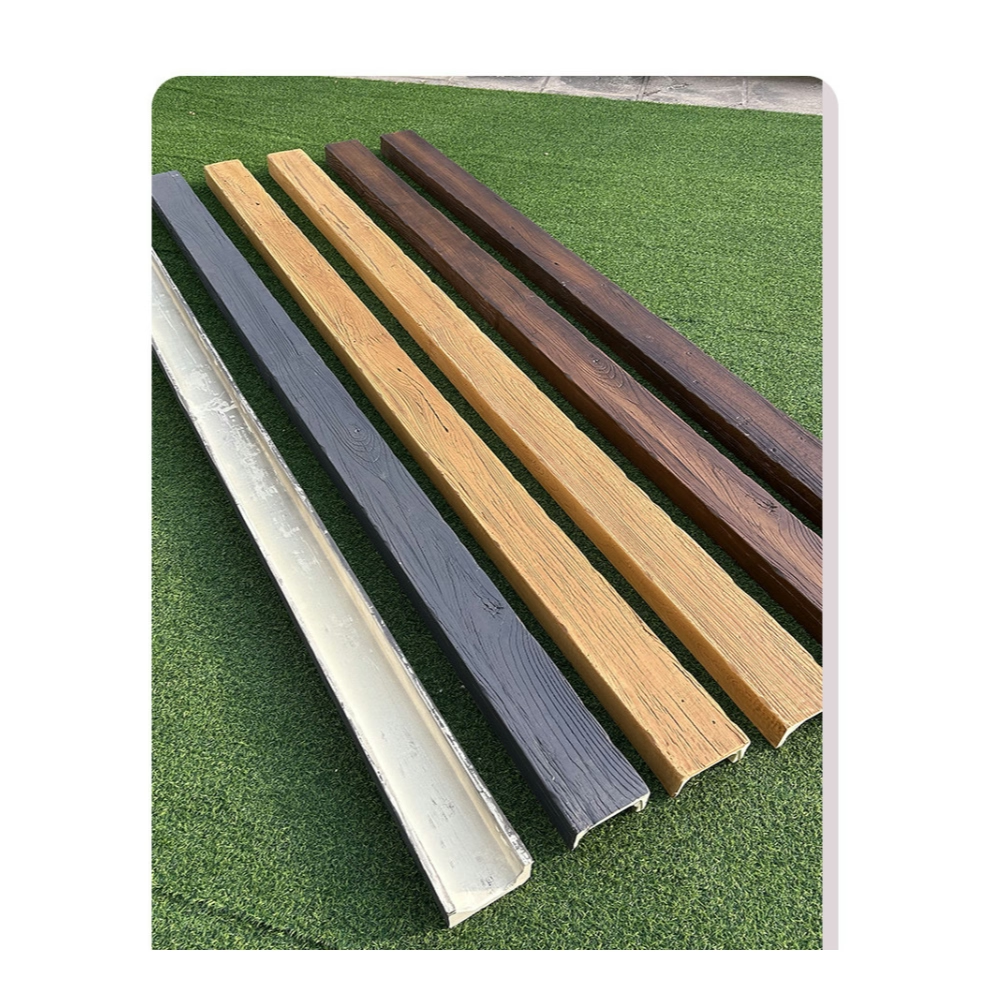
Existing ceiling beams in older homes and buildings often represent significant investments in both material and craftsmanship that deserve preservation rather than replacement. The structural value of these beams may remain sound while their appearance has deteriorated beyond acceptable standards. Painting, staining, or other surface treatments may prove insufficient for beams with extensive damage, leaving property owners with limited options that balance aesthetic improvement against practical constraints.
PU molded wood grain beam covers offer comprehensive solutions for aging beam structures by providing protective shells that completely enclose existing elements while presenting fresh, attractive timber surfaces. This approach preserves structural integrity while achieving appearance improvements that would be impossible through surface treatment alone. The technology has matured significantly, with modern products providing convincing timber aesthetics that satisfy discriminating design requirements.
The decision between cover installation and complete beam replacement involves multiple considerations including structural condition, budget constraints, and aesthetic goals. Covers prove most appropriate when underlying structure remains sound but surface appearance has degraded. Complete replacement becomes necessary when structural issues prevent continued use regardless of surface appearance.
Understanding Cover Technology
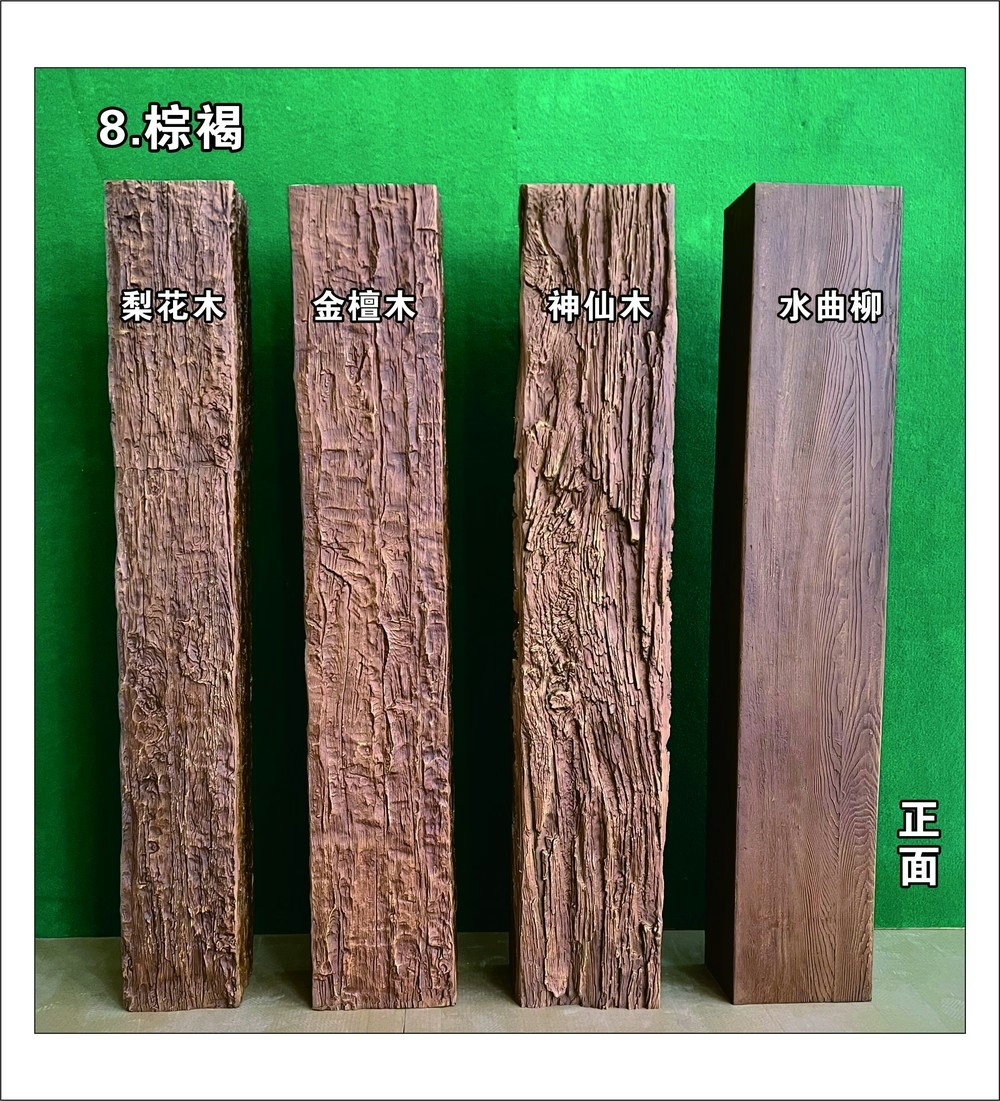
Molded wood grain technology reproduces the organic textures of natural timber through manufacturing processes that capture detailed surface characteristics. The resulting products display grain patterns, growth ring formations, and natural variations that characterize genuine timber while maintaining the practical advantages of synthetic materials. This combination of aesthetic quality and practical performance distinguishes modern cover products from earlier generations.
The molding process creates consistent texture reproduction across multiple units, ensuring that all covers in an installation present unified appearances. Unlike natural timber where each piece differs from every other, molded covers enable precise aesthetic coordination that supports design intentions. This consistency proves particularly valuable in commercial applications where uniform appearance across large areas is essential.
Material formulations for beam covers emphasize durability and appearance retention over extreme lightweighting that might compromise either characteristic. The balance between weight and performance ensures that covers install easily while maintaining structural integrity throughout their service lives. Quality manufacturers publish weight specifications that enable structural evaluation during specification.
Surface finish options range from clear coatings that preserve natural wood tones to stained finishes that replicate specific species or achieve particular color goals. The finishing flexibility enables matching to existing wood elements or creating deliberate contrasts that establish new design directions. Sample evaluation verifies color relationships before commitment to specific finishes.

Assessment and Selection Process
Evaluation of existing beams determines whether cover installation represents an appropriate treatment. Structural assessment identifies any damage, deterioration, or deflection that might compromise beam performance. Only beams with sound structural condition qualify for cover treatment; any structural concerns must be addressed before or during cover installation.
Dimensional survey measures existing beam dimensions, spacing, and alignment to determine appropriate cover sizes and configurations. The survey should document not only nominal dimensions but also variations and irregularities that affect cover fit. Accurate dimensional information prevents installation problems that result from insufficient field measurement.
Species and style selection considers both existing architectural context and desired appearance outcomes. Covers can either complement existing timber elements through matching species selection or establish new directions through contrasting treatments. The selection process should consider how covers will appear alongside other wood elements that remain uncovered.
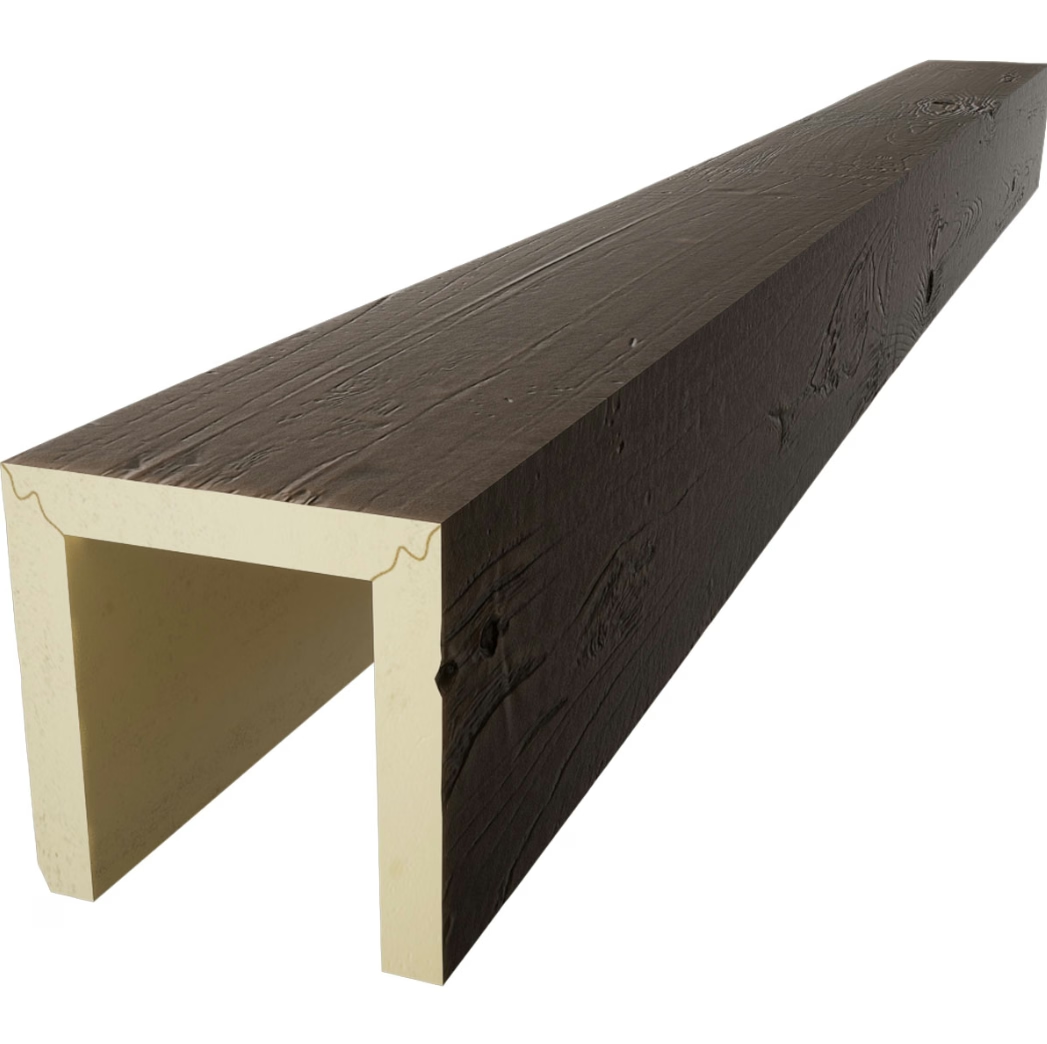
Profile selection determines the visual character of covered beams, with options ranging from simple rectangular shapes to complex architectural profiles featuring decorative edges, corbel silhouettes, or other ornamental details. The profile should relate appropriately to room scale, ceiling height, and overall design vocabulary.
Installation Procedures
Successful cover installation requires proper preparation and sequencing that ensures lasting results. The process begins with surface preparation that creates clean, stable substrates for cover attachment. Any existing finish that might interfere with adhesion or mechanical fastening must be removed or properly prepared to accept new materials.
Structural preparation addresses any deterioration or damage discovered during assessment. This work may involve structural repair, reinforcement, or pest treatment depending on specific conditions. The preparation phase should resolve all structural concerns before proceeding with cosmetic cover installation.
Cover modification for field conditions may be necessary when dimensional variations require adjustment. Quality covers can be cut, routed, or otherwise modified to accommodate unusual conditions while maintaining appearance quality. The modification process should preserve texture continuity at cut edges through appropriate finishing techniques.
Attachment methods vary based on cover design, ceiling construction, and load requirements. Mechanical fastening through screws or nails provides secure attachment that resists both gravity and lateral loads. Adhesive bonding supplements mechanical attachment in applications requiring enhanced security or reduced visible fasteners.
Coordination with Building Systems
Ceiling building systems require consideration during cover installation planning. Electrical wiring, HVAC ductwork, and other services that occupy ceiling cavities may interfere with cover placement or require relocation before installation can proceed. Early coordination prevents discovery of conflicts during installation.
Light fixture integration requires planning that accounts for fixture locations, mounting requirements, and clearance needs. Covers can be notched, modified, or specially configured to accommodate fixtures while maintaining continuous beam appearances. The coordination process should verify that proposed cover configurations allow proper fixture installation and operation.
Sprinkler and fire alarm system compliance requires verification that cover installation does not compromise required clearances or coverage patterns. Building code requirements for fire protection systems may limit cover projection into spaces or mandate specific clearance from sprinkler heads. This coordination should occur during design rather than creating problems during inspection.
Acoustic and insulation considerations may influence cover specification and installation approach. Hollow cover construction may affect acoustic performance differently than solid beams, potentially changing room acoustics in subtle ways. Thermal insulation behind covers may require ventilation to prevent moisture accumulation in enclosed spaces.
Maintenance and Care
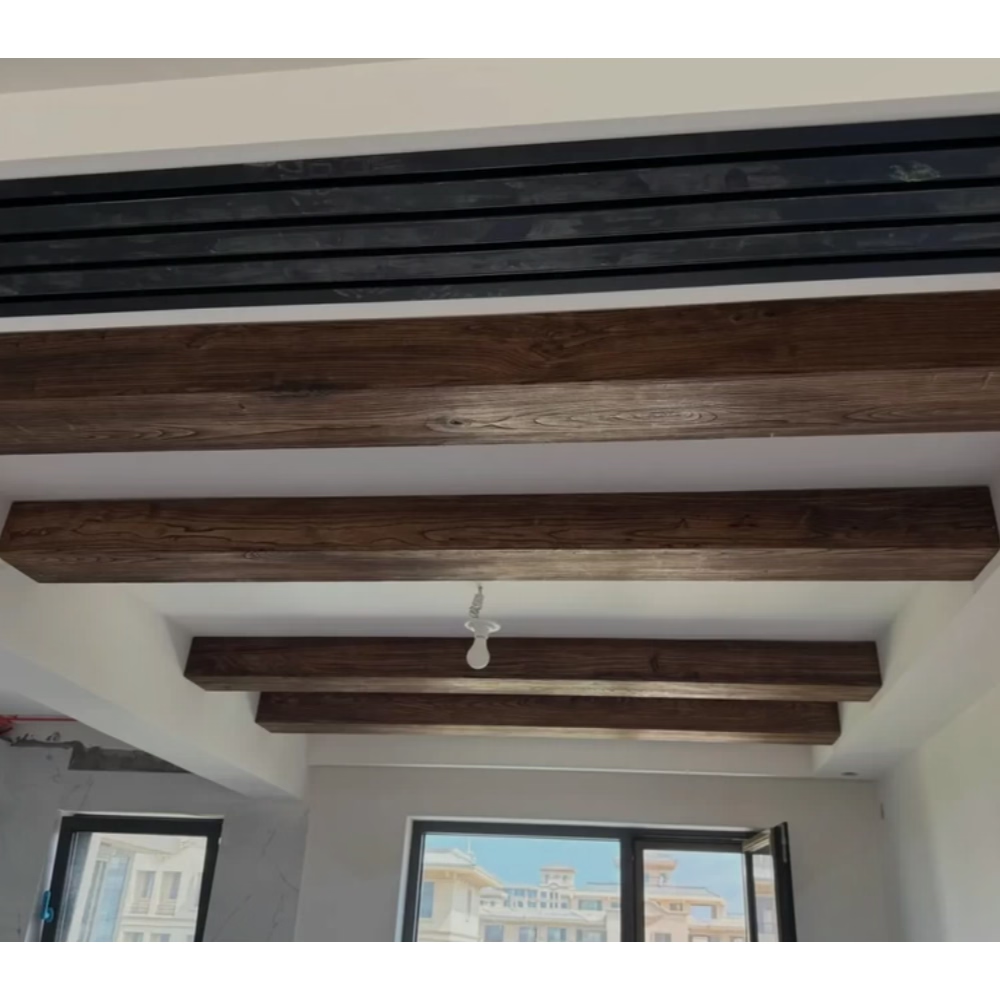
Cover maintenance requirements are minimal compared to genuine timber alternatives, with routine cleaning representing the primary ongoing care need. The molded texture, while realistic, does not accumulate debris in the same way that natural wood grain can, simplifying cleaning procedures.
Inspection of cover attachment should occur periodically to verify continued secure mounting. While covers do not deteriorate like genuine timber, the attachment systems that support them may loosen over time. Regular inspection identifies attachment issues before they cause appearance problems or safety concerns.
Damage repair for covers differs from timber repair through the availability of patching compounds formulated for synthetic materials. Unlike timber where damaged areas must be carved and filled with matching species, cover repairs can use filler compounds that accept paint or finish application. This repair simplicity reduces maintenance costs and extends service life.
Replacement of damaged covers is straightforward when matching products remain available. Unlike genuine timber where each piece differs, replacement covers match existing installations exactly, ensuring consistent appearance when repairs become necessary. Maintaining spare covers for critical installations enables immediate replacement without waiting for product availability.
Technical References
ASTM standards cited in every specification
Test Data
Lab results from internal testing program
Updated 2026
Reviewed against current product specs