Architecture has always depended on structural elements that simultaneously serve functional purposes and contribute to visual design. From ancient temples to modern commercial buildings, the way overhead spaces are treated dramatically influences how inhabitants perceive and experience interior environments. Beams represent one of the oldest architectural traditions, serving as load-bearing components that craftsmen have decorated, carved, and celebrated throughout human history.
Contemporary designers inherit this rich tradition while working within constraints that ancient builders never faced. Construction schedules are compressed, budgets are scrutinized, and the skilled artisans capable of creating elaborate wood carvings have become increasingly rare. Molded polyurethane beams address these realities by delivering premium architectural aesthetics through efficient modern manufacturing while preserving the visual richness that makes beam architecture so compelling.
Historical Context and Modern Evolution
The decorative beam tradition spans virtually every architectural style and cultural context. Greek temples featured carved wooden beams with painted details. Medieval European great halls showcased massive timber structures adorned with heraldic elements. East Asian architecture incorporated elaborately bracketed beam systems that served as both structure and ornament. Each tradition reflected local materials, construction techniques, and aesthetic preferences.
Modern molded polyurethane beams draw inspiration from these historical precedents while optimizing for contemporary needs. The manufacturing process captures the intricate details that hand craftsmanship once provided, then replicates them precisely across unlimited production runs. A designer's vision for an ornate corbel can become a standardized product available to any project that specifies it, democratizing access to premium architectural aesthetics.
This evolution represents more than mere cost reduction. It enables architectural consistency that was simply unachievable when every decorative element required individual hand-crafting. Large projects can now specify identical beams throughout, and replacement pieces will match original installations perfectly even decades later.
The Art of Mold Creation
The quality of a molded polyurethane beam begins with the master pattern and the molds derived from it. Skilled craftsmen create original patterns using various techniques—some sculpt patterns from clay or foam, others work from computer-generated designs, and still others use actual antique wooden beams as templates, capturing authentic historical details with photogrammetric precision.

The molds themselves represent significant investment, typically crafted from silicone rubber or other flexible materials capable of capturing fine surface details while withstanding repeated use. A single mold might produce hundreds of beams during its useful life, spreading the tooling investment across many installations and contributing to the cost efficiency that makes premium architectural elements accessible.
Mold maintenance requires ongoing attention in high-volume production environments. Regular inspection identifies wear before it affects beam quality, and proper storage protects molds from environmental damage between production runs. Manufacturers committed to premium quality maintain comprehensive maintenance records and replacement protocols for their tooling assets.
Material Performance Advantages
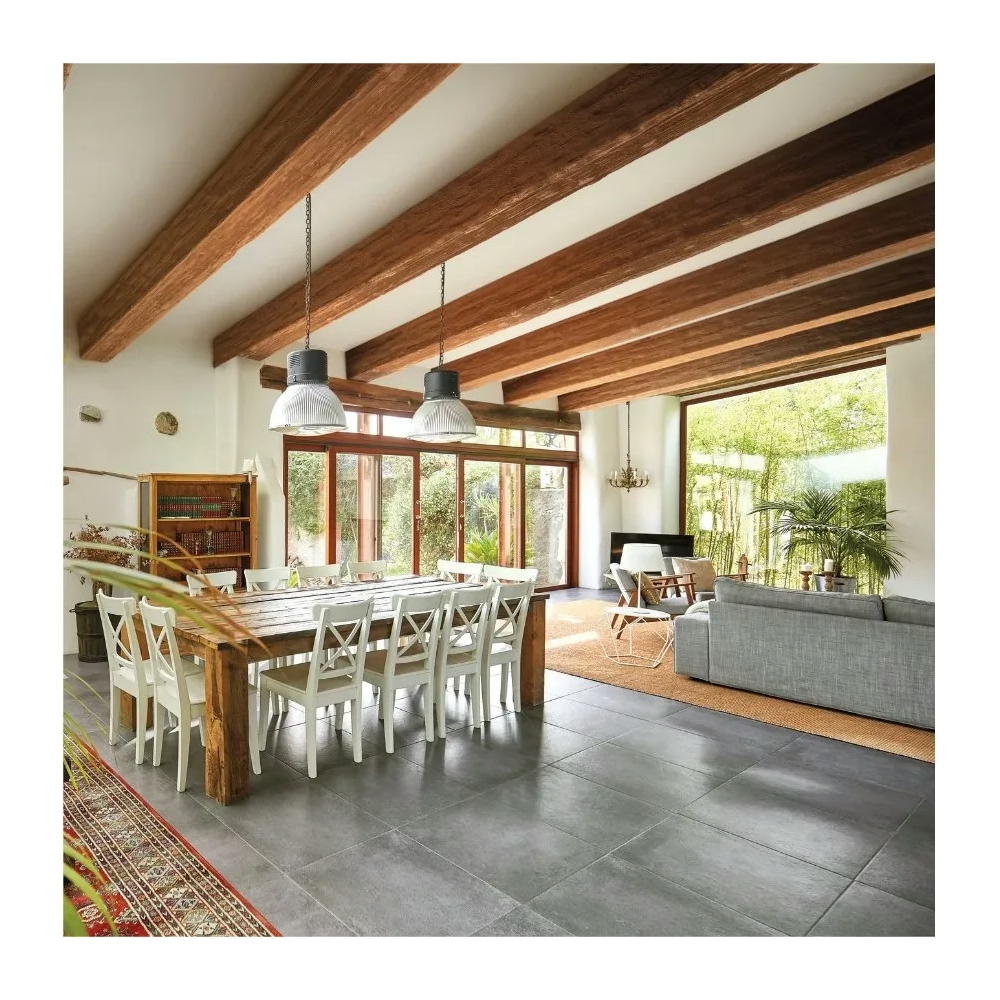
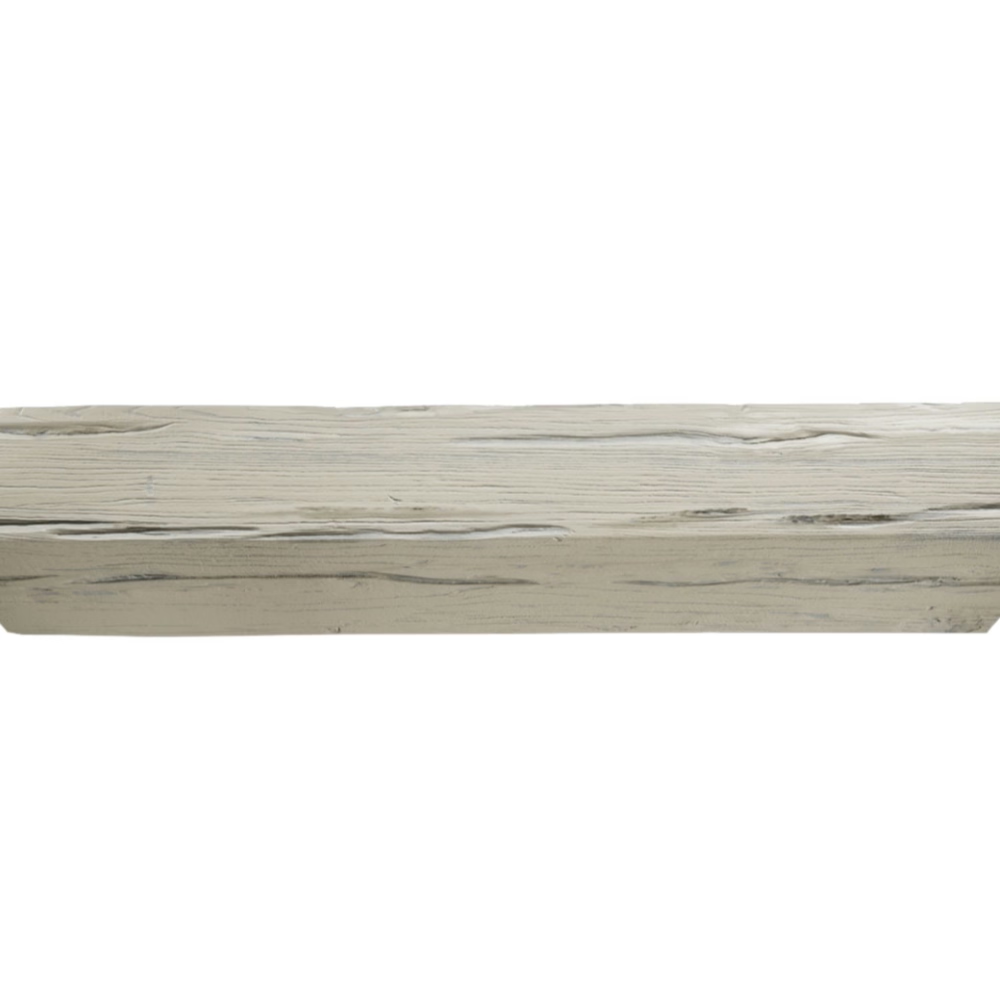
Beyond aesthetics, polyurethane as a substrate offers performance characteristics that enhance its value as an architectural material. The material accepts paint and stain treatments with excellent results, allowing designers to specify custom finishes that complement specific color palettes and design schemes. Whether the project calls for natural wood tones, bold painted colors, or distressed finishes that suggest aged patina, polyurethane delivers satisfactory results.
Structural engineers appreciate the material's strength-to-weight ratio. Molded beams provide meaningful visual impact without the weight penalties that accompany genuine timber of comparable size. This weight reduction simplifies handling, reduces mounting hardware requirements, and places less stress on the building structure itself—particularly valuable in upper-floor installations where cumulative ceiling weight becomes a significant factor.
The material's thermal stability ensures that dimensional changes remain negligible across normal temperature ranges. Unlike wood, which expands and contracts with seasonal humidity fluctuations, polyurethane maintains consistent dimensions year-round. This stability preserves tight joints and crisp reveals that might otherwise open or close with the seasons, keeping architectural details precisely as intended.
Integration with Contemporary Building Systems
Modern buildings incorporate mechanical, electrical, and plumbing systems that earlier architectural traditions never anticipated. Molded polyurethane beams accommodate these requirements through thoughtful design and flexible installation approaches.
Lighting integration represents a common challenge that polyurethane beam design addresses effectively. Recessed fixtures can be installed within beam cavities, coffered arrangements can incorporate uplighting, and decorative luminaires can be mounted to beam surfaces without compromising structural integrity. The material machines cleanly, allowing custom modifications when standard configurations do not suit specific installation requirements.
HVAC distribution often requires running ductwork through ceiling cavities. Hollow polyurethane beam profiles can be specified to accommodate these runs, concealing mechanical infrastructure while maintaining continuous visual coverage. Alternatively, beams can be installed around fixed ductwork routes, creating the desired architectural effect without requiring duct relocation.
Acoustic considerations receive increasing attention in premium commercial and residential projects. Molded beams can incorporate acoustic treatments that absorb sound and reduce reverberation, combining aesthetic and functional performance in single elements. These integrated solutions simplify specification and installation while achieving results that purely decorative elements cannot match.
Custom Design Opportunities
While catalog products serve many projects effectively, the most ambitious architectural visions often require custom elements. Molded polyurethane manufacturing accommodates bespoke design work, allowing architects and designers to develop proprietary elements specific to their projects.
Custom mold creation enables unique profiles, specialized proportions, and distinctive details that differentiate a project from work that uses standardized components. The process typically begins with design development in collaboration with manufacturer engineers, who evaluate feasibility and suggest modifications that optimize the design for production and installation.
Lead times for custom molded elements naturally exceed those for catalog products, and tooling investments may be required depending on project scope. However, these investments often prove worthwhile for flagship properties, luxury residences, and other projects where distinctive architectural identity justifies additional investment. The resulting elements become signature features that contribute meaningfully to overall design success.
Cost-Benefit Considerations
Evaluating molded polyurethane beams against alternatives requires considering both direct costs and lifecycle factors. Initial pricing typically falls between budget wood-look alternatives and premium genuine timber, positioning polyurethane as a mid-premium option that delivers value commensurate with its cost.
Long-term maintenance requirements significantly influence lifecycle cost calculations. Real wood demands regular refinishing, moisture management, and occasional repair to maintain its appearance. Polyurethane requires none of these interventions under normal conditions, reducing ongoing maintenance budgets while preserving aesthetic quality indefinitely.
Replacement costs also favor polyurethane in many scenarios. When genuine timber beams are damaged, matching replacements often prove difficult or impossible to source. Polyurethane replacements emerge from the same molds that produced the originals, ensuring perfect matching regardless of when replacements are needed. This availability simplifies facility maintenance planning and reduces the risk of aesthetic degradation as buildings age.
The complete cost picture, when thoughtfully analyzed, often reveals that molded polyurethane beams provide superior lifecycle value despite initial costs that may exceed some alternatives. Projects that prioritize long-term performance and aesthetic consistency find this value proposition compelling.
Technical References
ASTM standards cited in every specification
Test Data
Lab results from internal testing program
Updated 2026
Reviewed against current product specs


