
The tradition of architectural ornamentation stretches back thousands of years, with decorative ceiling treatments serving as status symbols and artistic expressions throughout architectural history. From the coffered ceilings of ancient Rome to the timber-framed halls of medieval Europe, ceiling beams have communicated cultural values and design sophistication. Polyurethane faux timber beams continue this tradition, making ornamental ceiling treatment accessible to contemporary construction without the structural and economic constraints that genuine timber imposes.
Building ornament serves purposes beyond mere decoration. Well-designed ornamental elements create visual interest that draws attention upward, elevating perception of space quality throughout built environments. The investment in ornamental treatment signals attention to detail that distinguishes quality construction from ordinary development.
Historical Context of Beam Ornamentation
Classical architecture employed elaborate beam and ceiling treatments to communicate power and permanence. Coffered ceilings in temples and public buildings created rhythmic patterns that suggested cosmic order and human achievement. The expense of these treatments limited their use to structures of civic or religious significance, making ceiling ornamentation a marker of institutional importance.
Medieval timber construction developed independently across Northern Europe, with exposed structural timber serving as both structure and ornament. The craftsmanship invested in mortise-and-tenon joinery created visual patterns that decorated while they supported. This tradition continued through Gothic and Renaissance periods, evolving into the elaborate timber roofs of great halls and cathedral structures.
The industrial age reduced the economic barriers to ornamental treatment while changing the materials available for implementation. Mass production techniques made decorative elements available for broader audiences, though quality varied dramatically between artisan production and machine manufacturing. Contemporary polyurethane technology represents the latest evolution, combining aesthetic excellence with manufacturing efficiency.
Contemporary Ornamental Applications
Modern architecture often strips ornamentation in favor of minimalism, creating spaces that feel austere despite functional excellence. The reaction against this sterility has produced renewed interest in ornamental treatments that add warmth and character to contemporary contexts. Faux beams provide this ornamentation without the maintenance concerns that historical materials would introduce.
Institutional buildings including libraries, museums, and civic centers have rediscovered the value of ornamental ceilings in creating spaces that inspire and elevate. The ornamentation transforms utilitarian functions into dignified environments appropriate to their public purposes. Visitors experience these spaces as special rather than merely functional.
Residential construction incorporates ornamental beam treatments as standard features in quality development. The treatment elevates perception of home quality while providing the aesthetic character that distinguishes custom homes from production alternatives. Even modest homes benefit from beam treatments that suggest craftsmanship and attention to detail.

Ornamental Beam Design Strategies
Pattern creation through beam arrangement establishes visual rhythm that structures spatial perception. Regular spacing creates formal, ordered compositions appropriate for institutional and traditional contexts. Irregular spacing introduces visual interest that prevents monotony while maintaining overall coherence. The pattern choice should align with the character intended for finished spaces.
Intersecting beam configurations create grid and lattice patterns that reference historical ceiling treatments. The intersections become focal points that draw attention and establish visual anchors. These compositions work well in square or rectangular rooms where the geometry supports regular patterns.
Diagonal and angular arrangements create dynamic compositions that introduce movement into static ceiling planes. These treatments suit contemporary contexts where traditional regularity might feel inappropriate. The angular treatment creates visual energy that aligns with modern design sensibilities.
Profile Selection for Ornamental Impact
Complex beam profiles create greater ornamental impact than simple alternatives through increased visual detail. Beads, coves, and decorative edges add intricacy that distinguishes ornamental treatment from basic installation. The additional detail rewards close observation while maintaining coherent appearance from normal viewing distances.
Scale variation within ornamental compositions creates hierarchy that guides visual attention. Primary beams with substantial presence establish overall pattern, while secondary elements add detail without competing for attention. This hierarchy ensures that ornamental treatments read as intentional design rather than random accumulation.
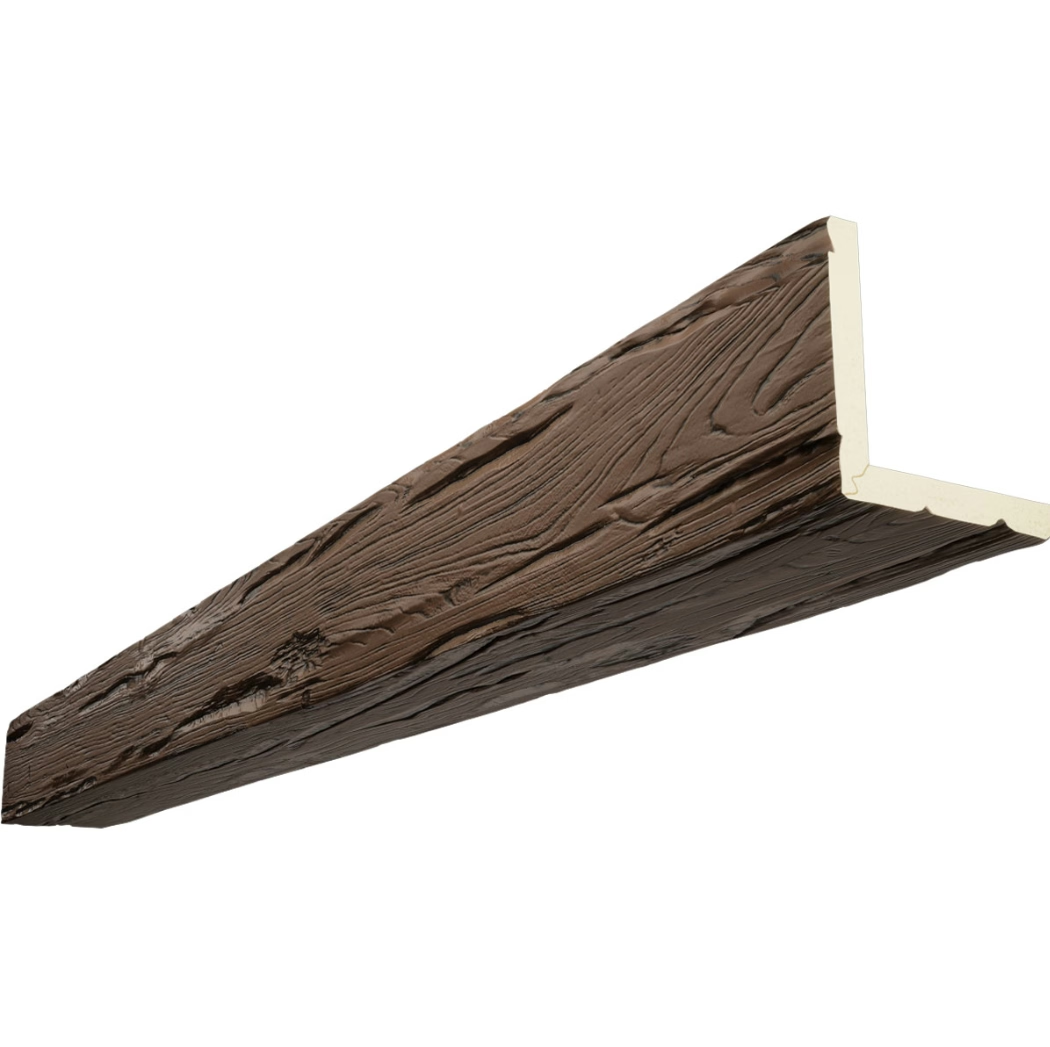
Textured surfaces contribute ornamental detail through tactile variation that catches light differently across surfaces. Hand-scraped, wire-brushed, and distressed textures add complexity that smooth surfaces cannot achieve. These treatments prove particularly valuable in traditional contexts where authenticity of aging suggests established character.
Material Advantages for Ornamental Applications
The manufacturing precision of polyurethane enables ornamental details that natural materials cannot achieve consistently. Mold-produced textures repeat exactly across all components, ensuring visual consistency throughout installations. This precision eliminates the variation that natural materials exhibit, producing cleaner ornamental effects.
Dimensional stability distinguishes polyurethane from natural wood that expands and contracts with moisture variation. Ornamental details remain precisely aligned despite environmental changes that would cause natural materials to warp, twist, or check. This stability preserves ornamental intention throughout the service life of installations.
Finish consistency across all components ensures that ornamental patterns read clearly without color variation distracting from design intent. Factory-applied finishes cure under controlled conditions, achieving adhesion and uniformity that field finishing cannot match. The resulting surfaces maintain appearance without the refinishing requirements that natural wood demands.
Durability in Ornamental Contexts
Ornamental details that accumulate dust and grime lose impact that fresh installation provided. Polyurethane surfaces clean easily without damage from cleaning agents that might affect natural wood finishes. This cleanability preserves ornamental appearance despite exposure to environmental contaminants and routine maintenance.
Impact resistance protects ornamental details from damage that would require expensive repair or replacement. The solid construction of quality polyurethane withstands impacts that would dent or chip natural wood alternatives. This durability proves particularly valuable in accessible locations where furniture, equipment, or building maintenance might contact beam surfaces.
UV resistance prevents the yellowing and chalking that affects some polyurethane formulations under sustained sun exposure. Quality products incorporate UV inhibitors that maintain original appearance despite exposure to sunlight through windows or skylights. This resistance preserves ornamental appearance indefinitely in interior applications.
Integration with Architectural Styles
Traditional architectural styles benefit from beam ornamentation that references historical precedents. Victorian, Craftsman, and Colonial interpretations each employ beam vocabulary specific to their periods. Contemporary faux beams can replicate these traditional profiles while adapting to modern construction methods and maintenance expectations.
Transitional architectures that blend traditional and contemporary elements employ beam treatments that bridge both contexts. Natural wood finishes in contemporary profiles create hybrid aesthetics that satisfy neither pure traditionalist nor strict modernist. The flexibility of beam customization enables precise targeting of specific stylistic positions.
Contemporary and minimalist architectures can employ ornamental beams as contrasts to otherwise spare design vocabularies. A single ornate beam in an otherwise minimal context creates focal interest that dense ornamental treatment cannot achieve. This selective approach proves powerful when restraint serves design intentions better than abundance.
Color and Ornamentation
Color selection for ornamental beams affects both immediate impact and long-term relationship with surrounding elements. Dark stains create strong visual presence that establishes beams as primary ornamental elements. Light natural finishes provide subtle enhancement that supports without dominating surrounding design.
Painted ornamental beams offer unlimited color options that complement any design palette. White and off-white painted beams brighten spaces while maintaining textural interest. Bold colors create dramatic focal points appropriate for spaces seeking strong visual identity.
Finish layering that combines paint with wood-tone details creates ornamental complexity that single-finish alternatives cannot achieve. Exposed wood tones at edges and details against painted fields suggest aging and wear that adds authentic character. These layered finishes work particularly well in traditional and farmhouse design contexts.
Investment and Value Analysis
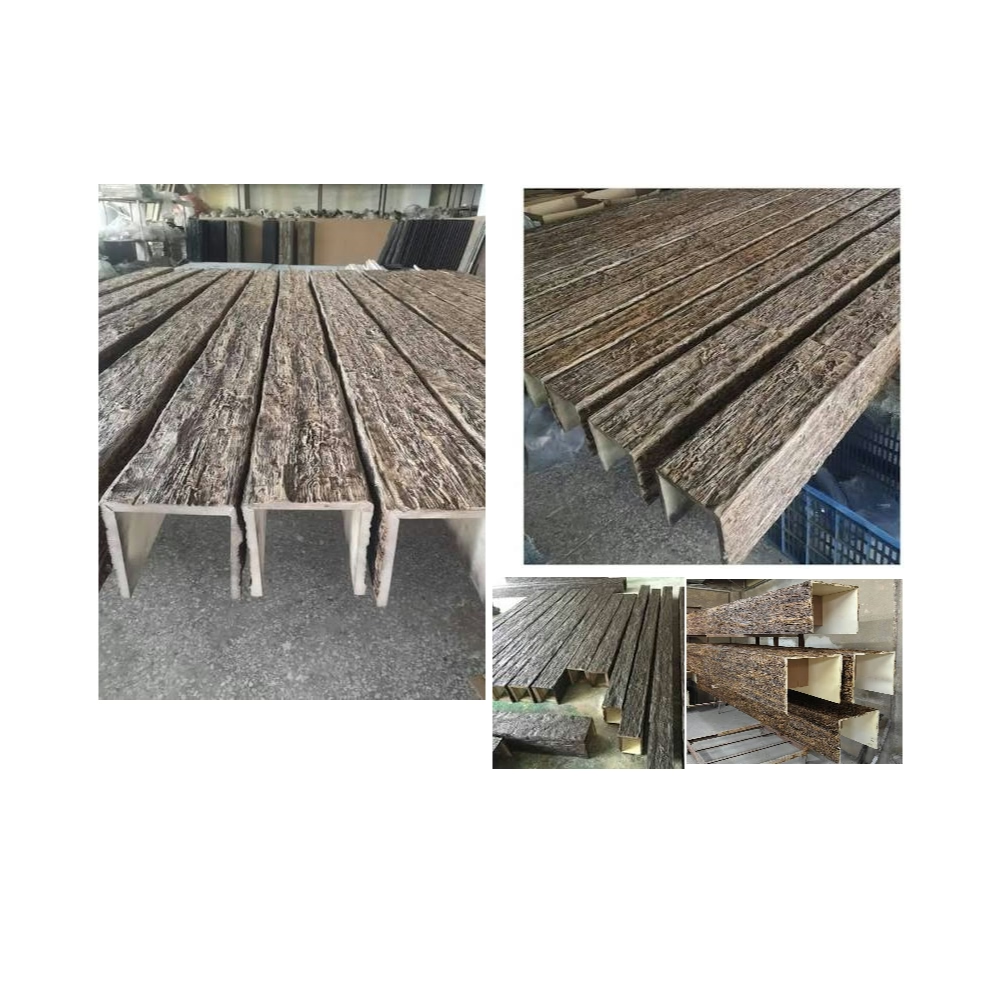
Ornamental beam installation represents meaningful investment that should align with overall project budgets and objectives. The cost includes both materials and specialized installation that simple mounting does not require. Evaluating whether ornamental treatment serves project goals prevents investment in details that fail to contribute proportionate value.
Quality perception from ornamental treatment often exceeds actual construction investment. The visual impact of well-designed beam ornamentation suggests craftsmanship and attention to detail that justify premium pricing in competitive markets. This perceived value translates to both immediate satisfaction and long-term property appreciation.
Maintenance cost comparison between ornamental and plain treatments favors polyurethane alternatives. The easy cleaning and lasting finish of quality faux beams reduce lifetime maintenance investment compared to natural wood alternatives that require refinishing and repair. This cost advantage should factor into investment analysis alongside initial installation costs.
Technical References
ASTM standards cited in every specification
Test Data
Lab results from internal testing program
Updated 2026
Reviewed against current product specs


