
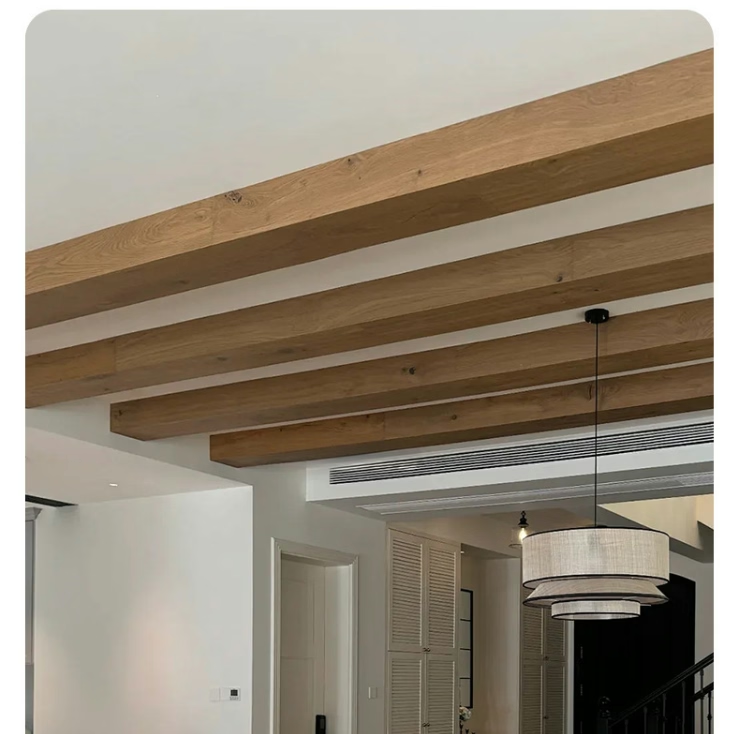
The universal appeal of timber aesthetics transcends the boundaries that otherwise segment design markets. What works beautifully in a mountain cabin proves equally effective in a downtown loft, a suburban restaurant, or a coastal resort. Polyurethane faux timber beams capitalize on this universal appeal, delivering authentic wood appearances without the limitations that restrict natural timber across demanding applications.
This versatility creates opportunities for specification across remarkably diverse project types. A single product line can serve design professionals working on single-family homes, hospitality venues, retail environments, and institutional spaces without compromising quality or requiring different material sources. The consistency simplifies procurement while ensuring that expertise developed in one context transfers directly to others.
Residential Application Spectrum
Single-family homes represent the broadest residential application category, with beams specified in every room type and architectural style. Kitchens benefit from beam installations above islands and eating areas, adding warmth that balances stainless steel and stone surfaces. Living rooms gain architectural character through ceiling treatments that transform standard construction into custom environments.
Bedroom applications focus on creating intimate, restful atmospheres through ceiling beams that define sleeping spaces as distinct from the activity zones that surround them. The scale and finish selection in bedroom applications typically emphasize comfort over dramatic impact, with softer textures and warmer tones supporting relaxation objectives.
Specialty residential spaces including home theaters, wine cellars, and hobby rooms employ beams for both aesthetic and functional purposes. Acoustic benefits in theaters, humidity resistance in wine storage, and character enhancement in hobby spaces all drive specification decisions. The versatility of polyurethane accommodates these varied requirements within unified product lines.
Renovation Versus New Construction
Existing homes undergoing renovation benefit from beam installations that address dated architecture or missed opportunities from original construction. The lightweight nature of polyurethane accommodates ceiling conditions that might not support genuine timber, expanding the range of applicable projects. This accommodation proves particularly valuable in older homes where structural limitations are common.
New construction benefits from beam specification through design flexibility that traditional materials cannot provide. Custom profiles, coordinated finishes, and integrated components all become achievable when manufacturing processes support precise production. The investment in beam specification during new construction returns value through enhanced market positioning and buyer appeal.
Adaptive reuse projects converting non-residential structures to residential use often struggle with ceiling treatments appropriate to changed functions. Beam installations provide residential character in spaces originally designed for commercial, industrial, or institutional purposes. The transformation succeeds through beam treatment that establishes new identity while acknowledging existing architecture.

Commercial Application Categories
Hospitality venues including hotels, resorts, restaurants, and entertainment spaces specify beams to establish brand-appropriate atmospheres that justify premium pricing. The consistency and durability of polyurethane supports the demanding use patterns common to hospitality environments. Maintenance requirements that would burden natural wood alternatives become manageable with polyurethane's forgiving characteristics.
Retail environments utilize beams to differentiate spaces within competitive marketplaces. The architectural character establishes brand identity that distinguishes tenants from surrounding competitors. Customization capabilities enable precise brand alignment that generic products cannot achieve, supporting marketing objectives through architectural expression.
Corporate office spaces incorporate beams as alternatives to conventional ceiling systems that dominate commercial construction. The visual warmth improves employee satisfaction while impressing visitors and supporting talent attraction. The acoustic benefits contribute to productive work environments that benefit from reduced noise distraction.
Healthcare and Educational Applications
Healthcare facilities have discovered that beam treatments create healing environments that reduce patient stress and support recovery. The visual warmth counteracts clinical sterility while meeting infection control requirements that limit material selection. Specialized formulations with antimicrobial properties address healthcare-specific concerns.
Educational facilities including libraries, lecture halls, and student centers employ beams to create learning environments that support academic mission. The acoustic benefits prove valuable in spaces where speech intelligibility impacts educational effectiveness. Durable surfaces withstand heavy student traffic without the maintenance demands that natural wood would require.
Religious and spiritual spaces utilize beam treatments to create contemplative atmospheres appropriate for reflection and community gathering. The scale possibilities allow installations that match grand architectural traditions while accommodating modern construction methods and budget constraints.
Material Performance Across Contexts
Moisture resistance proves critical in applications ranging from pool enclosures to coastal properties to kitchens with cooking humidity. Polyurethane's resistance to moisture absorption, swelling, and decay addresses concerns that limit natural wood utility in these demanding conditions. This resistance enables design approaches that natural wood alternatives cannot support.
Temperature stability ensures performance across environmental conditions that natural materials would find challenging. Unheated spaces, sun-exposed installations, and temperature-cycling environments all accommodate polyurethane without the expansion, contraction, and deterioration that affects natural wood. This stability preserves appearance and structural integrity throughout environmental challenges.
Insect resistance eliminates concerns about termite damage, carpenter ant activity, and other biological threats that affect natural wood in many regions. This resistance proves particularly valuable in geographic areas where insect pressure limits natural wood applications. Property owners gain peace of mind alongside aesthetic improvement.
Durability Characteristics
Impact resistance protects beam surfaces from damage that would require repair or replacement. The solid construction of quality polyurethane withstands impacts from furniture, equipment, and building maintenance that might dent or chip natural wood alternatives. This durability reduces lifetime costs while maintaining appearance quality.
Surface hardness resists scratching from casual contact and routine cleaning that might mark softer materials. The hard outer surface of quality polyurethane maintains smooth appearance despite the friction and contact that ceiling surfaces occasionally encounter. This hardness contributes to long-term appearance maintenance.
UV stability in quality products prevents the yellowing, chalking, and surface degradation that affects some polyurethane formulations under sustained sun exposure. Products formulated for UV resistance maintain original appearance indefinitely in interior applications with typical light exposure. This stability ensures that investments in beam treatment maintain returns throughout service lives.
Design Coordination Strategies
Color coordination between beams and surrounding elements creates cohesive appearances that unified design vocabularies require. Matching beams to existing woodwork, flooring, or furniture establishes relationships that feel intentional rather than arbitrary. This coordination requires attention during specification to ensure that selected products integrate with existing elements.
Contrast strategies create dynamic tension between beams and surroundings that engages visual interest. Light beams against dark ceilings, smooth surfaces amid textured walls, or contemporary profiles in traditional contexts all establish contrasts that add visual complexity. These contrasts should align with overall design intentions rather than arising from oversight.
Finish durability considerations affect specification decisions for high-traffic commercial applications. Factory-applied finishes typically outperform field applications, making pre-finished products preferable for demanding environments. Understanding finish characteristics ensures that selected products meet performance requirements for specific applications.
Professional Design Integration
Interior designers specify beams as part of comprehensive design schemes that consider all elements simultaneously. The beam specification should coordinate with furniture selection, color palettes, lighting design, and other elements that contribute to overall design quality. This coordination ensures that beams contribute to rather than compete with other design elements.
Architects incorporate beams into building designs that address both aesthetic and structural requirements. The relationship between beams and structural systems, mechanical coordination, and building code compliance all require architectural attention. Early specification prevents conflicts that might require costly redesign or substitution.
Landscape architects working on covered outdoor spaces specify beams for structures that extend indoor aesthetics into protected exterior environments. Weather resistance, UV stability, and moisture tolerance all affect specification for these applications. The coordination between landscape and architectural elements ensures cohesive treatment throughout designed environments.
Specification Best Practices
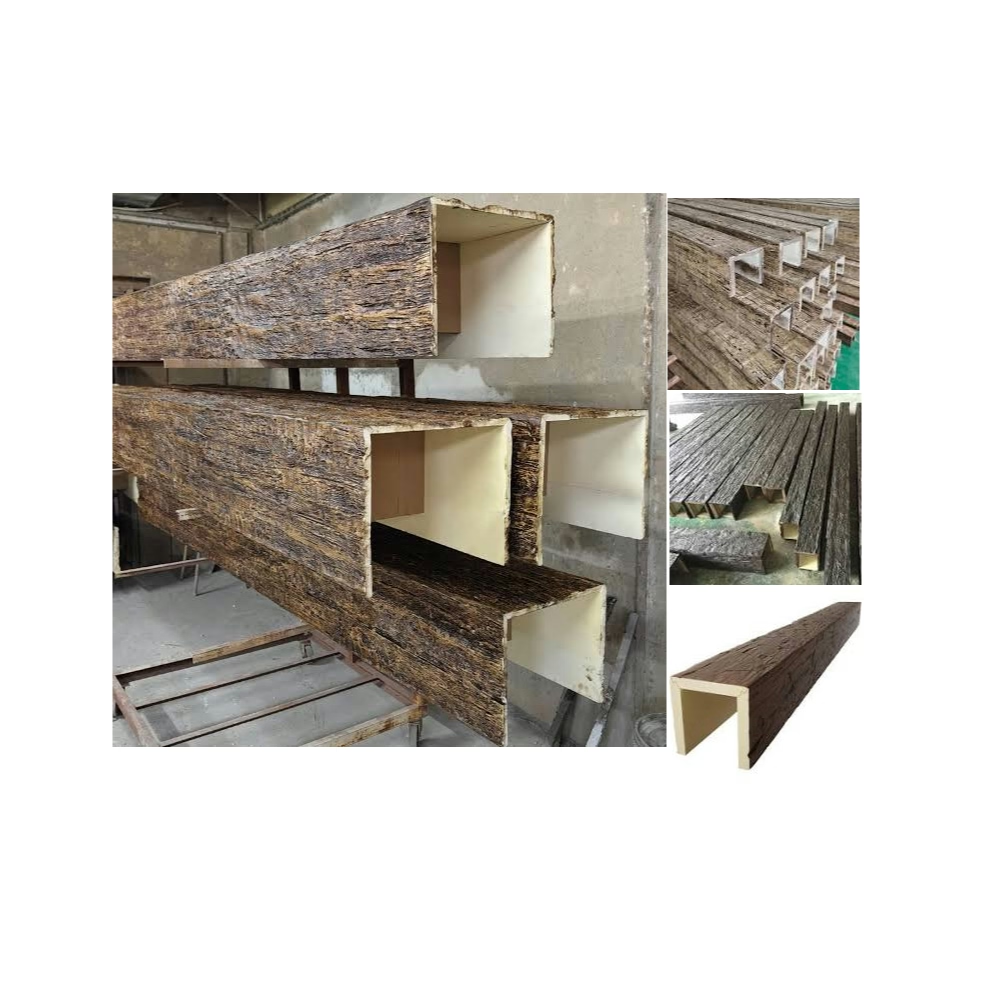
Accurate specification begins with complete project information including dimensions, conditions, and requirements. Measurement verification prevents ordering errors that might delay projects or require expensive remediation. Sample evaluation ensures that selected products match expectations before commitment to full orders.
Performance requirement documentation ensures that specified products meet or exceed project needs. Fire ratings, structural capacities, and environmental resistances should be verified through appropriate testing and certification. This documentation supports code compliance and insurance requirements that projects must satisfy.
Lead time planning accommodates production and delivery timelines that affect project schedules. Standard products may ship quickly from inventory, while custom specifications require extended lead times for tooling and production. Understanding these timelines prevents specification of products that cannot meet project schedules.
Vendor Selection Criteria
Vendor reliability significantly impacts project success, with consistent quality and dependable delivery supporting smooth project execution. Evaluating vendors based on track record, customer references, and support capabilities helps identify partners capable of supporting project requirements.
Technical support availability proves valuable when questions arise during specification, installation, or post-installation periods. Vendors offering knowledgeable technical support help resolve issues efficiently, preventing delays and ensuring correct product use. This support differentiates vendors who merely sell from those who partner.
Warranty terms and claim processes affect long-term satisfaction with beam investments. Understanding coverage scope, duration, and claim procedures ensures that warranty protection remains accessible if problems emerge. Quality vendors stand behind products with warranty terms that reflect confidence in product performance.
Technical References
ASTM standards cited in every specification
Test Data
Lab results from internal testing program
Updated 2026
Reviewed against current product specs


