In nature, forests are never composed of a single species in uniform rows. The visual richness of a woodland landscape comes from the interplay of different bark textures, leaf shapes, trunk proportions, and colorations across multiple species growing together. This organic diversity is one of the qualities that makes natural wood so appealing in interior design — no two boards are identical, and a wall or ceiling clad in real timber presents a constantly varying tapestry of grain patterns and tonal shifts.
Replicating this natural diversity in a faux wood beam installation used to be challenging. When all beams came from a single mold with a single wood-grain finish, the result could feel repetitive and manufactured — precisely the aesthetic quality that designers were trying to avoid. The development of multi-species mixed wood look PU faux beams changes this equation, allowing designers to incorporate multiple wood species and grain patterns within a single installation to create the kind of layered, naturalistic visual complexity that characterizes genuine timber construction.

The Concept of Multi-Species Beam Design
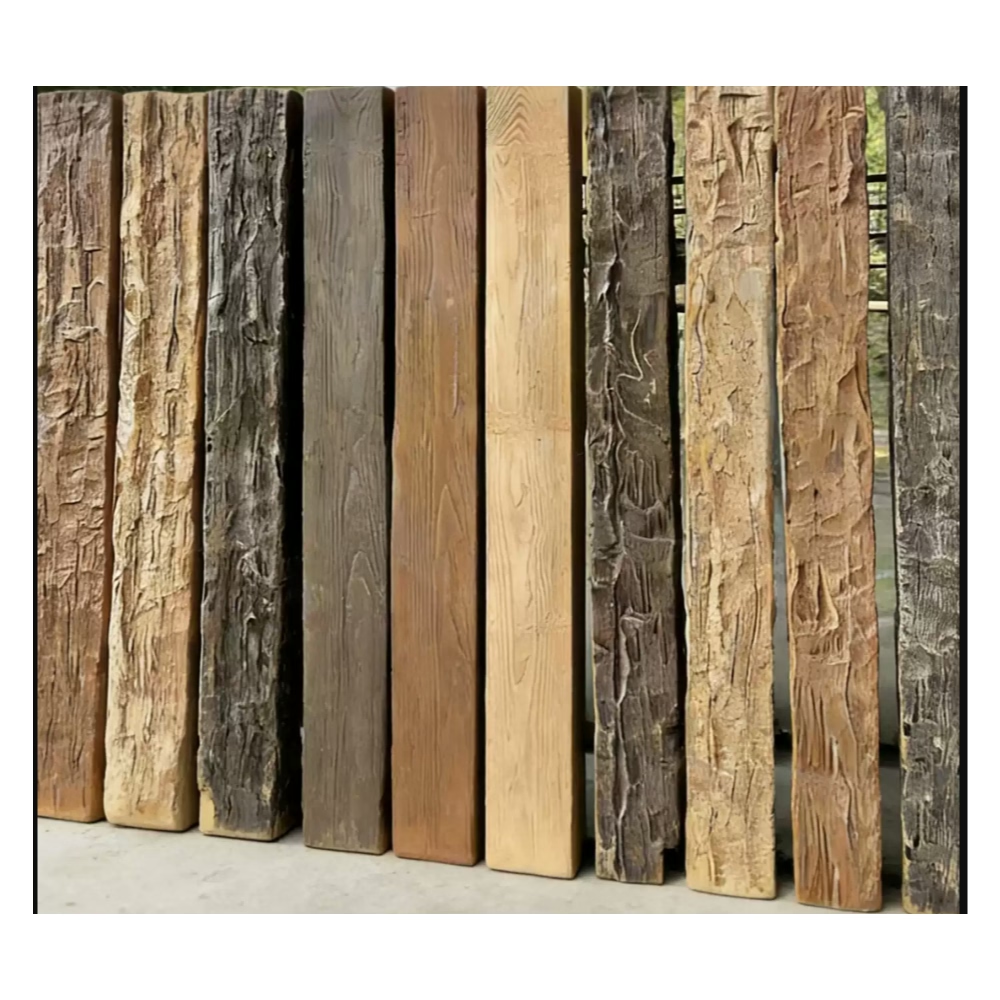
Multi-species mixed wood look beams are designed around the principle that variety within a coordinated framework produces more compelling visual results than uniformity. Rather than installing twelve identical beams across a ceiling and accepting the resulting repetition, a designer using multi-species beams can specify a palette of three, four, or even five distinct wood-grain finishes and distribute them across the installation in a deliberate, planned pattern.
The species and finishes included in a mixed-species palette are selected to complement one another rather than to compete. A common approach pairs species that share a tonal range — perhaps warm honey oak alongside deeper amber maple — while varying the grain pattern, with oak's pronounced cathedral peaks contrasted against maple's finer, straighter figure. The result is a ceiling that feels rich and varied without becoming chaotic or discordant.
Another approach deliberately includes tonal contrast within the palette. A light-toned ash or birch finish combined with a deep espresso walnut creates a dramatic interplay of light and dark that adds energy and definition to the ceiling. This approach works particularly well in contemporary and transitional interiors where a bold design statement is desired.
Achieving Naturalistic Grain Variation
The key to successful multi-species beam design lies in understanding how wood grain patterns communicate species character and how those patterns can be used to create believable, naturalistic variation. Oak grain, with its distinctive wide rays and pronounced pore figure, conveys strength and traditional craftsmanship. Maple's subtle, almost uniform grain reads as refined and contemporary. Hickory's dramatic color variation and bold grain lines communicate rustic authenticity. Walnut's rich, swirling figure adds luxury and depth.
When these different characters are combined in a mixed-species installation, the ceiling takes on a quality reminiscent of a timber frame built from whatever the forest happened to provide — a quality that is extremely difficult to achieve with uniform beams. The eye moves across the ceiling discovering differences, pausing at contrasts, and following the flow of grain lines much as it would across a natural wood surface.
PU faux wood beam manufacturers achieve this variety through careful mold design and finish engineering. Multiple wood-grain patterns are developed for the same beam profile, each capturing the essential character of a different species. These patterns are then assigned to specific beams during the ordering process, allowing designers to specify which species finishes they want in which positions across the ceiling.
Design Strategies for Mixed-Species Installations
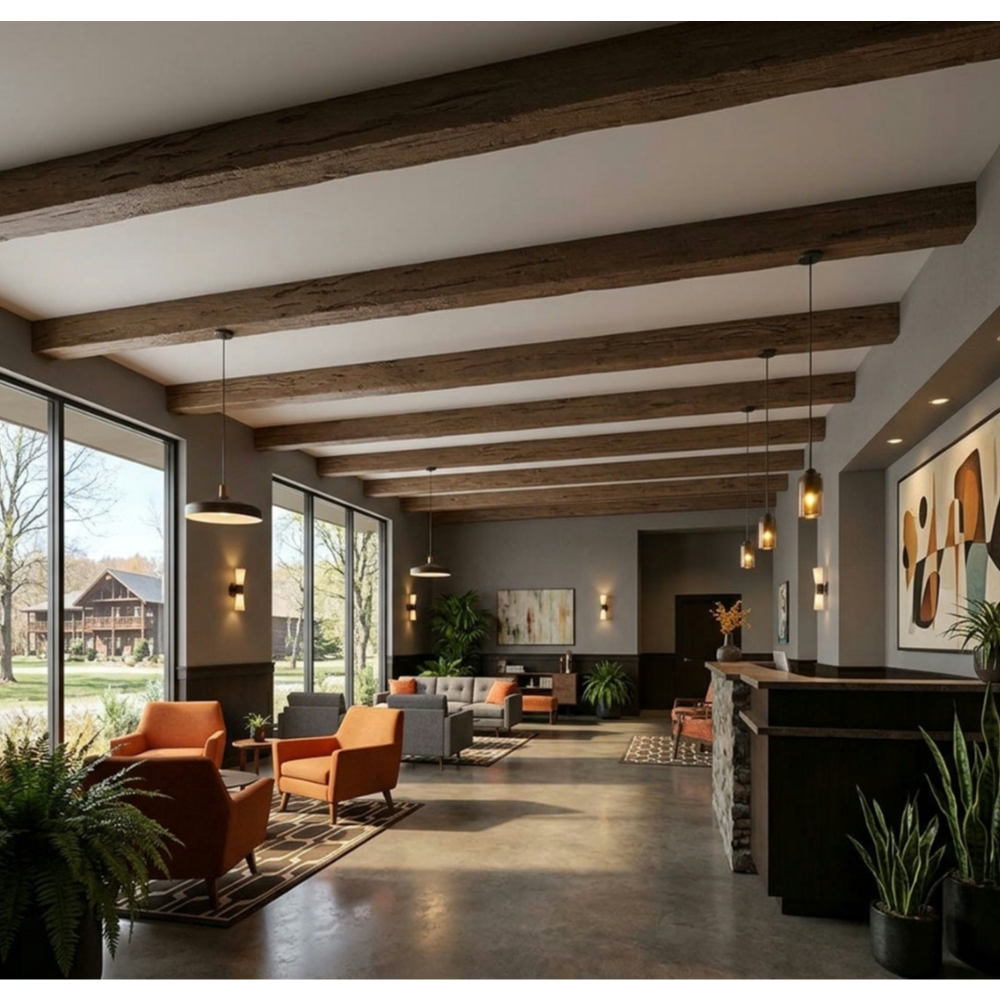
How the different species finishes are distributed across an installation significantly affects the final visual result, and designers have developed several established strategies for achieving specific effects. The random distribution approach places species finishes in a pattern that approximates natural randomness — no two adjacent beams share the same finish, and the overall impression is one of unstudied variety. This approach works well in rustic and farmhouse-style interiors where a casual, unpretentious aesthetic is the goal.
Alternating distribution places different species finishes in a regular repeating sequence, such as Species A, Species B, Species A, Species B across the ceiling. This approach provides variety while introducing an orderly rhythm that suits more formal or contemporary interiors. The alternating pattern can be straightforward — alternating every beam — or more complex, such as groups of two or three beams of one species followed by a contrasting group.
Gradient distribution arranges species finishes along a tonal or character continuum, creating a gradual transition from light to dark or from one grain character to another as the eye moves across the ceiling. This approach is particularly effective in long, narrow rooms where the gradient can follow the room's natural direction, or in spaces with distinct functional zones that might benefit from subtly different wood tones in each area.
Balancing Variety with Cohesion
The central challenge in multi-species beam design is maintaining visual cohesion while introducing variety. Too little variety and the installation feels monotonous; too much variety and it becomes chaotic. The designer's task is to find the sweet spot where the different species finishes enhance one another and contribute to a unified overall effect.
Color harmony is the most important factor in achieving cohesion. Even when grain patterns differ dramatically, species finishes that share a common color temperature — warm with warm, cool with cool — will read as part of a coordinated palette. Introducing finishes from different color temperatures without a bridging element creates discord rather than interest.
Scale consistency is another important factor. The beams in a mixed-species installation should share a common cross-sectional profile and dimensional proportions, even when their finishes differ. This dimensional consistency provides a structural framework that holds the varied finishes together visually. If one beam in an installation were significantly wider or taller than the others, the different species finishes would compete for attention rather than contributing to a unified composition.
Applications in Residential Spaces
In residential settings, multi-species mixed wood look beams are most commonly used in open-plan living spaces where the ceiling is visible from multiple vantage points and serves as a major design element. Great rooms, kitchen-dining-living combinations, and two-story entryways all benefit from the visual richness that mixed-species beams provide, as these are spaces where the ceiling has maximum exposure and minimum opportunity to hide behind furniture and other interventions.
Bedrooms and bathrooms tend to be smaller and more contained, and mixed-species beams can overwhelm these intimate spaces if applied too liberally. In these contexts, a more restrained approach — perhaps two species in close tonal harmony — adds warmth and character without dominating the room's visual field.
Basement remodels, which often feature low ceilings and limited natural light, represent an interesting application for mixed-species beams. The variety and warmth of multiple wood tones can significantly brighten and enrich a space that would otherwise feel utilitarian and characterless. A palette of light and medium-toned species can make a basement ceiling feel considerably more inviting without the darkness that often comes with rustic reclaimed wood finishes.
Commercial Applications and Brand Expression
In commercial interiors, multi-species beams can serve as a powerful tool for brand expression and differentiation. A restaurant concept built around farm-to-table values might use a mixed-species beam palette inspired by the diverse woodlots of a working farm, reinforcing its connection to natural, local sourcing. A boutique hotel might use an exclusive palette of three carefully selected species finishes that appear nowhere else in the market, creating a distinctive visual signature that guests recognize across multiple properties.
Hospitality environments also benefit from the way mixed-species beams create visual interest in spaces where guests spend limited time and form impressions quickly. A ceiling that reveals new visual details with each glance — different grain patterns at different positions, subtle tonal shifts across the span — maintains guest interest and reinforces the sense that the space has been thoughtfully designed rather than decorated from a catalog.
Retail environments face different considerations. Beams in a retail setting must contribute to the brand experience while not interfering with merchandise display, signage visibility, or the practical requirements of a selling space. Mixed-species beams work best in retail environments where the ceiling is high enough and the merchandise presentation refined enough to support an architectural treatment without competing for attention.
Technical References
ASTM standards cited in every specification
Test Data
Lab results from internal testing program
Updated 2026
Reviewed against current product specs


