There is a particular satisfaction in finding a product category that proves itself equally capable in contexts as different as a family home and a hotel corridor, a cozy café and a corporate boardroom. Multi-style decorative PU faux beams occupy this rare territory, delivering consistent aesthetic quality and practical performance whether they are installed in a compact urban apartment or a sprawling commercial atrium. This breadth of applicability is not accidental; it reflects deliberate design choices in both the product's material composition and the manufacturing process that produces its diverse stylistic range.
Understanding why PU faux beams perform so effectively across such varied settings requires examining both the inherent properties of the material and the design strategies that make a single product category suitable for radically different applications. The answers lie in the combination of aesthetic flexibility, physical performance, and cost-effectiveness that polyurethane manufacturing makes possible.

Material Properties That Enable Versatility
Polyurethane as a manufacturing material brings a combination of properties that individually are interesting and collectively are transformative for the decorative beam category. The density of the foam can be precisely controlled during production, allowing manufacturers to produce beams ranging from lightweight and easy to handle to dense and substantial-feeling. Surface hardness can be similarly adjusted, enabling finishes that range from soft and tactile to smooth and semi-gloss.
Dimensional precision is another property that serves diverse applications equally well. CNC machining of cured polyurethane produces consistent, accurate profiles that install cleanly in any context. In a residential setting, this precision means that beams align perfectly and joints are invisible. In a commercial setting, where installation teams may be working under time pressure and on structures that are not perfectly plumb or level, the same dimensional precision allows for predictable, reliable results without the custom fitting and field modification that less accurate products would require.
The surface accepting characteristics of polyurethane also contribute to its versatility. The material holds paint, stain, and clear coat finishes with equal reliability, enabling the full range of wood tones and painted finishes that the market demands. This finish flexibility means that a single beam profile can be produced in dozens of different finishes, dramatically expanding the stylistic range available from a given production tool without requiring separate tooling for each finish variation.
Residential Applications: Warmth and Character
In residential settings, decorative beams most commonly appear in living rooms, kitchens, and master bedrooms — spaces where homeowners want to add architectural interest and a sense of crafted quality to their interiors. The styles that work best in these contexts tend to emphasize warmth and approachability, with wood tones that feel inviting rather than austere.
Living rooms with standard eight or nine-foot ceilings often benefit from beams in the mid-size range, with widths of six to nine inches and projections of six to eight inches. These proportions provide meaningful visual impact without overwhelming the room's proportions. A warm honey oak or natural maple finish adds light-reflecting warmth that is particularly valuable in rooms with limited natural light or north-facing windows.
Kitchens present both an opportunity and a challenge for residential beam installations. The opportunity lies in the kitchen's centrality to daily life — a well-designed kitchen with decorative beams feels like a genuinely crafted space rather than a generic appliance enclosure. The challenge comes from the kitchen environment's moisture, grease, and temperature fluctuations. Smooth-finished polyurethane beams in transitional styles handle this environment well, as their non-porous surfaces resist moisture absorption and clean easily when grease settles on them.
Master bedrooms and primary living areas in larger homes with higher ceilings can support more dramatic beam treatments. A bedroom with vaulted ceilings might incorporate beams twelve inches or more in width, running the length of the room to create a sense of enclosure and intimacy beneath the open overhead space. The wood tone in these applications should complement the room's color palette and furniture style, creating a cohesive visual narrative rather than a competing element.
Commercial Applications: Performance Under Pressure
Commercial environments make different demands on decorative beams, and PU faux beams respond to these demands with a combination of durability, code compliance, and installation efficiency that serves the commercial market well. Understanding these commercial requirements illuminates another dimension of the product category's versatility.
Durability in commercial settings means resistance to the daily wear and tear of high-traffic environments. Hotel corridors, restaurant dining rooms, and retail spaces experience continuous use by large numbers of people, each of whom is paying at least passing attention to the overhead environment. PU beams resist impact, abrasion, and the accidental contact that is inevitable in busy commercial spaces. When damage does occur, repair is straightforward: a quick fill, sand, and touch-up restores the damaged area to its original appearance.
Code compliance is non-negotiable in commercial interiors. Fire codes in most jurisdictions require that interior finish materials meet specific flame spread and smoke development ratings, particularly in exit corridors, assembly spaces, and public areas. Fire-retardant polyurethane beams are available that meet these requirements, providing the aesthetic qualities of wood-grain decorative beams while satisfying the safety standards that building codes mandate.
Installation efficiency matters in commercial projects where time is often as constrained as budget. The lightweight nature of PU beams means that installation crews can work quickly without mechanical lifting equipment, reducing labor costs and minimizing disruption to other trades working simultaneously in the same space. A restaurant renovation that might require a week of ceiling work with heavy timber beams can often be completed in two or three days with PU alternatives.
Matching Style to Context
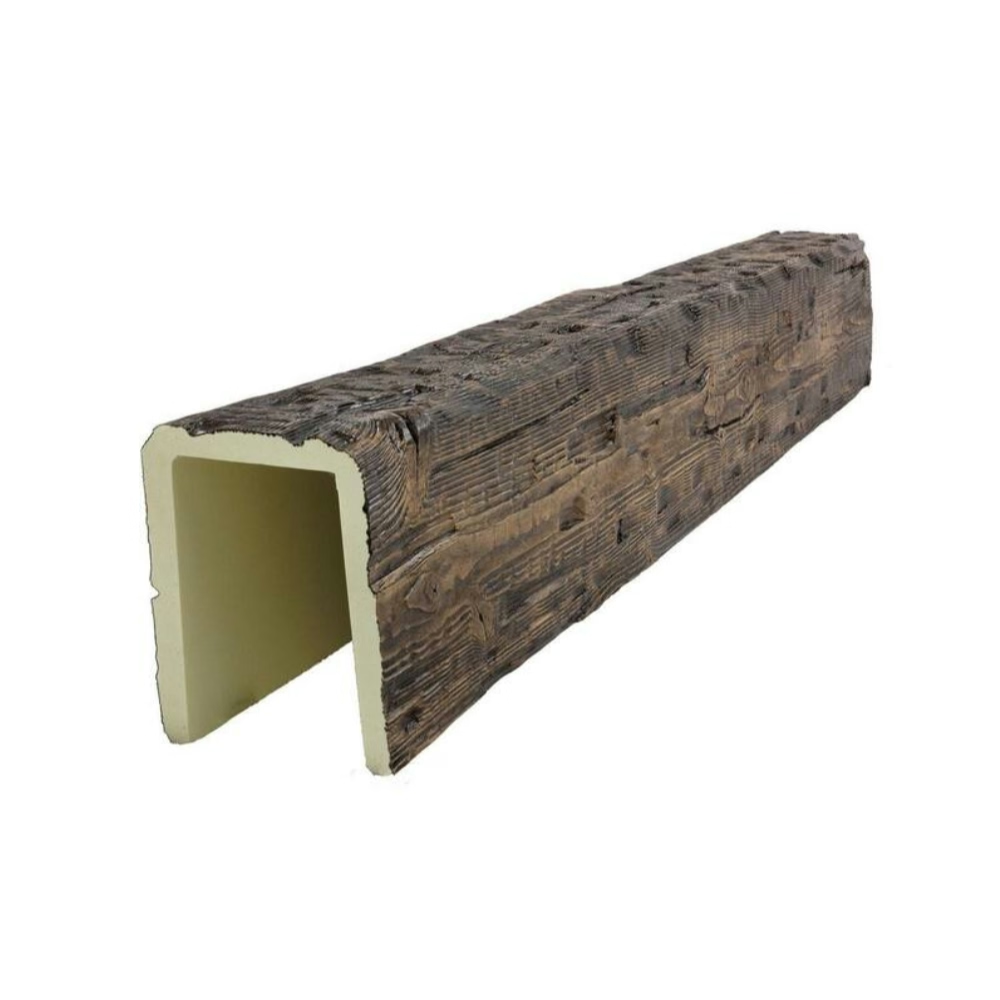
The multi-style range available in PU faux beams is not simply a marketing feature — it is a practical response to the real diversity of interior design contexts. A rustic beam with deep grain texture and saw mark details tells a different story than a smooth contemporary beam with a subtle grain pattern, and both stories have their appropriate settings.
Rustic styles, with their pronounced texture and hand-crafted character, work best in contexts that celebrate authenticity and natural materials. Mountain homes, coastal retreats, and farmhouses are natural homes for rustic beams, as are commercial establishments — wineries, breweries, farm-to-table restaurants — that want to communicate a connection to natural, artisanal production. The key to using rustic styles effectively is restraint: one or two rustic elements in a room create atmosphere; too many create clutter.
Transitional styles occupy the broadest middle ground, working comfortably in contexts from contemporary suburban homes to boutique hotels to upscale casual dining. Their defining characteristic is balance — enough wood character to feel authentic, enough refinement to avoid visual heaviness. These styles are the most forgiving and the most widely applicable, making them the default choice when a specific design direction has not been established.
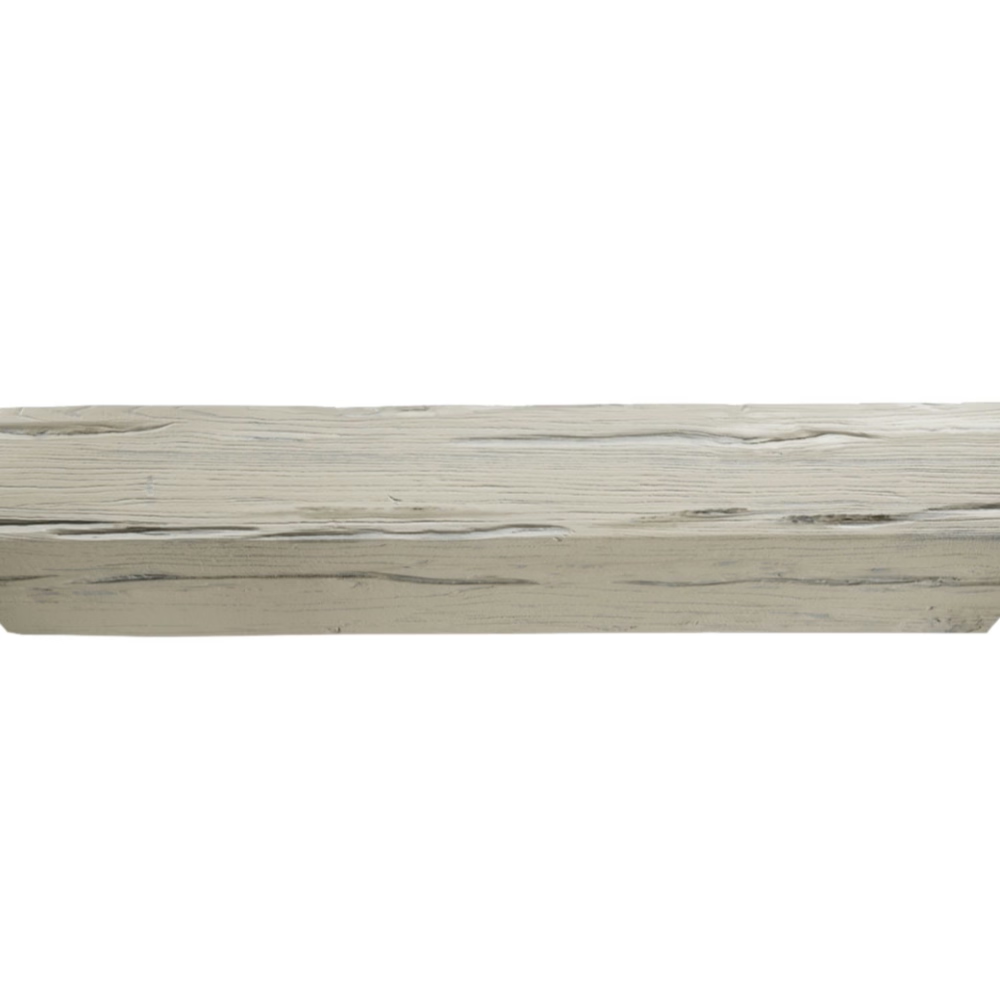
Contemporary styles serve modern and minimalist interiors, where the design vocabulary emphasizes clean lines, geometric clarity, and restrained ornamentation. Contemporary beams add warmth and material authenticity to spaces that would otherwise rely entirely on metal, glass, and plaster. Their use in commercial interiors — particularly in office buildings, tech company headquarters, and contemporary hospitality brands — reflects the growing preference for warm modernism over industrial austerity.
Economic Considerations for Different Markets
The market for decorative beams encompasses both B2B buyers — distributors, retailers, interior designers, general contractors — and end consumers undertaking residential projects. Multi-style PU faux beams serve both markets effectively, though the economic dynamics differ.
For B2B buyers, the value proposition centers on margin opportunity, inventory efficiency, and reliable supply. A product category that spans multiple styles from a single source simplifies purchasing and reduces the number of supplier relationships that buyers must manage. The consistent quality of manufactured PU beams supports premium pricing in commercial contexts while remaining competitive enough for volume residential distribution.
For end consumers, the appeal lies in access to high-end aesthetic results at accessible price points. A homeowner who has admired decorative beam ceilings in design magazines can achieve a similar effect in their own home without the cost of custom timber fabrication or the structural implications of heavy wood members. The availability of multiple styles within the same product category means that homeowners can select the beam that best matches their existing décor without being limited to whatever happens to be in stock at a local supplier.
Technical References
ASTM standards cited in every specification
Test Data
Lab results from internal testing program
Updated 2026
Reviewed against current product specs


