Versatility in interior design products is often claimed but rarely delivered with the depth and authenticity that designers and homeowners actually need. A product that claims to work in multiple styles may achieve only a bland middle ground that satisfies no particular aesthetic fully. Multi-style decorative PU faux wood beams avoid this trap by offering genuine stylistic diversity — multiple distinct design expressions, each fully realized, within a single product family unified by consistent material quality and manufacturing standards.
The practical consequence of this approach is significant for anyone involved in interior design decisions. Rather than searching across multiple product categories and suppliers for beams that match different style requirements, a designer can source all their beam needs from one manufacturer, confident that whatever style they select will meet the same quality standards and be available in consistent dimensions. This consolidation simplifies procurement, reduces lead time variability, and ensures that beams from different styles will share the same installation characteristics and physical properties.

Farmhouse Aesthetic with PU Faux Beams
Farmhouse interiors have experienced a remarkable sustained popularity over the past decade, and decorative beams are among the most effective tools for achieving the rustic warmth that defines this aesthetic. In a farmhouse context, beams should feel as though they were salvaged from an old barn or cut from timber on the property — authentic, weathered, and rich with the evidence of time and use.
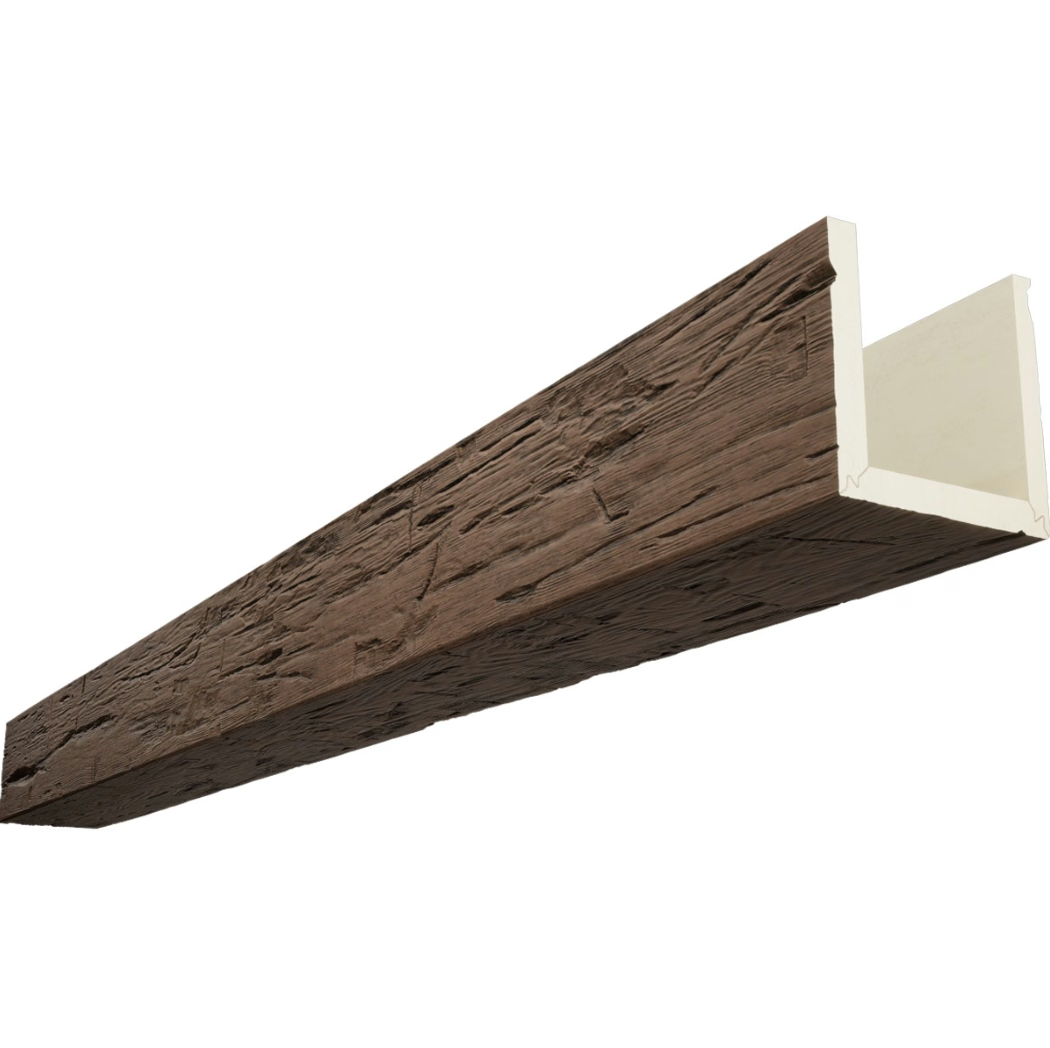
PU faux beams designed for farmhouse aesthetics typically feature pronounced wood grain with deep valley lines and prominent earlywood-latewood contrast. Surface textures may include saw marks, subtle chipping along edges, or light distressing that mimics the wear patterns of aged timber. Color palettes tend toward warm mid-tones — barn red undertones, golden wheat, weathered oak — that complement the whitewashed walls and natural linen textiles common in farmhouse interiors.
The installation pattern for farmhouse beams often favors irregularity. Rather than perfectly symmetrical spacing, farmhouse beam installations may use varied spacing between beams, beams that run in only one direction rather than creating a grid, or asymmetrical compositions that introduce visual interest through unexpected arrangement. This irregularity reinforces the aesthetic narrative of beams that were installed for function rather than appearance.
Accessories play an important role in completing the farmhouse beam installation. Beam collars — decorative metal straps or wooden rings installed at regular intervals along the beam — add an authentic detail that reinforces the rustic narrative. Mason jar pendant lights suspended from beams, or wrought-iron chandeliers with chain mounts, complement the farmhouse aesthetic by echoing the craft tradition that defines the style.
Contemporary Aesthetic with PU Faux Beams
Contemporary interiors present a different set of requirements for decorative beams. Where farmhouse design celebrates texture and history, contemporary design favors restraint, precision, and material honesty. Beams in a contemporary context should add warmth and organic character without introducing visual clutter or competing with the clean geometry that defines the style.
Contemporary PU faux beams typically feature minimal surface texture — a fine, subtle grain that reads as material authenticity rather than active pattern. Profiles are clean and geometric, with crisp edges and no applied ornamentation. The color palette for contemporary beams tends toward extremes: very light tones like natural birch or weathered ash, or very dark tones like espresso walnut or painted black. Mid-tones, which can feel somewhat generic in a contemporary context, are less commonly specified.
Installation in contemporary interiors often emphasizes precision and regularity. Beams are typically spaced evenly and aligned perfectly parallel or perpendicular to the room's dominant axes. The grid may be mirrored across the room's centerline, creating a symmetrical composition that reinforces the sense of considered design. In open-plan spaces, beam grids may align with room divisions implied by furniture groupings or changes in flooring material.
The relationship between beams and other ceiling elements — recessed lighting, HVAC grilles, structural elements — is carefully managed in contemporary installations. Beams are positioned to create intentional relationships with these elements rather than simply avoiding conflicts. A recessed light positioned at the center of a beam panel, for instance, creates a composed visual element that integrates the functional and decorative aspects of the ceiling.
Transitional and Hybrid Aesthetics
Between the clear poles of rustic farmhouse and minimalist contemporary lies a vast territory of transitional and hybrid aesthetics that accommodate many different beam styles. Transitionally styled interiors blend elements from multiple design vocabularies — perhaps a farmhouse beam profile paired with a more refined wood tone, or a contemporary profile finished in a warm rustic color. These hybrid approaches are not compromises but deliberate design strategies that create spaces with layered meaning and visual depth.
Transitional beam styles typically feature medium-depth grain texture that is visible and appealing without being so pronounced as to read as overtly rustic. Profile edges may be slightly softened or chamfered rather than razor-sharp, suggesting craftsmanship without claiming primitive authenticity. These beams work in partnership with other transitional elements — furniture with clean lines but warm upholstery, lighting fixtures that combine geometric forms with organic materials.
The flexibility of PU manufacturing enables transitional styles that would be difficult or impossible to produce in real wood. A beam with a contemporary profile and a rustic finish, for instance, could be produced by applying a deep-grain texture mold to a geometric profile, combining the best of both aesthetic vocabularies. This kind of hybrid approach is particularly effective in family homes where different household members have different aesthetic preferences but share a common desire for warmth and quality.
Rustic Authenticity in Modern Construction
Rustic style has deep roots in architectural history, drawing on the traditions of rural building where materials were used as they came from nature — rough, irregular, and honest about their origins. Modern rustic interiors reinterpret these traditions for contemporary life, incorporating rustic beams, natural materials, and hand-crafted details while maintaining the comfort and convenience of modern construction.
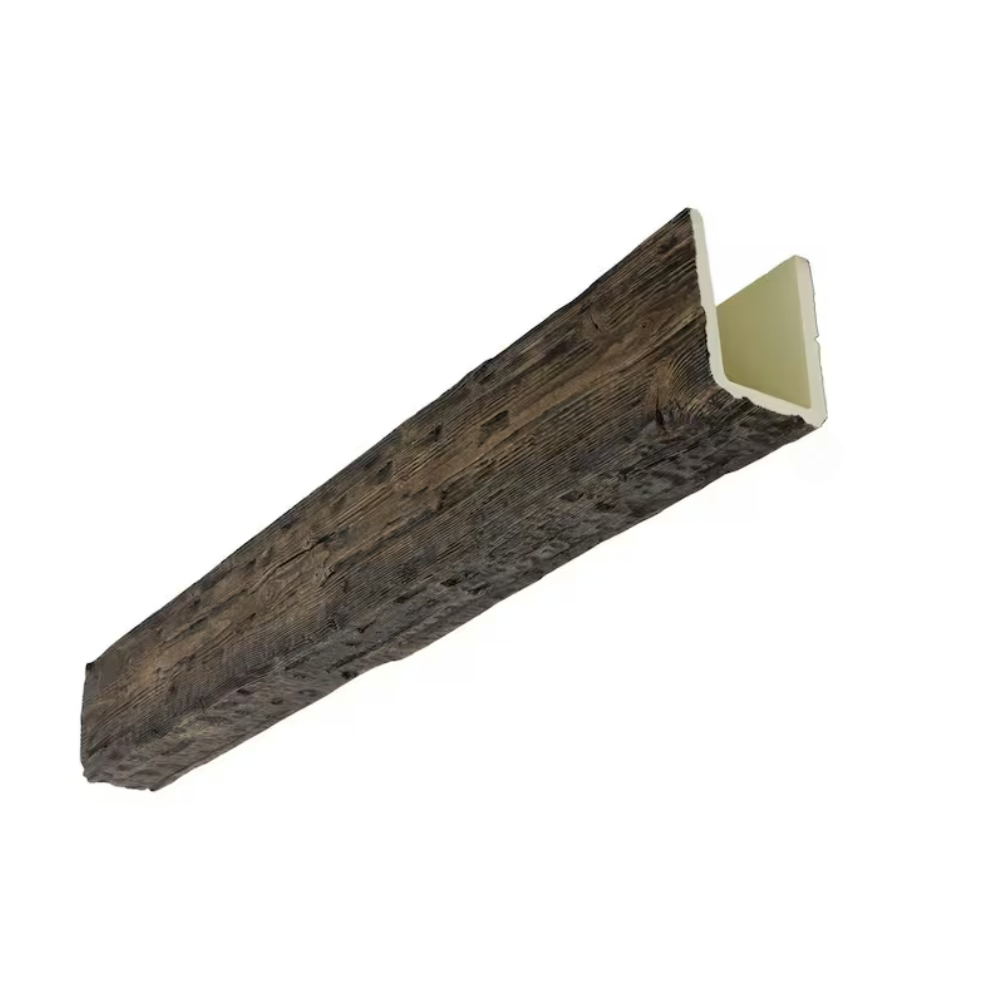
PU faux beams designed for rustic applications go to considerable lengths to achieve authentic rustic character. Deep, varied grain patterns replicate the growth rings and seasonal variation of slow-grown timber. Edge treatments may include simulated checking — the hairline cracks that develop along grain lines in aged timber — and small knots that occur naturally in wood. Color variations within a single beam, mimicking the tonal differences between heartwood and sapwood in real timber, add to the sense of organic authenticity.
Rustic beam installations in modern contexts often incorporate metal hardware — iron straps, forged brackets, and bolted plate connections — that reinforce the narrative of timber frame construction. These metal elements are typically available as accessories from the same suppliers that offer the beams themselves, enabling coordinated installations that feel genuinely crafted rather than assembled from unrelated components.
The juxtaposition of rustic beams with modern furnishings and amenities is one of the most powerful techniques in contemporary interior design. A rough-hewn beam passing through a sleek, minimally furnished living room creates a compelling visual tension that draws the eye and generates conversation. This juxtaposition works because it layers temporal narratives — the ancient tradition of timber construction and the contemporary moment of the interior — into a single, coherent composition.
Style Selection Strategy
Choosing among the available beam styles for a specific project requires a systematic approach that considers both the existing design context and the desired final effect. The starting point is always an honest assessment of the room's existing elements — wall colors, flooring material and tone, furniture style, architectural character of the building — which will either support or conflict with different beam styles.
Rooms with neutral walls, simple trim, and contemporary furnishings are natural candidates for contemporary beam styles. The beams will add warmth and material richness without competing with the room's existing design direction. Conversely, rooms with rich wall colors, elaborate trim, or traditional furnishings may be overwhelmed by contemporary beams and are better served by transitional or rustic styles that complement the room's existing character.
Lighting conditions also influence style selection. Rooms with abundant natural light can accommodate darker beam finishes without feeling heavy or closed in. Rooms with limited light benefit from lighter beam finishes that reflect and distribute available illumination. This consideration is particularly important in north-facing rooms and basement spaces where light is at a premium.
The long-term perspective should also inform style selection. Design trends shift, and a beam installation is a relatively permanent intervention that will remain in place through multiple cycles of furniture更换 and color scheme updates. Choosing a versatile transitional style that can accommodate a range of companion aesthetics provides more future flexibility than committing to an extreme style that may feel dated when design preferences inevitably evolve.
Technical References
ASTM standards cited in every specification
Test Data
Lab results from internal testing program
Updated 2026
Reviewed against current product specs


