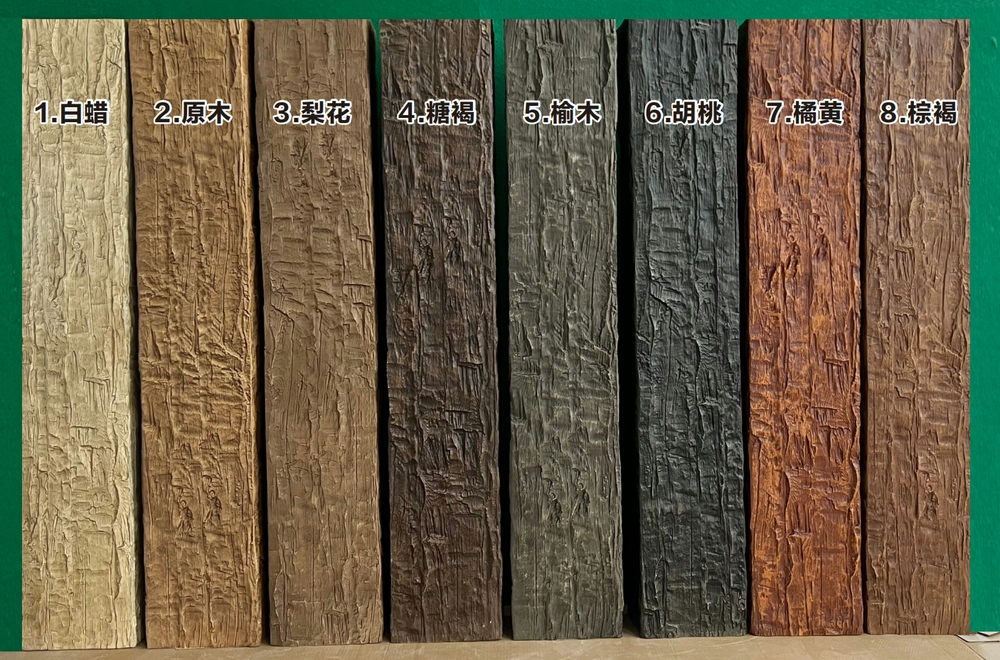
Personalization is the defining aspiration of contemporary interior design. Where previous generations might have accepted whatever standard options were available from local suppliers, today's designers and homeowners expect — and deserve — the ability to specify exactly the right color for their specific project. Multi-variant color options in PU faux wood beams respond to this expectation, offering a broad spectrum of finish variants that enable genuine personalization rather than compromise selection from a limited palette.
The concept of multi-variant color goes beyond simply offering many different colors. It encompasses the entire ecosystem of color selection — from standard catalog variants through semi-custom matches to fully bespoke formulations — and provides a pathway from each level to the next. A buyer who needs only a standard color can order quickly from catalog options; a buyer with a specific vision can work with the manufacturer to achieve an exact match.

The Structure of Color Variant Options
The color variant ecosystem for PU beams can be conceptualized as three tiers of increasing specificity and lead time. Understanding this structure helps buyers navigate the options efficiently and select the appropriate tier for their project's requirements and timeline.
The first tier consists of standard catalog variants — a carefully curated palette of colors that are manufactured regularly and maintained in stock or semi-stock. These variants typically include the most popular wood tones across the full range from light to dark, as well as a selection of on-trend painted colors that reflect current interior design preferences. Standard variants offer the shortest lead times and the most predictable pricing, making them the default choice for most projects.
The second tier consists of extended palette variants — colors that are manufactured to order from established formulations but are not maintained as stock items. These include less common wood tones (gray-toned oak, reddish cypress, pale bleached finishes), a wider range of painted colors beyond the standard catalog, and specialty finishes like whitewash and pickling that require specific application techniques. Extended palette variants typically require one to two additional weeks of lead time compared to standard variants.
The third tier consists of fully custom color formulations — colors developed specifically for a particular project based on a physical sample, a paint code reference, or a verbal color description. Custom formulations require the longest lead time and may involve sample approval steps, but they deliver exact color matches that enable truly personalized design expressions. The investment in custom color is justified when the color is a critical element of the design concept or when the space includes other custom-colored elements that must be precisely matched.
Popular Wood Tone Variants and Their Applications
Among the most consistently popular color variants are the natural wood tones that faithfully reproduce the appearance of specific timber species. These variants are chosen for their warmth, their proven aesthetic appeal, and their compatibility with a wide range of interior color schemes.
Natural oak variants — spanning from light golden oak to deeper honey oak — are the workhorses of the wood-tone palette. Their warm, approachable character complements both cool and warm companion colors, and their medium saturation prevents them from overwhelming the color balance of a room. Natural oak variants are the safest choice when color coordination is uncertain and the most reliable choice for projects that must appeal to a broad audience.
Walnut and espresso variants occupy the darker end of the wood-tone spectrum. Their rich, saturated tones create visual weight and drama, making them well suited to larger rooms, higher ceilings, and design schemes that embrace bold color choices. Dark wood variants read as sophisticated and established, bringing a sense of gravitas to formal living rooms, executive offices, and upscale hospitality venues.
Whitewash and bleached variants represent the lighter extreme of the wood-tone range. These pale finishes replicate the appearance of sun-bleached timber or weathered driftwood, with subtle grain visible beneath a predominantly light surface. Whitewash variants are particularly valued in coastal, Scandinavian, and farmhouse-style interiors where a light, airy aesthetic is desired. Their high light reflectance also makes them practical choices for rooms with limited natural light.
Specialty Variants and Trend Colors
Beyond the core wood-tone palette, specialty color variants address specific aesthetic trends and niche design requirements. These variants may have shorter product lifecycles than classic wood tones, reflecting the cyclical nature of fashion in interior colors, but they serve important market segments that standard options cannot address.
Gray-toned wood variants have experienced sustained popularity in contemporary interiors, where they complement the prevalence of gray walls, concrete floors, and metal accents in modern design schemes. The spectrum of gray wood variants ranges from subtle gray-washed oak with just enough gray to register against a warm companion color to dramatic charcoal-stained beams that approach the visual weight of black. This versatility makes gray-toned variants among the most frequently requested specialty options.
Blue-toned wood variants represent a more adventurous choice that works in specific design contexts. A deep blue-gray stain on a beam replicates the appearance of weathered ebony or painted timber, creating a distinctive look that stands apart from conventional wood tones. These variants are most effective when paired with complementary accent colors — copper, brass, warm cream — that bridge the visual gap between the unusual beam color and more traditional furniture and accessories.
Painted solid colors — sage green, dusty rose, warm terracotta, slate blue — address the growing trend toward color-drenched interiors where walls, ceilings, and architectural elements share a unified color narrative. Beams painted in these tones become integrated elements of the room's color scheme rather than contrasting wood-tone additions, enabling ceiling treatments that would be impossible with traditional wood-finish options.
Coordinating Variants Across Multiple Elements
In projects where beams appear in multiple rooms or where the beam installation must coordinate with other custom-colored elements, managing color variant selection requires a systematic approach. The goal is consistency — ensuring that all instances of a given color match precisely — while allowing for intentional variation between rooms where the design concept calls for it.
When coordinating beams across multiple rooms in a single project, the simplest approach is to specify the same color variant throughout. This consistency creates visual coherence across the project and simplifies procurement and installation. A hotel or restaurant chain applying beam treatments across multiple locations might standardize on a single color variant that aligns with the brand identity, achieving recognition and consistency simultaneously.
Intentional variation between rooms requires a more nuanced approach to color coordination. If different beam colors are used in adjacent or visible spaces, the relationship between those colors should be considered deliberately. A progression from light to dark as one moves through a space can create a satisfying sense of journey and transition. Alternating complementary colors in adjacent rooms creates visual dialogue between spaces. These intentional variations require careful specification and, often, physical samples to verify that the intended relationship will read correctly in the built environment.
Coordination between beams and other custom-colored elements — furniture, wall finishes, trim — is one of the most common reasons buyers request custom color formulation. Matching the beam color to an existing fabric, a custom paint on the walls, or a specific tile in the room ensures that the beams integrate seamlessly into the design rather than introducing an unrelated color element. This level of coordination requires close collaboration between the buyer, the designer, and the manufacturer, but the result is a level of color coherence that standard catalog options cannot achieve.
Managing Color Expectations
Despite the precision of modern color matching technology, managing expectations around color accuracy is an important part of the custom color process. Several factors affect how beam colors appear in situ, and understanding these factors helps buyers avoid disappointment and achieve the results they envision.
Lighting conditions dramatically affect color perception. The same beam color will appear different under incandescent lighting, LED lighting, fluorescent lighting, and natural daylight. When specifying custom colors, buyers should evaluate samples under the lighting conditions that will prevail in the installed environment, not under the standardized lighting of a showroom or supplier's display.
Adjacent colors affect perception through simultaneous contrast — the phenomenon whereby colors appear to shift when placed next to other colors. A mid-tone beam color may appear lighter against dark walls and darker against light walls, even though the beam color itself has not changed. This effect should be anticipated during color selection, particularly when the beam color is intended to create a specific visual relationship with surrounding surfaces.
Material differences between the color reference and the beam substrate can produce subtle perceived differences. A paint chip reference and a polyurethane beam finished in the same color formula may appear slightly different due to differences in surface sheen, texture, and light-scattering properties. Physical sample approval is the most reliable method for confirming that the finished product will match the intended color in the actual installation environment.
Technical References
ASTM standards cited in every specification
Test Data
Lab results from internal testing program
Updated 2026
Reviewed against current product specs


