
The boundary between residential and commercial design has blurred considerably in recent years, with each context borrowing freely from the other's vocabulary. What once distinguished public spaces from private homes now appears interchangeably across both. Decorative faux timber beams exemplify this convergence, serving identical functions in contexts ranging from single-family homes to corporate headquarters to hospitality venues.
The multipurpose nature of these beams reflects broader trends in how spaces are conceived and used. Today's homes function as offices, entertainment venues, and personal retreats depending on time of day. Commercial spaces serve simultaneously as workplaces, gathering spots, and brand expressions. Faux timber beams address these diverse requirements through aesthetic flexibility that adapts to any context.
Residential Multipurpose Applications
Living rooms benefit from beam installations that establish architectural character while defining activity zones within open floor plans. The beams create visual separation between seating areas and circulation paths without the physical barriers that walls would impose. This zone definition proves particularly valuable in contemporary homes where open plan configurations dominate.
Kitchen and dining areas gain warmth and visual interest through beam treatments that soften the industrial aesthetics common to these functional spaces. Islands and eating areas become focal points when beams overhead create implied canopies suggesting appropriate use. The treatment adds perceived value to these high-traffic spaces while managing acoustic conditions that hard kitchen surfaces otherwise create.
Bedrooms utilize beams to establish sanctuary atmospheres conducive to rest and relaxation. Ceiling beams create intimate, cocoon-like environments that standard drywall cannot achieve. Master suites particularly benefit from treatment that elevates perceived quality and establishes premium positioning within homes.
Home Office Adaptations
The dramatic increase in residential work has transformed home office design from afterthought to priority. Beam installations in workspaces add professional polish that supports productive mindsets while impressing clients during video conferences. The architectural character distinguishes work areas from other home functions, supporting the mental transitions that work-from-home arrangements demand.
Acoustic benefits of beam treatments prove particularly valuable in spaces where video and audio communication occur. The texture and dimension of beams help dampen sound reflections that might otherwise compromise call quality. This functional advantage complements the aesthetic improvement, making beams doubly valuable in home office applications.
Integration with task lighting creates focused illumination appropriate for detailed work while maintaining the warm atmosphere that prevents workspace sterility. Pendant fixtures suspended from beams provide appropriate lighting levels without the institutional appearance of recessed alternatives. This lighting integration exemplifies how beams serve multiple purposes simultaneously.

Commercial Multipurpose Applications
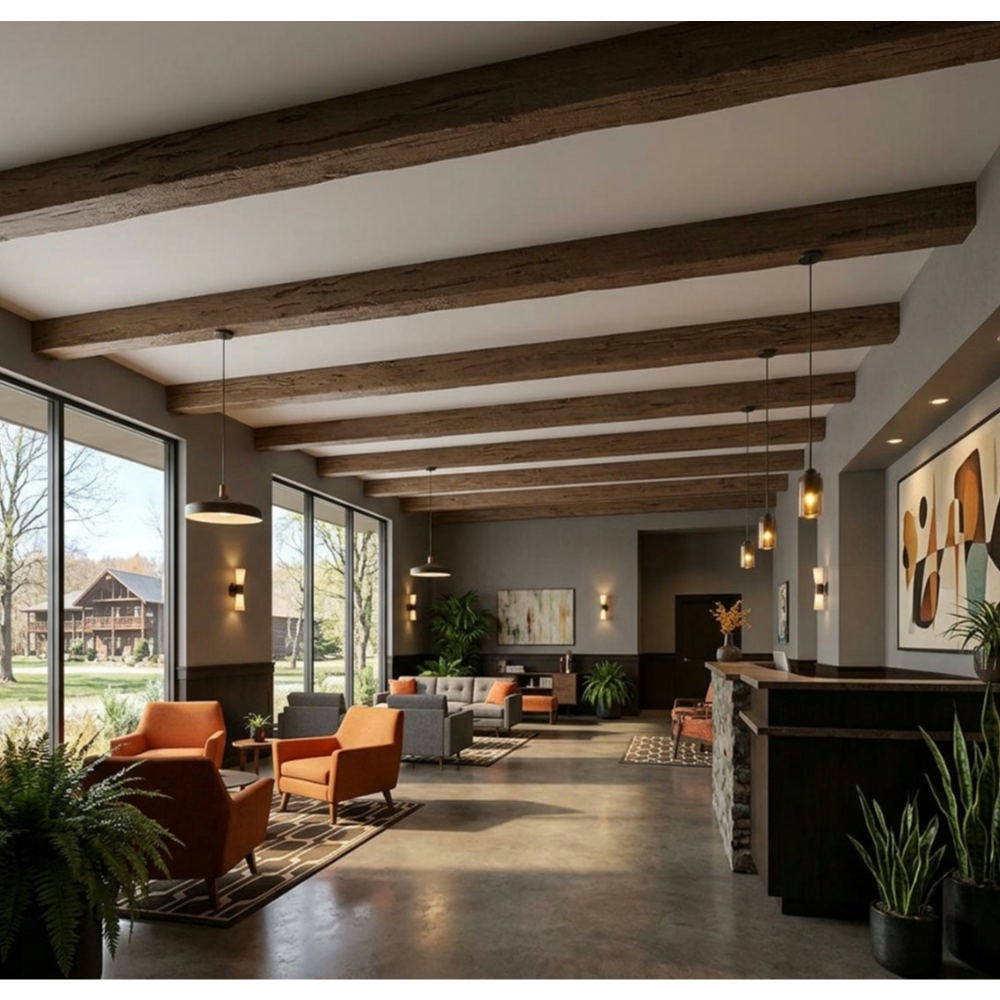
Corporate environments have embraced faux timber beams as alternatives to suspended ceiling systems that dominate conventional office construction. The open ceiling aesthetic communicates transparency and forward-thinking culture while reducing construction costs and maintenance requirements. Beams provide visual interest that prevents sterile appearance while maintaining the clean lines that contemporary office design prefers.
Hospitality venues including hotels, restaurants, and entertainment spaces rely on beams to establish brand-appropriate atmospheres. Boutique hotels feature beams that create residential comfort within public spaces. Upscale restaurants incorporate beams as primary design elements that justify premium pricing. The versatility of beam styling accommodates diverse brand identities through finish selection and arrangement choices.
Retail environments utilize beams to differentiate spaces within competitive shopping centers. The architectural character establishes identity that distinguishes tenants from surrounding competitors. High ceilings that might feel cavernous become intimate through beam treatment that scales visual perception appropriately.
Multipurpose Functionality Analysis
Beyond aesthetic contribution, beams serve practical purposes that justify installation investment. Concealing ceiling infrastructure ranks among the most common functional applications, with beams hiding electrical conduit, HVAC ductwork, and structural irregularities that would otherwise require expensive treatment.
Acoustic management represents another functional advantage, with textured beam surfaces reducing echo and reverberation in spaces where sound quality matters. Restaurants, home theaters, music practice rooms, and conference spaces all benefit from the acoustic improvements that beam installations provide. This functional value supplements aesthetic contribution.
Structural transition purposes also motivate beam installations in some contexts. Beams spanning between different ceiling heights create visual bridges that smooth otherwise abrupt transitions. Room additions, converted spaces, and architectural renovations frequently employ beams to unify disparate conditions into cohesive compositions.
Design Approach Variations
Residential beam design typically emphasizes warmth, comfort, and character over dramatic visual impact. Natural wood finishes, relaxed spacing, and traditional profiles create inviting atmospheres appropriate for homes. The goal is enhancement of residential comfort rather than architectural statement that might overwhelm domestic contexts.
Commercial beam design often prioritizes brand alignment and visual impact over residential comfort priorities. Contemporary profiles, bold color choices, and dramatic arrangements create memorable impressions that support marketing objectives. The design vocabulary shifts accordingly, with beams serving as brand expression tools rather than merely aesthetic enhancement.
The overlap between these approaches creates hybrid applications where residential comfort meets commercial polish. Coworking spaces, boutique hospitality, and upscale residential development blur these distinctions, requiring design approaches that satisfy both contexts simultaneously. Faux timber beams adapt readily to these hybrid requirements.
Finish Selection for Context
Residential finishes typically reference familiar wood species with warm tones and natural textures. Oak, pine, and cedar appearances dominate, with weathered and distressed treatments adding character that suggests established homes with genuine history. These finishes complement residential furniture and decorative elements that share similar vocabularies.
Commercial finishes range more broadly based on brand requirements. Some commercial applications employ natural wood finishes similar to residential contexts, while others specify painted surfaces, dark stains, or even metallic finishes that residential applications rarely use. The expanded commercial palette provides design flexibility that pure residential focus would not allow.
Neutral finish options serve both contexts through versatility that adapts to surrounding elements. White and gray painted beams integrate with diverse color schemes without committing to specific wood species associations. This neutrality proves valuable in commercial contexts where future tenants or uses might differ from current applications.
Installation Adaptability
Residential installations typically face fewer structural constraints than commercial applications. Standard ceiling joists and framing members accommodate beam mounting without reinforcement, with lightweight polyurethane reducing load concerns that heavier materials might impose. The simplicity enables straightforward installation without engineering involvement.
Commercial installations may require structural evaluation before beam specification, particularly for extensive installations in spaces with substantial ceiling areas. The cumulative weight of multiple beams warrants verification that ceiling structures can accommodate loading. This evaluation proves routine for most installations but should not be assumed without verification.
Both contexts benefit from the installation efficiency that polyurethane faux beams provide. Faster installation reduces labor costs and minimizes disruption during renovation or construction. The single-person handling capability eliminates scheduling complications that heavier materials would create.
Maintenance Requirements Across Contexts
Residential maintenance typically involves periodic cleaning and occasional touch-up of any damage from normal use. The non-porous surface of quality faux beams resists staining and cleaning damage, maintaining appearance with minimal ongoing attention. This low maintenance requirement suits busy homeowners who cannot commit to regular upkeep.
Commercial maintenance faces greater challenges due to higher traffic and more frequent cleaning. Quality polyurethane surfaces withstand commercial cleaning protocols including disinfecting agents and aggressive scrubbing. The durability ensures that commercial installations maintain appearance despite demanding maintenance schedules.
Both contexts benefit from establishing maintenance protocols that prevent problems through preventive attention. Regular inspection, prompt attention to any damage, and periodic deep cleaning maintain appearance quality throughout beam service life. This proactive approach proves more cost-effective than reactive maintenance that addresses accumulated problems.
Technical References
ASTM standards cited in every specification
Test Data
Lab results from internal testing program
Updated 2026
Reviewed against current product specs


