There is a quality of authority that comes only with age. In the built environment, this quality manifests as the patina of centuries-old plaster, the worn steps of buildings that have received countless feet, and the hairline cracks that trace across the surface of timber beams that have witnessed decades of seasonal expansion and contraction. These marks of time are not imperfections to be concealed but evidence to be celebrated — signs that something has been tested by experience and emerged with character rather than damage.
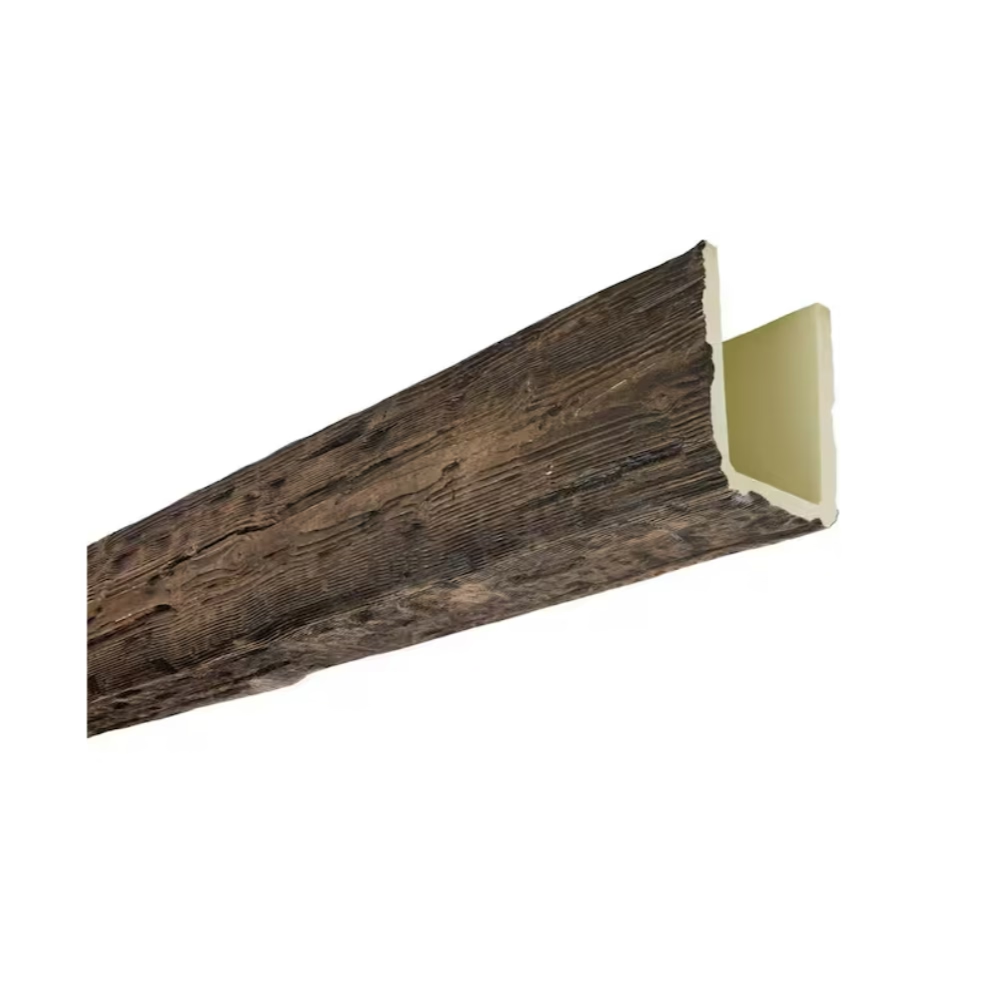
Natural aged-checked texture PU faux wood beams bring this quality of authentic age to contemporary interiors. The checked texture — those small, branching cracks that form along the grain lines of aging timber — is one of the most distinctive and telling features of genuinely old wood, and replicating it convincingly in a polyurethane substrate requires both sophisticated mold design and careful finish application. The result is a beam that carries the visible evidence of a history it does not actually possess, enriching the interior with a narrative of age and endurance.

Understanding Wood Checking and Its Aesthetic Significance
Checking refers to the small cracks that develop along the grain lines of wood as it ages and dries. Unlike splits, which run perpendicular to the grain and can compromise structural integrity, checks follow the grain and are primarily a cosmetic phenomenon. In real timber, checking begins at the surface and progresses inward over many years, with the deepest checks appearing in the most exposed surfaces and at the ends of beams where drying occurs most rapidly.
The aesthetic significance of checking lies in its authenticity as an indicator of age. A smooth, unblemished beam reads as new regardless of its color or grain pattern; a beam with visible checking reads as old, weathered, and time-tested. This perceptual effect is so powerful that checking has become one of the primary markers of authenticity in rustic and vintage design, sought out in reclaimed timber and faithfully replicated in faux wood products.
The pattern of checking on a beam is never random. Checks radiate outward from the growth ring centers and follow the natural lines of the grain, creating branching patterns that resemble the branching of rivers on a map or the branching of lightning across the sky. This organic, fractal quality is what makes checking visually compelling — it is ordered enough to feel intentional but irregular enough to feel natural. Fake checking, applied carelessly or without understanding these patterns, looks false and decorative rather than authentic and aged.
Manufacturing Authentic Checking Patterns
Creating authentic checking patterns in PU beams requires attention to both the physical structure of the crack and the coloration that surrounds it. The mold must capture the actual depth variation of the check — narrower at the opening, slightly wider as it penetrates the surface — along with the subtle raised edges that occur where compressed wood fibers create a slight lip along the crack margin.
The finish application adds the coloration that distinguishes checking from mere surface scratches. Real checks in aged timber are typically darker than the surrounding wood surface, as the exposed end grain absorbs more finish and collects more airborne contaminants over time. A realistic check finish involves applying slightly darker stain or paint within the check itself while maintaining the surrounding surface color, creating the subtle tonal contrast that makes the check visible without appearing painted or applied.
The distribution and density of checks across the beam surface is another critical manufacturing consideration. Real timber does not check uniformly; some areas of the beam surface show no checking while others display concentrated clusters of intersecting checks. This variation should be replicated in the beam design, with areas of concentrated checking balanced by areas of relatively smooth surface. A beam with uniform checking across its entire surface would appear artificially processed rather than naturally aged.
Patina and Surface Wear
Beyond checking, authentic aged appearance involves a range of surface wear patterns that accumulate on timber over decades of use. These include subtle surface abrasions from handling and cleaning, slight color variation from uneven light exposure, and the general softening of sharp edges and pronounced grain peaks that occurs through years of casual contact.
Polyurethane beams designed for weathered vintage aesthetics incorporate these wear patterns through carefully designed surface textures and finish applications. Edges are slightly softened to simulate the rounding that occurs when wooden surfaces are repeatedly touched over many years. Grain peaks are subtly muted, as the high points of the grain receive the most wear and become slightly lower and smoother than the valleys. Surface color is varied slightly across the beam, with areas near windows or heat sources exhibiting the subtle tonality shifts that occur with long-term light and heat exposure.
The combination of checking, wear patterns, and tonal variation produces a beam that looks genuinely old rather than merely styled to look old. The difference is in the subtleties: authentic aged beams reward close inspection, revealing new details with each closer look, while superficially styled beams reveal their lack of depth at first glance. For projects where authenticity matters — heritage properties, boutique hospitality venues, design-conscious residential projects — the investment in high-quality aging simulation pays dividends in the credibility of the final result.
Integrating Aged Beams into Design Schemes
Weathered aged-checked beams make their strongest statements in interiors that commit fully to the vintage aesthetic. These beams are not neutral design elements that can be placed in any context without consequence; they carry a strong narrative of age, endurance, and rustic authenticity that must be supported by the surrounding design elements to read convincingly.
Full commitment to the vintage aesthetic means selecting companion materials and finishes that reinforce rather than contradict the narrative of aged authenticity. Stone or brick walls, wide-plank natural hardwood floors, linen and leather furnishings, and warm incandescent lighting all support the vintage aesthetic by creating an environment where aged beams feel entirely natural. A vintage beam installed in a room with sleek modern furniture and polished chrome hardware will feel like a misplaced artifact rather than an integrated design element.
Partial commitment — using aged beams in interiors that blend vintage and contemporary elements — requires more careful composition. The vintage character of the beams should be echoed by at least one other element in the room to create a coherent design narrative, but the overall composition should remain balanced enough that the beams do not dominate. A single statement beam in an otherwise contemporary living room can work effectively, particularly if the beam's placement and scale are carefully considered, but multiple heavily aged beams in a contemporary space risk creating visual confusion rather than curated contrast.
Applications Across Residential and Commercial Settings
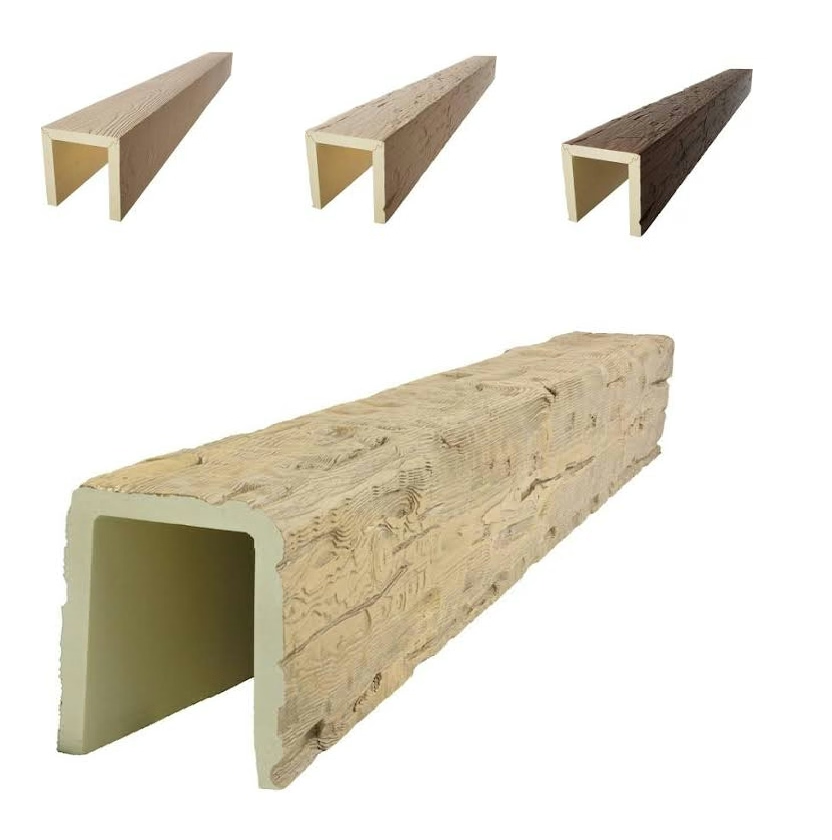
Residential applications for aged-checked beams span from whole-house rustic renovations to single-room feature installations. In living rooms and great rooms, aged beams across vaulted or flat ceilings create immediate atmosphere and establish the room's design direction. In dining rooms and kitchens, aged beams add warmth and character to spaces that might otherwise feel merely functional. Even in bedrooms, where a softer atmosphere is typically desired, lighter-toned aged beams with subtle checking can add warmth without overwhelming the room's intimate scale.
Commercial applications for aged-checked beams are particularly common in hospitality venues that want to communicate authenticity and heritage. Wineries, breweries, and farm-to-table restaurants frequently use aged beam treatments to reinforce their connection to artisanal traditions and natural materials. The authenticity of carefully simulated checking and wear patterns adds credibility to these design narratives in ways that generic wood-tone beams cannot match.
Retail environments with vintage or heritage brand identities also benefit from aged beam treatments. Antique shops, vintage clothing stores, and heritage brands with established histories can use aged beams to create physical environments that support their brand narratives. The investment in authentic aging detail signals attention to quality that extends to every aspect of the business, building customer confidence in the brand's commitment to authenticity.
Office spaces and co-working environments have increasingly adopted vintage beam aesthetics as part of biophilic and material-honest design approaches. The warmth and organic character of aged beams humanizes the work environment in ways that ceiling tiles and exposed concrete cannot, contributing to employee well-being and creative output. In these contexts, aged beams are typically paired with contemporary furniture and clean lighting to create spaces that feel both authentic and productive.
Maintaining Aged Appearance Over Time
One of the practical advantages of polyurethane beams with factory-applied aged finishes is their ability to maintain their appearance indefinitely without the maintenance interventions that real aged timber would require. The aging simulation is built into the surface at the factory, and the polyurethane substrate does not continue to age, check, or deteriorate in the way that real timber would.
Surface cleaning of aged PU beams follows the same practices as cleaning any polyurethane finish — regular dusting with a soft cloth and occasional cleaning with mild soap and water. The textured surface of aged beams may accumulate dust in grain valleys and check lines more readily than smooth surfaces, but this accumulation typically enhances rather than diminishes the aged appearance, adding to the sense of accumulated history rather than creating a dirty appearance.
Any necessary repairs to aged PU beams can be accomplished with standard finishing materials. Minor scuffs or scratches in the aged surface can be touched up with stain or paint matched to the factory finish. More significant damage may require surface preparation and refinishing, but because the aging simulation is applied to the surface rather than embedded in the material, refinishing can restore the original appearance without special treatment.
Technical References
ASTM standards cited in every specification
Test Data
Lab results from internal testing program
Updated 2026
Reviewed against current product specs


