Douglas fir is the structural backbone of American architecture. From the exposed framework of Craftsman bungalows to the massive glu-lam beams of mid-century public buildings, fir has provided the strength, workability, and beauty that American builders have relied on for generations. Its straight grain, warm tones, and excellent strength-to-weight ratio made it the preferred structural material in an era before engineered steel and engineered wood products became widespread. Today, the aesthetic legacy of Douglas fir endures in the decorative beam treatments that evoke the authentic character of structural timber construction.
Natural architectural fir grain PU faux beams translate the classic beauty of Douglas fir into a manufactured product optimized for decorative ceiling applications. The characteristic straight grain, warm pinkish-brown to amber tones, and subtle figure variations of fir are captured with precision, producing beams that read as authentically fir-like at any viewing distance. The result is a ceiling treatment that combines the timeless appeal of structural timber with the practical advantages of modern polyurethane construction.

The Architectural Legacy of Douglas Fir
Douglas fir's role in American architectural history gives it a cultural significance that transcends its material properties. The species was the workhorse of West Coast construction from the earliest pioneer days, providing the heavy timbers that framed barns, warehouses, and eventually the iconic homes of the Pacific Northwest and northern California. Its straight, clear boles — often fifty feet or more of branch-free trunk — produced timber of exceptional quality and uniformity that builders came to rely upon.
The visual characteristics of Douglas fir are distinctive and appealing. The heartwood ranges from yellowish-orange to deep reddish-brown, darkening to a rich amber with age and exposure. The sapwood is pale yellow to nearly white, creating visible contrast with the darker heartwood in some boards. The grain is predominantly straight, though occasional wavy or interlocked patterns occur, and the texture is medium to coarse. The combination of warm color and consistent grain produces a wood that is both visually interesting and easy to work with aesthetically.
In Craftsman and Arts and Crafts architecture — the design movements most closely associated with Douglas fir — the wood was celebrated for its honest expression of structural function. Exposed rafters, purlins, and knee braces in fir were left visible precisely because their structural role gave them meaning beyond mere decoration. This tradition of expressing structure through material choice has influenced American architectural taste for over a century and remains relevant in contemporary design approaches that value material honesty and authentic expression.
Capturing Fir Aesthetics in Polyurethane
The challenge of replicating Douglas fir aesthetics in polyurethane lies in capturing the species' distinctive combination of warm color, straight grain, and subtle figure variation. Unlike more dramatically grained species, fir's appeal lies in its refined, restrained character, and any manufacturing process that exaggerates these qualities undermines rather than enhances authenticity.
The color palette for architectural fir finishes centers on warm pinkish-brown to amber tones that capture the wood's characteristic coloration. The finish should be warm but not orange, rich but not dark, and consistent enough across the beam surface to suggest genuine timber without appearing artificially uniform. Variable finish application that introduces subtle tonal variation across the beam surface creates the natural color complexity of real fir while maintaining overall color harmony.
Grain rendering for fir finishes should emphasize straightness and consistency with occasional subtle figure variation. The grain depth should be moderate — deep enough to be visible and tactile but not so deep as to create the dramatic relief of more coarsely textured species. The key is restraint: the grain should feel like natural wood texture rather than a pronounced decorative pattern.
The finish sheen for architectural fir beams should be satin to semi-gloss, replicating the way naturally finished fir reflects light. A flat finish would appear dull and lifeless; a high-gloss finish would look artificial and plastic. The moderate sheen of real fir — achieved through careful finish formulation in polyurethane — provides just enough luster to catch the light without appearing varnished or processed.
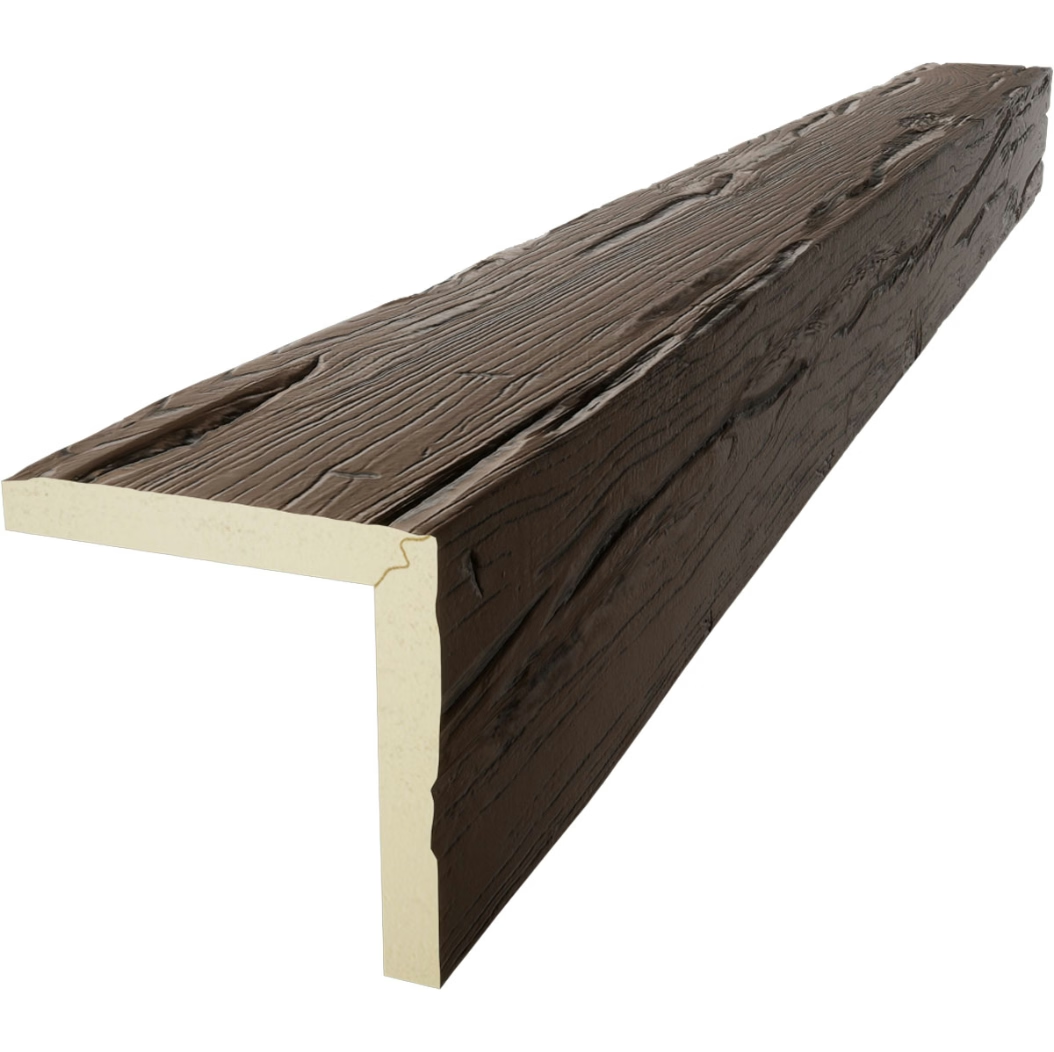
Craftsman and Arts and Crafts Applications
The close historical association between Douglas fir and the Craftsman and Arts and Crafts movements makes architectural fir beams a natural choice for interiors that embrace these design traditions. The simplicity, honesty, and material authenticity that define Craftsman design are embodied in the fir beam aesthetic.
In classic Craftsman interiors, beams were typically left exposed and structural, expressing the load-bearing function of the ceiling framework. Contemporary Craftsman-inspired interiors may not require actual structural beams, but the same aesthetic can be achieved through decorative fir-finish beams that echo the historic appearance. The key is maintaining the proportions and detailing of authentic Craftsman beams — substantial depth relative to width, simple profiles without applied ornamentation, and visible connections that suggest genuine structural intent.
Built-in cabinetry, box beam ceilings, and plaster or wood-paneled walls in Craftsman interiors should coordinate with fir beam treatments to create a unified material palette. The warm pinkish tones of fir complement the dark wood tones common in Craftsman woodwork — Mission oak, dark mahogany — by providing a lighter, warmer counterpoint. This color relationship between lighter fir beams and darker woodwork creates visual balance and prevents the interior from becoming oppressively dark.
Craftsman lighting — typically pendants and sconces with glass globes or mica shades in warm amber tones — complements fir beam treatments beautifully. The warm light from these fixtures enhances the amber tones in the fir finish, creating a rich, glowing atmosphere that defines the cozy, settled quality of well-executed Craftsman interiors. The light fixture finish should complement the fir tones — dark bronze, hammered iron, or aged brass rather than bright chrome or polished nickel.
Traditional and Transitional Applications
Beyond the Craftsman context, architectural fir beams serve a wide range of traditional and transitional interior styles. Their warm, refined character and relatively restrained grain pattern make them one of the most versatile wood-tone options available, adaptable to design contexts from classic formal to updated country.
Traditional interiors with formal aspirations — dining rooms, libraries, formal living rooms — benefit from the warmth and material richness that fir beams contribute. The classic proportion and refined grain of fir complement traditional furniture, wallcoverings, and window treatments without introducing the rustic character that would feel out of place in a formal context. A formal dining room with fir beam ceiling, for instance, establishes warmth and character while maintaining the sense of occasion that formal dining requires.
Transitional interiors that blend traditional and contemporary elements find in fir beams a versatile bridging material. The wood grain provides the warmth and organic quality that prevents purely contemporary interiors from feeling cold, while the clean, refined grain character does not introduce the rustic complexity that would compete with contemporary furniture and styling. Fir beams in a transitional living room can serve as the warm anchor around which both traditional and contemporary elements gather comfortably.
Country and farmhouse interiors at their more refined end also accommodate fir beams effectively. The lighter, more golden tones of fir distinguish it from the darker, more rustic wood species commonly associated with full-commitment farmhouse aesthetics, allowing fir beams to contribute warmth and character without overwhelming the fresh, bright quality of whitewashed walls and natural textiles.
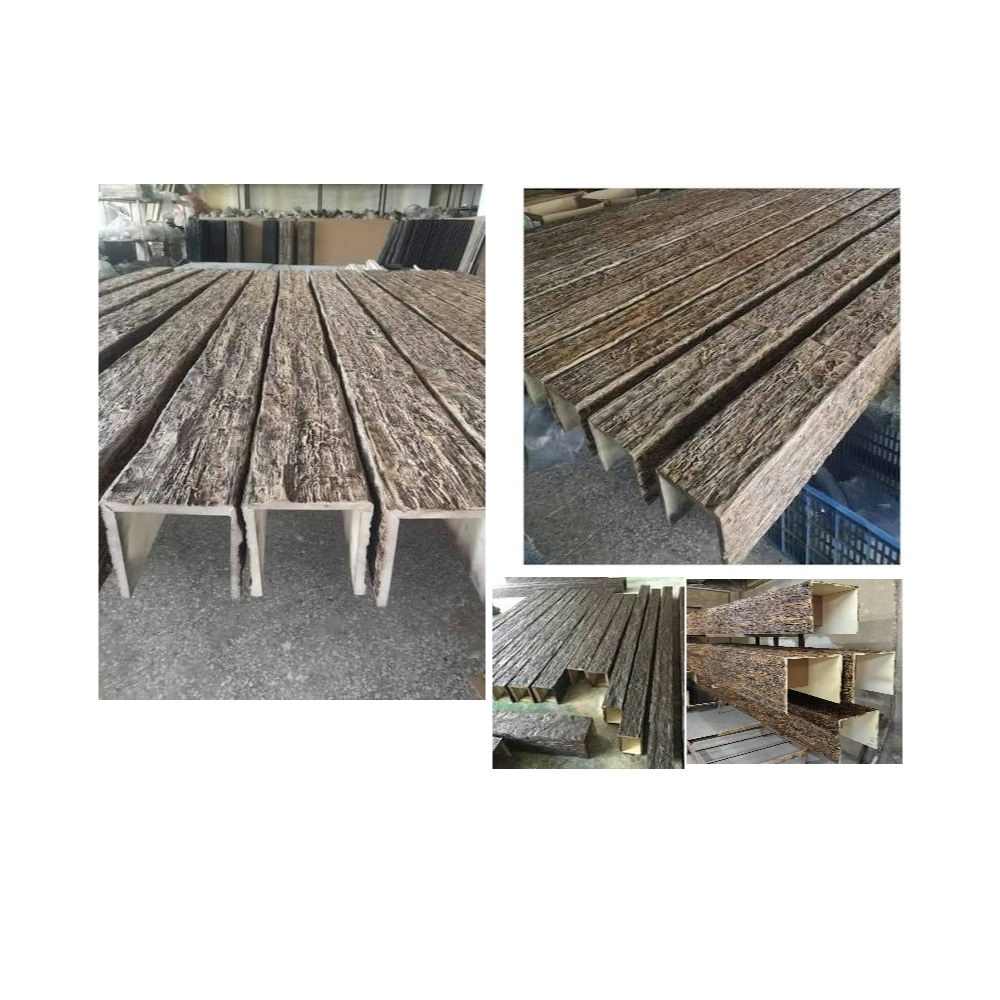
Structural Detailing and Authentic Expression
One of the distinctive features of architectural timber construction is the detailing that expresses structural function — the brackets, collars, plates, and connections that transfer loads and join members. Fir beams in traditional contexts were often left with visible connections that showed how the structure was assembled, and replicating this authentic structural expression in decorative beams adds credibility and visual interest.
Beam corbels and brackets — decorative support elements that appear at beam-wall intersections — are among the most common structural detailing elements that can be incorporated into decorative beam installations. In polyurethane, these elements can be manufactured as integral parts of the beam or as separate accessories that attach during installation. The detailing should reflect genuine structural logic — corbels that appear to support the beam's weight, plates that appear to join beam ends — rather than purely decorative applications of these forms.
Beam caps and collars — decorative elements installed at regular intervals along the beam length or at intersections — provide another opportunity for authentic structural expression. In real timber construction, these elements often served genuine structural purposes: collars prevented rafters from spreading, caps protected beam ends from moisture. Decorative versions of these elements should suggest their structural origins without claiming functions they cannot plausibly serve.
Beam-end details deserve particular attention in authentic structural styling. Real timber beam ends, whether they terminate at walls or project beyond support points, exhibit specific characteristics related to how the timber was cut and how it has aged. Authentic fir beam-end detailing includes appropriate cut geometry, appropriate weathering or aging at exposed surfaces, and any hardware or metal connectors that were used in the original construction.
Commercial Applications and Hospitality Design
Commercial interiors that seek to communicate craftsmanship, authenticity, and American heritage are well served by architectural fir beam treatments. The material's historical significance and warm, refined character create environments that feel established and trustworthy — qualities that support a wide range of commercial objectives.
Hotels and boutique inns seeking to establish a sense of place rooted in American architectural traditions can use fir beam ceilings as signature design elements. The warm, welcoming atmosphere that fir beams create encourages guest relaxation and positive brand association. In lobbies, reading rooms, and dining areas, fir beams establish an architectural identity that differentiates the property from competitors while maintaining the residential comfort that hospitality guests expect.
Office environments increasingly embrace natural materials and biophilic design principles that support employee well-being and productivity. Fir beam ceilings provide a visible, tactile connection to natural materials that enhances the workplace environment. The warm tones of fir are particularly effective in open-plan offices and collaborative spaces where the material warmth counteracts the potential coldness of open, shared environments.
Restaurant design benefits from the warmth and character that fir beams contribute to dining environments. The material's association with craft and authenticity supports farm-to-table dining concepts, traditional brewing and baking, and other culinary narratives that emphasize genuine, hand-crafted food and beverage. In tasting rooms, brewpubs, and artisan dining establishments, fir beams create the atmospheric backdrop that makes the dining experience memorable.
Installation and Long-Term Performance
The practical aspects of installing and maintaining architectural fir-finish PU beams follow the same principles as other polyurethane beam products. Lightweight construction simplifies handling and positioning; dimensional stability ensures long-term alignment; moisture resistance protects against the humidity fluctuations that affect real wood.
For the most authentic structural expression, installation details should acknowledge the real methods of timber construction even when the beams are decorative. Visible lag bolts or through-bolts at beam-wall connections, for instance, suggest genuine structural fastening even when the actual attachment uses concealed brackets. Metal plate connectors at beam intersections add the kind of authentic detail that elevates a decorative installation toward genuine architectural expression.
The warm amber tones of architectural fir finishes should be protected from prolonged direct sunlight, which can cause fading and color shift over time. In rooms with extensive south or west-facing window exposure, UV-protective window film or appropriate window treatments can help maintain the beam finish's color integrity. This consideration is particularly important in commercial installations where replacement of faded beams would be costly and disruptive.
Technical References
ASTM standards cited in every specification
Test Data
Lab results from internal testing program
Updated 2026
Reviewed against current product specs


