Interior design trends come and go, but the appeal of natural wood remains constant. There's a reason architects and designers keep returning to wood as a primary material for adding warmth and character to spaces. The grain patterns, the subtle color variations, the way light plays across the surface — these qualities create atmosphere in ways that synthetic materials struggle to match. Yet bringing authentic wood into projects often means accepting significant compromises in cost, weight, and ongoing maintenance requirements. This tension between beauty and practicality has driven the development of advanced faux wood solutions that honor the aesthetic while eliminating traditional drawbacks.
Ash wood presents a particularly compelling option for interior applications. Its light, creamy coloration provides a brightness that darker woods simply cannot achieve, making rooms feel more open and airy. The grain pattern is distinctive without being busy — elegant swirls and subtle figuring that add visual interest without demanding attention. Historically, ash was prized for furniture and architectural elements in grand European estates, a heritage that brings inherent sophistication to any space where it's installed.

The challenge with real ash wood has always been practical. Dimensional lumber suitable for structural beams requires trees of significant age and size, making the material increasingly scarce and expensive. Even when available, authentic ash beams demand careful handling during installation due to their weight and the specialized knowledge required for proper finishing. Polyurethane faux beams manufactured with authentic ash wood grain patterns solve these problems elegantly, capturing everything that makes ash desirable while shedding the complications.
Understanding Ash Wood Characteristics
Authentic ash wood comes from the Fraxinus genus of trees, native to temperate regions across North America, Europe, and parts of Asia. The wood is characterized by its light heartwood, typically ranging from creamy white to light tan, with subtle color variations that deepen slightly with age and exposure to light. Grain patterns follow a generally straight course though they can display attractive figuring in quartersawn samples, with growth rings that create distinctive silver-grain appearance when the wood is viewed from certain angles.
The cellular structure of ash makes it relatively easy to work with — it machines cleanly, accepts fasteners well, and takes finishes evenly. These properties made ash historically popular for everything from baseball bats to kitchen cabinets. In architectural applications, the wood's ability to be steamed and bent allowed craftsmen to create curved elements that would be impossible with many other species. Modern PU molds capture these characteristics with remarkable fidelity, replicating not just the visible grain but the subtle three-dimensional texture that distinguishes premium ash.
The light coloring of ash makes it exceptionally versatile in design applications. Unlike darker woods that tend to dominate spaces and demand specific companion colors, ash integrates smoothly with almost any palette. White walls and ash beams create clean, contemporary feeling spaces. The same beams paired with warm neutrals and natural textiles evoke Scandinavian hygge. Against deep accent colors, ash provides gentle contrast without harshness. This adaptability explains why ash remains popular despite the availability of numerous alternative wood species.
Design Applications for Light-Toned Spaces
Scandinavian and Nordic design movements have elevated light wood to an art form, and ash plays a starring role in this aesthetic vocabulary. The emphasis on brightness, natural materials, and functional beauty aligns perfectly with ash's inherent characteristics. Homes embracing this style benefit enormously from ceiling beams that reinforce the connection to nature while maintaining the visual lightness that defines the approach. Ash effect beams make these spaces feel complete in ways that bare ceilings simply cannot achieve.
Contemporary minimalist interiors often suffer from a certain sterility — beautiful but cold, impressive but unwelcoming. Introducing wood elements provides the warmth necessary to make these spaces livable without compromising the clean lines that define them. A single exposed beam or a grid of beams across a high ceiling can transform the character entirely, adding texture and depth that photographs cannot fully capture but visitors immediately feel. The ash effect is particularly valuable here because it reinforces rather than fights the minimalist aesthetic.
Traditional and transitional interiors gain equally from these beams. Classic home designs with established architectural details can be refreshed with period-appropriate faux beams that honor the original intent while adding fresh visual interest. The beams don't need to match existing woodwork exactly — the subtle variation that comes from using a different species creates the layered richness that distinguishes genuinely old homes from new construction. Over time, houses accumulate these details; faux beams can help newer spaces achieve that same sense of history.

Dining rooms and formal living spaces often call for a certain gravitas that can be difficult to achieve without heavy architectural elements. Ash beams provide this weight while maintaining the brightness that prevents spaces from becoming oppressive. A long, continuous beam running the length of a formal dining room ceiling creates ceremony and occasion without overwhelming the furniture and fixtures below. The effect is particularly striking when beams are positioned to align with key sight lines from the primary seating areas.
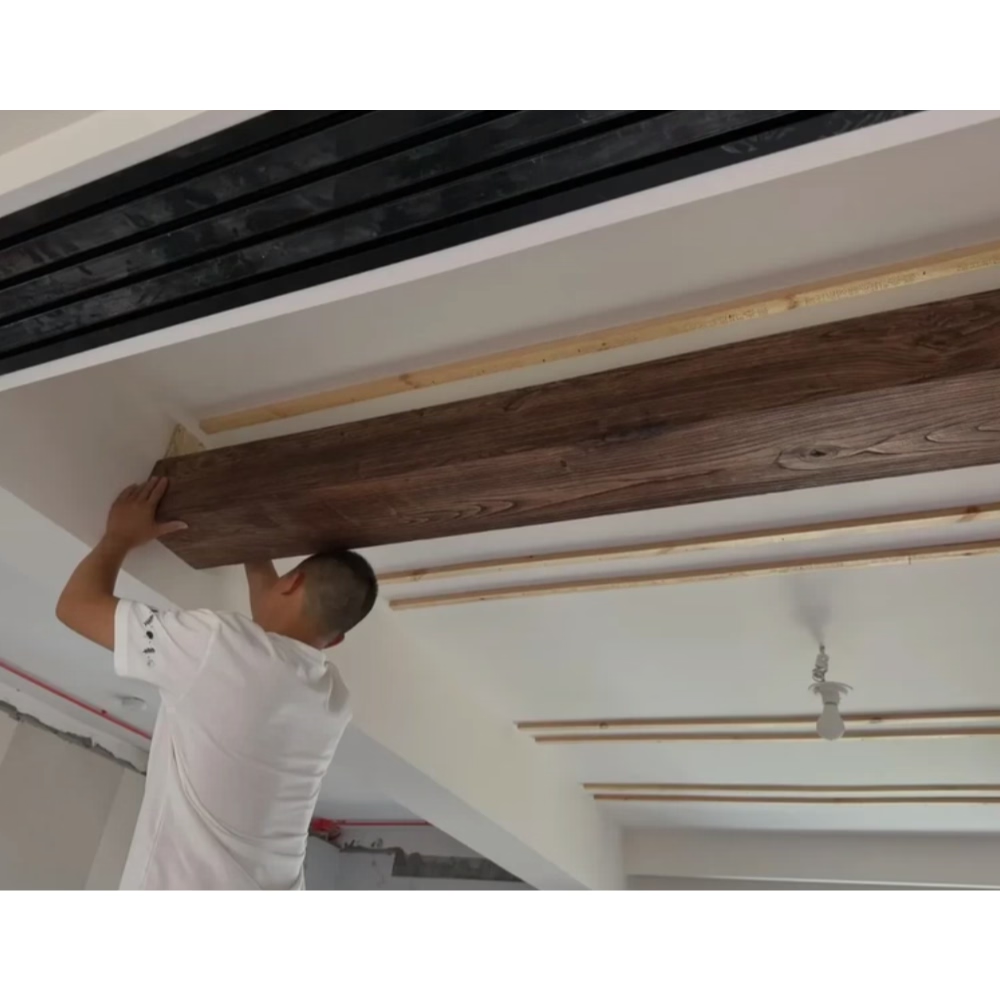
Installation Approaches for Different Ceiling Types
Vaulted ceilings present natural opportunities for beam installation, with the angled surfaces creating dramatic backdrops for architectural detail. Ash effect beams work beautifully in these settings, their light coloring preventing the ceiling from visually descending too heavily. Installation typically involves mounting beams along the ridge and rafters, with mitered cuts at corners to create clean transitions. The lightweight nature of PU makes working at height much safer and easier than with equivalent timber beams.
Flat ceilings require more deliberate planning but offer their own possibilities. Beams can be installed perpendicular to joists for a traditional look, or at angles that create geometric interest. Some designers use beams in pairs or groups to create visual weight in specific areas — above dining tables, for instance, or in conversation zones within open-plan spaces. The key is ensuring beams are scaled appropriately for the room; oversized beams can overwhelm small spaces, while undersized beams disappear into larger rooms.
Coffered ceiling designs represent the most elaborate application for faux beams, creating recessed panels that add extraordinary depth and dimension. While true coffered ceilings require extensive construction, faux beam versions achieve similar effects through strategic placement of beam profiles that appear to structural. The shadow lines created by projecting beams define the coffers even when the ceiling behind remains flat, giving the illusion of complex architecture through surface treatment alone.
Color Coordination and Finish Selection
While the natural ash coloration works wonderfully in most settings, these beams accept stain and paint readily when specific looks require it. Dark stains can transform ash beams to resemble walnut or mahogany for richer, more dramatic spaces. Whitewash finishes preserve the grain while lightening the overall effect for ultra-bright coastal or Nordic interiors. The flexibility means a single beam profile can serve many design purposes across different projects, reducing the inventory complexity for designers working at scale.
Maintaining the natural ash finish requires minimal effort. Unlike real wood that can darken unevenly when exposed to sunlight, quality PU beams maintain consistent coloring indefinitely. Occasional dusting or light cleaning removes accumulated dirt without risk of damaging the surface. The non-porous nature of polyurethane prevents staining from cooking grease, candle smoke, or other common household pollutants that can discolor real wood over time.
The environmental case for faux beams strengthens further when finish longevity enters the calculation. Real wood requires periodic refinishing to maintain its appearance — a labor-intensive and potentially hazardous process involving chemical strippers and toxic finishes. PU beams never need refinishing, eliminating both the direct costs and the environmental burden of repeated treatment cycles. For environmentally conscious consumers, this difference often proves decisive in the purchasing decision.
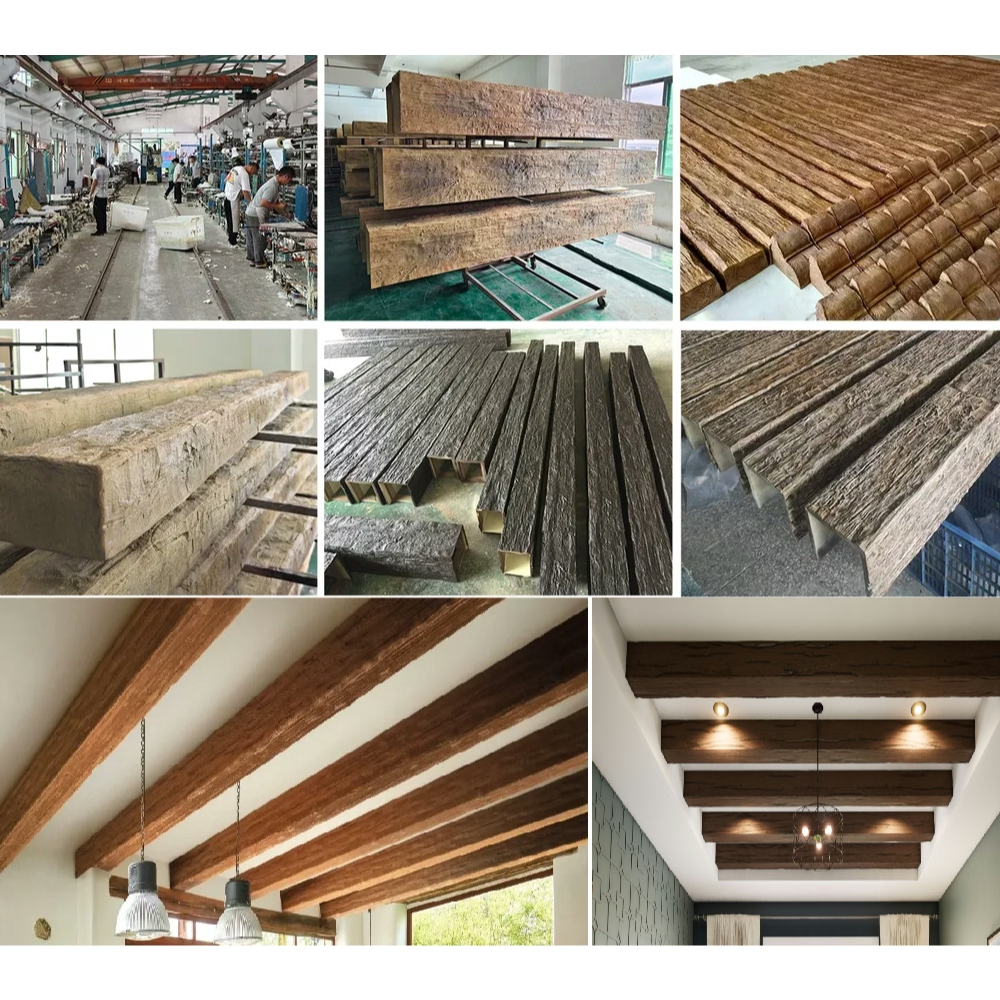
Investment Value and Project Economics
When evaluating any significant home improvement, the full lifecycle cost matters more than the initial price. Ash effect PU beams present attractive economics across multiple dimensions. The material cost itself competes favorably with mid-range natural wood options while eliminating the structural requirements and specialized labor that drive up real wood installation expenses. The elimination of ongoing maintenance transforms what would be a recurring budget line into a single settled cost.
For property developers and home builders working at scale, these advantages multiply. A development of twenty homes might previously have required extensive planning for beam installation, including structural assessments and specialized trades. With lightweight PU beams, any competent finish carpenter can handle the work, dramatically reducing scheduling complexity and labor costs. The consistency of manufactured product means no surprises on site, no rejected pieces due to natural defects, no waiting for special orders to arrive.
The aesthetic results satisfy even discerning clients who initially express skepticism about faux materials. When properly installed, these beams fool most observers on first impression, and closer inspection reveals only quality craftsmanship rather than any deception. The beams perform their architectural function beautifully — creating the warmth and character that distinguish exceptional interiors — while asking nothing in return beyond occasional dusting. For projects where design excellence must align with practical realities, ash effect PU beams deserve serious consideration.
Technical References
ASTM standards cited in every specification
Test Data
Lab results from internal testing program
Updated 2026
Reviewed against current product specs


