The farmhouse aesthetic has experienced a remarkable revival over the past decade, evolving from a niche interest into a dominant force in interior design. This widespread appeal reflects something deeper than mere fashion — it speaks to a longing for authenticity, craftsmanship, and connection to simpler times. At the heart of authentic farmhouse style lies natural materials, particularly wood that carries the marks of its history and use. Weathered barn oak captures this essence perfectly, with its silver-gray tones, prominent grain, and the subtle imperfections that time bestows.
Yet the romantic vision of reclaimed barn wood often collides with practical realities upon closer examination. Authentic reclaimed timber carries significant costs — not just monetary, but environmental and practical. The supply of genuine reclaimed beams is inherently limited, driving prices upward as demand increases. Transporting massive barn timbers consumes fuel and generates carbon. Once installed, the organic nature of real wood means ongoing susceptibility to moisture, pests, and the gradual degradation that eventually claims all natural materials.
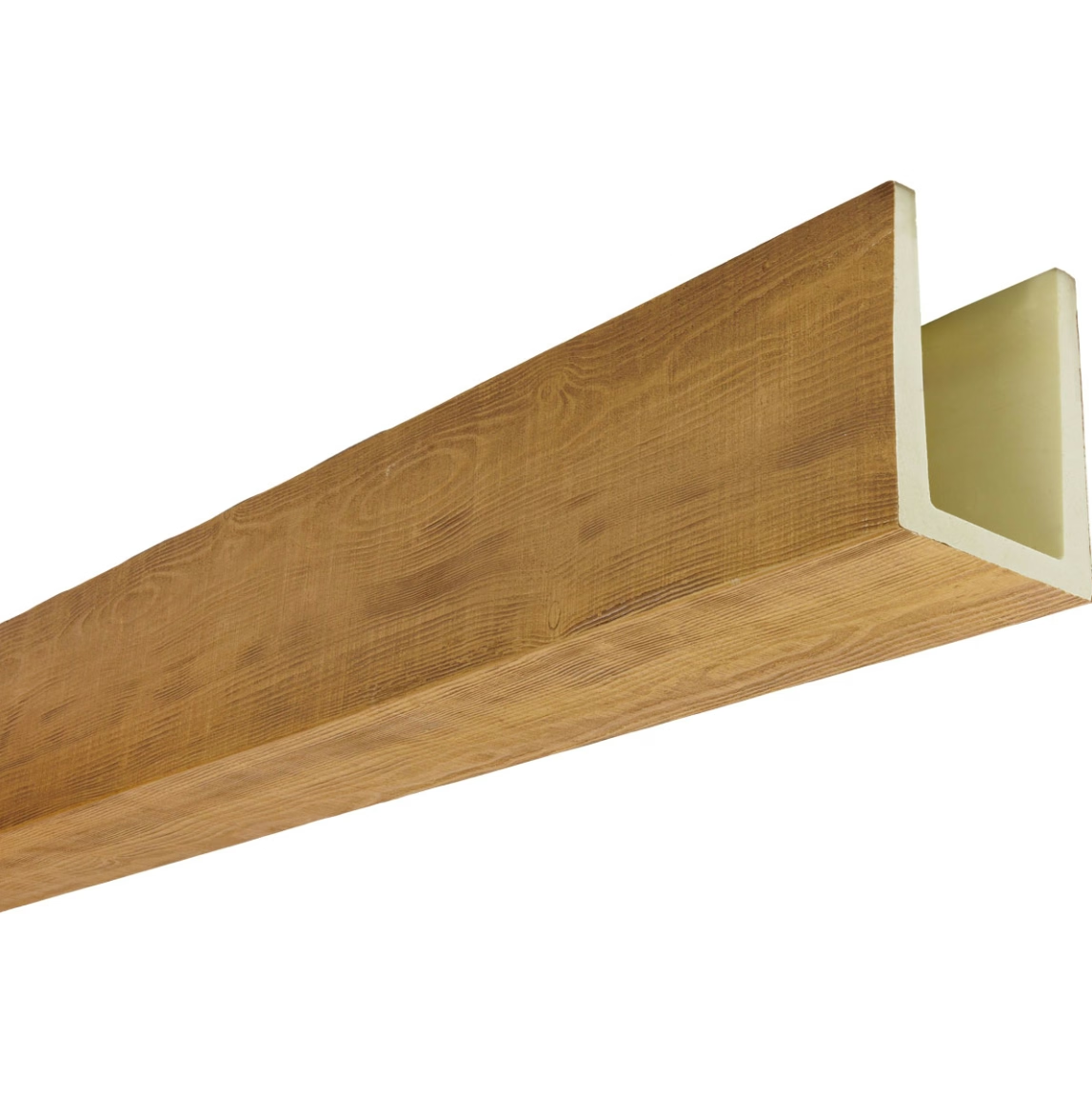
Modern material science offers a compelling alternative that preserves the aesthetic qualities designers seek while eliminating these traditional drawbacks. Polyurethane faux beams manufactured with authentic barn oak grain patterns capture the visual complexity of aged, weathered wood with remarkable precision. Each beam bears the characteristic silver-gray patina, the pronounced grain lines, and the occasional knot and imperfection that distinguish genuine barn oak from freshly milled lumber. The material behaves entirely differently from organic wood, however, offering stability and durability that enables applications impossible with authentic timbers.

The Character of Weathered Barn Oak
Understanding what makes barn oak so visually compelling requires appreciating its journey through time. When oak trees are felled and the lumber begins its service life in agricultural structures, the transformation begins immediately. Exposure to decades of cycling temperatures, humidity fluctuations, and seasonal weather gradually transforms the wood. Surface fibers break down, creating the silver-gray patina so prized by designers. Grain patterns become more pronounced as softer wood erodes faster than harder latewood bands. Knots develop characteristic checking and cracking patterns that add character rather than detract.
The molecular changes extend below the surface as well. Tannins and other compounds migrate and oxidize, deepening and evening the coloration across decades of exposure. Iron in rain and snow can react with wood chemicals to create subtle blue-gray and green-gray undertones that vary across individual pieces. This complexity cannot be replicated through simple staining or artificial distressing — it must be captured through careful reproduction of actual weathered samples.
Manufacturers achieve this authenticity by sourcing genuine barn oak samples, often from structures being carefully dismantled rather than demolished. High-resolution scanning technology captures every visual detail, from broad patterns down to microscopic texture variations. These scans inform mold creation with tolerances measured in fractions of millimeters, ensuring that every PU beam faithfully reproduces its inspiration. The result is a product that rewards close inspection rather than relying on distant impressions.
Farmhouse Design Integration Strategies
The farmhouse kitchen represents the most common application for barn oak beams, and with good reason. This is the heart of the home, where families gather and create memories. The visual warmth and tactile authenticity that beams bring transforms cooking spaces from mere functional rooms into the comfortable hearts of domestic life. Beams above islands create natural gathering zones; beams along ceiling runs establish rhythm and structure; beams framing range hoods add architectural punctuation.
Integrating beams with contemporary farmhouse elements requires attention to proportion and balance. Shiplap walls, a defining feature of modern farmhouse style, create strong horizontal lines that benefit from vertical beam elements for contrast. The beams should feel substantial — undersized beams create a sense of preciousness inconsistent with true farmhouse authenticity. When possible, beams should appear to serve a structural purpose even when they don't, with mounting details suggesting genuine load-bearing capacity.
Open shelving, another farmhouse staple, pairs naturally with ceiling beams. The combination creates layered visual complexity with both functional and decorative elements working together. Beam placement should consider sight lines from different positions in the kitchen, ensuring the beams read well from both standing and seated perspectives. In larger kitchens, consider using beams to define distinct zones — a prep area, a dining nook, a coffee station — without resort to walls or room dividers.

Living rooms and great rooms welcome barn oak beams with equal enthusiasm. The larger scale of these spaces allows for more dramatic beam installations — long continuous runs, exposed ridge beams in vaulted ceilings, or clusters of parallel beams creating rhythmic patterns. The beams provide visual anchoring for furniture groupings, helping define conversation areas within open floor plans. Their weathered appearance grounds contemporary furnishings, preventing spaces from feeling too polished or insincere.
Bedrooms adopt farmhouse beams particularly well when creating guest rooms or master suites with country character. The beams add intimacy and enclosure to larger rooms while bringing necessary warmth to spaces that might otherwise feel clinical. Paired with linen bedding, rustic furniture, and vintage accessories, barn oak beams help create the relaxed, welcoming atmosphere that distinguishes truly successful farmhouse interiors from mere imitations.
Technical Considerations for Durable Performance
Despite their weathered appearance, PU faux beams offer performance characteristics that genuine barn oak cannot match. The material resists moisture absorption completely, eliminating the swelling, warping, and rot that plague organic wood in humid environments. Kitchens, bathrooms, and enclosed porches — spaces where reclaimed wood would gradually deteriorate — present no challenge for these beams. The surface can be cleaned with standard household products without risk of damage or discoloration.
Thermal stability represents another significant advantage. Polyurethane expands and contracts minimally with temperature changes compared to natural wood, which can move substantially between seasons. This dimensional stability means beams maintain their appearance and fit indefinitely without developing gaps, splits, or other problems associated with wood movement. Installations that would require expansion gaps with real timber can be executed as flush, continuous details with PU beams.
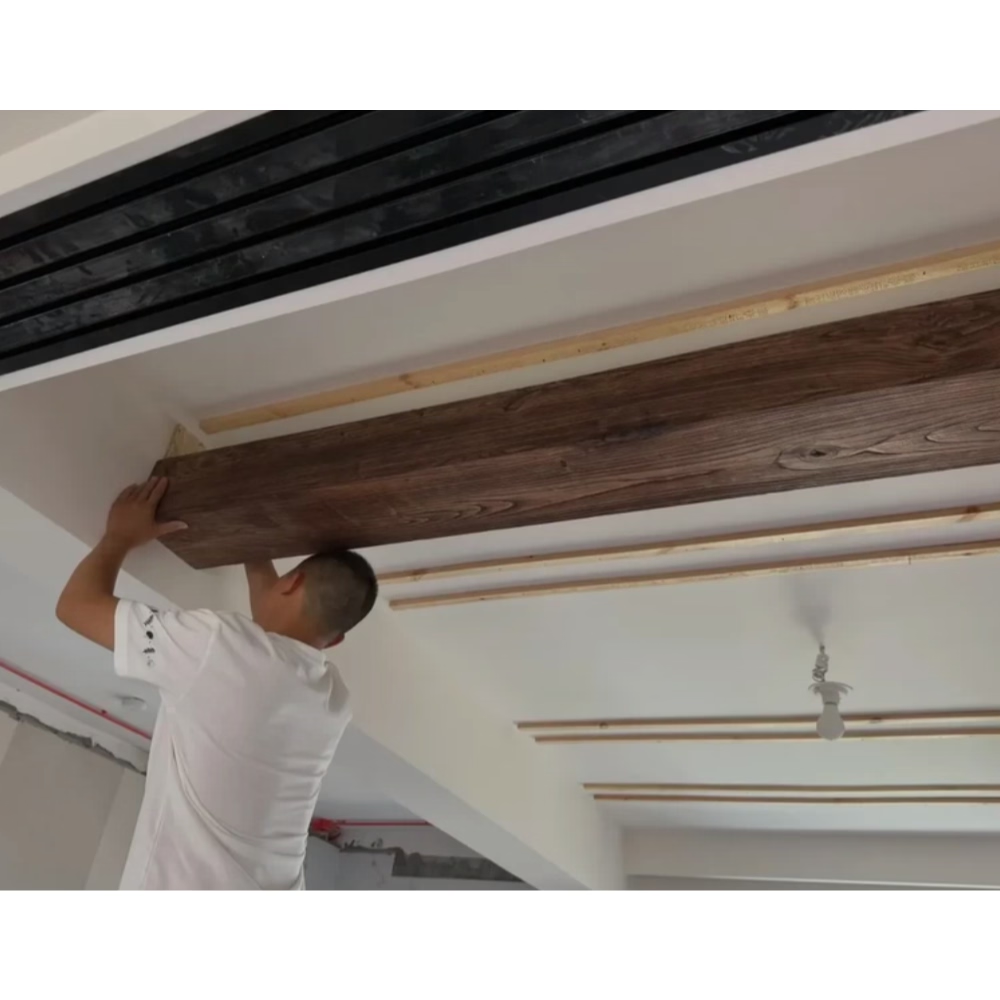
The lightweight nature of polyurethane dramatically simplifies installation logistics. Where a genuine barn oak beam might require structural support, lifting equipment, and multiple installers, a PU equivalent can often be handled by a single person. This opens up beam installation to competent DIYers who lack access to professional equipment, potentially reducing installation costs substantially for homeowners willing to handle the work themselves.
Authentic Details That Elevate the Design
Successful farmhouse beam installations depend on details that separate genuine rustic character from shallow imitation. End caps deserve particular attention — real barn beams rarely terminate cleanly, instead showing signs of previous cutting, notching, or natural termination. Many PU beam designs include optional end treatments that capture this character, with ragged cuts, natural splits, or charred ends depending on the desired effect.
Mounting hardware provides another opportunity for authenticity. Exposed brackets, carriage bolts, and metal straps all reinforce the sense of genuine timber construction. These details should be consistent with the overall style — farmhouse interiors typically favor black iron or natural steel over brass or chrome. The hardware need not be load-bearing to appear functional; its purpose is visual reinforcement of the rustic narrative.
Consider the relationship between beams and other wood elements in the space. Authentic farmhouse interiors accumulate wood over time — flooring, trim, furniture, and architectural details in varying ages and conditions. Rather than matching all wood elements perfectly, embrace the variation. Barn oak beams might sit alongside honey-toned pine flooring or cream-colored painted trim, with each element contributing its own character to a harmonious whole.
Environmental Responsibility in Design Choices
The environmental calculus of faux versus reclaimed wood deserves honest examination. Reclaimed wood advocates correctly note that the material avoids new harvesting and prevents useful timber from entering landfills. Yet reclaimed wood is not without environmental costs — transportation from often-distant sources, energy-intensive kiln drying to stabilize the material, and the fundamental unsustainability of satisfying growing demand from a finite supply.
PU faux beams sidestep these concerns entirely. Manufactured from widely available petrochemical feedstocks, the production process generates predictable, controllable emissions and waste. The lightweight nature of finished beams reduces transportation fuel consumption dramatically compared to equivalent timber products. No forests are harvested, no old buildings demolished, no rare or threatened species exploited. For environmentally conscious consumers, these beams offer a responsible path to achieving their aesthetic goals.
The longevity factor compounds the environmental benefit. A reclaimed wood beam might last thirty years before moisture damage, pest activity, or structural failure requires replacement. A PU beam installed today will look identical decades hence, with no maintenance interventions required. When eventually disposed of, quality polyurethane can often be recycled into new products, further reducing the lifecycle environmental impact.
Farmhouse style at its best represents an authentic response to human needs for comfort, warmth, and connection to the natural world. Barn oak grain PU beams enable this aesthetic in modern contexts where traditional materials would prove impractical, expensive, or environmentally problematic. The result honors both the heritage of farmhouse design and contemporary values of sustainability and practical performance.
Technical References
ASTM standards cited in every specification
Test Data
Lab results from internal testing program
Updated 2026
Reviewed against current product specs


