There's a reason rustic design refuses to disappear despite decades of competing trends promising sleeker, more modern alternatives. Human beings have an deep-seated affinity for natural materials, particularly those that show evidence of time and use. We gravitate toward spaces that feel authentic rather than manufactured, lived-in rather than staged. Rustic styling speaks to these preferences directly, offering warmth and character that newer aesthetics struggle to replicate. At the center of this visual language lies barnwood — wood that has served faithfully for generations, accumulating beauty through the very process of aging and weathering.
The appeal of barnwood extends beyond mere aesthetics into deeper psychological territory. These materials connect us to human history, to craftsmanship traditions that valued durability and function over superficial polish. A barn built a century ago was constructed to last, using timber chosen for strength and seasoned through patience rather than industrial processes. When we bring barnwood into our homes, we invite a piece of that heritage through our doors, creating continuity with the past even in contemporary contexts.
Authentic reclaimed barnwood presents real challenges for most interior applications, however. The supply is inherently limited and growing scarcer as remaining sources are harvested and incorporated into projects. Prices reflect this scarcity, putting genuine reclaimed materials beyond reach for many budgets. Those who do acquire authentic barnwood face practical complications: the material often requires extensive preparation, may harbor pests or decay organisms, and demands ongoing attention to prevent deterioration in its new environment.
Capturing Authentic Barnwood Character
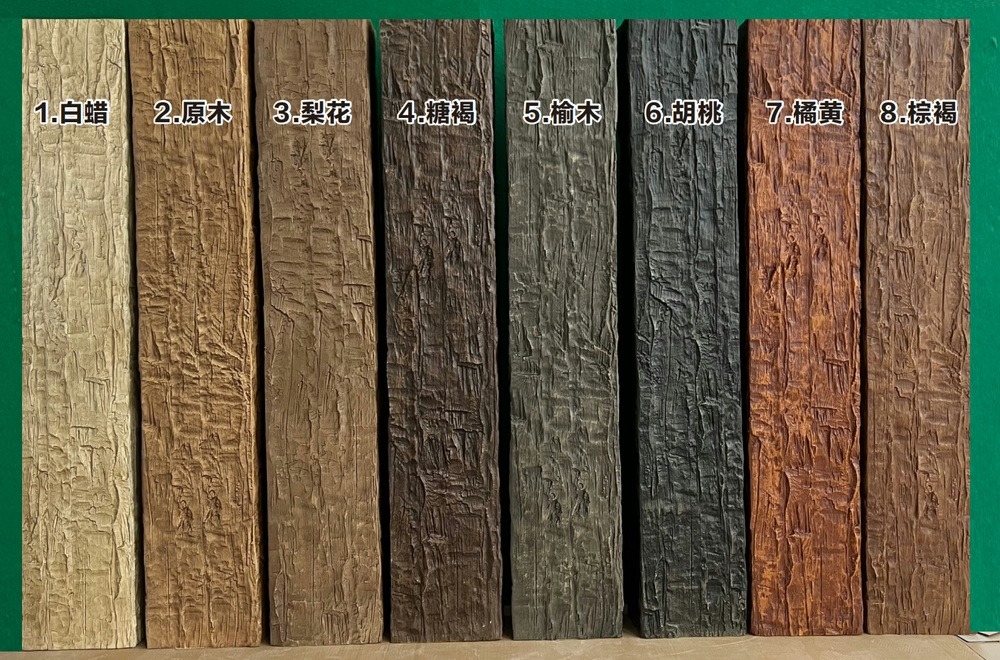
The manufacturing challenge in creating convincing barnwood reproductions lies in understanding what makes the original so visually compelling. Barnwood tells stories through its surface — the silver-gray weathering on exposed faces, the amber tones where paint has peeled away, the dark patina where hands and shoulders rubbed over years of use. Nail holes mark where equipment hung, saw marks reveal original milling techniques, and checking patterns map the stress of seasonal expansion and contraction.
Modern reproduction techniques approach this complexity through careful study of authentic samples. Rather than simply replicating visible patterns, manufacturers analyze the underlying processes that create those patterns. The silver-gray surface results from UV degradation breaking down lignin and exposing cellulose fibers. Checking develops when wood cells contract along grain lines faster than they can accommodate. Paint peels in characteristic patterns based on the underlying wood species and paint formulation. Each phenomenon can be approximated in PU production to create reproductions that read as genuine to casual observers.
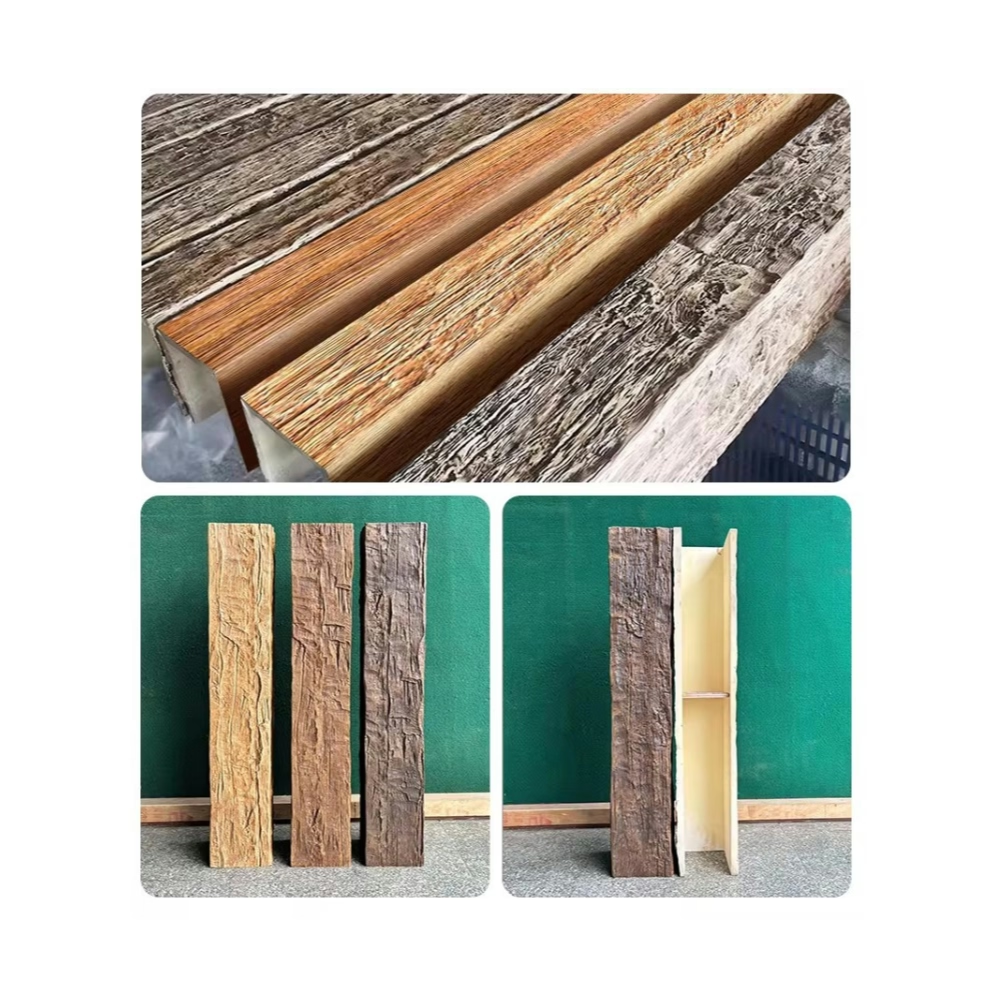
The depth of field in quality barnwood reproductions distinguishes them from flat printed patterns. Real barnwood surface has dimension — raised grain along annual rings, recessed checking lines, variations in texture across the face. This three-dimensional quality is captured through careful mold making that preserves every nuance of the original surface. When light falls across the beam, it interacts with this texture just as it would with genuine weathered wood, creating subtle highlights and shadows that photographs cannot fully convey but eyes immediately recognize.

Versatile Applications Throughout the Home
Kitchens embrace barnwood beams with particular enthusiasm, finding in them the perfect counterpoint to both sleek modern appliances and farmhouse-style finishes. Above kitchen islands, beams create gathering zones that feel naturally inviting — the kind of space where family and friends congregate without feeling the need to be doing anything in particular. The warmth of the wood softens the often-clinical functionality of kitchen spaces, making them more hospitable for everyday living rather than just cooking.
Living rooms benefit equally from barnwood beam installations, with ceiling treatment providing the visual foundation for entire room designs. A coffered arrangement of beams creates formal structure in larger spaces; a single prominent beam across a lower ceiling makes intimate rooms feel more complete. The beams work with virtually any furniture style, from leather sofas to slipcovered sectionals, providing flexibility that more specific design approaches cannot match.
Bedrooms take on sanctuary-like qualities when barnwood beams introduce natural texture and warmth. The sleeping space becomes a refuge from the world's harshness, its rustic character encouraging rest and relaxation. Master suites particularly suit this treatment, with the beams adding substance and presence that prevents large primary bedrooms from feeling cavernous or impersonal. Guest rooms benefit similarly, giving visitors an immediate sense of welcome and comfort.
Dining rooms gain ceremony and occasion from ceiling beams, the architectural treatment elevating everyday meals into something more special. Long continuous beams above dining tables establish visual focus without requiring a dedicated fixture; the beams themselves become the decoration. For formal dining rooms with higher ceilings, multiple beams or more elaborate arrangements create the grandeur appropriate to the space.

Design Cohesion and Style Integration
Successful rustic interiors balance warmth with restraint, avoiding the cluttered, over-stocked appearance that characterizes poorly executed country styling. Barnwood beams provide substantial visual weight, which means companion elements should generally be quieter and more subtle. Solid-color walls in warm neutrals, simple window treatments, and furniture with clean lines allow the beams to speak clearly without competition.
Textile choices reinforce the rustic narrative while maintaining freshness. Linen, cotton, and wool in natural tones introduce softness without diluting the architectural character. Area rugs define zones and add comfort underfoot while layering visual textures that enrich the overall composition. The goal is creating spaces that feel gathered over time rather than assembled all at once, even when everything is new.
Lighting design requires particular attention in beam installations. The beam surfaces provide opportunities for ambient uplighting that washes the ceiling with warm reflected light. Pendant fixtures positioned in beam openings create pools of task illumination for islands or tables while contributing their own decorative interest. The interplay between architectural wood, ambient light, and focused fixtures creates the layered lighting that distinguishes professional installations from amateur efforts.
Practical Performance Advantages
The performance characteristics of PU faux beams address every weakness of natural barnwood while preserving its aesthetic strengths. Where authentic reclaimed timber might harbor insects or fungal spores, polyurethane is completely inert — no pests can damage it, no biological organisms can colonize it. Where real wood absorbs moisture and swells, warps, or decays, PU remains dimensionally stable regardless of humidity conditions. Where natural beams require periodic treatment to maintain their appearance, these reproductions ask nothing beyond occasional dusting.
This practical resilience opens applications that would be impossible with authentic barnwood. Bathrooms, poolsides, outdoor living spaces, and other high-moisture environments that would rapidly degrade natural wood present no challenge for PU beams. The material performs consistently from heated interiors through unheated garages, tolerating temperature ranges that would cause natural wood to crack and split. This versatility enables consistent design language throughout entire properties rather than limiting rustic elements to protected interior spaces.
The maintenance profile proves equally advantageous for busy households. Real barnwood requires periodic inspection for pest activity, moisture damage, and structural integrity. PU beams demand no such attention — they cannot be damaged by the issues that threaten organic wood. For rental properties or vacation homes that see intermittent use, this maintenance-free characteristic eliminates the uncertainty of returning to find damaged wood after extended absences.
Economic and Environmental Considerations
Budget-conscious consumers often assume that rustic styling requires either accepting inferior materials or stretching to afford genuine reclaimed wood. PU faux beams challenge this assumption by providing authentic appearance at accessible price points. The material cost sits comfortably between basic composite options and premium reclaimed products, while installation costs remain low due to the handling advantages of lightweight construction. The total project cost often proves competitive with or superior to alternatives when all factors are considered.
The environmental dimension of this choice deserves thoughtful consideration. Authentic reclaimed barnwood carries complex environmental credentials — it avoids new harvesting but requires transportation from often-distant sources, energy-intensive processing to stabilize it, and eventual replacement when deterioration claims the material. PU faux beams avoid these lifecycle impacts entirely, providing permanent appearance without ongoing resource consumption or disposal concerns.
For projects requiring consistency across multiple units — as in resort developments, restaurant chains, or hospitality brands — the manufactured consistency of PU beams provides significant advantages. Every beam in an order will match precisely, enabling predictable installation sequences and eliminating the customization delays that authentic reclaimed materials inevitably introduce. This operational efficiency translates to real cost savings at scale.
Rustic barnwood style endures because it speaks to fundamental human preferences for authenticity, warmth, and connection to natural materials and processes. Barnwood look faux ceiling beams make this aesthetic achievable in any context, at any budget, with performance characteristics that ensure satisfaction for decades rather than years. The result honors both the heritage of rustic design and the practical requirements of contemporary building and living.
Technical References
ASTM standards cited in every specification
Test Data
Lab results from internal testing program
Updated 2026
Reviewed against current product specs


