Renovation budgets rarely accommodate every desirable improvement, forcing trade-offs that require careful prioritization. Some upgrades deliver disproportionate impact relative to their cost, providing exceptional value by transforming spaces with minimal investment. Ceiling beam installations often fall into this high-impact category, delivering architectural interest that fundamentally changes how rooms feel without requiring extensive construction or demolition work. When authentic timber proves too expensive for modest budgets, non-real wood simulation PU ceiling beams step in to deliver the aesthetic payoff at a fraction of the cost.
The economics of faux wood beams versus genuine timber extend beyond initial purchase price. Transport costs favor lighter materials significantly, as freight charges often exceed material costs for heavy timber shipments. Installation labor differs dramatically between lightweight faux products and cumbersome natural wood. The total installed cost difference frequently reaches sixty to seventy percent when all factors enter the calculation.
Understanding the True Cost Comparison
Material costs for PU beams typically range from thirty to fifty percent of comparable natural wood products, depending on profile complexity and finish quality. This baseline advantage grows when handling and installation requirements enter the comparison. Where natural wood might require two or three installers, a single person handles most PU beam installations.
Foundation and structural support costs that authentic timber demands add significantly to total project expense. Engineered wood products capable of bearing loads cost more than non-structural alternatives, while the connections and hardware required for safe installation add further expense. PU beams eliminate these requirements entirely, with mounting hardware costing a small fraction of structural support systems.
Ongoing maintenance expenses favor faux wood as well. Natural timber requires periodic refinishing to maintain appearance, with each refinishing cycle costing nearly as much as the original installation. PU beams resist the moisture absorption, insect damage, and UV degradation that make refinishing necessary. The absence of these maintenance requirements preserves the budget advantage throughout the product lifecycle.
Replacement costs arrive sooner for natural wood in challenging environments. Bathrooms, kitchens, and outdoor applications subject beams to conditions that accelerate timber deterioration. PU beams maintain appearance and function indefinitely regardless of humidity fluctuations or temperature extremes. The avoided replacement cost represents significant value that initial cost comparisons often overlook.

Maximizing Impact Within Limited Budgets
Strategic beam placement multiplies visual impact without multiplying cost. A single well-placed beam can serve as a room's dominant architectural feature, drawing attention and establishing character that multiple beams might dilute. The restrained approach often produces more sophisticated results than generous installations that risk visual clutter.
Partial ceiling treatments cost less than complete coverage while delivering substantial visual transformation. Beams crossing key zones above furniture groupings create focal points that anchor room design without requiring coverage of the entire ceiling. This approach works particularly well in larger rooms where complete coverage would overwhelm rather than enhance.
DIY installation removes labor costs entirely, transforming beam installation from a professional contractor project to a capable homeowner weekend undertaking. The lightweight nature of PU beams enables one-person handling that eliminates the need for assistance that heavy timber would require. The satisfaction of completed installation adds value beyond the monetary savings.
Phased installation approaches enable budget spreading across multiple periods. Starting with the most visible space establishes the aesthetic direction while future phases extend the treatment to additional rooms. The approach enables observation of how beams perform in actual living conditions before committing to broader installation.
Quality That Justifies the Investment
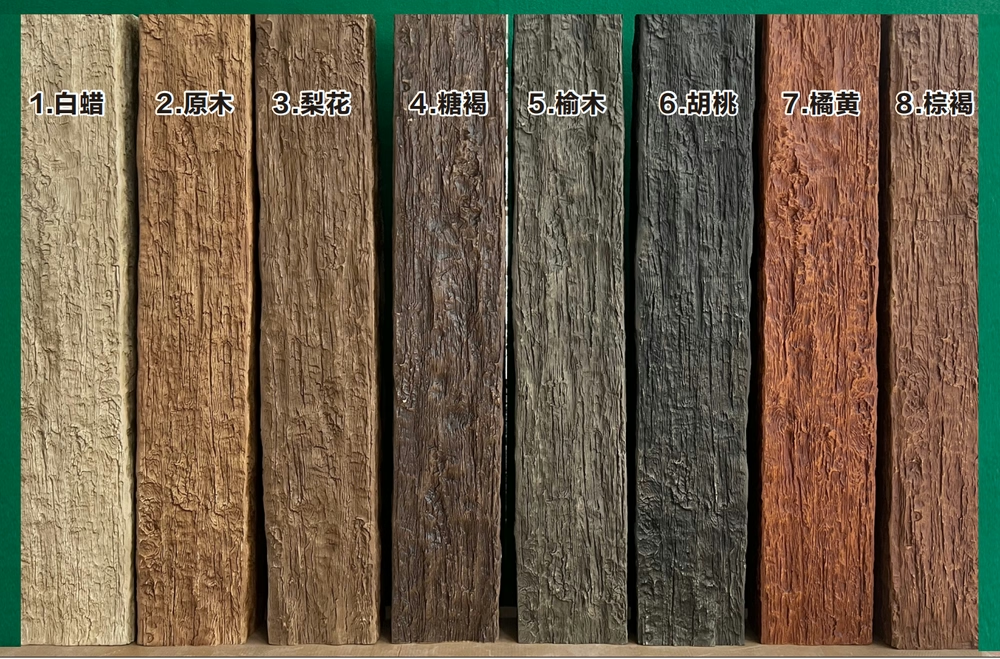
Budget-friendly does not mean cheap or flimsy in quality faux wood beam construction. The best PU beams exhibit surface detail and color depth that rivals authentic timber while providing performance characteristics that natural materials cannot match. Selecting quality products ensures that budget-friendly pricing does not sacrifice the authentic appearance that motivates the purchase.
Warranty coverage distinguishes confidence from corner-cutting. Products backed by multi-year warranties demonstrate manufacturer belief in durability and performance. The warranty protection adds value beyond the coverage itself, ensuring that any manufacturing defects reveal themselves before becoming permanent problems.
Finish durability determines whether initial appearance persists throughout the product lifecycle. Quality PU beams utilize UV-stable pigments and durable topcoats that resist fading, chipping, and wear. The investment in better finishes costs more initially but pays dividends through extended service life without refinishing requirements.
Hardware quality affects both installation experience and long-term performance. Quality mounting brackets provide secure attachment while remaining hidden after installation. The difference between hardware that works smoothly and hardware that complicates installation affects perceived value even though the components themselves represent small cost items.
When Budget Constraints Are Actually Present
Maximizing every dollar becomes critical when renovation budgets prove particularly tight. Faux wood beams enable transformations that would simply not occur without affordable options, allowing projects to proceed that would otherwise await future funding. The benefit of immediate enjoyment versus delayed improvement often exceeds the monetary value of waiting.
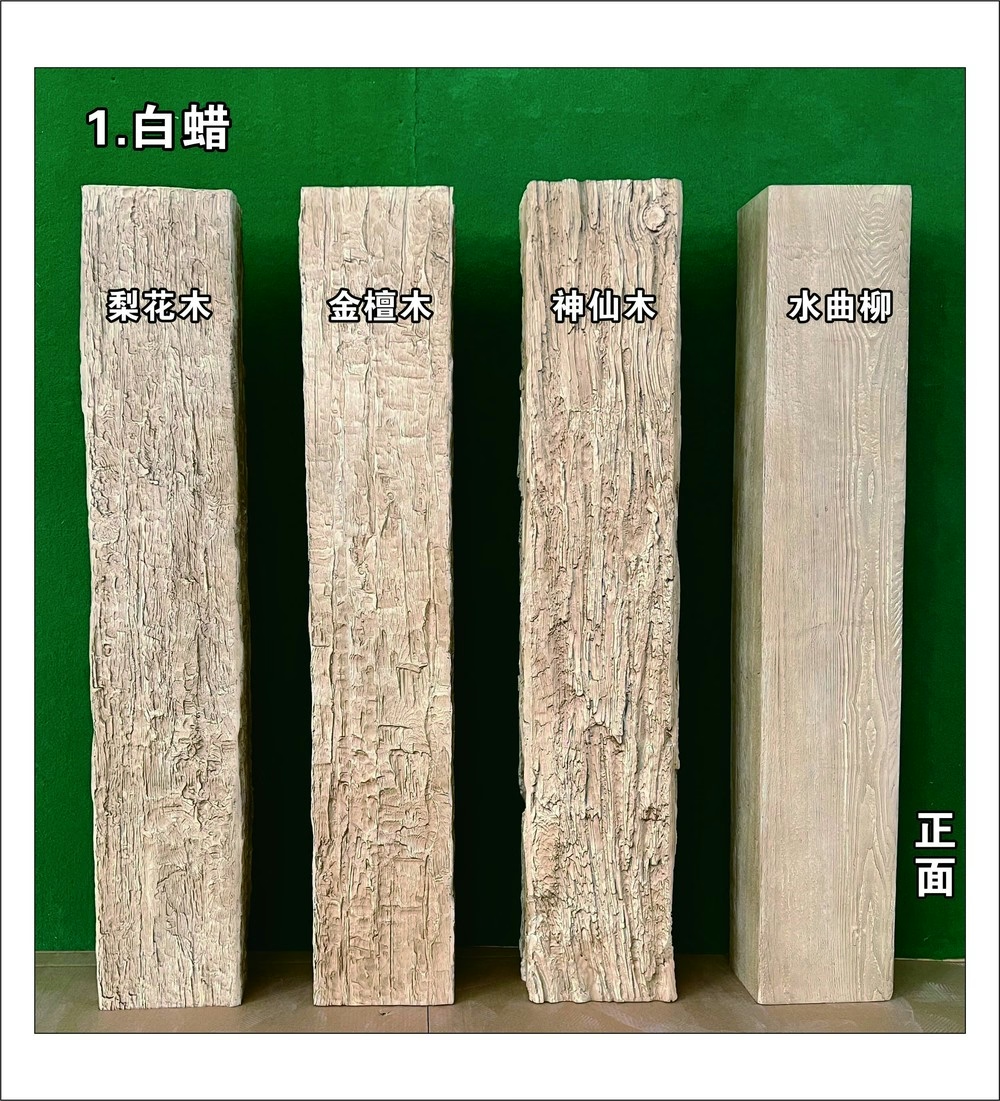
Simpler profiles cost less than complex alternatives while providing comparable visual impact. Basic rectangular beams with authentic wood grain textures deliver the essential character of timber at lower prices than intricately carved alternatives. The restrained aesthetic often suits contemporary interiors better than elaborate traditional detailing.
Standard lengths reduce cost compared to custom dimensions while still accommodating most residential applications. The availability of common sizes at competitive prices enables immediate installation without waiting for custom production. The convenience and cost advantages combine for budget-friendly outcomes.
Opportunity purchasing captures savings when sales or closeout pricing becomes available. Unlike perishable goods, beams can be purchased and stored until installation funding becomes available. The patience required for opportunistic purchasing often yields meaningful savings that eager buying does not achieve.
The Long View on Budget Decisions
The cheapest initial option rarely proves least expensive over time when lifecycle costs enter the calculation. Budget-friendly PU beams often represent the wisest long-term investment even if alternatives seemed comparable at purchase. The absence of maintenance, replacement, and repair costs makes the initial savings compound into greater total value.
Home value enhancement from beam installations provides return on investment that justifies the expenditure regardless of budget sensitivity. The aesthetic upgrade contributes to perceived home value that exceeds the actual installation cost in most markets. This value appreciation provides ongoing benefit that pure expense items do not deliver.
Quality of life improvements from beautiful living spaces represent value that spreadsheets cannot capture. The daily pleasure of architectural interest overhead, the pride of hosting guests in impressive surroundings, and the comfort of spaces designed with care all contribute to wellbeing that monetary valuation cannot express. The budget-friendly path to these benefits makes them accessible to households that premium materials would exclude.

Technical References
ASTM standards cited in every specification
Test Data
Lab results from internal testing program
Updated 2026
Reviewed against current product specs


