The most distinctive interiors rarely rely on standard catalog products. Behind every memorable space is a series of design decisions that push beyond what is readily available, specifying elements that are made specifically for the project at hand. When a ceiling detail, a feature wall, or a built-in element calls for timber beams, the designer who specifies a standard profile from a manufacturer's catalog is often making a compromise — accepting what exists rather than achieving what was envisioned. Original Design Manufacturing, commonly known as ODM, shifts the equation by enabling the creation of decorative faux timber beams that are conceived, prototyped, and produced to the exact requirements of each individual project.
Understanding ODM in the Context of Faux Timber Beams
ODM refers to a manufacturing relationship where the manufacturer designs and produces a product based on the buyer's specifications, and the resulting design becomes a unique product owned by the buyer. In the context of decorative faux timber beams, this means that an architecture or design firm can commission beams with a specific cross-sectional profile, surface texture, color, and dimensional tolerance that matches the project's design intent exactly, without being constrained by what the manufacturer happens to have in stock.
This is meaningfully different from OEM (Original Equipment Manufacturing) arrangements, where the buyer specifies an existing product for incorporation into their own brand or project, or from simple off-the-shelf purchasing, where the buyer selects from an existing catalog. ODM partnerships create entirely new products that did not exist before the engagement, developed collaboratively through design review, prototyping, and refinement.
Why Standard Beams Sometimes Miss the Mark
Standard faux timber beam profiles are designed to appeal to the broadest possible market. Manufacturers naturally gravitate toward shapes and sizes that sell well, which means popular profiles tend to dominate catalogs even when they are not ideal for every application. A standard beam profile might be the wrong proportion for a specific ceiling height, might lack the specific molding details that match adjacent millwork, or might come in finishes that do not coordinate with the project's palette.
In historic renovation projects, the mismatch between standard offerings and the existing conditions can be particularly acute. A beamscape that was originally built with a particular structural logic and aesthetic language — say, the heavy masonry-and-timber construction of a medieval hall or the refined proportions of an eighteenth-century Georgian interior — may not have any close analog in a contemporary catalog. Trying to force a standard beam profile into such a context produces results that feel wrong, even if a casual observer cannot articulate why.
Custom ODM beams resolve these mismatches entirely. The design team can provide drawings, reference photographs, or physical templates, and the manufacturer will produce beams that match the specified profile with precision.

The ODM Process for Custom Faux Timber Beams
The ODM engagement for custom decorative beams typically begins with a consultation during which the design team shares its requirements. This may include architectural drawings with beam cross-sections, elevation views showing how beams relate to adjacent elements, references images showing target aesthetics, and physical samples of existing materials that the beams must coordinate with.
The manufacturer then develops detailed specifications for the custom beam, including the exact cross-sectional geometry, surface texture treatment, color formulation, and any special requirements such as fire retardance, enhanced UV resistance for bright rooms, or specific mounting provisions. These specifications are reviewed by the design team, and revisions are made until the details are correct.
A prototype is then produced — typically a short length of the beam showing the full cross-section, texture, and finish. The design team reviews the prototype against the design intent and the physical conditions of the installation. Adjustments to the profile, texture depth, or color are communicated back to the manufacturer, and a revised prototype is produced if needed. Once the prototype is approved, production of the full set of beams for the project proceeds.
Custom Profile Possibilities
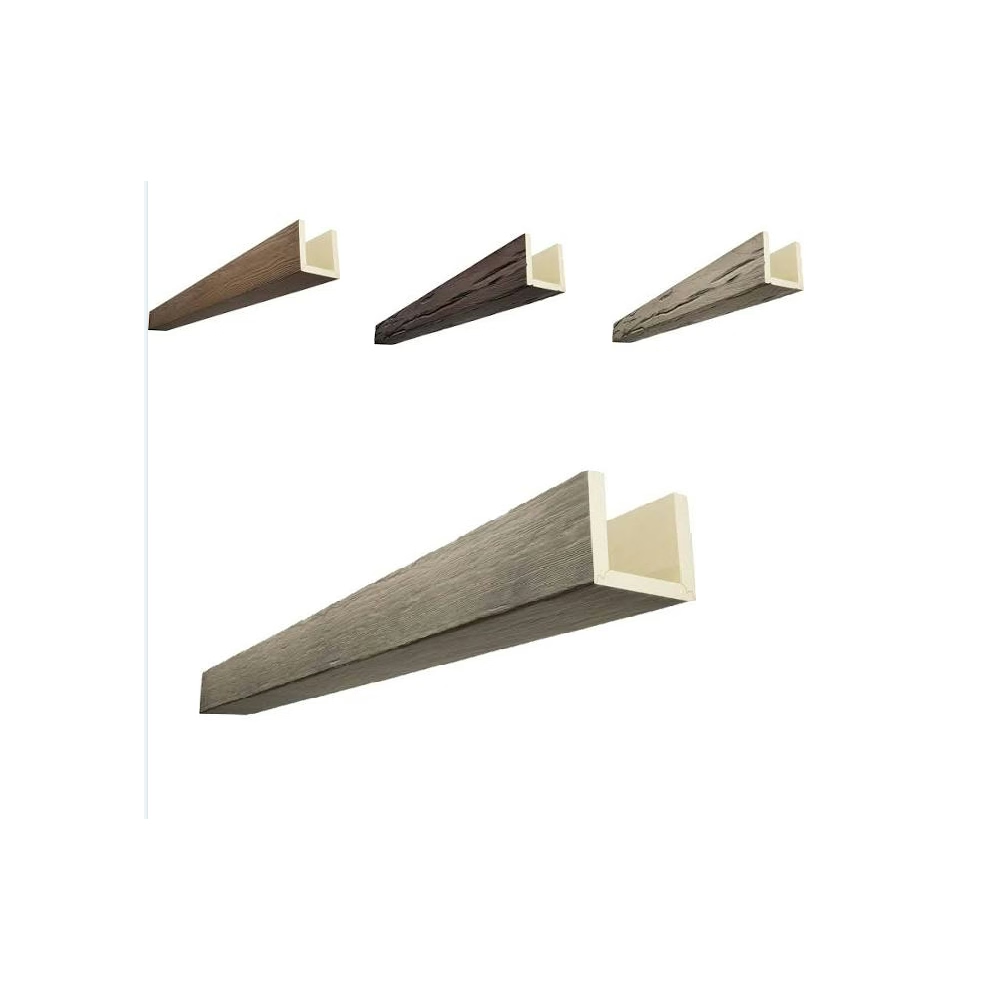
The range of profile customization available through ODM is broader than many designers initially expect. Standard beam shapes — rectangular, T-shaped, box beams — can be modified with custom chamfers, bevels, flutes, or decorative moldings carved into the exposed surfaces. More ambitious profiles are also possible, including beams with curved profiles, compound angles, built-in lighting channels, and integrated crown molding systems.
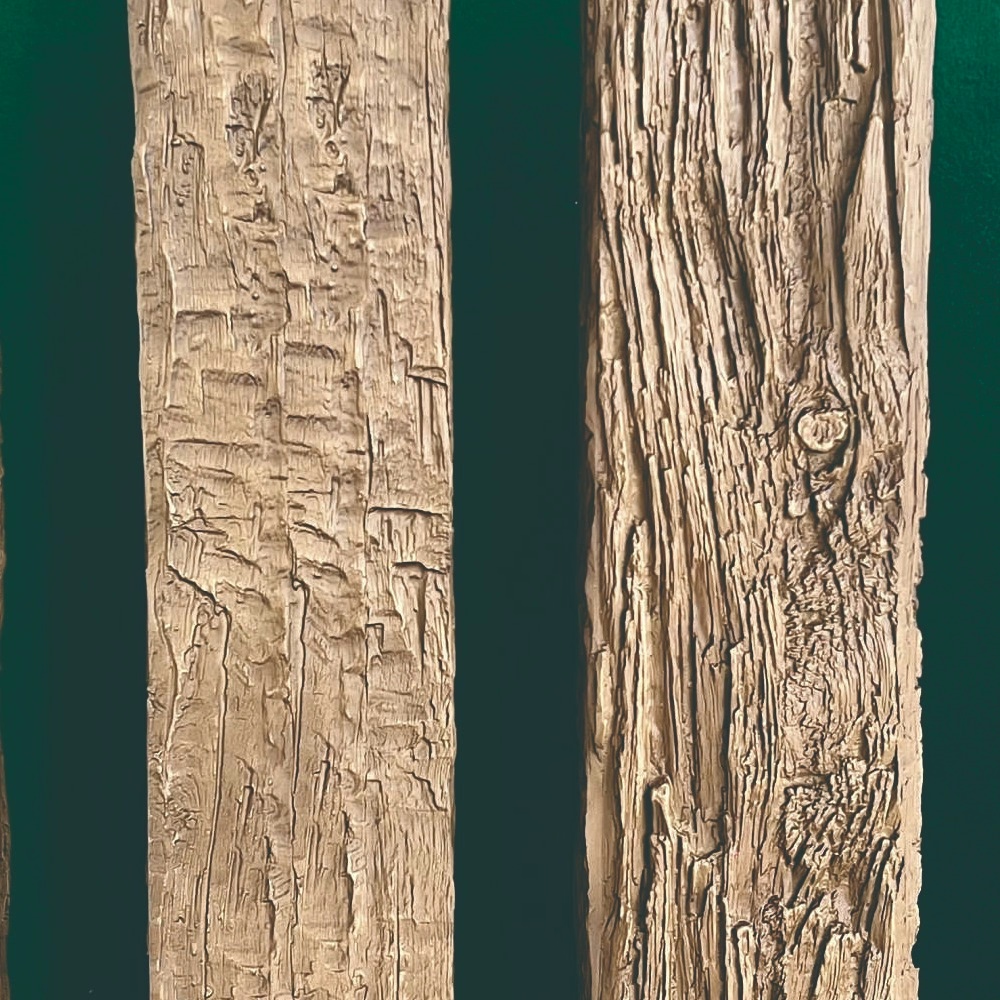
Surface textures can be matched to specific wood species or aging patterns. A beam intended to match aged oak in a heritage renovation can receive a texture treatment that replicates the open grain and fastener holes characteristic of old oak timber, while a contemporary interior might specify a cleaner, more uniformly textured surface. The texture is molded directly into the beam surface during manufacture, eliminating the need for post-installation finishing work.
Color matching is performed using paint and stain formulations that are applied and cured during manufacturing. The design team can specify a precise color standard — a Pantone reference, a paint manufacturer's chip, or a physical sample — and the manufacturer will match it. Color consistency across all beams in the installation is guaranteed by the factory-controlled application process, unlike site-applied stains where variation between coats and applicators is common.
Coordinating Custom Beams with Other Millwork
One of the practical benefits of ODM customization is the ability to coordinate beam profiles and finishes with other millwork in the project. If the design includes custom cabinetry, built-in shelving, wainscoting, or window trim in a complementary wood tone, the custom beams can be produced with a matching finish, creating a unified material language throughout the interior.
This coordination is particularly valuable in luxury residential projects and high-end hospitality interiors, where clients and guests are attuned to the quality of material coordination. A dining room where the ceiling beams, the bar front, and the built-in bookcases all share a coherent finish and profile reads as the work of a thoughtful design team committed to every detail. The same room with standard catalog beams and mismatched trim details reads differently — and not in a way that serves the project well.
Fire-retardant formulations are available for commercial applications where building codes require limited flame spread ratings. Custom beams can be produced with fire-retardant polyurethane that meets the relevant standard, allowing the design team to use decorative beams in corridors, assembly spaces, and other regulated areas without sacrificing the aesthetic.

Lead Times and Minimum Orders
Custom ODM production necessarily involves longer lead times than catalog products. The design and prototyping phase typically requires four to eight weeks, and production runs add another four to eight weeks depending on the complexity and quantity of beams required. Projects with custom beam requirements should be planned accordingly, with the ODM engagement initiated early enough to deliver approved beams when needed for installation.
Minimum order quantities for custom ODM beams vary by manufacturer and are influenced by the complexity of the tooling required to produce the custom profile. Some manufacturers accommodate small-quantity custom orders for a premium, while others establish minimums that make ODM most practical for projects with substantial beam requirements. Design teams should discuss quantities early in the engagement to understand the economics of their specific project.
The result of navigating these logistics is a set of beams that are unambiguously right for the project — not approximately right, not close enough, but precisely the element the design called for. For interiors where the quality of details determines the quality of the whole, that precision is the difference between a good project and an exceptional one.
Technical References
ASTM standards cited in every specification
Test Data
Lab results from internal testing program
Updated 2026
Reviewed against current product specs


