The wholesale distribution of building materials is a commoditized business by nature. Distributors compete on price, availability, and logistics efficiency, and the products themselves — fasteners, sealants, panels, moldings — tend to be interchangeable from one supplier to the next. Private label programs offer distributors a way to escape pure price competition by creating differentiated product lines that carry their own brand identity and command customer loyalty on grounds beyond cost alone. For distributors interested in adding decorative architectural products to their offerings, ODM custom grain and color specifications for polyurethane faux wood beams provide a practical entry point to private label differentiation.
Why Standard Beams Limit Brand Differentiation
A distributor who purchases standard catalog beams and resells them under their own brand has technically created a private label product, but one that is visually identical to products sold by every other distributor handling the same manufacturer. The only basis for customer preference is price and availability — factors that are inherently unstable and that reward the customer's willingness to switch suppliers at any moment.
To build genuine brand equity through a product line, the product itself must carry something distinctive. In the context of decorative beams, distinctiveness lives primarily in two dimensions: the grain pattern and the color. These are the visual characteristics that determine how a beam looks in a showroom, how it photographs for a catalog, and how it reads in an installed application. When those characteristics are unique to a brand, the brand itself becomes associated with a specific aesthetic that customers cannot find elsewhere.
ODM customization allows distributors to specify grain patterns and color formulations that belong to their brand, not to any competitor. The result is a product line with visual identity, which translates directly to brand recognition and customer loyalty.

Developing a Signature Grain Collection
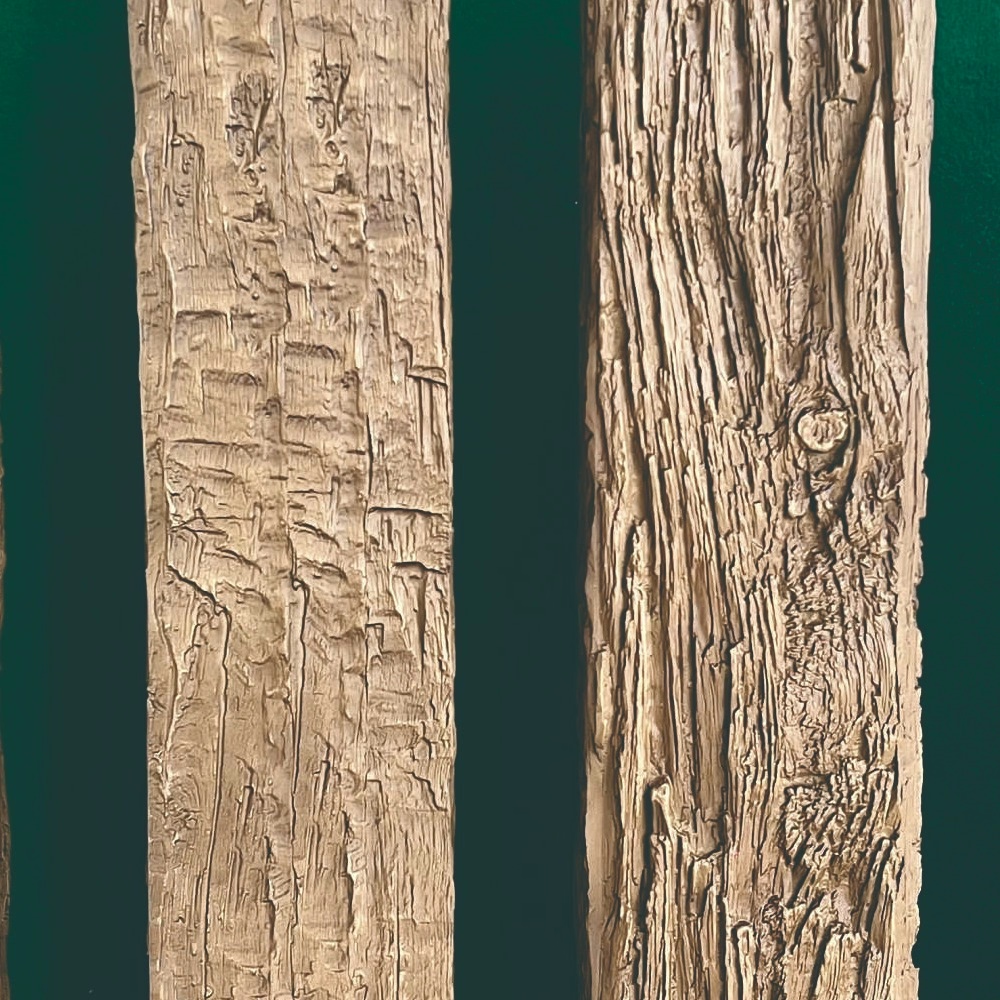
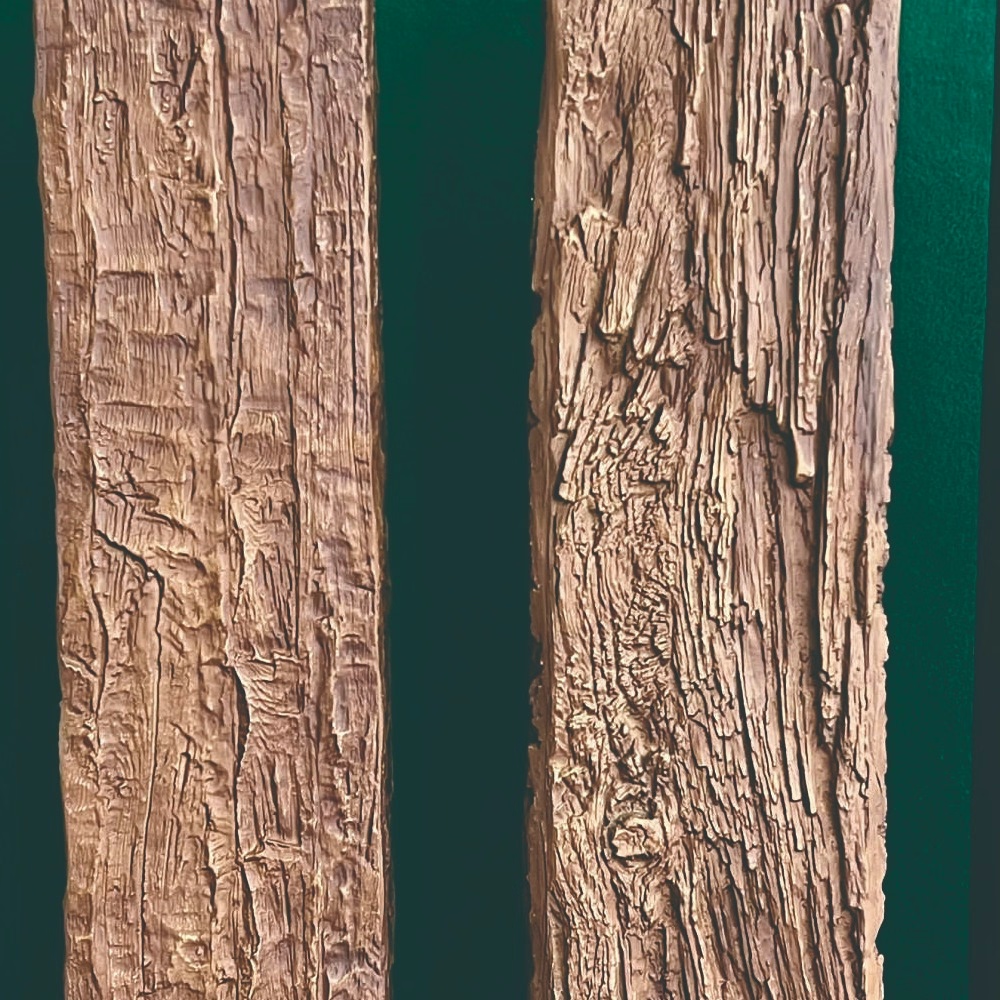
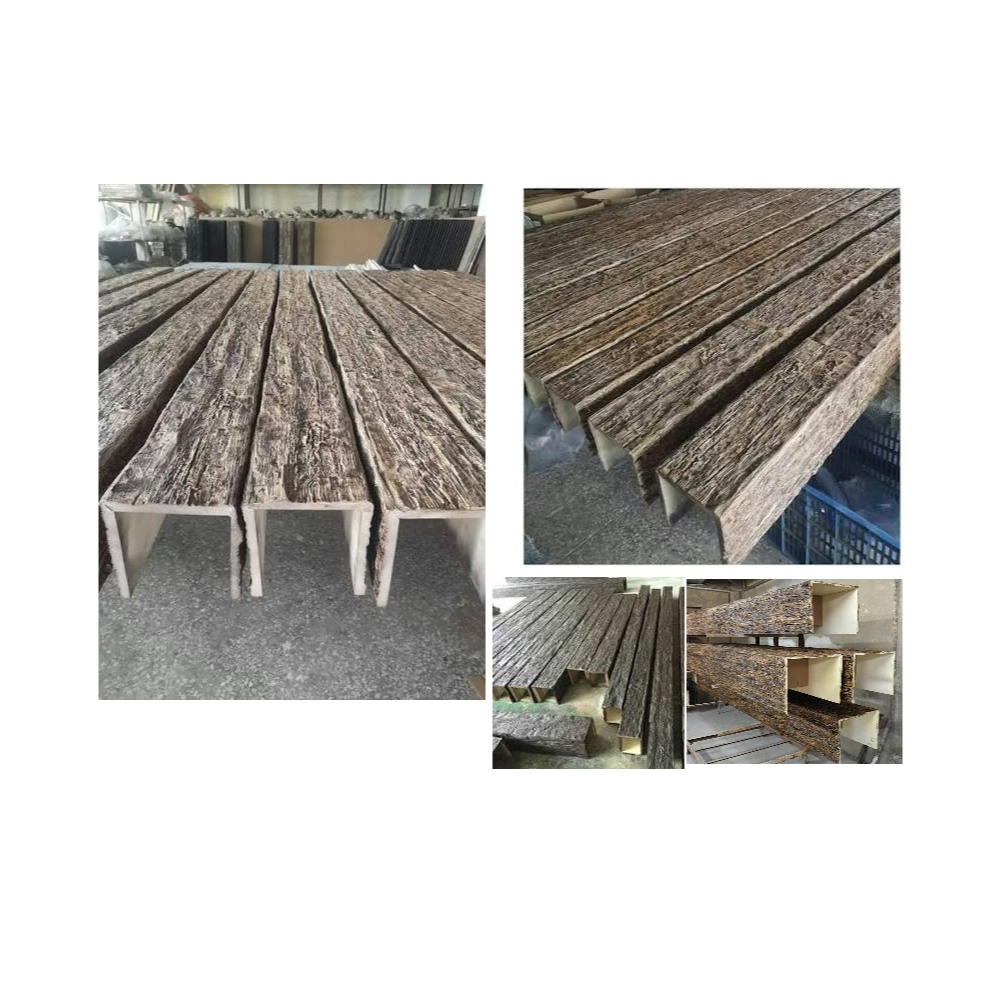
Wood grain is not a single uniform pattern — it is an umbrella term for dozens of distinct visual characteristics, each associated with different species, growing conditions, and processing methods. Oak grain has prominent ray flecks and open pores. Maple grain is fine, uniform, and relatively subdued. Douglas fir grain has dramatic contrast between earlywood and latewood bands. Reclaimed barn wood has a mixed pattern of old-growth tight grain overlaid with the marks of nails, weathering, and decades of use.
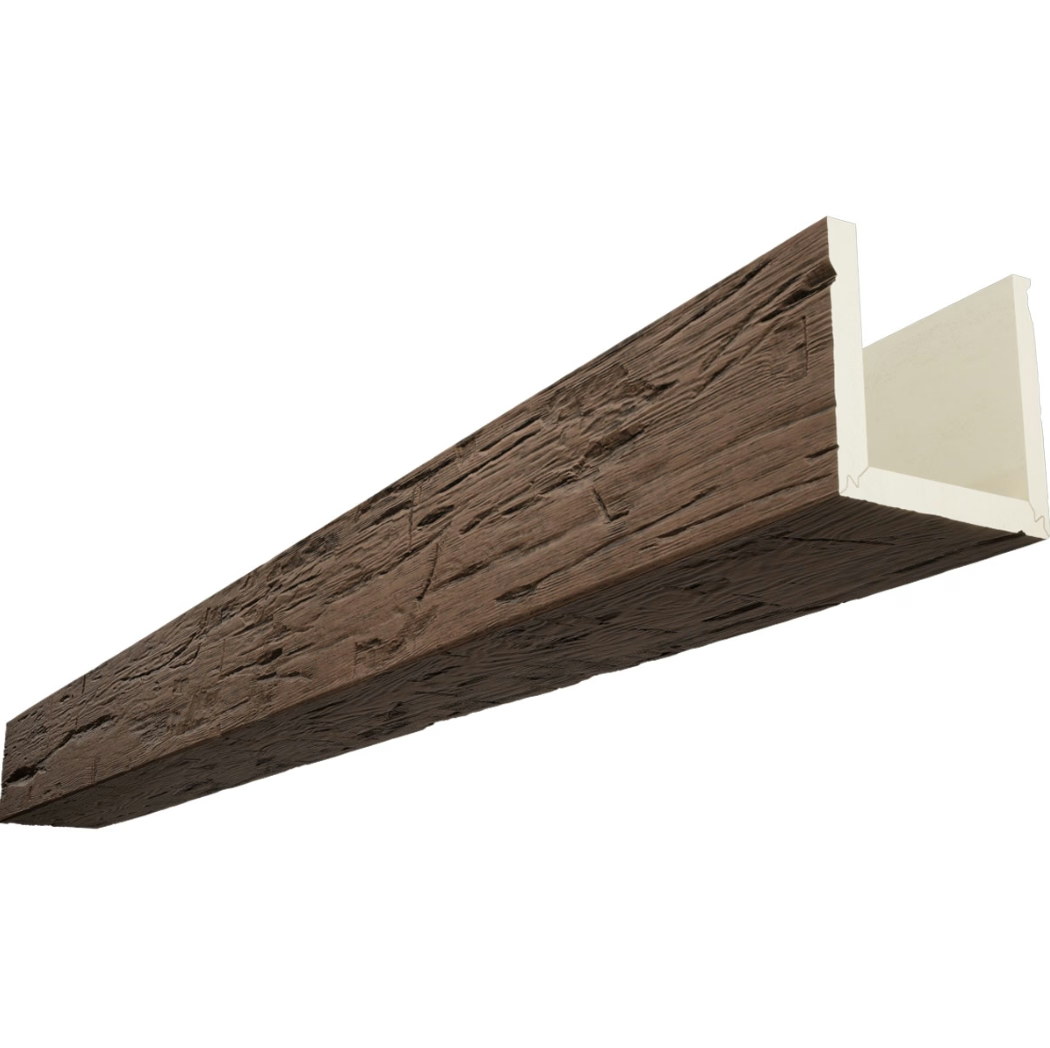
An ODM manufacturer can develop custom grain treatments that either replicate specific real-world wood characteristics or create entirely original textures with no direct natural analog. A distributor building a private label collection might commission a set of three to five signature grain treatments — perhaps one referencing classic American hardwoods, one evoking European heritage timber, one representing contemporary Scandinavian minimalism, and one capturing the character of weathered coastal wood. These grain treatments become the visual foundation of the product line and can be combined with different color formulations to create an extensive range of SKUs from a relatively small number of base treatments.
The development process involves creating reference specifications — which may include physical wood samples, high-resolution photographs, detailed written descriptions of the visual characteristics, and the designer's intent for how the grain should be perceived — and then translating those references into manufacturing specifications for the ODM producer.
Proprietary Color Formulations
Color is often the first visual attribute that customers respond to when evaluating a decorative product. A beam that looks warm and inviting in one color palette may look cold and clinical in another. The ability to specify proprietary colors — colors that belong to the brand and cannot be found in competing product lines — is a significant competitive advantage.
ODM color specification is more precise than site-applied staining because it happens in a controlled manufacturing environment. The manufacturer creates a formulation — a specific combination of base polyurethane compound, pigments, and finishing layers — that reproduces the target color exactly across all units produced. This eliminates the batch-to-batch variation that affects stained wood products and ensures that a customer ordering the same SKU months or years apart will receive visually identical material.
Private label color development typically begins with a mood board or reference palette assembled by the brand's design team. These references are translated into physical color standards — paint chips, wood samples, fabric swatches — that communicate the target color precisely. The manufacturer produces sample beams in candidate formulations, the brand team evaluates them against the reference, and revisions are made until the color is approved. The approved formulation is then documented and used for all subsequent production under the private label.
Seasonal color collections can extend the product line without requiring new tooling. If a brand wants to offer autumn-toned beams for fall promotional campaigns and cooler slate and charcoal tones for winter, these can be achieved by adjusting the finishing formulation within the same base tooling, keeping inventory manageable while maintaining visual freshness.
Building a Cohesive Product Catalog
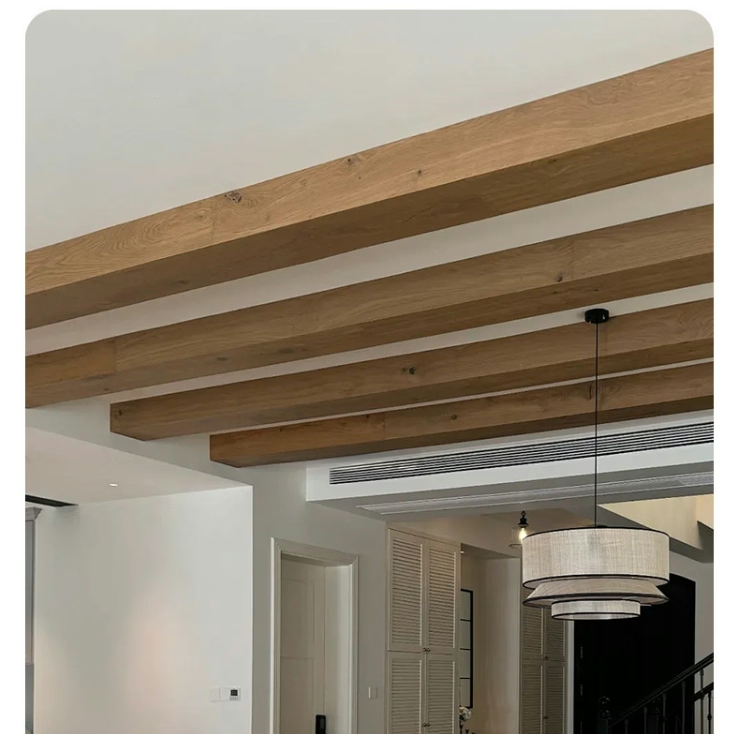
The combined effect of custom grain treatments and proprietary colors is a product line with genuine visual coherence — a family of beams that belong together because they share a common design language. This coherence is visible in the catalog, where products look like they belong to the same brand rather than being randomly assembled from different manufacturers' catalogs. It is visible in the showroom, where coordinated displays demonstrate the range of available options within a consistent aesthetic framework. And it is visible in installed applications, where beams from the same product line create a sense of intentionality rather than appearing to have been selected from whatever was in stock.
For distributors who also sell complementary products — corbels, brackets, paneling, moldings — the private label beam program can extend to those categories as well. A coordinated product line where corbels, beams, and paneling all share the same grain treatment and color formulation creates upsell opportunities and strengthens the brand's position as a single-source supplier for a complete decorative wood-look system.

Logistics and Inventory Considerations
Managing inventory for a private label product line with custom grain and color specifications requires planning that goes beyond standard stock management. Custom formulations require minimum production runs to justify the setup costs, and color consistency across production batches requires disciplined quality control processes. Distributors entering private label ODM arrangements should work with their manufacturing partner to establish realistic minimum order quantities, production lead times, and reorder points that balance inventory availability against working capital requirements.
Many ODM manufacturers offer the option to produce a master batch of base beam components in the custom grain treatment, which can then be finished in different colors as orders arrive. This approach reduces the lead time for color variants while maintaining the consistency of the underlying texture, and it allows distributors to hold a smaller inventory of base components that can be finished to order.
Long-Term Brand Equity
The most valuable asset a distributor builds through a private label program is brand recognition. When contractors, designers, and homeowners come to associate a specific brand with a particular aesthetic quality — the warmth of a signature grain, the sophistication of a distinctive color palette — they become customers for life, or at least for as long as the product line continues to meet their needs. The investment in developing custom grain and color specifications with an ODM manufacturer pays dividends in customer loyalty that far outlasts the initial development costs.
Technical References
ASTM standards cited in every specification
Test Data
Lab results from internal testing program
Updated 2026
Reviewed against current product specs