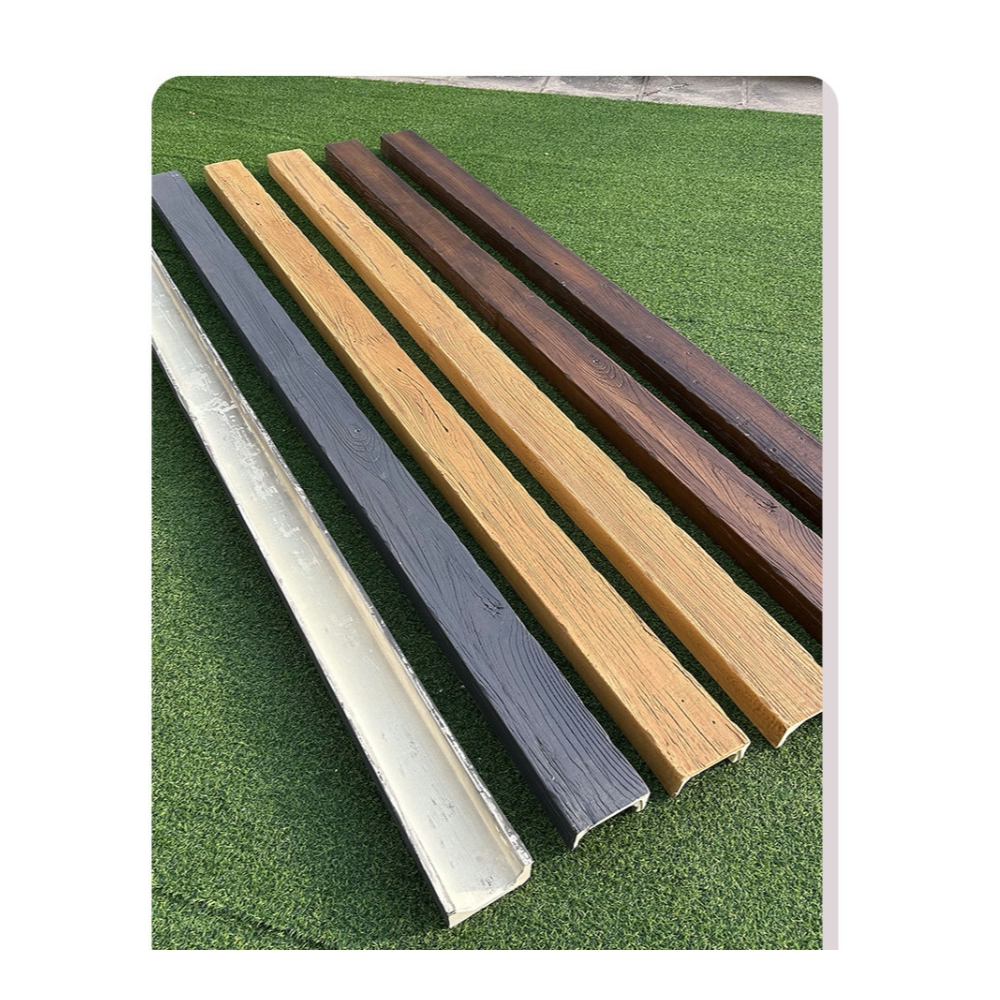
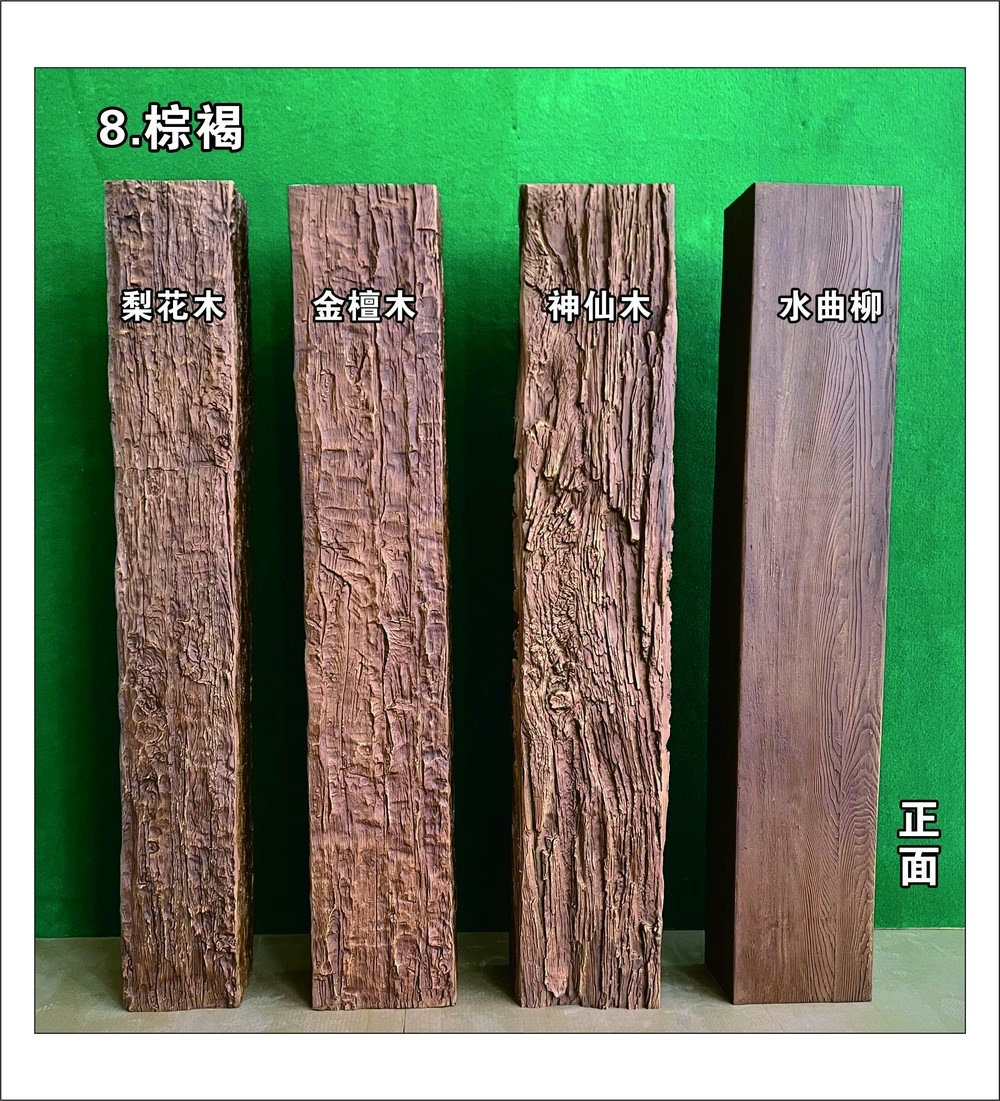
The difference between a beam installation that looks like it belongs in a high-end design magazine and one that looks like a weekend DIY project often has nothing to do with the beams themselves. Both installations may use identical beam profiles from the same manufacturer. The distinguishing factor is what surrounds the beams: the corbels that support them, the brackets that anchor them, the strapping that wraps around their ends, and the transition pieces that connect them to walls, columns, and other building elements. A beam system is only as convincing as its least-detailed component.
Why Matching Components Matter
Real timber beam installations are not just beams — they are systems of related elements that developed together as carpentry traditions evolved over centuries. A heavy timber frame in a barn or great hall has corbels carved to the same profile as the beams, strapping made from the same timber species, and brackets cut from the same boards. The material coherence of the system is part of what makes it read as authentic.
When synthetic beams are installed without corresponding synthetic components, the visual logic breaks down. A beautifully detailed polyurethane beam may be paired with a mass-produced medium-density fiberboard corbel that has a different density, a different surface texture, and a different finish. A well-proportioned beam may terminate against a wall where a rough-sawn board is used as strapping — the wrong species, the wrong color, and the wrong texture. These mismatches are often small, but they accumulate to create an impression of amateurism that undermines the overall effect.
ODM custom matching components address this problem by extending the same quality standards and design language to every visible element of the beam system. When the corbels, brackets, strapping, end caps, and transition pieces all share the same material, texture, and finish as the beams themselves, the installation achieves a visual coherence that is immediately perceptible.

Standard Components and Custom Additions
Most polyurethane beam manufacturers offer a range of standard companion components — corbels, brackets, and decorative elements that are designed to coordinate with their standard beam profiles. These standard components are readily available, cost less than custom parts, and work well for projects using standard beam profiles.
However, projects using ODM custom beams frequently need components that do not exist in any standard catalog. A custom beam with an unusually deep profile may require corbels with a larger bearing surface and a different proportion than any standard option. A custom beam with a curved profile may need brackets that follow a matching radius. A beam specified for a particular historical application may require decorative end caps that reference specific carved details from the period.
ODM component production allows these custom pieces to be designed and produced to match the custom beams exactly. The corbel that supports a custom deep-beam profile is itself a custom piece, sharing the same wood grain texture, the same color formulation, and the same manufacturing quality as the beam it supports.
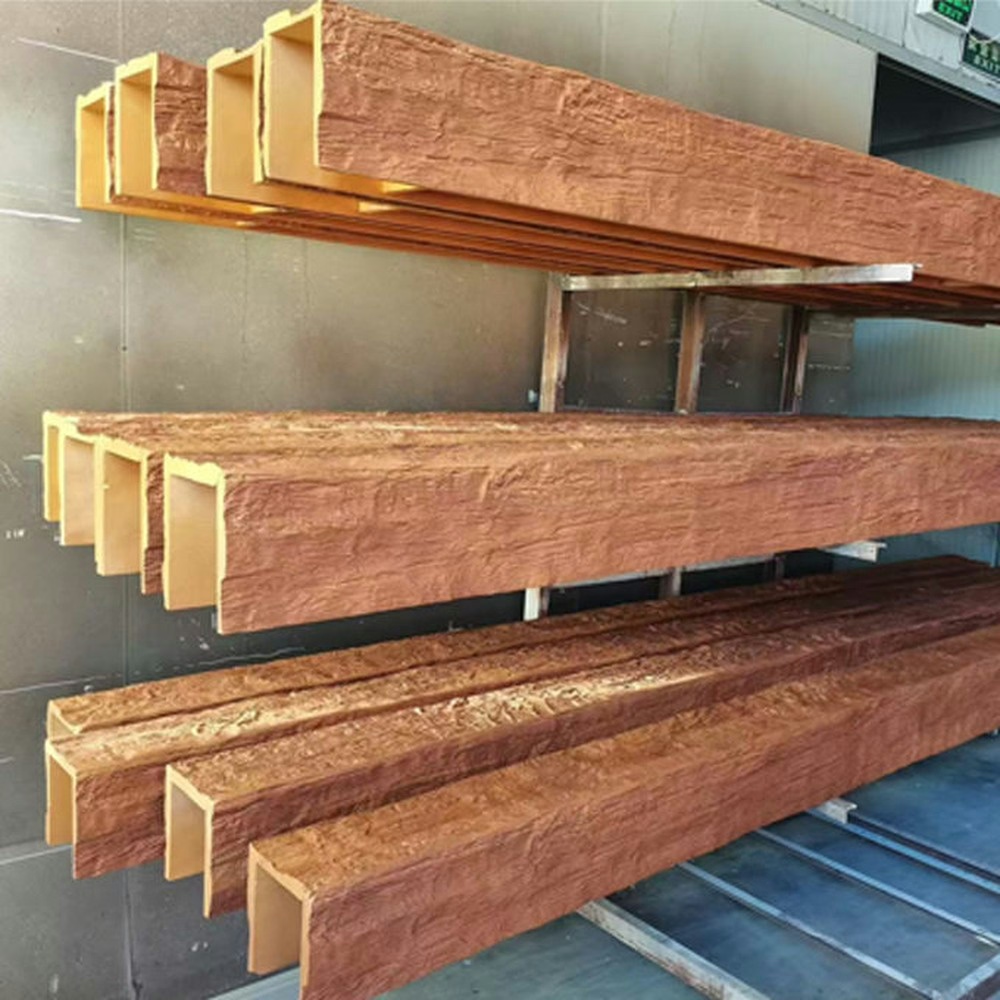
Corbel Design and Custom Options
Corbels are perhaps the most critical component of a beam system from a visual standpoint. They are positioned at the primary load points — typically where beams meet walls or where beams intersect — and they bear the visual weight of the beam above. A well-designed corbel adds architectural richness to the beam installation; a poorly matched one creates a jarring visual interruption.
Custom corbel design begins with the beam profile. The bearing surface of the corbel must be sized to support the beam properly, and the corbel's visible faces should be proportioned to relate harmoniously to the beam's proportions. A deep narrow beam calls for a different corbel profile than a shallow wide beam, and ODM customization allows these proportions to be designed together rather than forcing mismatches between incompatible standard elements.
Decorative carving on custom corbels can range from simple geometric chamfers to elaborate period-appropriate ornamentation. The level of detail is limited only by the manufacturing capability and the budget, and it can be specified to match historical references, complement adjacent architectural elements, or establish a completely original decorative vocabulary.
For commercial projects with repetitive installations — a chain of restaurants, a hotel brand with standard room types — custom corbels can be designed once and then reproduced exactly across all installations, maintaining brand consistency while eliminating the visual inconsistency of mixing standard and custom components.
Brackets, Strapping, and Transition Pieces
While corbels carry visual weight, brackets, strapping, and transition pieces provide the detail that sells the authenticity of the installation. Strapping — the material wrapped around the ends of beams where they meet walls — is particularly important because it is one of the most universally recognized details of timber construction. The wrong strapping immediately reads as wrong even to viewers who cannot articulate what they are seeing.
Custom strapping for ODM beam systems can be specified to match the beam's texture and color exactly. The strapping appears to be the same material as the beam because, from a material standpoint, it is. The visual effect is a clean, coherent joint where the strapping reads as an integral part of the beam system rather than a separate element forced into proximity.
Transition pieces — the trim elements that connect beam ends to wall surfaces, that frame beam penetrations through ceiling planes, or that bridge the gap between beams and adjacent millwork — complete the detail package. Custom transition pieces designed to the same specifications as the beams and corbels ensure that the system holds together visually from every viewing angle, including close inspection.

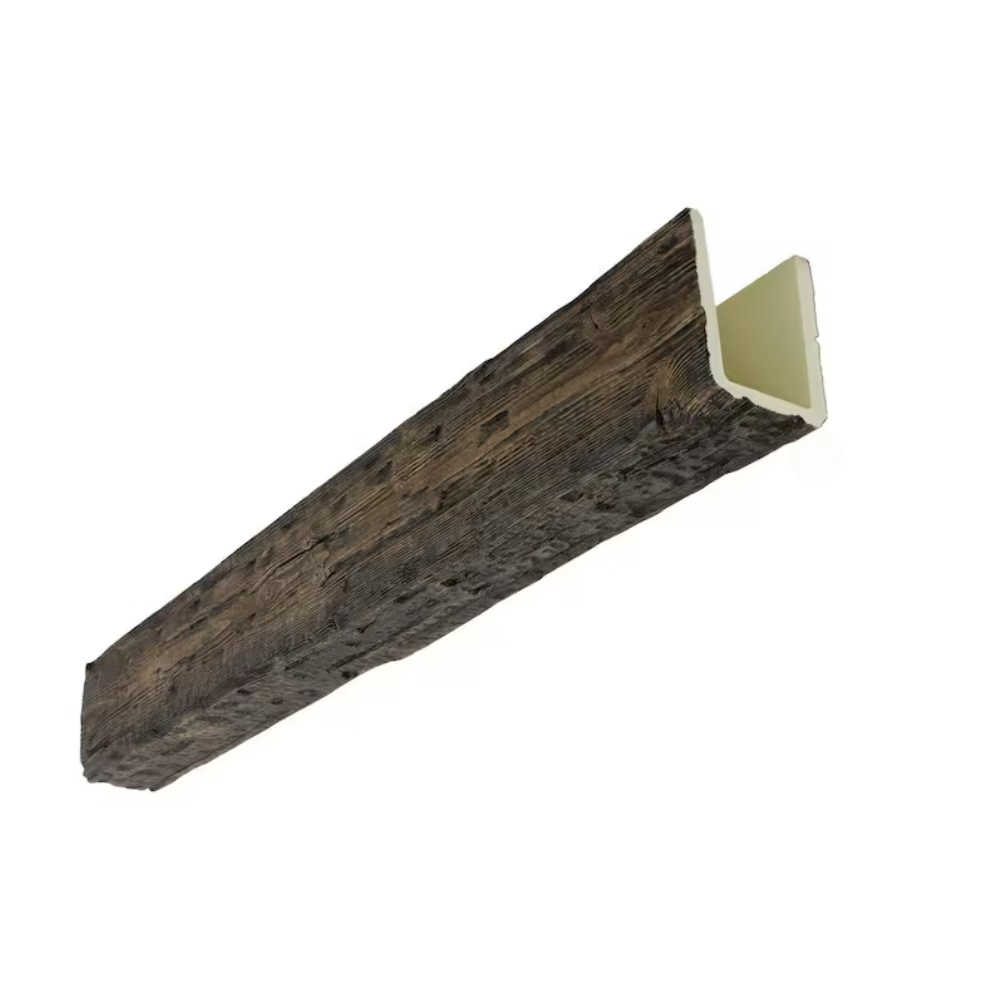
System-Level Design and Coordination
The most convincing beam systems are designed as systems from the beginning, not assembled from individually selected components. This means that the beam profile, the corbel profile, the bracket designs, and the strapping specifications are all developed together, each element designed to complement the others.
ODM manufacturing supports this system-level approach by allowing a single engagement to cover all components. The design team provides specifications for the complete system, the manufacturer develops tooling for each component, prototypes are produced and reviewed together, and production covers all elements in coordinated batches. The result is a system where every component shares the same material quality, the same finish, and the same manufacturing tolerances.
This approach is particularly valuable for projects with exposed beam ceilings where multiple beam types intersect — main beams crossing secondary beams, beams meeting columns, beams passing through soffits. A well-coordinated system manages all these intersections with matching transition pieces that maintain visual continuity across every joint.
Coordinating with Adjacent Materials
Beam systems rarely exist in isolation. They meet walls, ceilings, columns, and built-in furniture, and each junction is an opportunity either to reinforce the design language or to create a visual discontinuity. ODM customization allows the design team to specify not only the beam components but also the trim pieces that connect the beam system to adjacent materials.
If a beam meets a painted wall, the ODM manufacturer can produce trim pieces that transition from the beam's wood texture to a paintable surface that can be finished to match the wall. If a beam meets a stone column, custom components can be produced with a wood-textured face on one side and a smooth surface on the other that accepts stone-look paint or veneer. These transitions require coordination between the beam manufacturer, the design team, and the finish trades, but the end result is a level of detail quality that separates professional installations from amateur attempts.
Technical References
ASTM standards cited in every specification
Test Data
Lab results from internal testing program
Updated 2026
Reviewed against current product specs