The shift toward personalization in consumer products has reshaped expectations across the building industry. Where once a homeowner might have accepted the range of options available from a local supplier, today's clients expect to specify exactly what they want, in the exact color they envisioned, with the precise level of detail that matches their taste. This expectation is not limited to furniture and finishes — it extends to architectural elements, including beams, where the desire for something personal drives clients and their design representatives to seek out products that cannot be found in any retail catalog.
The Personalization Imperative in Interior Design
Residential and hospitality interiors increasingly reflect the personalities of their occupants rather than the conventions of their era. The proliferation of design media — magazines, websites, social platforms — has raised client awareness of possibilities and their expectations of their own spaces. A homeowner who has spent years collecting images of interiors that appeal to them has a precise mental picture of what they want, and that picture rarely corresponds exactly to any standard product offering.
This dynamic is particularly strong in the luxury residential and boutique hospitality segments, where clients are paying for exclusivity as much as for quality. A wealthy homeowner building a custom residence is not looking for the same beams available at the local home improvement store; they want beams that were designed for their home, that reflect their aesthetic preferences, and that cannot be found in any comparable property. Similarly, a boutique hotel competing for guests on the basis of distinctive design cannot rely on the same catalog products used by every other property in its category.
ODM custom polyurethane beams serve this personalization expectation by enabling design solutions that are genuinely tailored to the individual project. The scope of personalization ranges from simple customization of existing products — a non-standard color, a slightly modified profile — to completely original designs developed specifically for the project from first principles.
Personalizing Beam Aesthetics for Client Preferences
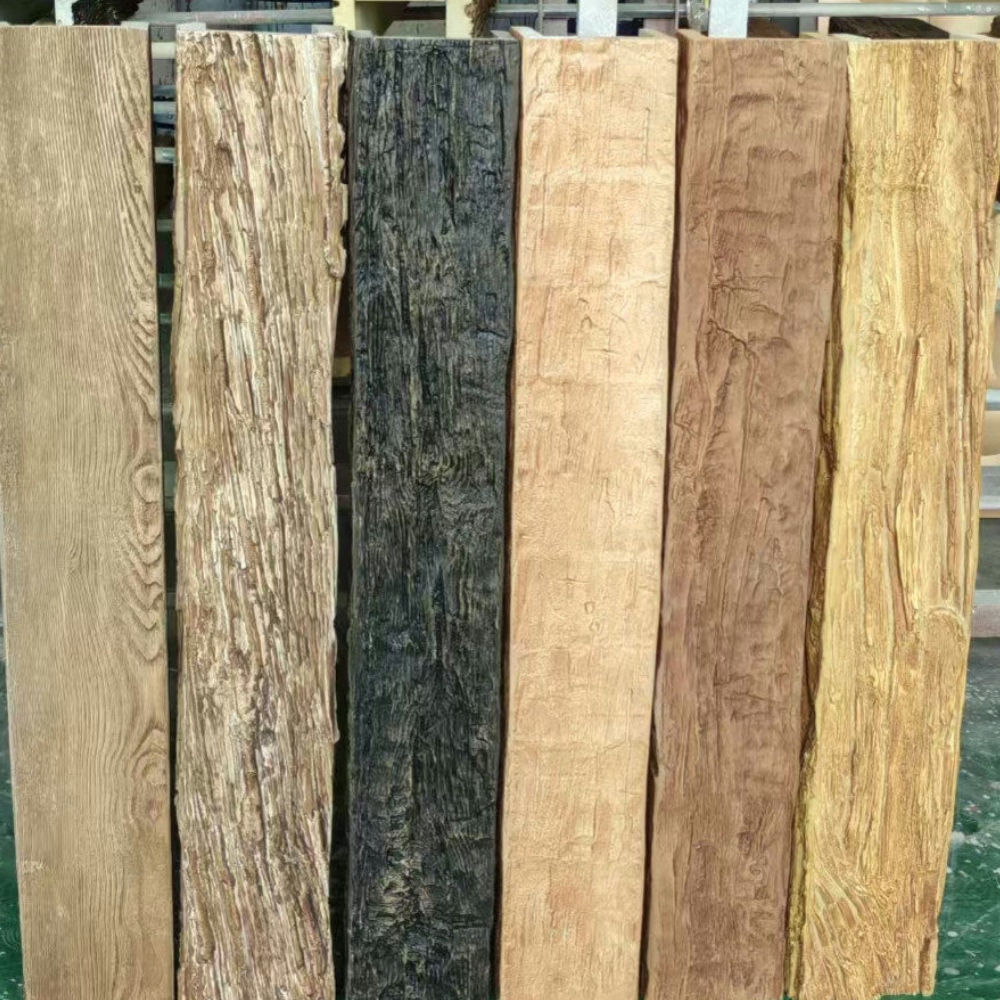
The most common form of beam personalization is aesthetic customization that reflects the client's taste. This may involve specifying a wood species appearance that the client finds particularly appealing — a deeply grained reclaimed oak look, a clean and contemporary maple tone, a warm honey-colored elm — even if that species is not locally available, would be prohibitively expensive in solid wood, or does not grow in the climate where the project is located.
Aesthetic personalization also encompasses the level of detail and age in the beam's surface. Some clients prefer the refined appearance of new, clean-cut timber with subtle grain and minimal character marks. Others are drawn to the weathered patina of aged beams, with prominent grain, visible checking, nail holes, and color variation across the surface. ODM customization allows the surface treatment to be specified at either end of this spectrum or anywhere in between, producing beams that match the client's visual preferences precisely.
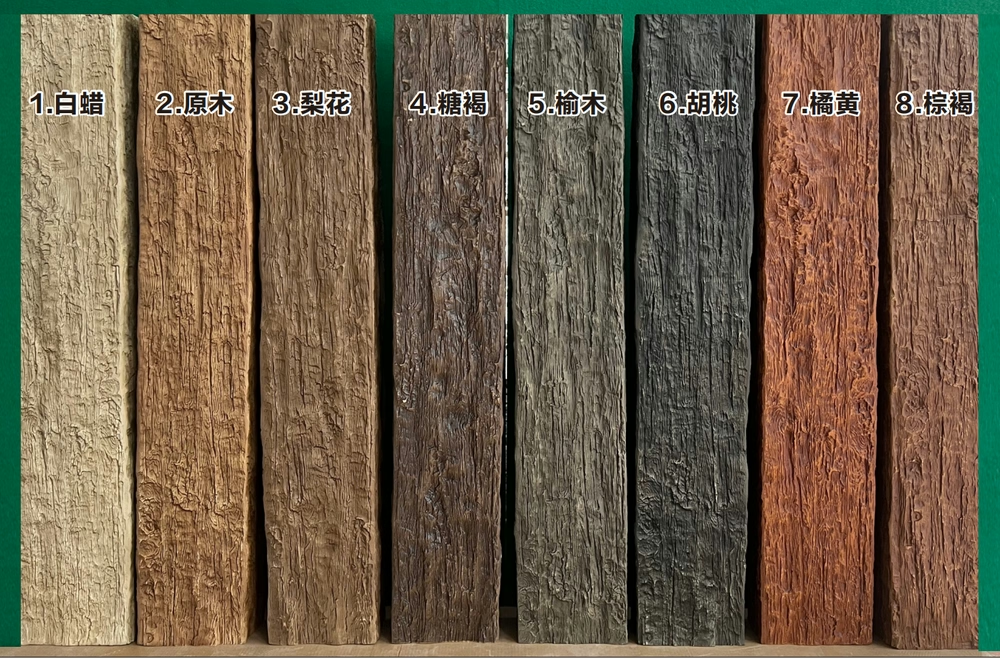
Color personalization extends beyond matching existing wood species to include completely original colors — beams finished in custom paint colors that complement the room's palette, beams with whitewash or limed finishes that lighten the wood grain for a Scandinavian aesthetic, or beams with dark stain treatments that create drama and contrast in contemporary interiors.
Accommodating Individual Project Constraints
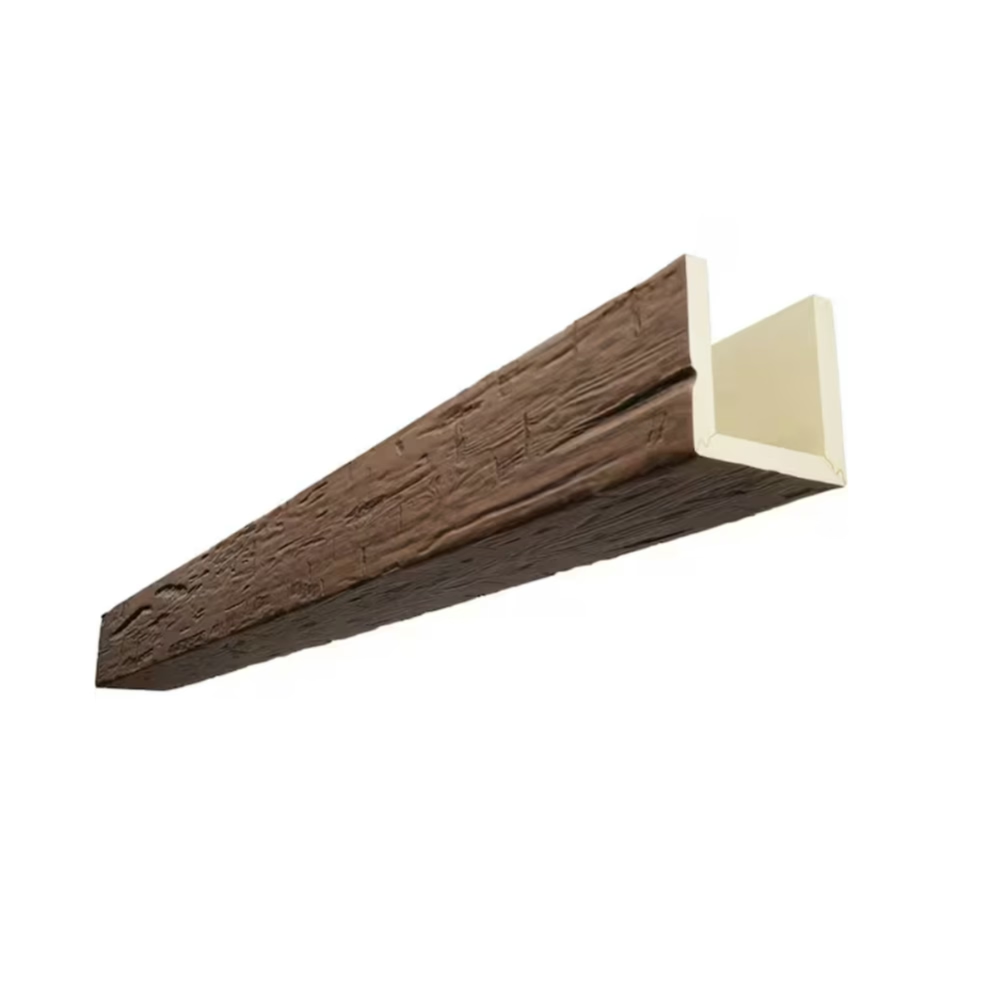
Personalization through ODM is not limited to aesthetic choices — it also addresses practical constraints that are unique to each project. A beam that must fit between existing structural elements with no tolerance for adjustment requires precise dimensional customization that catalog products cannot provide. A beam that must wrap around an architectural column, follow the slope of an unusual roof, or span an irregularly shaped opening requires geometric customization that no standard profile can offer.
By working with an ODM manufacturer from the earliest design stages, architects and designers can incorporate these constraints into the beam specification from the beginning rather than trying to solve them after a product has been selected. The manufacturer becomes a technical resource who can suggest workable solutions to challenging geometric problems, advise on appropriate material formulations for specific conditions, and ensure that the specified product can be produced reliably and installed as designed.
This collaborative approach is particularly valuable in renovation projects, where existing conditions are rarely exactly as represented in drawings and where field measurements are essential for accurate customization. A custom beam produced from field-verified measurements eliminates the gap between what was designed and what can actually be installed — a gap that is frequently bridged with compromises that compromise the design.

Personalization for Different Interior Styles
The specific nature of personalization varies significantly depending on the interior design style the project is pursuing. A minimalist contemporary interior calls for clean, precise beams with minimal texture and a restrained color palette — personalization in this context means getting the exact proportion and finish that works with the other minimalist elements in the space. A rustic mountain retreat calls for heavily textured beams with prominent grain and deliberate weathering — personalization means getting the authentic appearance of aged timber without the weight and maintenance burden of the real thing.
A transitional interior blending traditional and contemporary elements may require beams that bridge both vocabularies — perhaps a traditional profile treated with a contemporary finish, or a contemporary geometric profile textured to suggest traditional craftsmanship. These nuanced combinations are impossible to achieve with standard catalog products but are straightforward to specify and produce through ODM.
The Client Experience of Commissioning Custom Beams
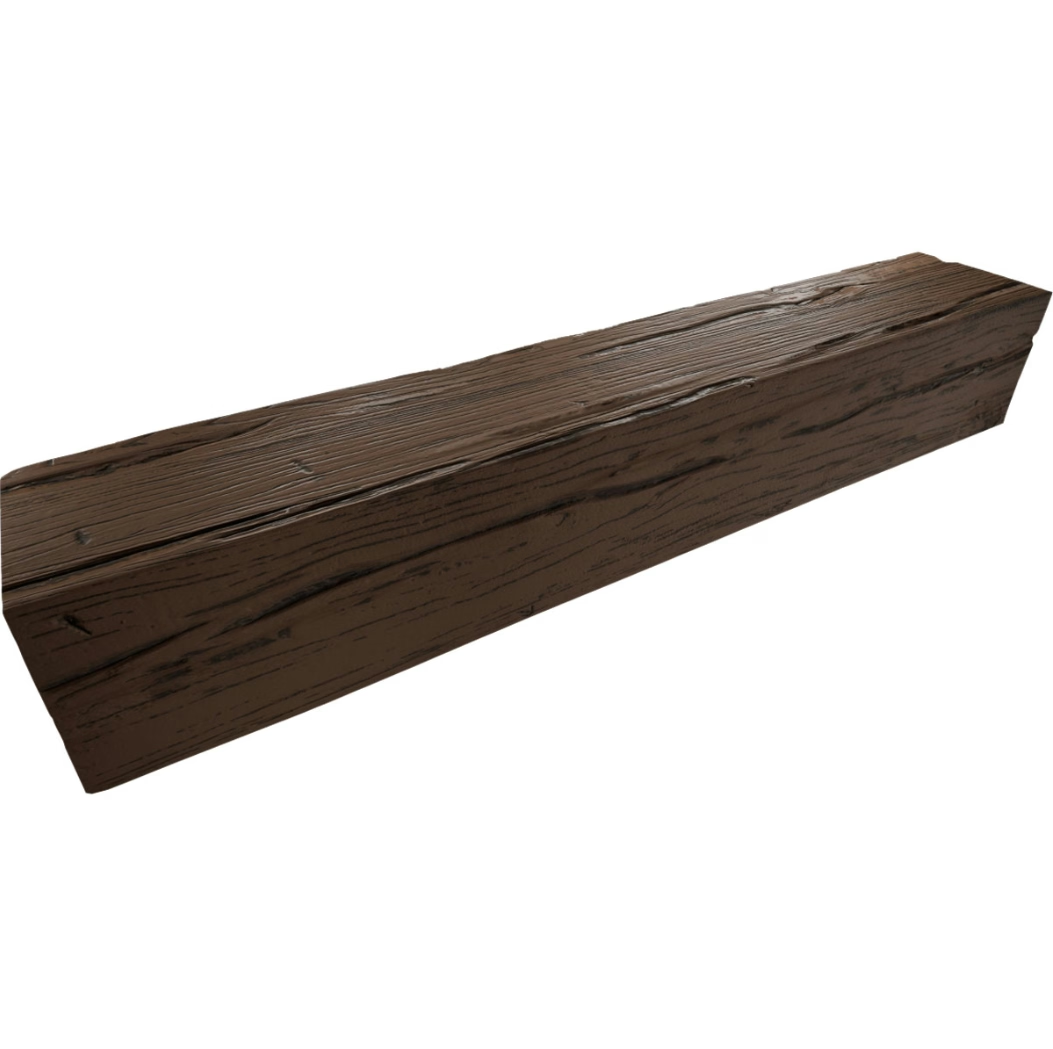
For the end client, the experience of commissioning custom beams through an ODM process is itself a value-add. The client participates in a design process that is centered on their preferences, sees prototypes that reflect their input, and ultimately receives a product that was made specifically for them. This participatory experience is meaningfully different from selecting a product from a catalog, and it contributes to the client's satisfaction with the project as a whole.
Designers who offer ODM beam customization as part of their service package differentiate themselves from competitors who rely solely on catalog products. The ability to present clients with a truly custom solution — beams that were designed for their space, that match their aesthetic, and that no one else has — is a powerful differentiator that can influence client selection of the design firm as well as the overall project budget.
The presentation of custom beam options also gives designers an opportunity to demonstrate their expertise. Walking a client through the customization options, explaining how different textures and finishes will age and perform, and translating the client's vague aesthetic preferences into precise technical specifications are all skills that experienced designers bring to the process and that clients value.

Balancing Personalization with Budget and Schedule
The desire for personalization must be balanced against practical realities of budget and schedule. Not every project has the time or resources for a full ODM development cycle with multiple prototype iterations. In these cases, designers can apply personalization selectively — customizing the most visible or architecturally significant beams while using standard products for less prominent applications, or customizing only the finish while using standard profiles.
The key is to identify where personalization delivers the highest impact relative to its cost. A single signature beam in a prominent location, fully customized from profile to finish, may deliver more visual impact than multiple moderately customized beams, and at a lower total cost. Working with the ODM manufacturer to identify these high-impact opportunities is part of the designer's value in the process.
For repeat clients — a hospitality brand developing multiple properties, a developer building a series of similar residential projects — the economics of ODM personalization become more favorable as the cumulative order volume justifies the initial development investment. The first project absorbs the prototyping costs, and subsequent projects benefit from the established specifications at more accessible pricing.
Technical References
ASTM standards cited in every specification
Test Data
Lab results from internal testing program
Updated 2026
Reviewed against current product specs