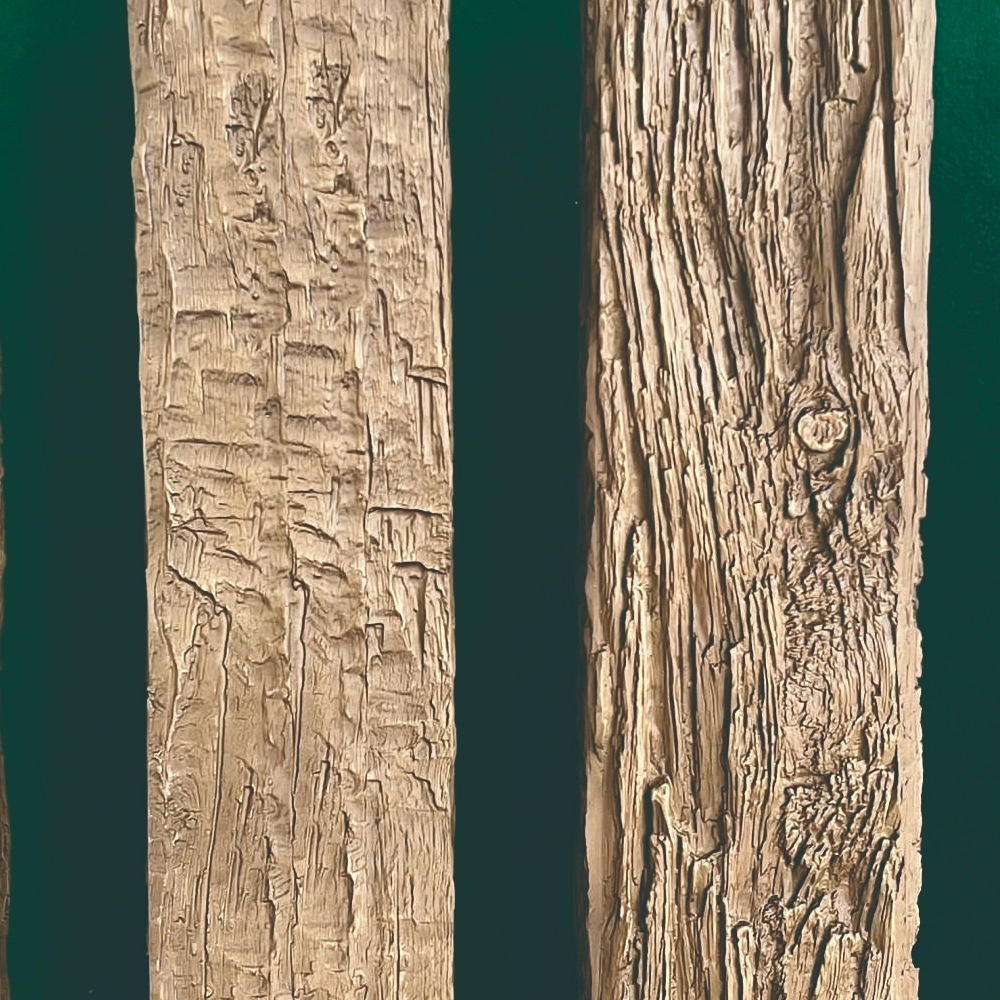
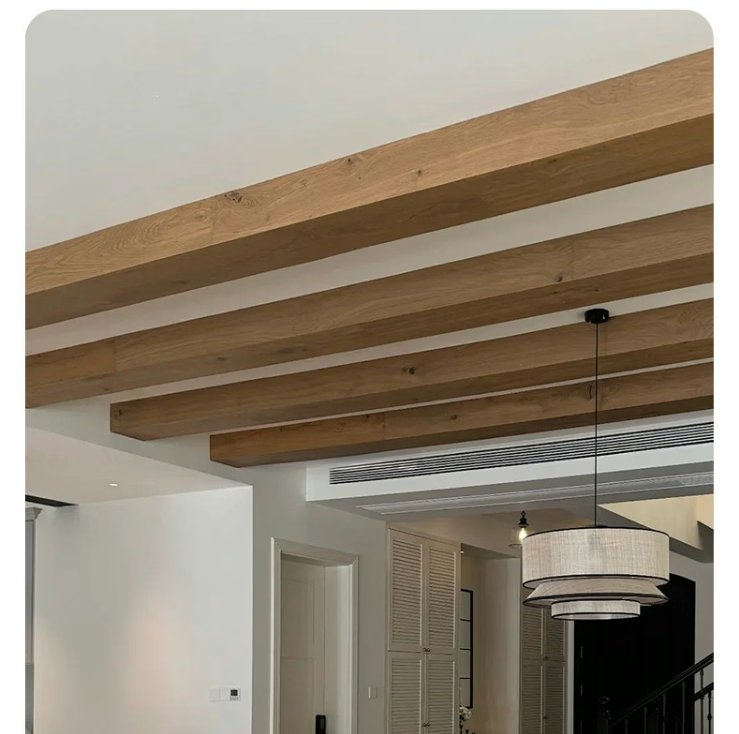
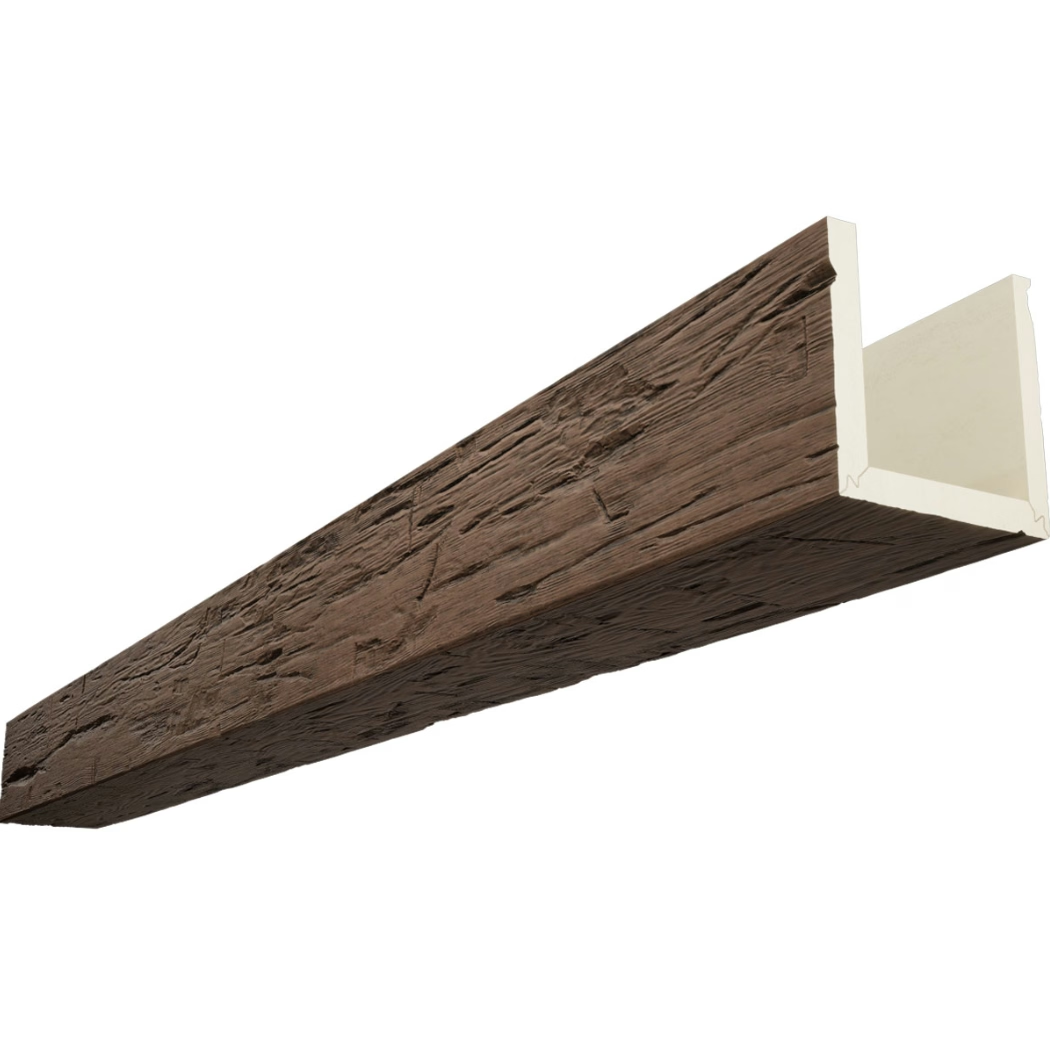
In competitive markets, product differentiation is the foundation of sustainable business strategy. When every competitor offers products that are functionally and visually identical, competition collapses into price — a race to the bottom that erodes margins, reduces service quality, and ultimately leaves all participants worse off. The alternative is to build products that competitors cannot easily replicate, creating differentiation that customers perceive as valuable and are willing to pay for. For companies in the building materials distribution and installation space, OEM custom manufactured polyurethane faux wood beams represent a practical pathway to this kind of differentiated product offering.
What OEM Custom Manufacturing Means for Brands
OEM custom manufacturing, in the context of decorative beams, refers to a relationship where a manufacturer produces beams according to a buyer's specifications, and the buyer sells those beams under their own brand name. The key characteristics of this arrangement are exclusivity and ownership. The design specifications — the beam profiles, finishes, textures, and any proprietary features — belong to the buyer. The manufacturer produces for that buyer exclusively within the agreed terms, and the product appears in the market only under the buyer's brand.
This exclusivity is what makes OEM custom beams a brand asset rather than merely a product. A company that sells beams under its own brand, with its own profile designs and finish formulations, is selling something that no competitor can match because the specifications are proprietary. The brand becomes associated with a specific aesthetic and quality standard that competitors cannot replicate without infringing on the buyer's design rights.
The scope of OEM customization ranges from modest adaptations of existing product lines — a proprietary color applied to standard profiles — to completely original product development where every aspect of the beam is designed specifically for the brand. The appropriate scope depends on the brand's strategic goals, its existing product portfolio, and its target market position.

Building a Proprietary Beam Collection
The most ambitious OEM customization strategy involves building a complete proprietary beam collection — a family of products that share a coherent design language and that collectively represent the brand's design vision. This collection might include multiple beam profiles, a range of finish options within a curated color palette, a set of matching system components, and supporting products like corbels, brackets, and trim pieces that extend the brand's aesthetic across the full range of decorative wood-look needs.
Building such a collection requires investment in product design, tooling, and development — the same investment that any manufacturer makes when developing a new product line. The difference is that the resulting products belong to the brand rather than to the manufacturer. The brand controls pricing, distribution, marketing, and product evolution. It can introduce new finishes or profiles on its own schedule, discontinue underperforming options, and adjust specifications based on customer feedback without requiring the approval of an external manufacturer.
For established brands with strong distribution networks, a proprietary beam collection creates a competitive moat that is difficult for new entrants or smaller competitors to cross. Contractors, designers, and homeowners who specify the brand because of its distinctive beam collection become locked into the brand's broader product ecosystem.
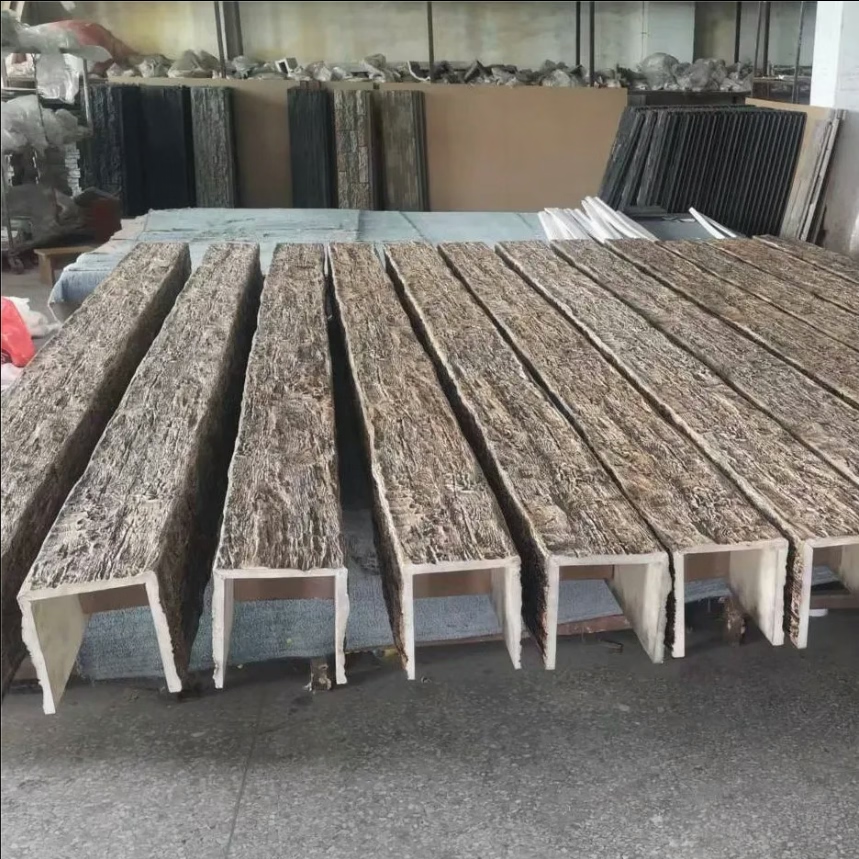
Modest OEM Customization: Proprietary Finishes
Not every brand needs or can absorb a complete proprietary product line. A more accessible entry point into OEM customization is the proprietary finish — a custom color or texture applied to standard beam profiles under the brand's own label.
The value proposition of a proprietary finish is straightforward. The brand offers a color or texture that is unavailable from competitors selling the same manufacturer's catalog products. A distributor selling a warm-toned honey finish under its own brand, for example, can position this finish as exclusive to their product line, supporting premium pricing and customer loyalty. The investment is limited to the finish development and any associated marketing to establish the finish's identity within the brand's collection.
Proprietary finishes also support seasonal or promotional marketing strategies. A brand can introduce limited-edition finishes for specific seasons or design collections, creating urgency and driving customer engagement with the product line. These limited editions can use the same base profiles as the standard line, keeping tooling costs minimal while generating marketing excitement.
Quality Standards and Brand Reputation
The connection between OEM manufacturing quality and brand reputation is direct and immediate. Products sold under a brand name carry that brand's reputation into every installation. A beam that performs well, maintains its appearance, and installs cleanly enhances the brand's standing with contractors and end customers. A beam that chips during installation, fades prematurely, or fails in service damages the brand's reputation regardless of whose name appears on the product.
This accountability means that brands investing in OEM customization must be as rigorous about manufacturing quality as about design quality. Selecting an OEM partner with documented quality management systems, appropriate testing and certification, and a track record of reliable production is essential. The brand's reputation is at stake in every unit that leaves the manufacturing facility.
Brands should require their OEM partners to provide quality documentation with each shipment, including dimensional verification, finish consistency checks, and any applicable certification testing. This documentation serves both as a quality assurance tool and as a risk management resource if questions arise about product performance after installation.
Controlling the Customer Experience
OEM custom manufacturing gives brands control over the complete customer experience with their beam products. This includes not just the physical product but also the packaging, documentation, and support materials that accompany it.
Packaging design — the cartons, wrapping, and labeling that protect the beams during shipping and present them upon delivery — is an extension of the brand's visual identity. Professional, well-designed packaging reinforces the brand's positioning and signals quality to everyone who handles the product, from the distributor's warehouse staff to the contractor on the jobsite.
Documentation — installation guides, care instructions, warranty information, and specification sheets — shapes the customer's experience of the product's quality and completeness. Clear, well-produced documentation that anticipates the customer's questions and provides complete information reduces installation problems, supports correct specification by designers, and demonstrates the brand's commitment to customer success.
For brands investing in premium market positioning, these elements of the customer experience are as important as the product itself. A brand that delivers a superior customer experience alongside a superior product builds the kind of loyalty that sustains business through competitive pressure and market cycles.

Protecting Design Investment
OEM custom manufacturing relationships should include clear intellectual property provisions that protect the brand's design investment. The specifications, tooling, and formulations developed for the brand's custom products should be documented in a way that establishes ownership and prevents unauthorized use.
Agreements with OEM partners should address tooling ownership — whether tooling created for the brand is owned by the brand or by the manufacturer — and should establish clear terms for the use of the brand's design specifications in production, marketing, and competitive situations. A well-structured OEM agreement provides the brand with the exclusivity it needs to justify its customization investment and protects against the risk that the manufacturer's production capabilities will be leveraged to produce competitive products.
For brands entering international markets, intellectual property protection considerations become more complex, requiring attention to trademark registration, design patents, and trade secret protections in each target jurisdiction. The investment in OEM customization should be supported by a commensurate investment in protecting the designs that result.
Technical References
ASTM standards cited in every specification
Test Data
Lab results from internal testing program
Updated 2026
Reviewed against current product specs