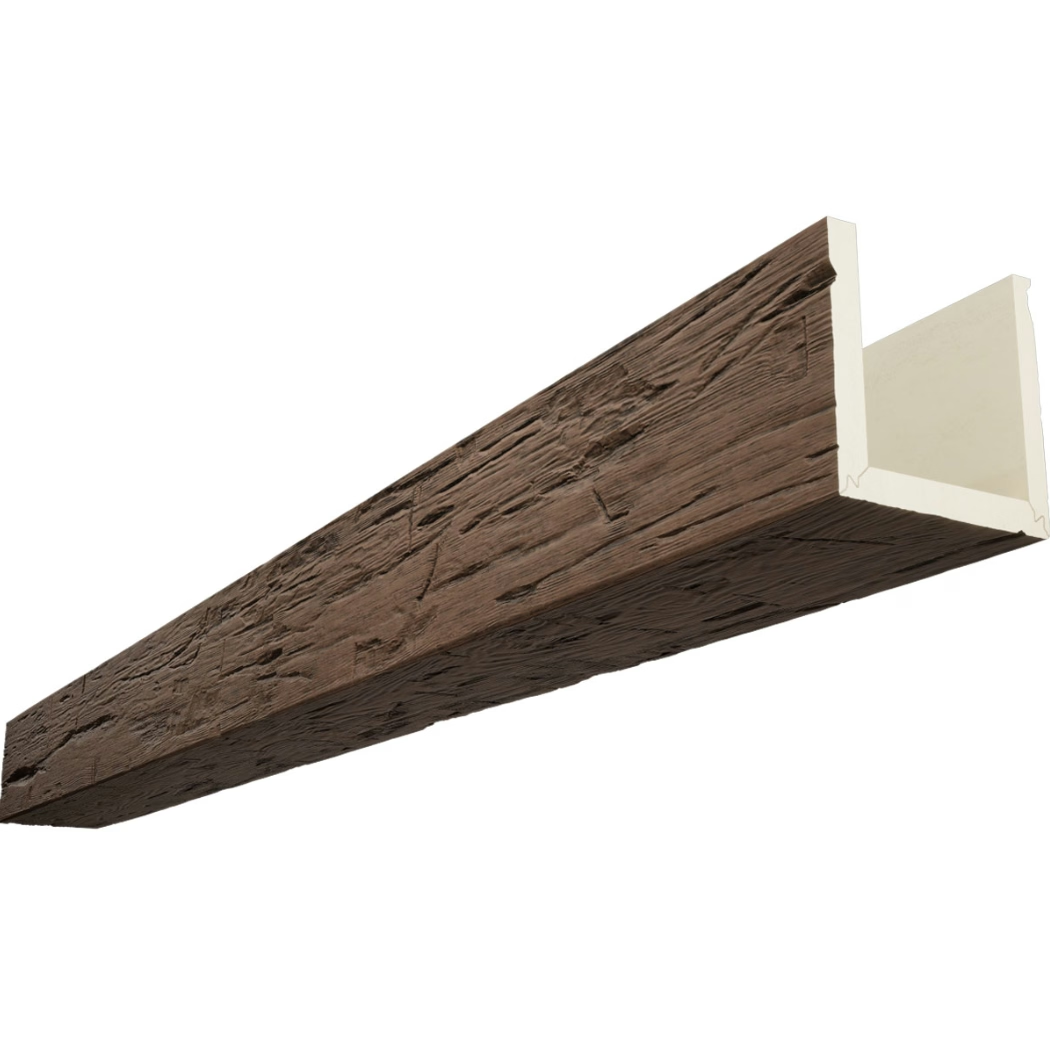
Large construction and renovation projects represent a distinct market segment with distinct procurement requirements. The decision-making criteria that apply to a homeowner selecting a single decorative beam — design appeal, ease of installation, delivery convenience — differ significantly from those that apply to a general contractor ordering hundreds of beams for a hotel renovation or a developer specifying beam components across a multi-phase residential development. For these large-scale buyers, factory direct procurement from an OEM manufacturer offers advantages in pricing, quality control, and supply chain management that are difficult to achieve through distributor networks.
The Case for Factory Direct Procurement
When beams are purchased through distribution channels, each step in the supply chain adds cost, introduces potential for miscommunication, and creates distance between the end buyer and the source of production. A manufacturer produces beams, sells them to a wholesale distributor, who sells to a regional distributor, who sells to a local retailer, who sells to the contractor or homeowner. Each step adds margin, and each step is an opportunity for specification errors, shipping damage, or quality issues to arise and require resolution.
Factory direct procurement eliminates the intermediate steps. The buyer works directly with the manufacturer, receiving quotes based on actual production costs, communicating specifications without translation through multiple parties, and receiving products that were produced by the same team that will handle any quality concerns. This direct relationship reduces cost, reduces risk, and improves the quality of communication throughout the procurement process.
For bulk orders specifically, the factory direct relationship becomes even more valuable. A manufacturer allocating production capacity for a large bulk order can optimize its production schedule to serve that order efficiently, reducing per-unit costs through more efficient use of tooling, material, and labor. These efficiencies are passed on to the buyer in the form of volume pricing that is simply unavailable through distribution channels where per-unit margins must cover the overhead of multiple intermediaries.

U-Shape Beams in Bulk Applications
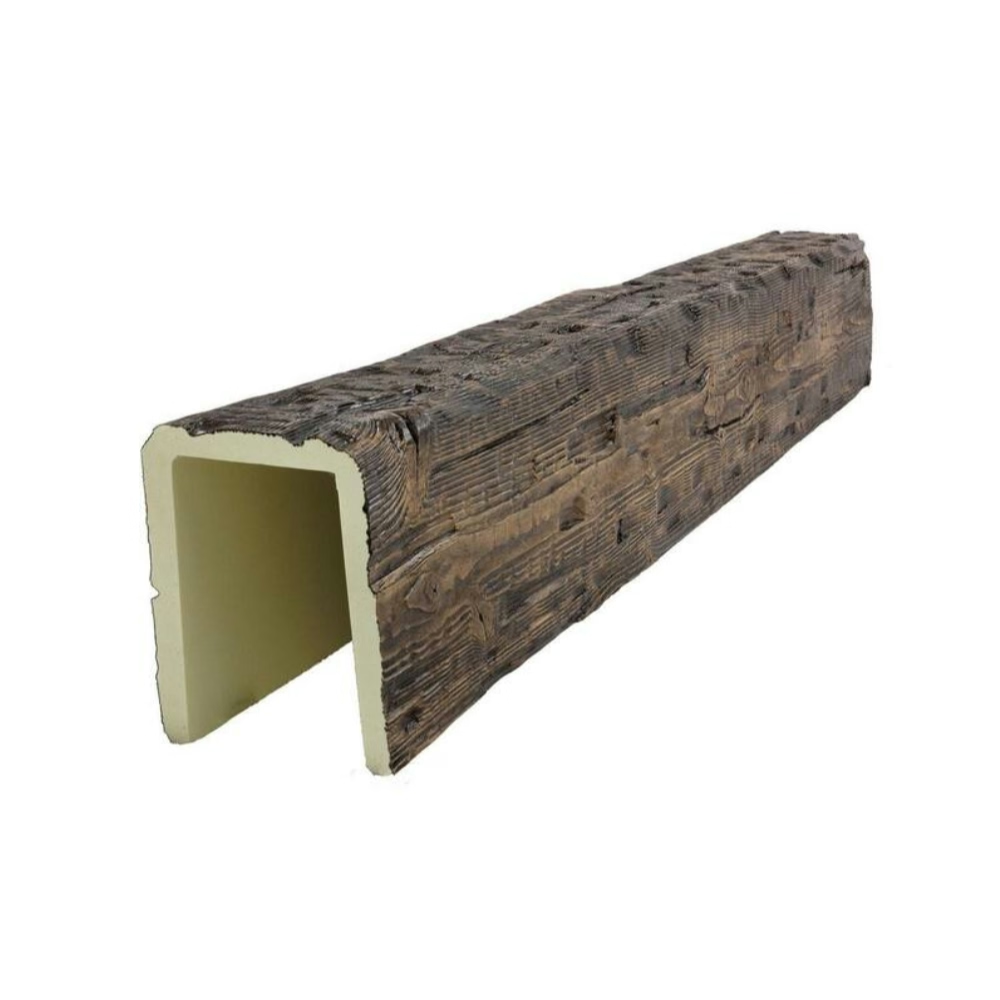
U-shape beams — also known as coffered beams or dropped beams — are a popular choice for large-scale ceiling installations because their geometric character creates a strong architectural rhythm that defines the ceiling plane effectively in large spaces. A hotel lobby, a conference center, a retail gallery, or an office atrium can be transformed by a grid of U-shape beams that imposes visual order on a potentially anonymous ceiling surface.
The visual impact of a U-shape beam installation depends on consistency across all units. Every beam in the grid must have the same depth, the same width, the same texture, and the same finish. Any variation — a beam that is slightly deeper than its neighbors, a finish that reads differently in natural light — disrupts the rhythm and compromises the intended effect. This consistency requirement makes factory direct procurement particularly valuable, because the same production run, using the same tooling, the same material batch, and the same finishing process, produces beams that are essentially identical to each other.
Bulk orders of U-shape beams are also common in multi-site rollouts for hospitality and retail brands. A hotel company standardizing its lobby design across all properties needs hundreds of U-shape beams that are identical from one property to the next. A retail brand refreshing its store concept needs beams that match the brand standard regardless of which distribution center served the individual store. Factory direct production from the same manufacturer, using the same specifications, produces this kind of inter-project consistency that is difficult or impossible to achieve when sourcing from multiple distributors.
Volume Pricing Economics
The pricing structure for factory direct bulk orders is fundamentally different from the pricing for smaller orders through any channel. In a factory direct relationship, the manufacturer sets pricing based on the actual cost of production, with margin applied to cover manufacturing overhead and generate a reasonable profit. In a distribution relationship, each intermediary adds its own margin, and the end price reflects all of these markups stacked together.
For large-volume orders, the per-unit pricing achievable through factory direct procurement can be significantly lower than pricing through distribution channels. The exact differential depends on the specific products, the order volume, the complexity of the customization, and the current production capacity of the manufacturer, but differentials of thirty to fifty percent compared to retail pricing are commonly reported for substantial bulk orders.
Buyers evaluating factory direct options should request a detailed quotation that breaks down the pricing into its components: tooling costs (if custom tooling is required), material costs, production labor, finishing costs, quality control, packaging, and shipping. This transparency allows the buyer to understand the value they are receiving and to identify any areas where volume might further reduce costs.
Quality Assurance in High-Volume Production
High-volume production places different demands on quality assurance than small-lot production. In small-lot production, each unit can potentially receive individual attention. In high-volume production, quality must be built into the process so that individual units do not require inspection and correction.
Factory direct manufacturers serving large orders typically have quality management systems that document and control the key variables in the production process. Material lot numbers are tracked so that any issue with a particular batch of raw material can be traced and affected units identified. Process parameters — mixing ratios, cure times, demolding conditions — are monitored and recorded. Finished units are sampled and inspected against specifications, and the results of these inspections are documented.
For the buyer, this documented quality assurance provides confidence that the beams received will meet the approved specifications. Quality issues, if they occur, can be traced to their source and resolved systematically rather than addressed unit by unit after the fact.
Lead Time Management for Large Orders
Large bulk orders require longer lead times than smaller orders, and managing these lead times is a shared responsibility between the buyer and the manufacturer. The buyer must provide specifications, approve prototypes, and confirm order details with enough lead time to allow production to proceed. The manufacturer must commit production capacity, manage the production schedule, and provide regular updates on progress.
Factory direct relationships facilitate this coordination. With direct communication to the production team, buyers can get accurate information about production status, identify any issues early, and adjust schedules if needed without going through layers of customer service representatives who may not have direct access to production information.
For projects with phased installation schedules, bulk orders can often be delivered in tranches that align with the construction sequence. A hotel renovation proceeding floor by floor can receive beam shipments as each floor is ready for installation, rather than receiving the entire order at once and managing on-site storage. This phased delivery requires coordination but reduces the burden of on-site material management.
Logistics and International Shipping
For buyers sourcing beams internationally, factory direct procurement includes the logistics expertise needed to move large quantities of material across borders efficiently. International shipping of construction materials involves documentation requirements, customs procedures, and transportation logistics that can be complex for buyers unfamiliar with these processes.
A factory direct manufacturer with international shipping experience can manage much of this complexity on the buyer's behalf. The manufacturer prepares the documentation required for export, selects appropriate shipping routes and carriers, and coordinates with the buyer's logistics providers to ensure smooth delivery. For buyers in new export markets, this logistical support is often as valuable as the product itself.
Freight costs represent a significant portion of the total delivered cost for international bulk orders, and factory direct manufacturers can often secure better shipping rates than individual buyers because of their larger shipping volumes and established carrier relationships. Consolidating multiple orders into full container loads, using appropriate packaging to maximize container utilization, and selecting shipping routes that balance cost and transit time are all areas where manufacturer expertise contributes to favorable total delivered costs.

Building a Long-Term Factory Direct Partnership
Buyers who establish ongoing factory direct relationships with beam manufacturers benefit from the familiarity and trust that develop over time. The manufacturer learns the buyer's preferences, quality standards, and communication style. The buyer learns the manufacturer's capabilities, lead times, and the nuances of working with their specific production processes.
This familiarity accelerates subsequent orders. The buyer does not need to re-explain preferences that were established in previous engagements. The manufacturer can anticipate the buyer's needs and offer proactive suggestions based on accumulated knowledge. Pricing negotiations are streamlined because both parties understand the cost structure and the value proposition.
For organizations with ongoing beam requirements — property management companies with maintenance and renovation programs, developers with continuous development pipelines, retail chains with regular refresh cycles — establishing a long-term factory direct partnership transforms beam procurement from a project-by-project transaction into a managed supply relationship that delivers consistent quality, favorable pricing, and reliable service over years of collaboration.
Technical References
ASTM standards cited in every specification
Test Data
Lab results from internal testing program
Updated 2026
Reviewed against current product specs