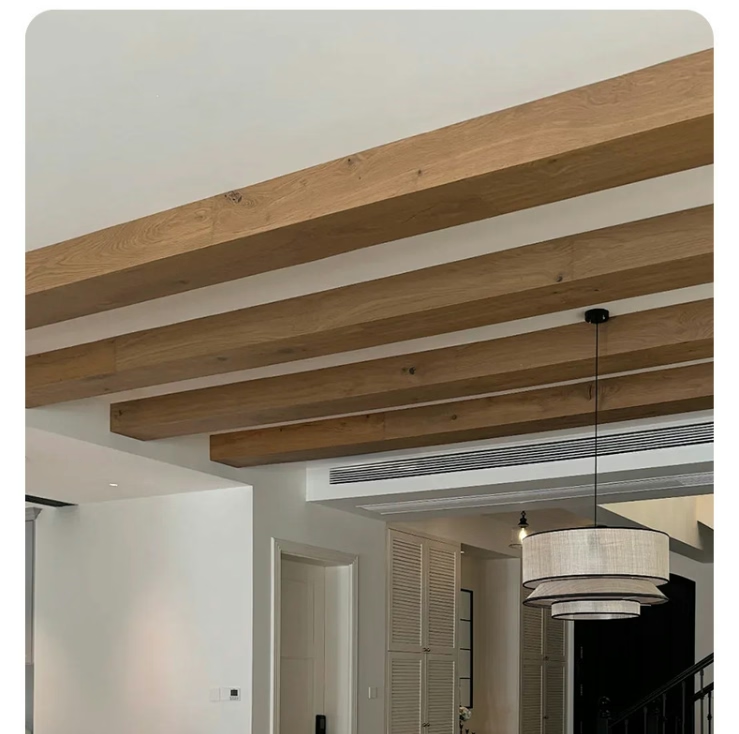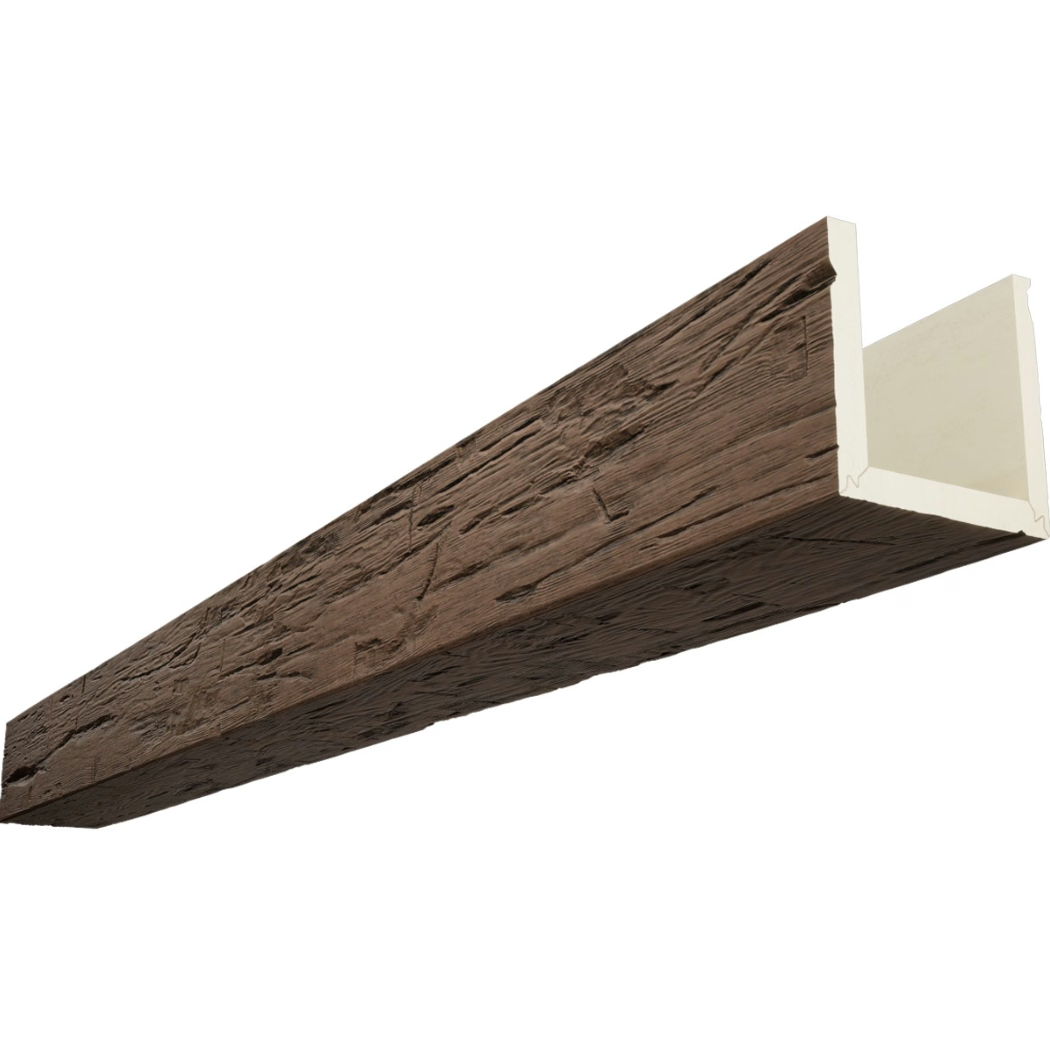
Project specification documents translate design intent into contractual requirements that guide procurement, installation, and acceptance of polyurethane resin faux timber beams. Well-written specifications protect owner interests, establish clear contractor obligations, and provide the measurable standards against which completed work gets evaluated. Understanding specification structure and content requirements enables development of comprehensive project documents.
Specification Format Standards
MasterFormat provides the standardized section numbering system used across North American construction specifications. Division 09 (Finishes) contains subsections for exposed ceilings and ceiling treatments where faux timber beams typically classify. Section 09 53 00 (Acoustical Ceilings) sometimes encompasses decorative beam installations, though custom sections may be developed for unique applications.
CSI (Construction Specifications Institute) format organizes each specification section into three parts: General, Products, and Execution. Part 1 (General) establishes scope, references, submittals, and quality requirements. Part 2 (Products) specifies acceptable products, materials, and accessories. Part 3 (Execution) details installation methods, tolerances, and acceptance criteria.
UniFormat provides an alternative organization by building system rather than trade contractor, useful for design-build projects and owner-focused specifications. Project teams select format appropriate to procurement approach and stakeholder needs. Hybrid approaches combining format elements serve projects with complex contracting structures.
Part 1 General Section Requirements
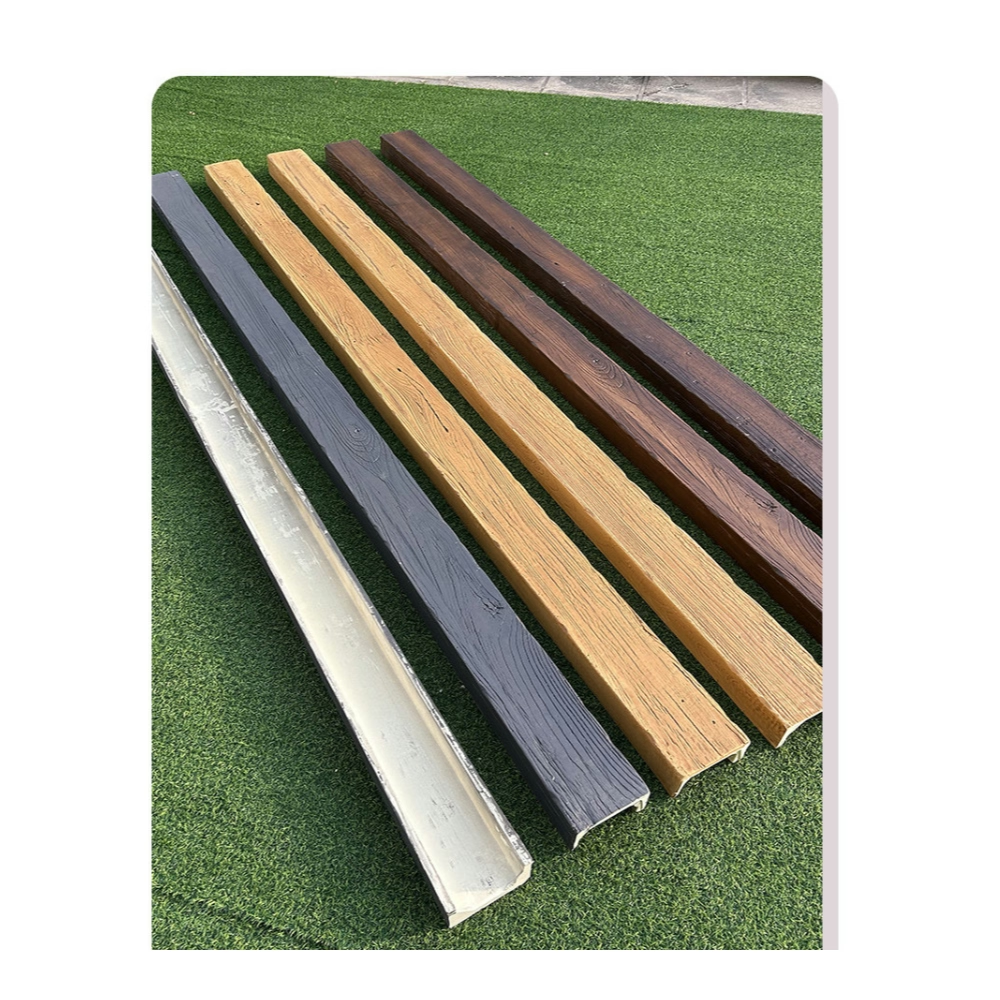
Scope language defines the work covered by the specification section, establishing boundaries with adjacent work. For faux timber beam installations, scope language should clearly address beam supply, mounting hardware provision, and installation labor. Exclusions prevent scope disputes; included items prevent gaps in contractor responsibility.
Reference standards cite applicable codes, test methods, and industry standards governing the work. Standards citations include organization abbreviation, standard number, and title. For PU beams, relevant references include ASTM fire test standards, ASTM dimensional tolerances, and applicable building codes. Standards should be current editions; outdated references create compliance ambiguity.
Submittal requirements specify what information contractors must submit for architect review before proceeding. Shop drawings showing beam layout, connection details, and coordination dimensions typically head the submittal list. Product data sheets, finish samples, and mock-up photographs follow. The specification should identify submittal format, quantity, and review timeline.
Part 2 Products Section Requirements
Product specifications should identify acceptable manufacturers by name followed by "or equal" language permitting substitution proposals. Named product specifications provide predictable quality and appearance while equal clauses enable contractor efficiency. Specifications should avoid proprietary language that precludes competition or violates procurement regulations.
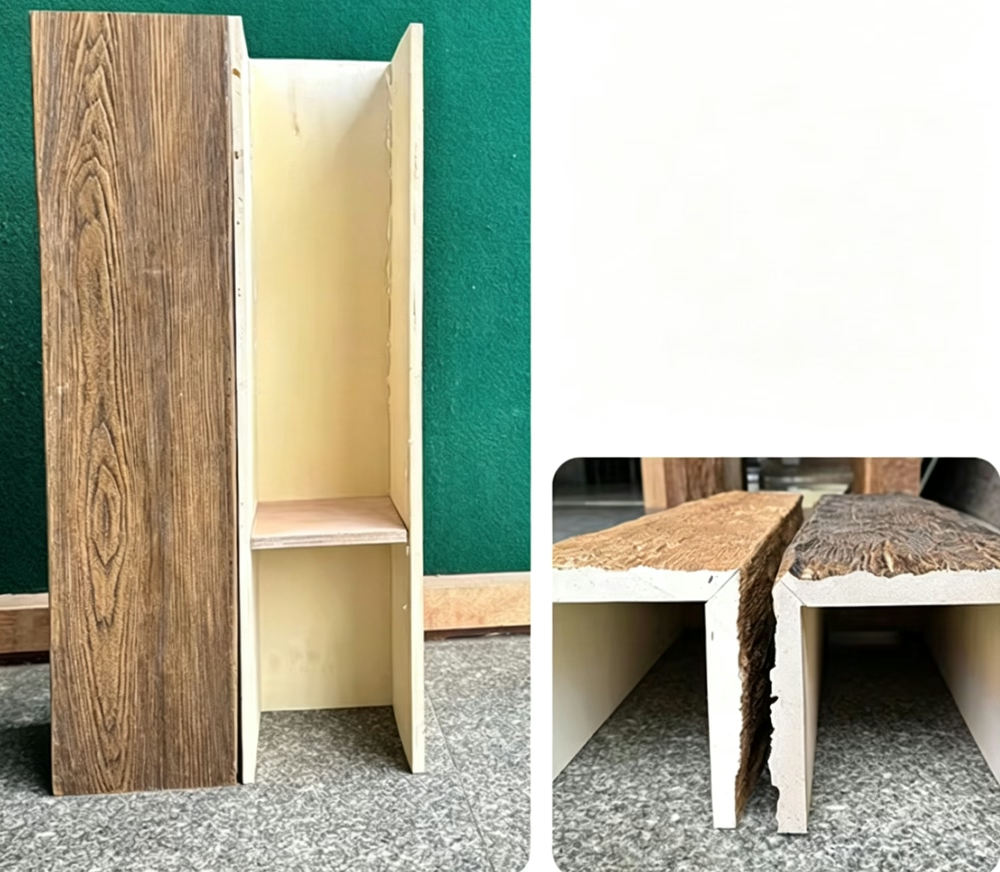
Material specifications address the physical and performance characteristics of supplied beams. Cross-sectional dimensions, length ranges, and profile descriptions establish baseline requirements. Fire performance classifications (Class A, B, or C flame spread) specify code compliance requirements. Weight per linear foot data enables structural coordination.
Finish specifications define appearance requirements including color, texture, and sheen level. Color specifications should reference named color systems (NCS, Pantone, or RAL) rather than descriptive language that invites interpretation disputes. Sample submittal requirements should precede final production, establishing appearance benchmarks for the completed installation.
Part 3 Execution Section Requirements
Installation requirements begin with jobsite conditions specifying acceptable temperature ranges, moisture levels, and preceding work completion. PU beam installations typically require dry conditions above 50°F with completed ceiling or structure ready to receive mounting hardware. Specifying readiness requirements prevents premature installation in conditions causing adhesion failure or dimensional problems.
Mounting methods must be specified in sufficient detail to ensure secure attachment without visible hardware. Canopy mounting for suspended appearance, direct mounting to structural elements, and bracket-supported configurations each have distinct requirements. Connection spacing, fastener specifications, and load capacity requirements provide measurable installation standards.
Tolerances and adjustments section specifies acceptable variation from design dimensions and remediation procedures for out-of-tolerance conditions. Beam alignment tolerances, joint spacing maximums, and gap-filling requirements provide acceptance criteria. This section should reference inspection methods and specify who determines compliance.

Submittal Review and Mock-Up Requirements
Submittal review procedures should specify the review period, anticipated comments, and conditions for approval. Submittals receiving "no exceptions taken" approval may proceed immediately. "Make corrections noted" permits proceeding with noted corrections; "revise and resubmit" requires correction and re-submission before work proceeds. Ambiguous approval language invites disputes.
Mock-up requirements establish appearance and installation quality standards before production installation begins. A mock-up typically includes at least one complete beam installation showing end condition, mounting detail, and finish quality. Mock-up approval provides reference standard for subsequent installation evaluation. Location, size, and approval authority should be specified.
Sample approval procedures for finishes and textures require establishing physical standards for production acceptance. Reflected ceiling plan markup identifying sample locations ensures consistent reference. Sample retention and protection requirements maintain reference availability throughout the project.
Quality Assurance Coordination
Inspection requirements should identify who performs inspections, when inspections occur, and what conditions trigger inspection requirements. Manufacturer representative observation may be specified for warranty validation. Code compliance inspections by authorities having jurisdiction occur independent of specification requirements but should be referenced.
Testing requirements for fire performance and structural attachment should identify test methods, acceptance criteria, and reporting procedures. Field verification of flame spread classification through product documentation review differs from actual testing. Specifications should clearly distinguish documentation review from physical testing.
Warranty requirements extend beyond standard product warranties to include installation quality assurance. Warranty periods, coverage scope, and claim procedures should be specified. Manufacturer and installer responsibilities should be clearly divided. Pre-warranty inspection requirements should be specified to establish baseline conditions.
Specification Maintenance and Closeout
Operation and maintenance manual requirements ensure that building operators receive information necessary for long-term maintenance. Finishing recommendations, cleaning procedures, and repair techniques support appearance maintenance. Manufacturer contact information enables service access. Digital documentation formats should be specified for consistency.
As-built documentation requirements capture installed conditions for future reference. Record drawings showing actual beam locations, mounting details, and product substitutions provide maintenance and renovation guidance. Coordinate requirements with general conditions and Division 01 closeout provisions.
Sustainability documentation addresses environmental certification requirements for applicable projects. Recycled content certification, VOC emissions documentation, and regional material sourcing support LEED and similar certification programs. Specification should identify required documentation formats and submission timing.
Technical References
ASTM standards cited in every specification
Test Data
Lab results from internal testing program
Updated 2026
Reviewed against current product specs