The tension between inventory availability and custom sizing has long challenged construction material procurement. Standard sizes ship quickly but require compromise when projects demand non-standard dimensions. Custom orders achieve perfect sizing but introduce lead times that complicate project scheduling. Cut-to-size solutions resolve this tension, enabling standard product availability with custom sizing achieved on-site through straightforward cutting.
This approach serves both immediate needs and long-term project flexibility. Current requirements drive initial sizing, while future modifications remain possible because field cutting can repeat whenever needs evolve. The investment in cutting capability pays dividends across a beam's service life, accommodating renovations, repairs, and reconfiguration that custom-ordered materials would not permit.
The Cut-To-Size Philosophy
Choosing cut-to-size means accepting slightly longer installation processes in exchange for faster material availability and greater long-term flexibility. The trade-off favors most projects, particularly those with reasonable timeline pressure and future modification potential. Even permanent installations benefit from the exact fit that on-site sizing enables.
The mental shift required involves trusting on-site measurement and cutting rather than relying on factory precision. This trust develops through experience—early projects might feel uncertain, but skill accumulates quickly as installers develop measurement confidence and cutting technique. The learning curve proves gentler than many installation skills.
Design professionals appreciate the flexibility cut-to-size provides for value engineering exercises. When budget revisions require examining alternative specifications, cut-to-size beams allow specification changes without ordering disruption. What originally specified ten-foot beams might shift to eight-foot beams if budget concerns arise, with the adjustment achievable without supply chain complications.
Measurement Mastery for Accurate Sizing
Accurate sizing begins with accurate measurement—a truism worth stating because measurement errors cascade through installations. Multiple measurements across spans catch variations that single measurements miss, and recording all measurements prevents the confusion that multiple dimensions create.
Measuring for beams involves more than measuring the span. Mounting method affects required length—beams that extend into corners or mount to mounting plates require additional length beyond the visible span. Understanding these requirements prevents discovering during installation that beams fall short of their intended termination points.
Documenting measurements prevents confusion during cutting. A simple diagram showing which end is which, which dimension applies where, and any special considerations prevents interpretation errors that might otherwise produce incorrect cuts. This documentation practice separates professional installation from amateur attempts.
Cutting Techniques for Quality Results
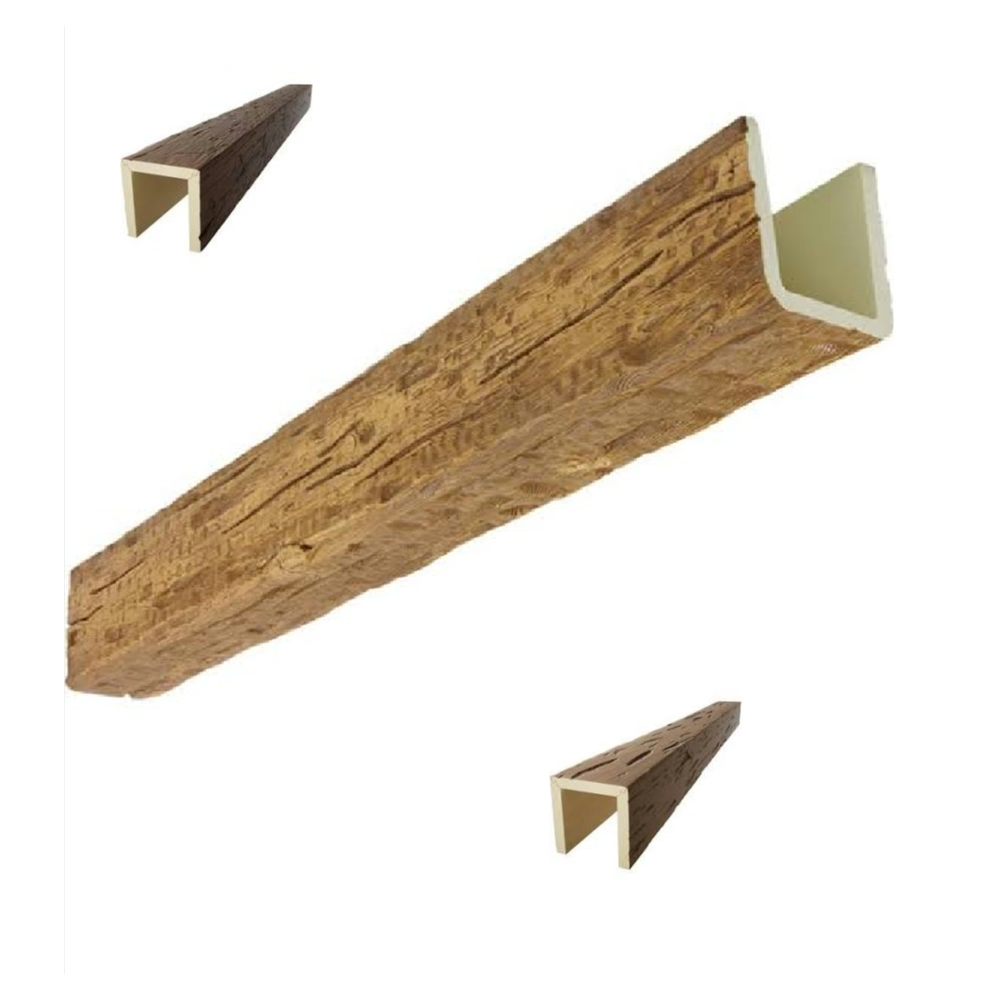
Straight cuts require little more than stable support and guided blade execution. The simplicity encourages confidence-building—new installers discover that cutting produces satisfying results with minimal practice. This accessibility democratizes professional-quality installation.
Compound cuts for corners require more planning but follow logical sequences. Cutting the acute angle first, then the obtuse angle, prevents measurement confusion that might otherwise arise. Test-fitting before final cutting catches errors that would otherwise become permanent, though careful measurement prevents most errors requiring correction.
Managing cut waste matters for efficiency. Standard beam lengths might produce scrap when cutting smaller pieces, and strategic cutting sequences minimize waste while ensuring all required pieces emerge from available stock. This optimization requires planning but rewards effort with material savings.

Integration with Design Intent
Cut-to-size beams serve design intent more effectively than fixed-dimension products because sizing can respond to actual conditions rather than anticipated conditions. Design intent remains true to vision while accommodating the realities that construction inevitably introduces.
Designers specifying cut-to-size approach communicate sizing flexibility to contractors, enabling the responsive adjustment that jobsite conditions demand. This specification removes barriers that fixed sizing would impose, allowing installation to achieve design goals despite any deviation between design documents and constructed reality.
Change orders diminish when cut-to-size capability exists. Where specification changes previously required reordering materials, cut-to-size capability allows immediate response to design revisions. This responsiveness improves client relationships while reducing administrative burden for everyone involved.
The cut-to-size approach represents mature thinking about construction materials—recognizing that field conditions govern success more than factory capabilities. Polyurethane faux beams' cutting friendliness enables this mature approach, making professional-quality customization accessible without requiring custom manufacturing infrastructure. The result serves projects, professionals, and ultimately the spaces where people live and work.
Technical References
ASTM standards cited in every specification
Test Data
Lab results from internal testing program
Updated 2026
Reviewed against current product specs