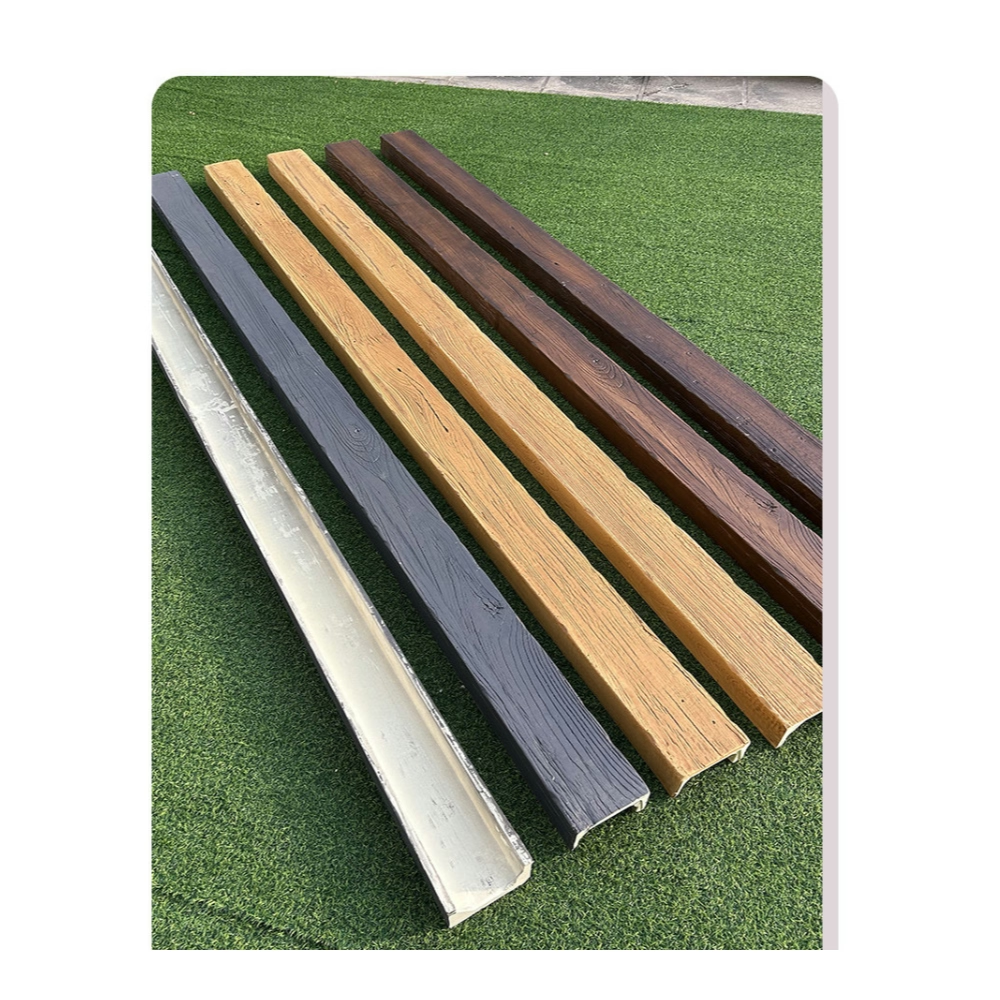
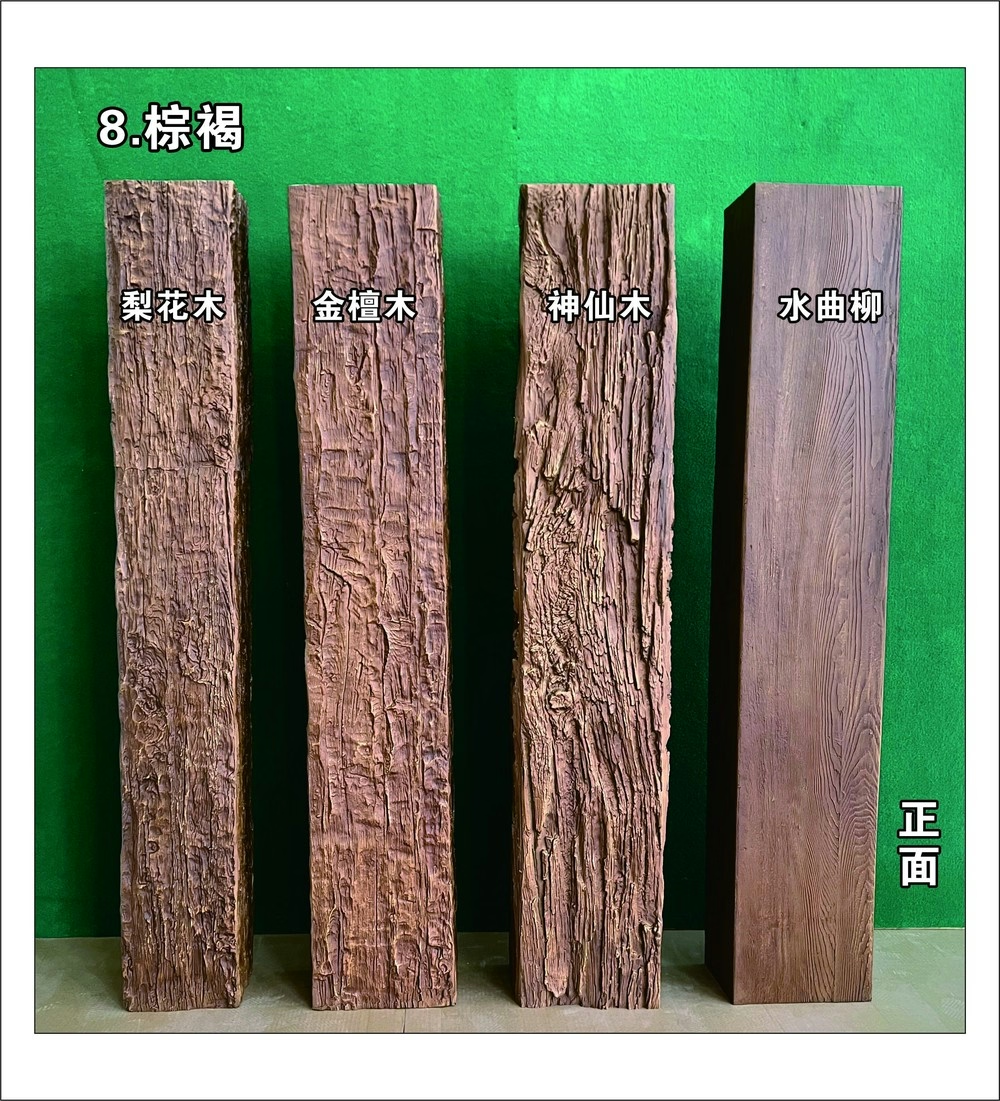
Construction documents represent intentions rather than certainties. The gap between designed dimensions and actual built conditions widens with project complexity, with experienced contractors expecting variations that require on-site problem-solving. Materials that accommodate this reality streamline installation while materials requiring precise ordering create frustration when site conditions deviate from documentation.
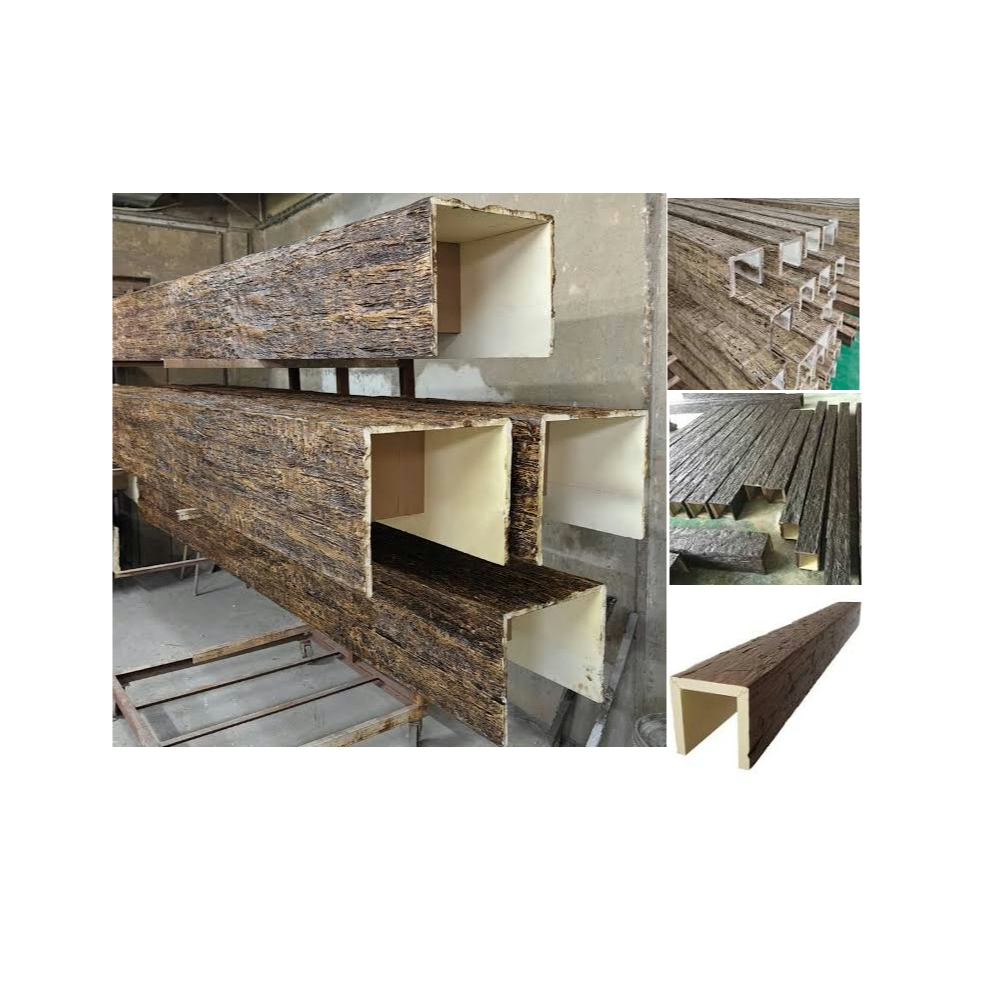
Polyurethane faux beams respond to actual conditions through on-site cutting capability, transforming jobsite challenges into manageable adjustments. The same products that ship as standard lengths adapt to accommodate any dimension reality presents, eliminating the need for expensive custom orders whenever site conditions deviate from ideal specifications.
Understanding Construction Tolerance Realities
Framing construction achieves accuracy within certain tolerances, but those tolerances accumulate across long spans. A beam designed for a twelve-foot span might actually measure twelve feet and a quarter inch due to stud length variations, plate alignment discrepancies, and accumulated small errors across dozens of measurements. The difference seems trivial until it prevents beam installation entirely.
Old construction presents even greater tolerance challenges. Century-old structures settled, warped, and shifted in ways that defy contemporary dimensional thinking. Attempting to install standard-length beams in historic buildings often proves impossible without cutting, making cuttable materials essential rather than merely convenient.
Renovation projects face compounded tolerance challenges. Existing structures modified over decades develop irregularities that new construction avoids. Removing old finishes reveals substrate conditions that inspection could not anticipate. These realities make adaptable materials valuable for any renovation work.
The Cutting Workflow in Practice
Effective on-site cutting begins with accurate measurement—measuring the actual space rather than relying on design documents that may not reflect reality. Multiple measurements across the span identify variations that single measurements miss, and using the smallest measurement ensures fit without forcing or additional modification.
Marking techniques affect cut quality significantly. Sharp pencils or marking knives create visible lines that guide saw blades accurately. Chalk lines work for long cuts but require careful attention during execution. Whatever marking method suits the situation, clarity matters for cut accuracy.
The cutting process itself requires stable support and controlled blade engagement. Rushing produces poor results; patience produces clean cuts that require minimal finishing. Supporting beam ends prevents binding that might otherwise deflect blades and compromise cut quality.
Common Jobsite Adjustment Scenarios
Electrical obstacles frequently require beam modification. Junction boxes, recessed lighting housings, and wiring passages occupy ceiling space that beam installations must accommodate. Cutting openings in beam undersides allows electrical components to occupy intended locations while beams span around them, preserving architectural effect without compromising electrical function.
HVAC considerations present similar challenges. Supply ducts, return grilles, and ventilation equipment sometimes occupy ceiling space in ways that conflict with beam placement. Strategic beam cutting accommodates these mechanical elements while maintaining design intent—a more practical solution than modifying expensive mechanical systems.
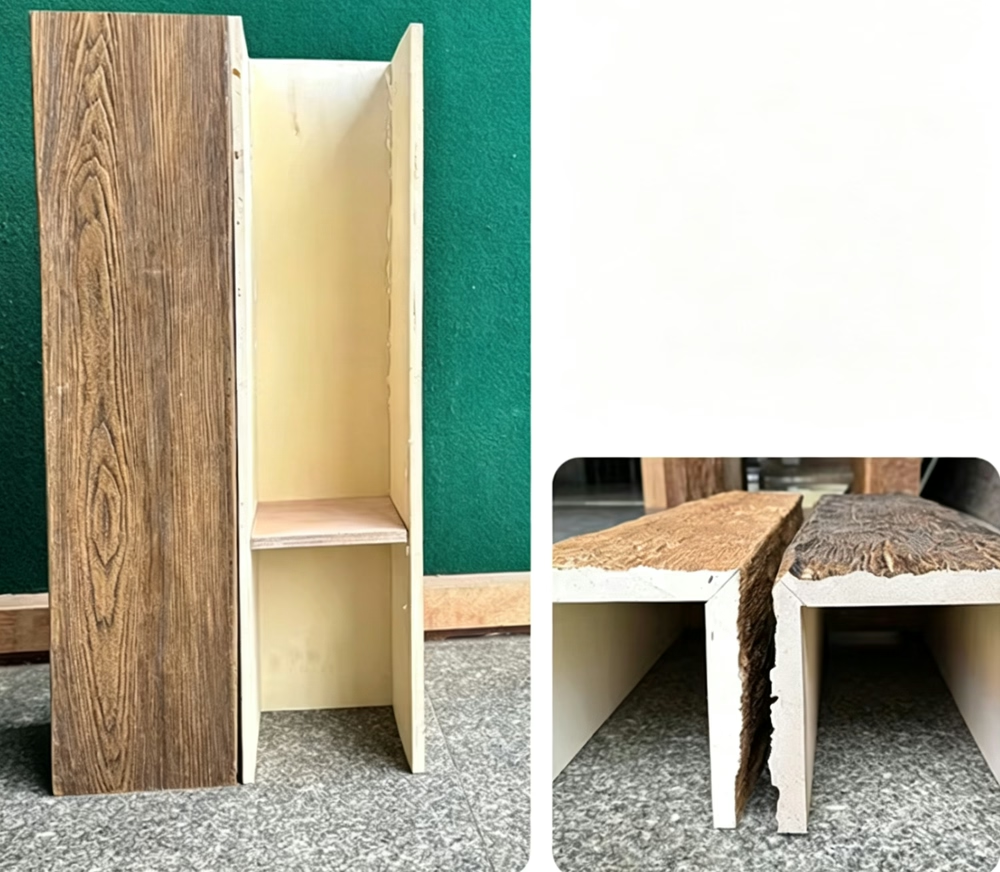
Notched beams accommodate structural elements that cross beam paths. Steel beams, heavy timber, and architectural features sometimes require beam routing rather than simple end-trimming. These complex cuts require careful planning but remain achievable through standard cutting techniques combined with careful layout.

Professional Installation Benefits
Professional contractors appreciate cuttable beams for the efficiency they enable. Rather than scheduling custom fabrication whenever site conditions require non-standard dimensions, crews adapt inventory beams to actual conditions, maintaining installation schedules that custom ordering would compromise. This adaptability proves valuable across all project types but particularly for time-sensitive renovations.
Communication with clients benefits from cuttable materials. When unexpected conditions require beam modifications, contractors can show clients exactly what adaptation the situation requires, demonstrating necessity rather than asking clients to trust unseen factory processes. This transparency builds confidence and reduces friction around change orders or additional charges.
Quality assurance improves with cuttable materials. Inspection during cutting allows immediate identification of any issues, while factory-custom products reveal problems only during installation. This quality gate prevents discovering problems after installation when correction becomes expensive and time-consuming.
The jobsite adaptability that cuttable beams provide represents practical wisdom applied to material selection. Projects succeed when materials accommodate reality rather than demanding reality conform to material constraints. Polyurethane faux beams' cutting capability reflects this understanding, making them valuable tools for contractors and homeowners alike who recognize that construction happens in the field, not on drawings.
Technical References
ASTM standards cited in every specification
Test Data
Lab results from internal testing program
Updated 2026
Reviewed against current product specs