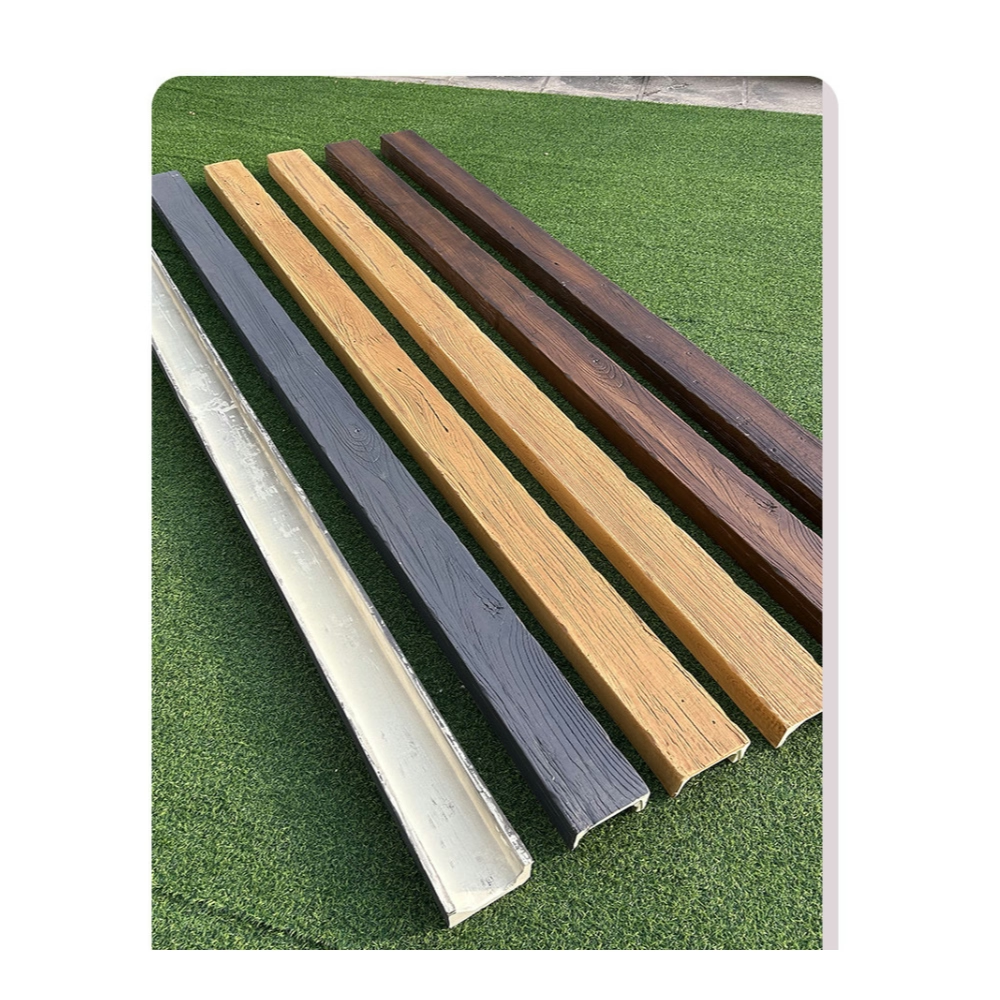
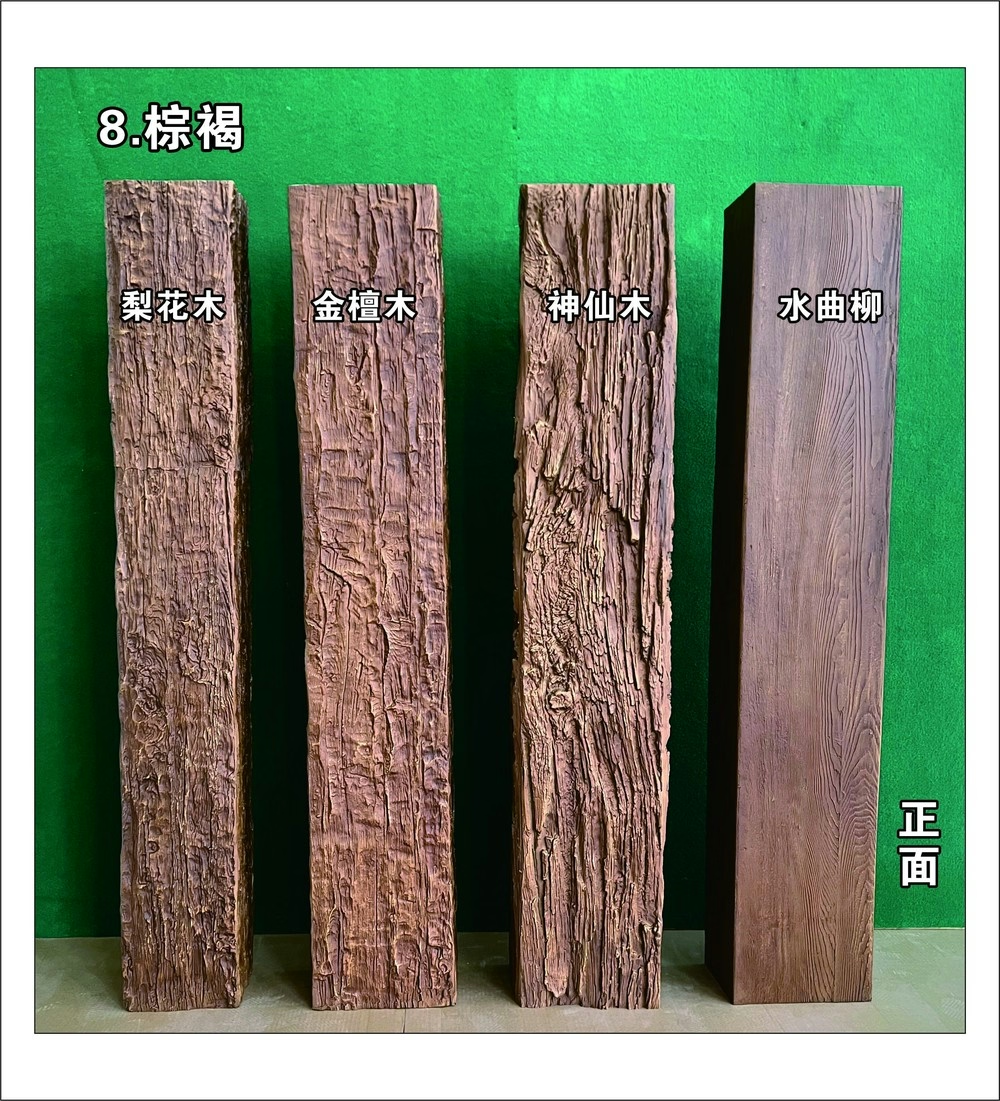
Every construction project encounters conditions that drawings did not anticipate. Pipes occupy ceiling spaces where beams should run, structural elements create obstacles that installation plans must accommodate, and accumulated tolerances push actual dimensions away from designed measurements. Projects succeed or fail based on how these conditions get addressed—whether modification solutions exist or obstacles defeat installation entirely.
Polyurethane faux wood beams provide exceptional flexibility for on-site modification, enabling solutions to problems that rigid materials would render unsolvable. This adaptability proves valuable across project types, from residential renovations where conditions defy documentation to commercial installations where unexpected mechanical systems require creative accommodation.
Common Site Modification Scenarios
Mechanical system conflicts represent the most frequent modification requirement. HVAC ductwork, electrical conduit, plumbing stacks, and fire suppression piping frequently occupy ceiling cavities in locations that architectural drawings do not reflect accurately. Beams that must span these obstacles require notching, drilling, or section removal to achieve installation without system modification.
Structural steel and heavy timber create similar challenges when beams must thread between existing elements. Historic buildings often feature exposed structural systems with irregular configurations that standard installation approaches cannot accommodate. Modification capability enables creative solutions that preserve both structural elements and design intent.
Measurement discrepancies manifest as beams that nearly fit or fall slightly short. Construction tolerances compound across long spans, producing actual dimensions that differ from designed dimensions. Beams requiring minor length adjustments benefit from cutting capability, while beams requiring lengthening require different approaches like mounting extensions or repositioning endpoints.
Modification Techniques That Preserve Quality
Notching removes beam sections to accommodate obstacles, producing openings that follow beam contours or rectangular shapes as situation requires. Clean notching requires careful marking and steady cutting, but achievable results equal factory fabrication quality when performed carefully. The key involves supporting beam adequately during cutting and finishing cut edges appropriately.
Drilling creates openings for services passing through beam depth—wiring, small conduit, and similar elements. Standard woodworking drill bits work effectively, producing clean holes that accept service runs without compromise. Hole placement requires attention to beam structural integrity, avoiding locations where drilling would weaken load-bearing sections.
Section removal trims beams for length adjustment when end connections require different dimensions. Cross-cutting produces clean ends that mount effectively, while preserving finish integrity around cut areas. Most modifications involve end trimming where exposed ends disappear into corners or mounting locations.
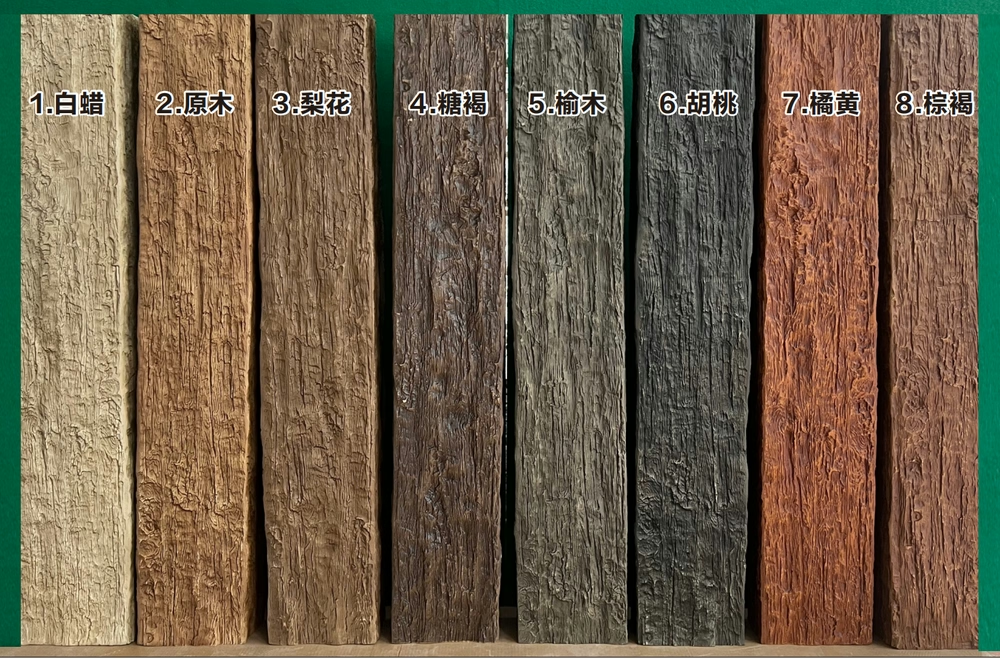
Adapting to Structural Irregularities
Ceiling surfaces rarely present perfectly flat mounting substrates. Floor joists vary in alignment, previous finishes create uneven surfaces, and settling introduces subtle variations that affect beam mounting. On-site modification addresses these irregularities through shimming, scribing, and selective fitting that factory fabrication cannot replicate.
Scribing adapts beam edges to irregular wall or ceiling surfaces, creating contact along entire edges rather than relying on spot mounting. This technique proves valuable where beams terminate against walls at angles that prevent standard mounting approaches. The skill develops quickly with practice, producing professional results from careful attention to marked lines.
Shimming addresses minor substrate variations that would otherwise produce gaps or uneven mounting. Thin material strips placed behind beams during mounting create solid contact across full beam depth. The shimming approach remains invisible after installation while providing the support that appearance requires.
Composite modification combines techniques for complex situations. A beam might require notching for a pipe, drilling for wiring, scribing to an irregular wall, and end trimming for overall length—all on a single piece. These combinations challenge installers but remain achievable with systematic approach and patient execution.

Problem-Solving Mindset for Site Challenges
Successful modification requires attitude adjustment alongside technique development. Challenges become problems only when solutions do not exist; modification capability reveals solutions that obstacles would otherwise block. This perspective transforms site challenges from defeats into opportunities for creative problem-solving.
Documentation captures modification solutions for future reference. Notes, photographs, and sketches preserve approaches that similar situations might benefit from later. This accumulated wisdom builds professional expertise faster than experience alone, as deliberate learning accelerates skill development beyond what random exposure provides.
Client communication matters when modifications become necessary. Explaining challenges and solutions builds confidence that might otherwise erode when unexpected conditions emerge. Clients who understand that modifications represent professional problem-solving rather than errors appreciate contractor expertise more fully.
The flexibility that polyurethane faux beams provide enables problem-solving approaches that rigid materials would preclude. This capability improves project outcomes while building professional reputation for handling challenges effectively. The investment in modification skill pays dividends across careers spent working with the realities that construction inevitably presents.
Technical References
ASTM standards cited in every specification
Test Data
Lab results from internal testing program
Updated 2026
Reviewed against current product specs