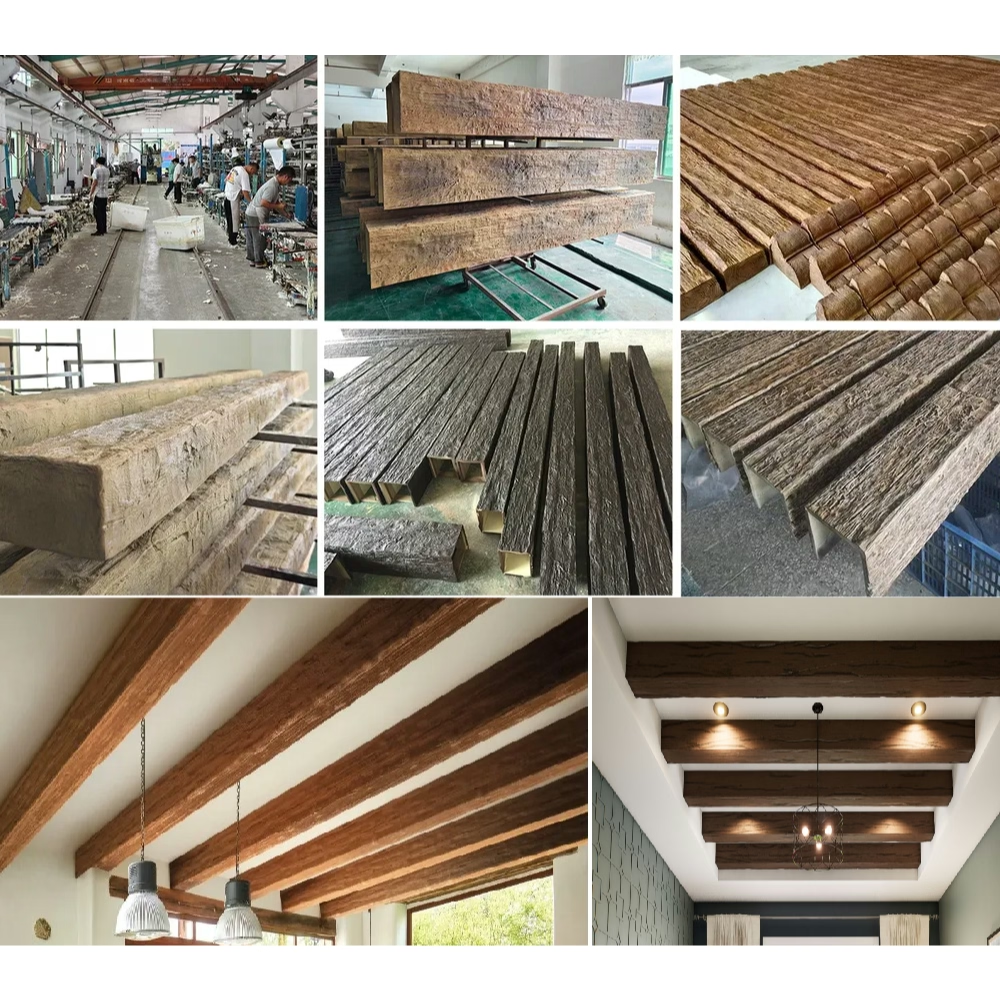
International trade in architectural building materials presents unique logistics challenges that differ substantially from standard consumer goods shipping. Faux timber beams exemplify these challenges—dimensional products exceeding standard container dimensions require careful planning, specialized equipment, and logistics partners experienced with oversized cargo. Understanding these requirements helps B2B buyers avoid costly surprises and establish reliable supply chains for sustained business growth.
The fundamental constraint in shipping long faux timber beams involves container length limitations. Standard twenty-foot containers accommodate approximately 5.9 meters of usable interior length, while forty-foot containers provide roughly 12 meters. Beams exceeding these lengths require flat rack containers, open-top containers, or breakbulk shipping arrangements. Each option carries distinct cost implications, transit times, and handling requirements that influence overall supply chain efficiency.
Container Selection and Optimization Strategies
Twenty-foot flat rack containers offer the most economical solution for beams between six and twelve meters in length. These specialized containers feature reinforced flooring and folding end walls, accommodating cargo that extends beyond standard container dimensions. When selecting flat rack options, verify that beam lengths fall within acceptable overhang limits—typically 30 centimeters beyond container ends for road transport segments but potentially tighter restrictions for certain ocean carrier routes.
Open-top containers provide advantages when top-loading equipment simplifies cargo handling. These containers accommodate beams up to approximately 12.5 meters with appropriate securing arrangements. The removable roof facilitates crane loading from above, eliminating constraints imposed by side-door dimensions. However, open-top shipments require weatherproofing considerations for transoceanic routes where rain and spray might affect unprotected cargo during marine transit.
Packaging optimization within container loads significantly impacts per-unit shipping costs. Bundle arrangements that maximize linear meter utilization while maintaining safe load weights require careful calculation. Standard bundle configurations typically accommodate between 8 and 15 beams depending on cross-sectional dimensions, with weight distributed to prevent shifting during transit. Experienced freight forwarders provide valuable guidance for load optimization based on specific beam profiles and destination requirements.

Load securing deserves particular attention for long-beam shipments. Dynamic forces during ocean transit—vessel motion, container stack weight, and equipment handling—create substantial stress on cargo. Professional load-securing techniques include steel strapping at multiple points, wooden blocking to prevent lateral movement, and protective padding at contact points. Documentation of load-securing procedures protects both parties in the event of shipping damage claims.
Freight Mode Selection and Transit Planning
Full container load (FCL) arrangements typically offer the best value for substantial orders, providing dedicated container utilization without consolidation delays. Transit times for FCL shipments range from 3-6 weeks for Asian manufacturing origins to European and North American destinations, depending on routing and carrier schedules. Direct port-to-port service eliminates transshipment delays but may require additional coordination for final-mile delivery.
Less than container load (LCL) options accommodate smaller orders but introduce consolidation complexities. When beams share containers with unrelated cargo, careful coordination ensures dimensional products receive appropriate handling. Some forwarders specialize in architectural building materials consolidation, offering regular departures that balance cost efficiency with reasonable transit times. The trade-off between cost savings and transit reliability requires evaluation based on specific business requirements.
Air freight represents a viable option for urgent orders or high-value projects where expedited delivery justifies premium costs. While air freight rates per kilogram substantially exceed ocean alternatives, reduced transit times—typically 3-7 days door-to-door—may prove valuable for time-sensitive construction schedules. Modern faux timber beams' lightweight nature relative to natural timber makes air freight more economically feasible than it might appear for other building materials.
Customs, Duties, and Import Compliance
Import classification for faux timber beams requires attention to Harmonized System (HS) codes that determine applicable duty rates. Polyurethane architectural moldings typically fall under HS Chapter 3925 for articles of plastics, though specific classification depends on product construction and intended use. Accurate classification prevents customs delays and avoids penalty assessments from misdeclared shipments.
Duty rate optimization may be available through preferential trade agreements between origin and destination countries. Completing required certificate of origin documentation unlocks reduced or eliminated tariff rates for qualifying shipments. Trade agreement qualification requirements vary—some require substantial local content percentage while others offer broader eligibility. Understanding applicable trade arrangements maximizes cost efficiency for regular importers.
Product compliance requirements in destination markets affect specification decisions. Fire retardancy certifications, emissions standards for interior applications, and structural performance ratings may be mandatory for legal market access. Verify destination market requirements early in the procurement process—compliance modifications become increasingly expensive and time-consuming once production is underway. Proactive compliance planning prevents costly delays at import clearance.
Cost Reduction and Efficiency Strategies
Consolidation programs that combine shipments from multiple suppliers into single containers reduce per-unit logistics costs. Working with logistics partners maintaining regular consolidation operations provides access to competitive rates while simplifying coordination. The trade-off involves accepting fixed departure schedules rather than shipping immediately upon order completion, requiring advance planning for inventory management.
Warehouse staging at origin ports enables order aggregation over extended periods with consolidated dispatch. This approach suits importers maintaining steady demand who prefer regular shipment cycles over irregular large shipments. Storage costs at origin typically prove lower than destination storage, though inventory carrying costs deserve consideration when evaluating total supply chain expense.
Return logistics planning addresses damage claims, warranty replacements, and seasonal inventory adjustments. Establishing clear protocols for documenting shipping damage during container unloading streamlines claim processing. Understanding carrier liability limitations and insurance options helps determine appropriate coverage levels for specific cargo values and route risks.
Building strong relationships with logistics providers yields ongoing benefits beyond transactional efficiency. Preferred shippers gain access to equipment availability during tight capacity periods, priority handling during congestion, and responsive support for exception management. Investing time in relationship development with qualified freight forwarders pays dividends across multiple shipments over time.
Successful international shipping of long faux timber beams depends on careful planning, appropriate container selection, and partnership with experienced logistics providers. The complexities deserve respect, but systematic approaches yield reliable results that support sustainable import operations for B2B buyers serving both commercial and residential market segments.
Technical References
ASTM standards cited in every specification
Test Data
Lab results from internal testing program
Updated 2026
Reviewed against current product specs


