The desire to add architectural richness to interior spaces transcends specific design periods or stylistic movements. Throughout architectural history, ornamentation has served purposes beyond mere decoration—establishing cultural identity, communicating status, and creating memorable environments that engage occupants emotionally. Ornamental decorative polyurethane ceiling faux beams make this architectural heritage accessible to contemporary projects, offering intricate detailing that historically required master craftsmen and significant budgets.
Modern manufacturing techniques enable production of ornamental details at scales and price points that traditional craftsmanship cannot achieve. The precision of computer-controlled machining combines with skilled artisanship in finishing to produce pieces that demonstrate genuine craft quality. This democratization of architectural ornament allows projects of any budget to incorporate features previously reserved for elite commissions.
Understanding the appropriate application of ornamental beams requires balancing visual ambition with spatial context. Ornamentation that overwhelms modest spaces creates uncomfortable contrast between architectural elements and human scale. Successful applications scale ornament complexity appropriately—subtle detailing in intimate spaces, more pronounced ornamentation in grander venues where architectural ambition matches available volume.
Design Traditions Influencing Contemporary Ornamentation
Classical Greek and Roman architecture established vocabulary that continues influencing decorative beam design. Egg-and-dart moldings, acanthus leaf scrollwork, and guilloche patterns trace their origins to ancient temple construction. These motifs developed originally in stone and marble, translating readily to polyurethane reproduction while maintaining authentic classical character. Contemporary applications range from strict historical revival to creative reinterpretation.
Gothic architecture introduced increasingly elaborate ornamentation that reached extremes in late Gothic periods. Ballflower, trefoil, and quatrefoil decorative elements appear in ceiling beams of medieval churches and cathedrals throughout Europe. Polyurethane reproduction of these medieval forms enables their incorporation into ecclesiastical, civic, and residential spaces where original construction would be impractical.
Renaissance ornamentation sought to synthesize classical forms with humanist philosophy. Raphael and other master artists designed decorative systems that balanced complexity with harmony. The resulting vocabulary—festoons, masks, mythological figures—continues inspiring contemporary decorative beam design. These human-scaled decorative elements prove particularly appropriate for residential applications where overly aggressive ornamentation might feel imposing.
Victorian and Edwardian periods developed ornamental richness into maximalist expressions. Parlor rooms featured heavily ornamented ceiling beams, cornices, and medallions that communicated prosperity and refinement. These elaborate decorative traditions have experienced revival interest, with polyurethane enabling their application in both restoration projects and new construction seeking period character.
Manufacturing Techniques for Ornamental Detail
High-density polyurethane accepts fine detailing that reproduces at scales from subtle moldings to pronounced sculptural elements. The material's dimensional stability ensures that intricate details maintain crispness from initial production through installation and long-term service. Unlike natural materials that might chip, crack, or weather, polyurethane holds tooling-derived details indefinitely.

Multi-stage tooling development enables complex ornamental profiles. Initial tooling establishes broad geometric forms while subsequent operations add progressively finer details. The staged approach produces results impossible to achieve through single-stage manufacturing. Tooling costs distribute across production volumes, making detailed ornamentation economically viable for standard product lines.
Surface preparation and finishing enhance rather than diminish ornamental detail. Painting and staining techniques require adaptation to preserve fine elements while building visual depth. Hand-finishing by skilled craftspeople ensures that attention to detail extends through final production stages. The combination of precision manufacturing and skilled finishing produces ornamentation meeting professional quality standards.
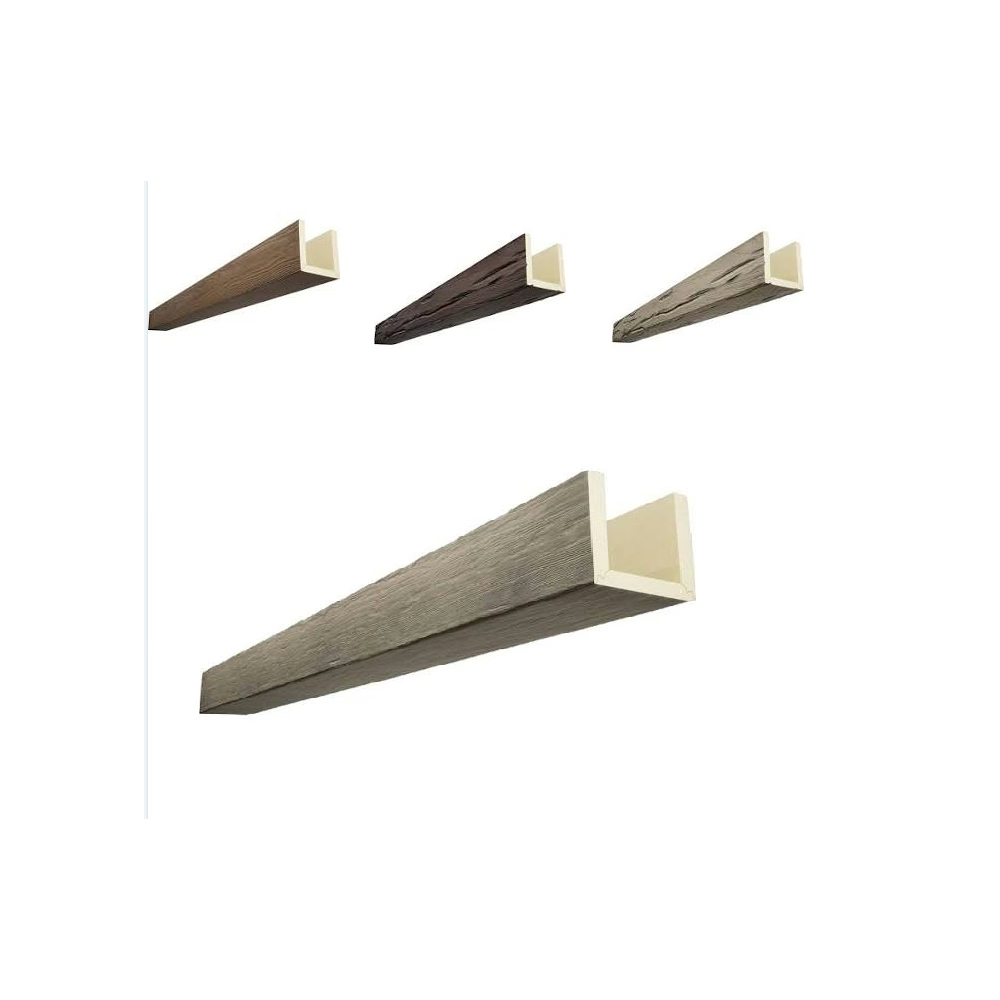
Product line development often includes modular ornamental components that combine with plain beam runs. This modular approach simplifies installation while enabling complex decorative compositions. Base beams in various profiles accept plug-in ornamental elements at intervals, creating varied appearances from coordinated components. The system approach expands design possibilities while managing manufacturing and inventory complexity.
Application Contexts and Scale Considerations
Residential entryways and formal living spaces accommodate substantial ornamental beam treatments. These primary reception spaces benefit from architectural grandeur that establishes home character. Ornamental beams in entryways create memorable first impressions while living room beams provide visual anchors for furniture arrangement and gathering spaces.
Dining rooms and home offices offer opportunities for ornamental beam installations that enhance spaces dedicated to specific activities. The concentrated attention in dining spaces justifies architectural investment, while home office beams add warmth to work environments that might otherwise feel purely functional. Scale should relate to ceiling height and room volume—grander spaces support more elaborate treatments.
Commercial hospitality venues frequently employ ornamental beam installations. Hotel lobbies, restaurant dining rooms, and bar areas benefit from the character and distinction that ornamented ceilings provide. The investment supports brand positioning and customer experience that justify premium space rental or cover charges. Fire-rated formulations meet commercial code requirements while maintaining aesthetic quality.
Ecclesiastical and civic buildings have long employed ornamental ceilings to communicate institutional significance. Contemporary restoration and new construction in these building types can utilize polyurethane beams that replicate historic detailing while meeting contemporary building codes. The approach preserves architectural heritage while enabling practical modern building operation.
Installation Best Practices for Ornamental Beams
Structural preparation ensures successful ornamental beam installation. Ceiling framing must accommodate beam weight and mounting requirements. Consultation with structural engineers identifies reinforcement needs for heavier ornamental installations. Addressing structural requirements before installation prevents costly remediation and ensures long-term secure attachment.
Accurate measurement and careful layout establish installation success. Ornamental beams typically command visual attention that magnifies installation imperfections. Professional measurement techniques, including laser leveling and template fabrication, ensure precise positioning. Layout should consider room proportions, furniture placement, and sight lines that determine how occupants perceive beam installations.
Mechanical fastening combined with adhesive bonding provides secure attachment. The ornamental details often preclude visible fasteners, requiring concealed attachment methods. Adhesive bonding to prepared surfaces provides continuous support while mechanical fasteners address immediate loads during adhesive cure. The combination ensures installations that withstand both gravity loads and building movement.
Finish application following installation completes ornamental beam integration. Touch-up of installation marks, joint caulking, and final coating ensure that completed installations present unified appearances. Professional finishing techniques match factory applied coatings while addressing site-specific conditions. The result should appear as a complete architectural system rather than assembled components.
Ornamental decorative polyurethane ceiling faux beams offer compelling combinations of aesthetic richness and practical performance. By understanding the design traditions informing contemporary ornamentation, manufacturing capabilities enabling detailed reproduction, and installation practices ensuring successful application, designers specify these architectural elements with confidence for projects ranging from intimate residences to grand commercial venues.
Technical References
ASTM standards cited in every specification
Test Data
Lab results from internal testing program
Updated 2026
Reviewed against current product specs


