Architecture has always balanced structural necessity with aesthetic aspiration, and ceiling beams exemplify this tension beautifully. When beams serve purely ornamental purposes, they free designers from structural constraints, enabling forms and placements that purely functional elements could never justify. Ornamental-only PU faux ceiling beams embrace this freedom, delivering visual enhancement without pretending to carry loads they do not bear.
The distinction between structural and ornamental elements carries honest implications for design. Structural beams must follow logic derived from load paths and support conditions—placements, sizes, and profiles that serve engineering requirements. Ornamental beams follow entirely different logic—placements, sizes, and profiles serving visual composition and aesthetic goals. Understanding this distinction guides appropriate design approaches for each type.
Contemporary architecture increasingly values honest expression of function, which supports frank acknowledgment of ornamental rather than structural beam elements. Rather than disguising non-structural beams as structural, sophisticated design celebrates their decorative purpose. This honesty about aesthetic motivation represents maturity in architectural thinking that ornamental-only beams embody gracefully.
Design Freedom in Ornamental Applications
Unconstrained placement options distinguish ornamental beams from structural counterparts. Where structural beams must align with support conditions, ornamental beams can position wherever visual composition benefits. Beams might float at non-standard heights, cluster in groups rather than spanning continuously, or terminate without reaching support points. These placements would be impossible for structural elements but entirely appropriate for ornamental treatments.
Profile selection for ornamental beams can prioritize visual interest over structural efficiency. Delicate proportions, dramatic overhangs, and elaborate detailing become viable when engineering constraints disappear. The freedom enables selection based purely on aesthetic contribution rather than balanced against structural requirements. Ornamental profiles can be as visually ambitious as design intentions desire.
Scale relationships in ornamental applications serve visual goals rather than load requirements. Beams might be oversized for visual weight, underscaled for delicate presence, or varied in size to create visual rhythm. The scaling flexibility enables compositions impossible when beam sizing must accommodate loads. Ornamental beams can be exactly as large or small as visual design requires.
Quantity decisions for ornamental installations follow aesthetic rather than structural logic. Single beams create focal points, pairs establish axes, and multiple beams create rhythm. The quantity depends on visual goals rather than engineering requirements, enabling installations as sparse or dense as composition requires.
Aesthetic Enhancement Strategies
Visual center creation uses ornamental beams to establish focal points that organize surrounding decoration. A prominent beam crossing a room's center draws attention and establishes hierarchy that guides subsequent decoration. The visual center may or may not align with architectural center—ornamental placement follows visual rather than geometric logic.
Rhythm establishment through beam repetition creates patterns that generate visual interest across ceiling surfaces. Regular spacing produces formal rhythms suitable for traditional interiors while varied spacing creates dynamic rhythms that suit contemporary compositions. The rhythm decision establishes visual character that subsequent decisions should reinforce.
Shadow play enhancement through beam installation creates visual complexity through light interaction. Beams positioned to catch directional light cast shadows that change throughout day and seasons. The temporal variation adds life that static decoration cannot provide. Light interaction becomes an integral design element rather than incidental consequence.
Color contribution from ornamental beams extends palette possibilities in decorated spaces. Beams finished in accent colors, metallics, or contrasting tones add visual interest that plain ceiling surfaces cannot provide. The color contribution enables ceiling treatments to participate in overall color composition rather than merely providing neutral backdrop.
Appropriate Scale for Visual Purposes
Intimate spaces benefit from proportional restraint that maintains appropriate scale. Beams in small rooms should not overwhelm available volume—delicate proportions and modest scale serve these spaces better than bold statements. The aesthetic enhancement should improve rather than dominate intimate environments.
Grand spaces accommodate bolder ornamental treatment that intimate spaces cannot support. Large beams, elaborate detailing, and substantial visual weight become appropriate in spaces with volume to absorb ambitious decoration. The scale relationship between beams and surrounding architecture should feel balanced rather than awkward.
Transition spaces between different scales benefit from intermediate treatment that bridges extremes. Ornamental beams in hallways, entryways, or connecting spaces should relate appropriately to both larger and smaller adjacent volumes. The transition quality ensures visual continuity across spaces of varying scale.
Vertical proportion consideration addresses how beams affect perceived ceiling height. Horizontal emphasis from wide beams or strong horizontal lines can reduce perceived height while vertical emphasis through narrow proportions or vertical detailing can increase it. Ornamental beams should intentionally influence proportion perception rather than treating height as fixed constraint.
Materials and Finishes for Pure Beauty
Finish quality in ornamental applications deserves particular attention because these beams exist purely for visual contribution. Any imperfection appears as failure rather than minor flaw—the beam has no other purpose to justify its presence. Premium finishing that satisfies close scrutiny becomes essential rather than optional.
Color intensity options for ornamental beams can embrace saturation that structural beams might preclude. Since ornamental elements serve aesthetic rather than practical purposes, they can feature colors, metallics, or effects that purely functional elements could not justify. This freedom enables visual ambition that enhances rather than complicates decorated environments.
Surface treatment options expand for ornamental applications where maintenance concerns might otherwise limit possibilities. High-gloss finishes, delicate textures, or specialty effects become viable when beams exist purely for visual enhancement. The surface becomes a canvas for aesthetic expression rather than merely a covering for manufacturing.
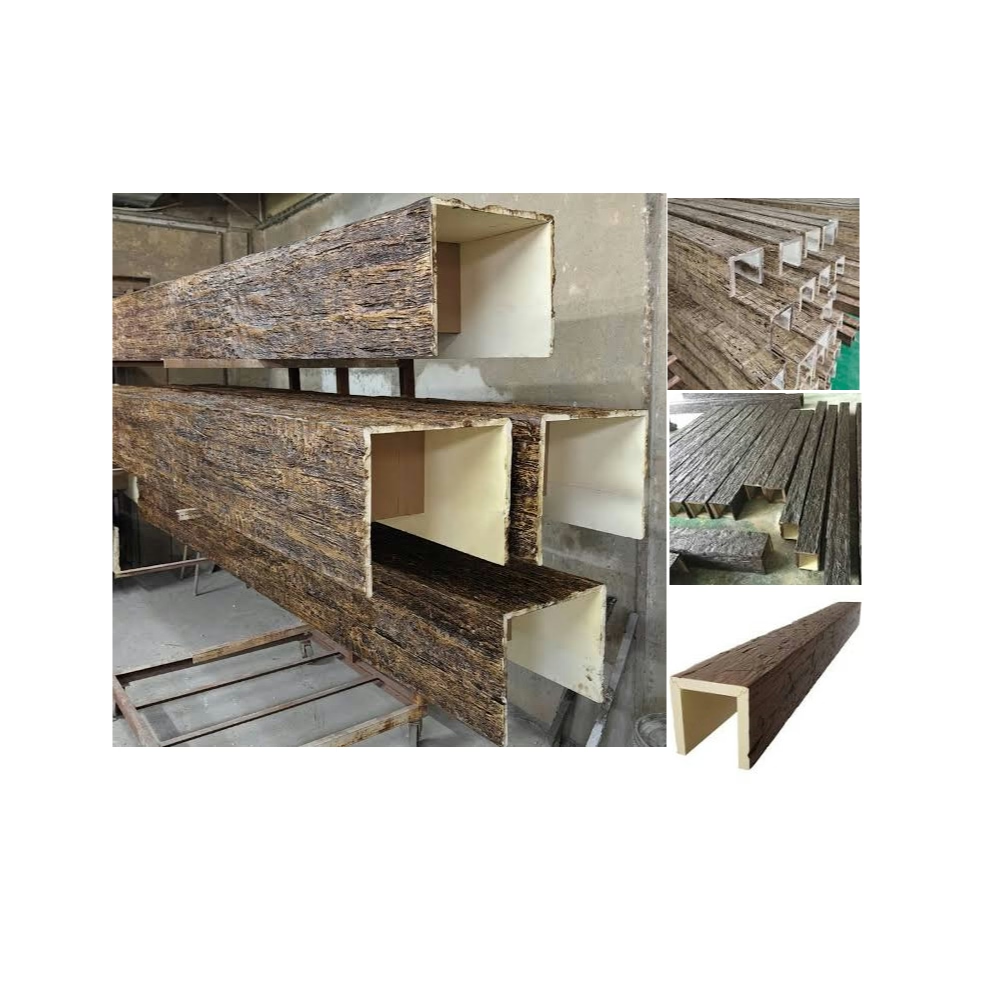
Texture contribution from ornamental beams adds tactile quality that plain ceiling surfaces lack. Even when viewed from distance, textured beam surfaces suggest materiality that enhances perceived quality. The texture should complement rather than distract from overall composition.
Ornamental-only PU faux ceiling beams celebrate design freedom by eliminating structural constraints that limit beam design. When beams exist purely for aesthetic enhancement, every design decision serves visual goals directly. This purity enables visual ambition that structural requirements would otherwise constrain, resulting in ceiling treatments that transform spaces through beauty alone.
Technical References
ASTM standards cited in every specification
Test Data
Lab results from internal testing program
Updated 2026
Reviewed against current product specs


