
Interior spaces featuring hardwood flooring and baseboard trim present specific challenges when introducing polyurethane faux wood beams. The goal—creating architectural harmony where ceiling beams feel native rather than added—requires understanding how finish colors, wood grain patterns, and material characteristics interact across different installation heights. When executed successfully, coordinated hardwood and faux beam installations achieve the rich, layered character that distinguishes professionally designed spaces from amateur decorating attempts.
The fundamental principle governing successful coordination involves recognizing that authentic hardwood trim and polyurethane faux beams possess inherently different material properties despite potentially identical surface appearances. Hardwood trim—typically oak, maple, cherry, or walnut—displays genuine wood grain with three-dimensional depth created by natural fiber structures. Polyurethane beams feature simulated wood grain applied to molded foam surfaces. These differences become invisible under good lighting when surface colors and textures coordinate effectively, but become painfully obvious when mismatches occur. The objective is coordination rather than perfect matching, acknowledging that slight variations between authentic hardwood and faux polyurethane actually enhance realism by mimicking the natural variation present in real wood installations.
Analyzing Existing Hardwood Trim Characteristics
Successful coordination begins with detailed analysis of the hardwood trim already installed in the space. Examine the specific wood species represented—red oak and white oak display dramatically different grain patterns and color temperatures despite both being classified as oak. Cherry trim presents reddish-brown tones that shift toward deeper burgundy with age and light exposure. Maple trim shows subtle, consistent grain patterns with lighter overall coloring. Walnut trim displays rich browns with distinctive grain character that photographs darkly compared to its actual appearance.
The existing finish condition matters significantly for coordination planning. Newly finished hardwood trim with contemporary stain colors requires different faux beam selection than aged hardwood with patina from decades of natural aging and possible refinishing. Bring actual trim samples or detailed photographs with accurate color representation when shopping for polyurethane beams. Digital images often misrepresent color temperature and saturation, leading to mismatched purchases that cannot be returned after installation.
Finish Coordination Strategies
Three primary strategies exist for coordinating polyurethane beams with hardwood trim: perfect color matching, complementary tonal coordination, and intentional contrast. Perfect matching selects polyurethane beams in finishes nearly identical to existing trim, creating unified ceiling-to-floor wood continuity. This approach works best when the hardwood trim represents a distinctive species or finish unavailable in polyurethane alternatives—forcing a close-but-not-identical match often produces disappointing results that read as incorrect rather than coordinated.
Complementary tonal coordination accepts that exact matching is impossible or undesirable, instead selecting polyurethane beams in colors that share the same temperature and saturation level as the hardwood trim. Warm-toned oak trim coordinates with honey or amber-toned polyurethane beams even if the exact shade differs. Cool-toned grey-brown trim pairs well with polyurethane beams featuring similar grey-brown characteristics. This approach creates visual harmony through temperature consistency rather than requiring identical color reproduction.
Intentional contrast deliberately selects polyurethane beams in colors deliberately different from hardwood trim, using the contrast to establish hierarchy or define distinct room zones. A home office might feature dark walnut hardwood trim around the floor perimeter while installing lighter honey-toned beams overhead to establish separate functional zones within an open floor plan. This approach requires confident design decisions and typically works best with professional interior design guidance.

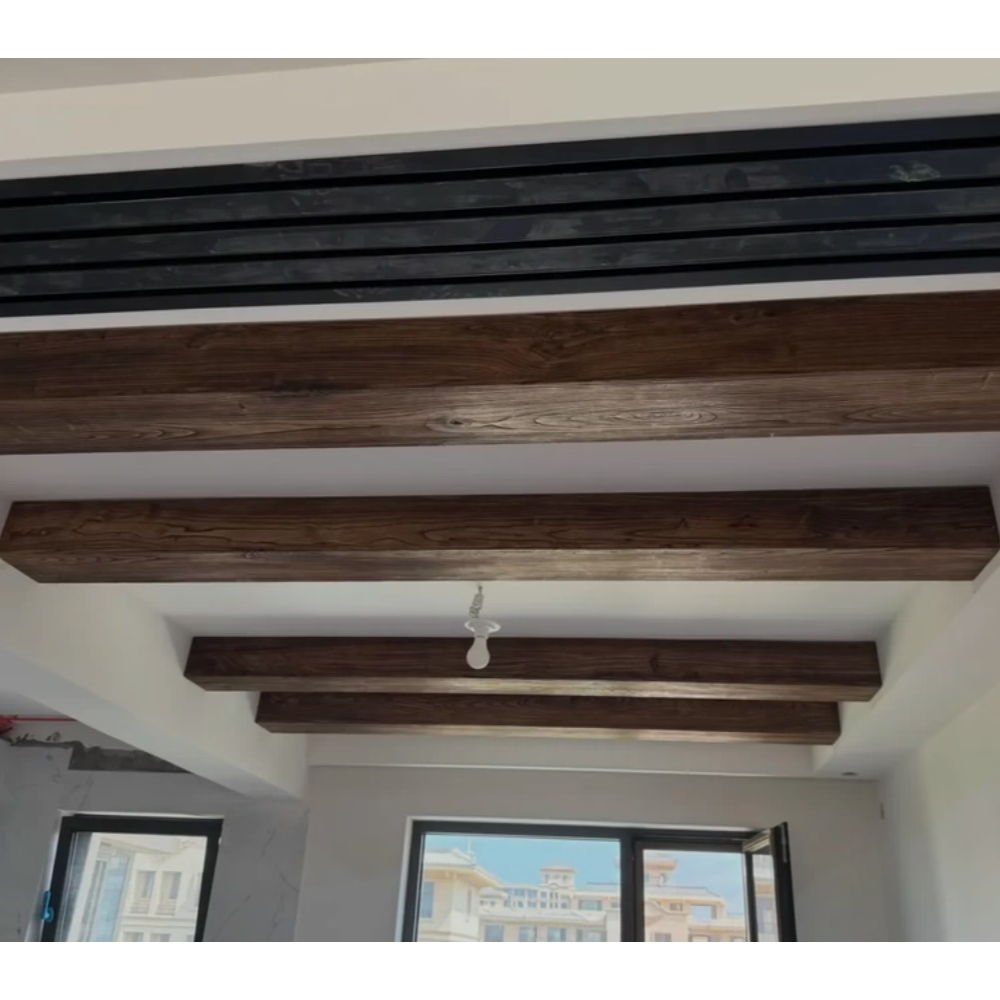
Custom Finishing for Perfect Coordination
Factory-finished polyurethane beams rarely provide exact matches to existing hardwood trim, but custom finishing allows achieving coordination that stock products cannot deliver. The finishing process involves priming polyurethane surfaces for paint adhesion, applying base stain layers, and building to the desired final color through layered color application. Multiple thin coats create more natural results than single heavy applications that can obscure surface detail.
Working with professional finishers experienced in polyurethane materials ensures proper technique and lasting results. Not all paint products adhere correctly to polyurethane surfaces—testing adhesion on inconspicuous areas before full application prevents disappointing peeling or chipping failures. Gel stains work particularly well on polyurethane because their thick consistency sits on the surface rather than penetrating the material, building color gradually without obscuring the simulated grain texture.
The finishing sequence matters for achieving natural appearance. Begin with light sanding using fine-grit paper (220 grit or higher) to ensure clean surfaces free from mold release agents. Apply quality primer specifically formulated for polyurethane surfaces, allowing complete drying between coats. Stain application should proceed in multiple thin layers, evaluating color development after each application and adjusting subsequent layers accordingly. Sealer application locks the finish while providing the slight sheen that authentic hardwood trim displays.
Installation Height and Visual Relationship
The relationship between floor-installed hardwood trim and ceiling-installed polyurethane beams depends partly on installation height and room proportions. In rooms with standard 8 to 9 foot ceilings, the visual distance between trim and beams creates separation that reduces the intensity of any coordination challenges. The eye naturally integrates these elements as part of the room's overall wood presence rather than comparing them element-by-element. Closer proximity—typical in two-story spaces with beams visible from both floors—intensifies coordination requirements because elements appear simultaneously more often.
Consider installing polyurethane beams in orientations or configurations that minimize direct visual comparison with specific hardwood trim elements. Beams running perpendicular to hardwood floor boards create different visual rhythms that prevent automatic side-by-side comparison. Beams positioned over transitional spaces like doorways or hallway openings reduce the frequency of simultaneous trim-beam visibility compared to beams in living areas where both elements remain constantly in view.
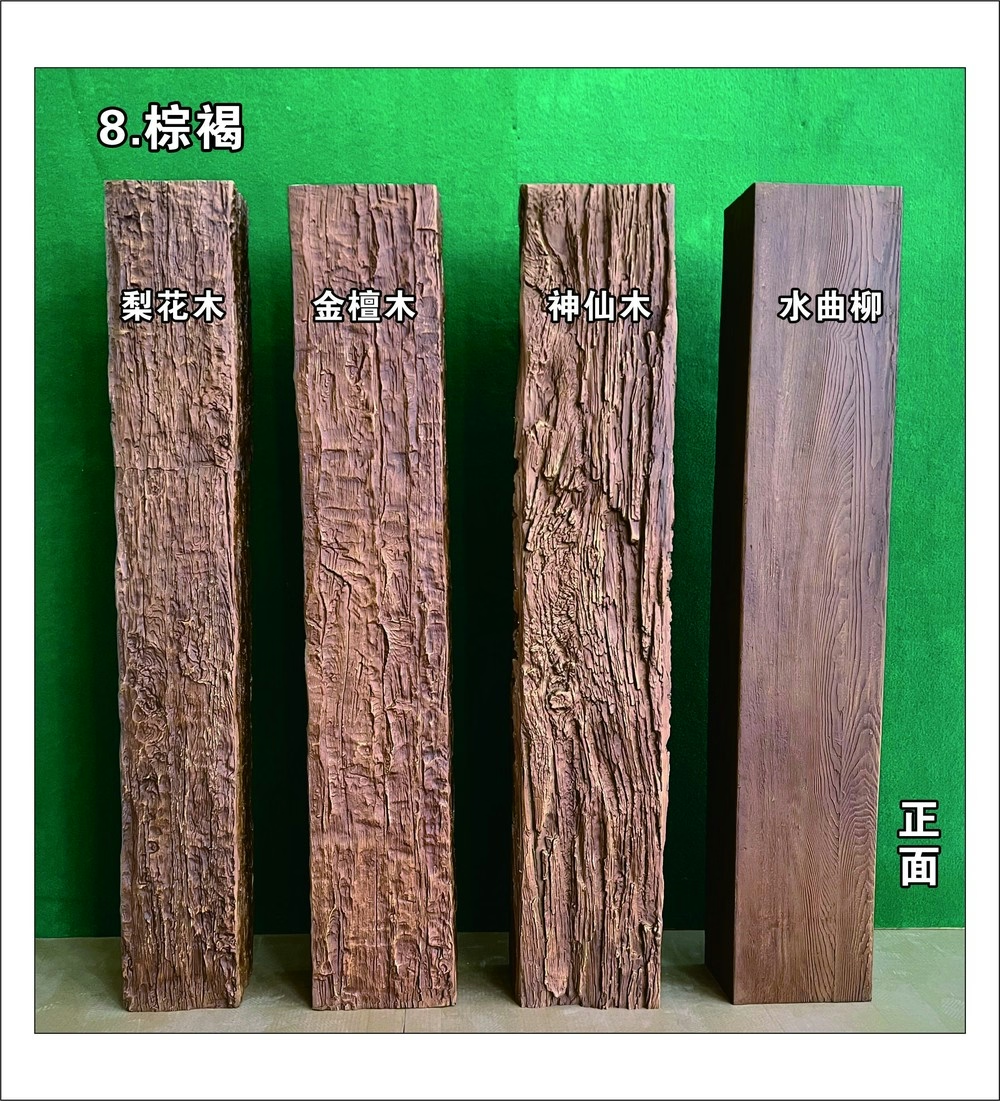
Material Compatibility Considerations
Polyurethane and hardwood possess fundamentally different physical properties that affect installation and long-term performance. Hardwood responds to humidity changes through expansion and contraction, typically accommodated by expansion gaps during installation. Polyurethane foam remains dimensionally stable regardless of humidity levels, allowing tighter installation tolerances but requiring different fastening approaches. Understanding these differences prevents installation errors that could damage either element or create visible gaps at connection points.
Temperature exposure patterns differ significantly between floor-level hardwood and ceiling-level polyurethane. Hardwood near heated floors or in direct sunlight experiences different expansion patterns than ceiling foam in more stable temperature zones. Polyurethane beams in exterior applications or spaces with significant temperature variation require evaluation for thermal expansion concerns that interior hardwood typically does not face. These factors rarely affect coordination aesthetics but do influence installation technique selection.
Maintenance and Aging Considerations
Coordinating maintenance requirements helps preserve the visual relationship between hardwood trim and polyurethane beams over time. Hardwood trim may require periodic refinishing, touch-up, or cleaning that polyurethane beams do not need. Establishing maintenance schedules that address hardwood needs without requiring matching attention to polyurethane elements simplifies long-term care while potentially extending the acceptable interval between hardwood refinishing.
UV exposure affects hardwood and polyurethane differently. Hardwood trim near windows may gradually lighten or darken depending on species and finish, while polyurethane beams in the same space experience different UV impact due to their different chemical composition. Over years, these differential aging patterns can shift previously well-coordinated finishes toward mismatched appearance. Using UV-protective window treatments in rooms with significant sunlight exposure moderates aging rates for both materials and preserves coordination integrity longer.
Technical References
ASTM standards cited in every specification
Test Data
Lab results from internal testing program
Updated 2026
Reviewed against current product specs


