
The farmhouse aesthetic has demonstrated remarkable longevity in residential design, evolving from regional rural vernacular to globally recognized style that transcends property types and geographic boundaries. Central to this enduring appeal is the honest, unpretentious character created by natural materials applied with straightforward craftsmanship—characteristics embodied perfectly by shiplap wall paneling and faux wood ceiling beams. When these two elements coordinate intentionally, they create interiors that feel genuinely crafted rather than decoratively contrived, inviting occupants to slow down and appreciate simple pleasures like visible wood grain and clean horizontal lines.
Shiplap installation originally served functional purposes in agricultural and coastal buildings, where the overlapping board design created weather-resistant exterior cladding that shed rain effectively while allowing controlled air circulation. Contemporary interior applications retain the distinctive shadow lines created by shiplap's overlapping profile, adding architectural texture to walls that might otherwise read as flat or generic. The horizontal orientation of shiplap lines creates visual flow across room dimensions, making spaces appear broader and more connected. Adding faux wood ceiling beams in perpendicular or matching orientations establishes complementary visual rhythm that unifies the room's architectural language.
Shiplap Color and Texture Considerations
Shiplap wall finishes range from pristine crisp whites through warm off-whites, greiges, and increasingly into colored applications including sage green, slate blue, and soft yellows. White shiplap provides maximum contrast against natural-toned faux wood beams, creating the classic farmhouse palette that photographs beautifully and appears fresh across changing seasons. The visual clarity of white shiplap prevents rooms from feeling dark or dated, making this choice particularly appropriate for smaller spaces, north-facing rooms, or properties where maximum perceived spaciousness takes priority.
Warm-toned shiplap colors—cream, ivory, or greige—create softer atmospheres more conducive to relaxed everyday living than bright white alternatives. These colors photograph less dramatically but age more gracefully, requiring less frequent touch-up painting as scuffs and marks accumulate. When coordinating warm-toned shiplap with faux wood beams, select beam finishes that echo rather than contrast the wall warmth—honey oak, natural pine, or wheat-toned beams maintain the cohesive warmth established by the wall color.
Colored shiplap applications require more confident design decisions but reward bold experimentation when executed thoughtfully. Sage green shiplap paired with light oak beams creates farmhouse spaces with fresh, garden-inspired character. Navy blue shiplap introduces unexpected formality that elevates farmhouse aesthetics beyond country cliché. These colored applications work best in spaces with substantial natural light that prevents the colors from appearing too saturated or overwhelming.
Faux Wood Beam Finish Selection
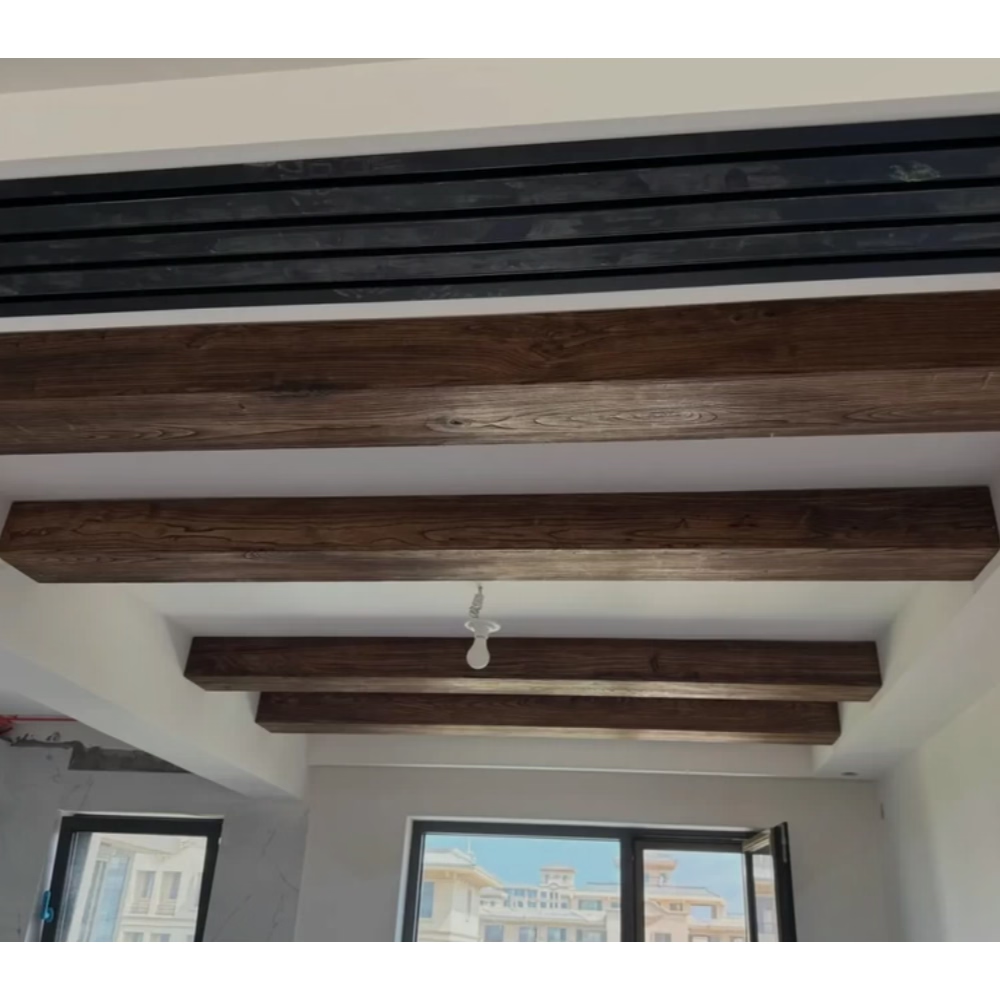
Matching faux wood beams to shiplap walls involves more than color coordination—it requires understanding how finish characteristics interact with the architectural texture of shiplap profiles. Beams installed over shiplap create layered shadows where beam edges meet wall surfaces, adding depth that flat-painted walls cannot provide. This three-dimensional quality enhances the rustic character that distinguishes farmhouse interiors from contemporary minimalism.
Natural wood-tone finishes—honey oak, golden pine, weathered grey—coordinate most authentically with farmhouse shiplap applications. These colors feel native to the style's rural origins while remaining sophisticated enough for contemporary residential applications. Staining beams to match specific shiplap colors creates monochromatic spaces that feel pulled together but potentially monotonous—introducing subtle color variation between wall and ceiling wood elements adds visual interest without disrupting overall cohesion.
White or cream-painted beams represent an alternative approach that prioritizes ceiling lightness over wood authenticity. Painted beams work particularly well in shiplap installations where the wall texture provides sufficient visual interest to compensate for neutralized beam finishes. This approach suits modern farmhouse aesthetics where clean lines and restrained color palettes define the design direction.

Beam Orientation and Spacing Strategies
The orientation of shiplap boards establishes baseline visual directions that faux wood beams either complement or contrast intentionally. Standard shiplap runs horizontally across walls, creating lines that emphasize room width. Beams running in perpendicular directions—vertically or across the room's shorter dimension—create dynamic visual interplay that prevents monotonous horizontal repetition. This directional contrast feels energetic and designed rather than accidental.
Parallel orientation—beams running in the same direction as shiplap lines—creates more contemplative, unified spaces where walls and ceiling share consistent visual language. This approach works particularly well in long, narrow rooms where reinforcing the horizontal direction provides better spatial proportions. The cumulative effect of matching horizontal lines across all surfaces creates immersive environments that feel architecturally deliberate.
Varying beam spacing prevents predictable patterns that feel calculated rather than authentic. Authentic farmhouse spaces rarely display mathematical precision in their architectural details—centuries-old barn beams settled irregularly, barn wood planks varied in width, and structural elements positioned according to function rather than aesthetic formulas. Recreating this organic irregularity in faux beam installations requires deliberately varying spacing intervals and potentially using multiple beam widths within the same installation.
Room-Specific Application Approaches
Kitchens represent the most common shiplap and faux beam application, where the farmhouse aesthetic creates warm gathering spaces suited to family activity and entertaining. Full shiplap backsplash installations paired with exposed beam-look ceiling details transform standard kitchen layouts into destination spaces. The combination works particularly well in open-plan kitchens where shiplap walls visible from multiple angles provide continuous visual interest while beams define specific functional zones.
Living rooms benefit from accent wall shiplap applications that establish focal points without overwhelming the space. A single shiplap wall behind the primary seating arrangement provides texture and interest while maintaining the predominantly smooth wall surfaces appropriate for furniture placement and artwork display. Ceiling beams in this context extend the accent wall's character upward, creating architectural continuity that makes the entire room feel designed rather than decorated.
Bedrooms featuring shiplap walls and faux beams should prioritize relaxation through color restraint and furniture softness. White or cream shiplap in master bedrooms paired with warm natural wood beams establishes calm atmospheres conducive to rest while maintaining the farmhouse character established throughout the home. Upholstered beds, soft area rugs, and layered textiles prevent the architectural elements from creating overly rustic environments inappropriate for sleep.
Accessory and Decor Coordination
Completing the farmhouse aesthetic requires accessory selections that reinforce rather than contradict the shiplap-beam architectural foundation. Natural materials—baskets, linen textiles, ceramic pottery, wooden furniture—echo the honest, handcrafted character established by architectural elements. Metal accents in matte black, wrought iron, or antique brass provide finishing definition without introducing contemporary materials that would feel foreign to the aesthetic.
Avoiding overly polished or synthetic accessories prevents visual dissonance between rustic architecture and generic décor. Cheap decorative items undermine expensive architectural investments by creating jarring quality contrasts. Instead, select fewer but higher-quality accessories that demonstrate thoughtful curation rather than impulsive accumulation. Vintage or antique finds add authenticity impossible to manufacture, while quality reproductions of farmhouse-style pieces provide similar aesthetics at accessible price points.
Lighting fixtures deserve particular attention in shiplap and beam installations. Industrial-style pendant lights, farmhouse chandeliers with Edison bulbs, and matte black recessed fixtures complement the aesthetic without competing for attention. Avoid overly ornate or formally styled fixtures that would feel incongruous in rustic settings. The goal remains creating environments where architectural elements and furnishings feel mutually native rather than arbitrarily combined.
Technical References
ASTM standards cited in every specification
Test Data
Lab results from internal testing program
Updated 2026
Reviewed against current product specs


