
The relationship between ceiling beams and lighting design presents both challenges and opportunities that distinguish successful interior installations from disappointing compromises. Beams interrupt continuous ceiling surfaces, creating shadow patterns, blocking light distribution, and complicating fixture placement in ways that demand thoughtful integration rather than afterthought accommodation. Perimeter ambient lighting—fixtures positioned to wash ceiling surfaces with diffused illumination—offers elegant solutions that transform beam interruptions into design assets rather than lighting obstacles.
Successful beam-and-lighting integration requires understanding how illumination behaves across three-dimensional architectural surfaces. Beams cast shadows downward and outward depending on fixture positioning, while illuminated beam surfaces become light sources themselves through reflected and bounced light. The interplay between direct illumination, shadow zones, and illuminated surfaces creates layered visual depth impossible to achieve with overhead fixtures alone. This dimensionality justifies the additional design complexity that beam integration demands.
The psychological impact of well-designed beam lighting extends beyond mere aesthetics. Spaces with layered lighting that highlights architectural details like ceiling beams create sense of crafted quality that flat, uniformly illuminated spaces cannot match. Occupants perceive these environments as more interesting, more carefully designed, and more worthy of attention—perceptions that influence comfort, satisfaction, and even productivity in work environments.
Understanding Light Behavior Across Beam Surfaces
Light striking beam surfaces creates different effects depending on illumination direction, surface material, and viewing angle. Uplighting from fixture positions below beam levels illuminates beam undersides and creates shadows that emphasize beam depth and dimensional presence. Downlighting from above or within beam pockets creates pools of light on beam tops while leaving undersides relatively shadowed. Side lighting from perimeter positions creates gradient illumination across beam faces that suggests dimensional form without harsh shadow definition.
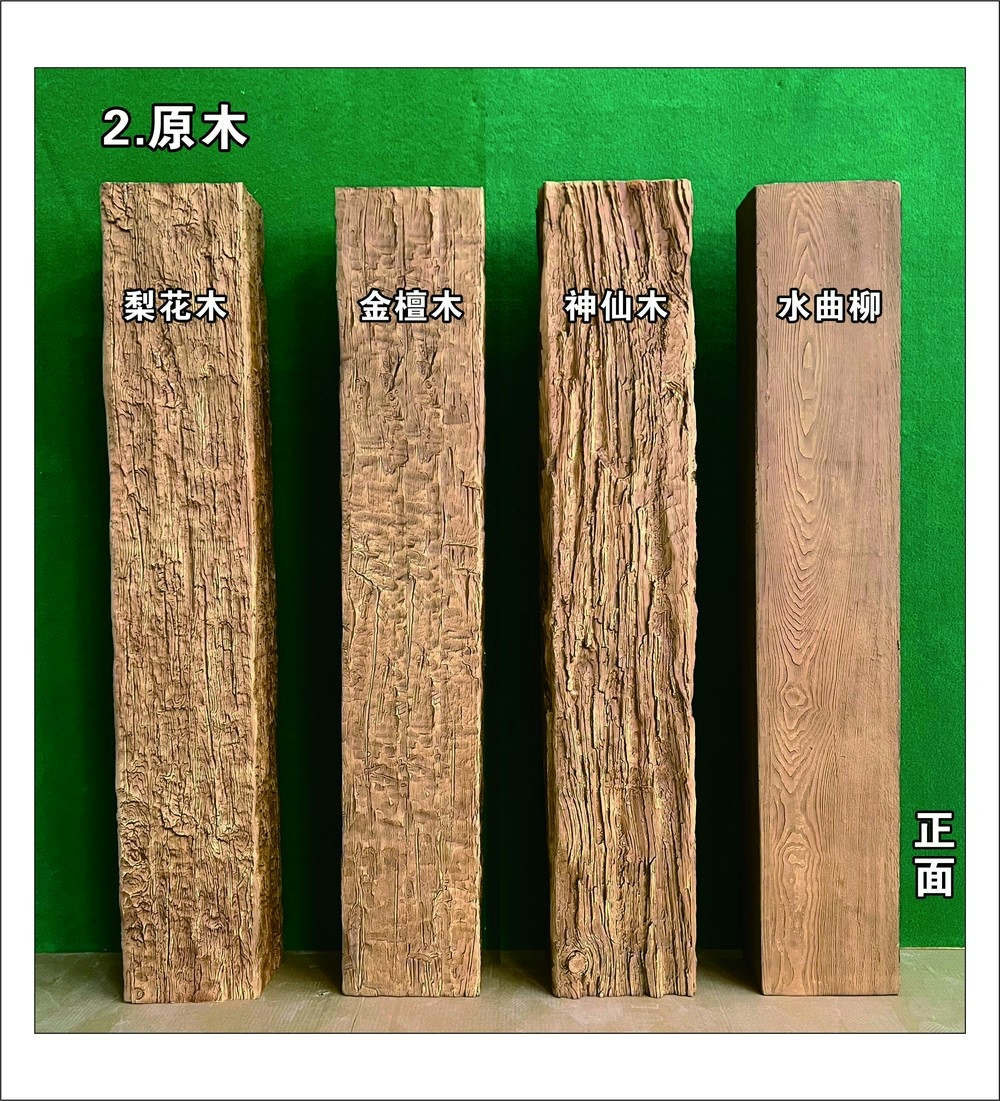
The finish characteristics of beam surfaces dramatically influence how they respond to illumination. Smooth, glossy polyurethane surfaces reflect light directly, creating bright highlights and mirror-like reflections that can be distracting if not properly controlled. Textured surfaces with authentic wood grain patterns scatter light more diffusely, creating softer, more natural illumination characteristics. Understanding how specific beam finishes interact with lighting enables fixture positioning that achieves desired effects rather than creating unwanted glare or reflection problems.
Color temperature selection for beam illumination affects both aesthetic quality and functional performance. Warmer color temperatures (2700K to 3000K) enhance the golden undertones in natural wood-finished beams, creating cozy, inviting atmospheres suited to residential living spaces. Cooler temperatures (3500K to 4000K) emphasize surface details and create crisper appearance suitable for commercial applications or contemporary residential aesthetics. Color temperature consistency throughout the lighting system ensures cohesive appearance without conflicting light qualities in different zones.
Cove Lighting Integration Techniques
Cove lighting—fixtures concealed within architectural ledges, ledges, or recesses that direct light upward toward ceiling surfaces—integrates naturally with beam installations when designed concurrently. The beam-to-ceiling intersection creates natural cove locations where fixture tracks or linear LED strips install without visible hardware. Light washes upward across beam faces and across ceiling surfaces between beams, creating continuous luminous planes that unify the ceiling composition.
Cove fixture selection involves trade-offs between installation simplicity, maintenance accessibility, and lighting quality. Rigid LED channels with integrated diffusers provide clean, continuous illumination but require full-length access for any future maintenance. Pin-based connector systems allow section removal for servicing but create potential connection failure points throughout the installation. Tape LED products offer maximum flexibility but may show individual diode visibility if diffuser quality is insufficient.
The width and depth of beam-to-ceiling coves determines lighting spread patterns and fixture placement options. Narrow coves (1 to 2 inches) accommodate slim LED channels but may produce narrow, defined light bands rather than broad wash effects. Wider coves (3 to 4 inches) provide more installation flexibility and create softer, more diffused illumination gradients. Beam depth affects how much light reaches ceiling surfaces versus remaining trapped within the cove cavity.

Recessed Fixture Placement Around Beams
Recessed downlighting positioned strategically relative to beam installations creates pools of illumination that highlight beam textures while providing functional ambient light for tasks and movement. The relationship between fixture position and beam location determines shadow direction and intensity—fixtures positioned directly above beams create minimal shadowing but may appear as bright spots competing with beam aesthetics. Offset positioning creates more dramatic shadowing that emphasizes beam depth while creating visual interest through light-and-shadow contrast.
Beam obstructions complicate recessed fixture installation, requiring either relocation around beams or special shallow-depth fixtures that fit between beam depth and ceiling joist space. Layout planning should identify beam positions early and coordinate fixture placement to avoid costly modifications during installation. Where fixture relocation isn't possible, low-profile fixtures designed for tight clearances provide solutions that maintain lighting objectives without beam removal or structural modification.
Housing selection for recessed fixtures affects both performance and beam interaction. IC-rated housings allow direct contact with insulation but may produce more heat that affects nearby beam finishes over time. Non-IC housings require clearance from insulation but produce cooler operation. Airtight housings prevent conditioned air leakage but may restrict ventilation around fixtures in ways that affect longevity. These trade-offs require evaluation against specific project conditions and local code requirements.
Beam-Integrated Lighting Solutions
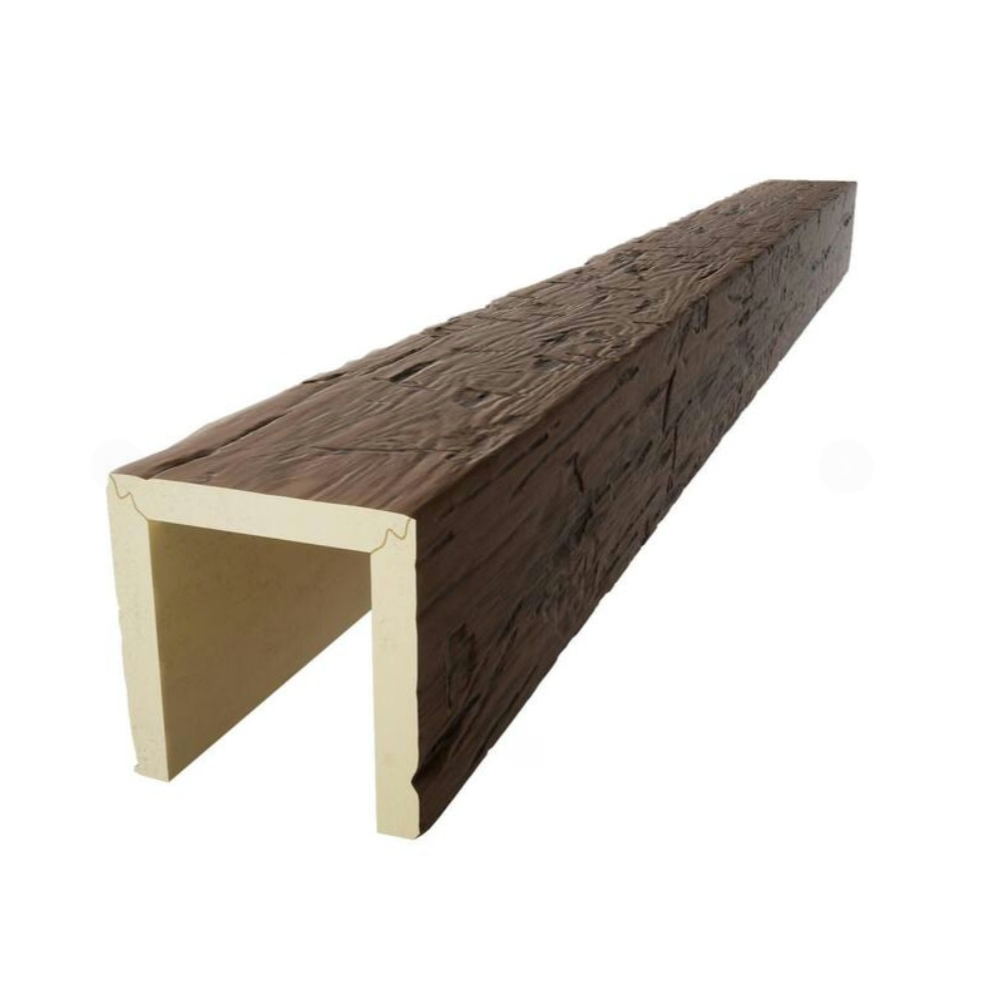
Modern faux wood beam designs increasingly incorporate lighting integration as standard features, with manufacturers offering beams with pre-installed channels, wire passages, and mounting provisions for various fixture types. These integrated solutions eliminate the coordination challenges that site-installed lighting creates, providing predictable outcomes without custom fabrication or installer interpretation. Pre-wired beams with switch-selectable color temperature options offer particular convenience for residential applications where future lighting adjustments may be desired.
LED strip integration within beam cavities provides continuous illumination without visible fixtures, creating ethereal glow effects that make beams appear to emit light from within. This technique works particularly well with translucent or semi-transparent beam finish options that diffuse internal light across surface areas. Standard opaque beams can accommodate edge-lighting approaches where LED strips positioned at beam perimeters create gradient illumination across visible surfaces.
The electrical requirements for integrated beam lighting should be addressed during installation planning rather than as afterthought additions. Low-voltage LED systems require transformer placement, voltage drop calculations across extended runs, and control wiring for dimming capability. High-voltage alternatives simplify transformer requirements but introduce safety considerations that affect installation procedures. Early coordination between beam suppliers and electrical contractors ensures adequate provision for lighting integration.
Control Systems and Lighting Scenes
Modern lighting control systems enable dynamic beam illumination that transforms spaces throughout daily use patterns. Dimming capability allows ambient level adjustment from bright functional lighting to intimate evening atmospheres. Color-tuning systems shift color temperature automatically based on time of day or manual selection, supporting circadian rhythms while maintaining aesthetic integration with beam finishes. Zoning controls illuminate different beam groups independently, enabling accent highlighting or functional separation within open plan spaces.
Smart home integration increasingly includes lighting control among standard capabilities, with beam illumination participating in whole-home automation scenarios. Morning wake sequences might ramp beam lighting gradually while evening scenes dim overheads while maintaining warm accent levels. Vacation modes create occupied appearance through randomized lighting patterns that include beam illumination timing variations. These automation capabilities add meaningful value beyond simple on-off switching.
Commissioning lighting systems for proper operation ensures that beam illumination performs as designed rather than creating disappointing first impressions that persist throughout the installation life. Professional calibration of dimming ranges, color temperature consistency verification, and scene programming that reflects actual use patterns transforms good hardware into great installations. The investment in commissioning pays dividends through spaces that perform consistently and satisfy occupants reliably.
Technical References
ASTM standards cited in every specification
Test Data
Lab results from internal testing program
Updated 2026
Reviewed against current product specs


